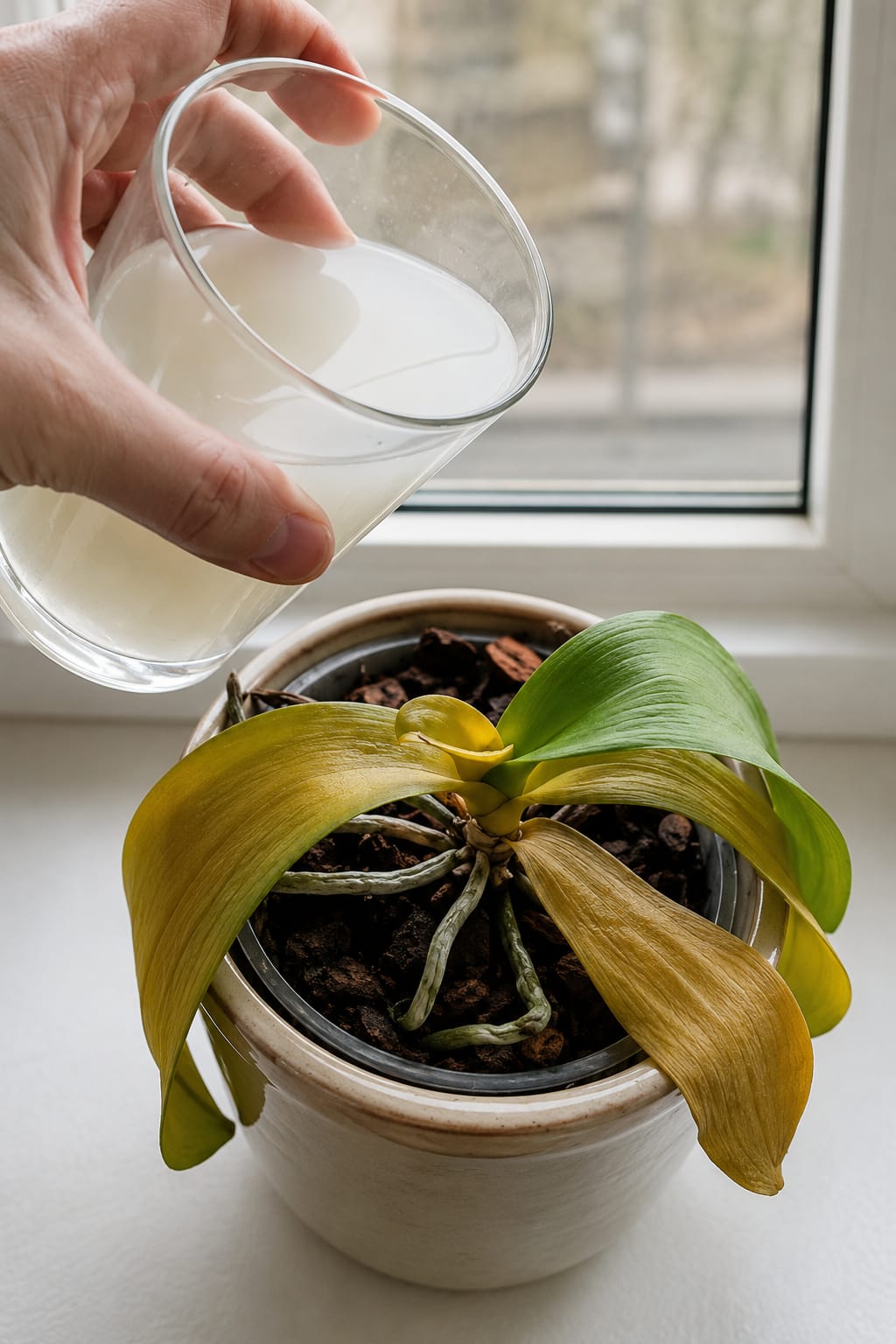
Orchids are some of the most elegant indoor plants for homeowners who want graceful flower spikes, glossy green leaves, silver aerial roots, and a refined decorative display that fits beautifully in living rooms, bedrooms, bright kitchens, home offices, apartments, windowsills, plant shelves, commercial interiors, luxury home staging, and premium indoor plant styling. A healthy orchid can look expensive and calm with very little decoration, especially when the roots are firm, the leaves are clean, and the potting bark looks fresh and airy.
Many plant lovers become concerned when an orchid starts turning yellow, drooping, or losing strength. When the leaves look weak and the roots look dry or tired, it can be tempting to pour a white liquid into the pot and hope it helps the plant recover. This white liquid may be rice water, milk water, diluted fertilizer, calcium water, or another homemade mixture. It may look gentle and nourishing, but orchids are sensitive plants. Their roots need air as much as moisture, and a weak orchid can decline faster if the wrong liquid is poured into the pot.
The safest way to understand this method is to treat white liquid as a risky support idea, not a guaranteed orchid rescue. A weak orchid does not recover because of one dramatic pour. It recovers when the root system is inspected, rotten roots are removed, old bark is replaced, the crown stays dry, watering is corrected, and the plant receives bright indirect light with good airflow. If the orchid is already yellowing, extra homemade liquid can make the root zone sour, wet, and more stressful.
Understanding Why the Orchid Looks Weak
Yellow orchid leaves can happen for several reasons. One old lower leaf turning yellow can be natural aging. However, several yellow leaves at once usually mean stress. The most common causes are overwatering, root rot, old compacted bark, poor drainage, low light, cold exposure, fertilizer burn, or a plant that has lost too many roots.
In a weak orchid, the roots matter more than the leaves at first. Healthy Phalaenopsis orchid roots are firm and usually look silver when dry and green when wet. Rotten roots feel mushy, hollow, brown, black, or slimy. Dry dead roots may look papery and empty. If the orchid has very few living roots, pouring extra liquid over the bark will not solve the problem. The plant cannot drink properly through damaged roots.
Before using any white liquid, the plant should be removed from decorative cover pots and checked carefully. If the inner pot is sitting inside a ceramic pot with trapped water, root rot may already be developing. Orchids should never sit in standing water, especially when they are weak.
What the White Liquid Might Be
The white liquid may be rice water. Rice water is cloudy because it contains starch from rinsed or soaked rice. Some plant owners use it as a mild homemade tonic, but it is not a complete orchid fertilizer. If used too often, rice water can leave starch residue in the bark and encourage microbial growth, odor, or fungus gnats.
The liquid may be milk water. Milk is sometimes promoted as a calcium trick, but it can spoil inside orchid bark. Milk residue can smell sour, attract pests, and coat roots. Orchids do not need milk in order to grow leaves or flowers. For a weak orchid, milk water is usually more risk than benefit.
The white liquid may also be diluted fertilizer. If it is a known orchid fertilizer mixed correctly, it may help only when the plant has healthy roots and is actively growing. If the roots are damaged, fertilizer can burn them further. A weak orchid should not be fed heavily.
Why White Liquids Can Be Dangerous for Orchids
Orchid bark is meant to be airy. It should hold some moisture while allowing oxygen to move around the roots. White homemade liquids can leave residue in the bark. If that residue breaks down, it can create sour smells and reduce the clean airflow orchids need.
A weak orchid is already vulnerable. Yellow leaves usually mean the plant is under stress. Adding a thick or cloudy mixture to old bark may keep the root zone damp for too long. This can make root rot worse, especially near a cold window or inside a pot with poor drainage.
Another danger is the crown. The crown is the center where orchid leaves meet. Liquid should not collect there. If white liquid pours into the crown and stays trapped, crown rot can develop. Crown rot can kill an orchid quickly. Any watering should be directed toward the potting medium and roots, not into the center of the leaves.
What to Do First With a Weak Orchid
The first step is to inspect the roots. Gently lift the orchid from the pot if the plant is declining. Remove old bark from around the roots and check what is firm and what is dead. Keep firm roots. Trim mushy, hollow, or rotten roots with sterilized scissors. Do not cut healthy silver or green roots just because they look dry.
The second step is to refresh the potting medium. Old bark breaks down and becomes compact. When bark is old, it holds too much water and reduces airflow. Fresh orchid bark can do more for recovery than any homemade liquid. A good orchid mix may include bark, perlite, charcoal, or a little sphagnum moss depending on the room conditions.
The third step is to repot into a container with drainage. Clear orchid pots are helpful because they allow root inspection. Decorative ceramic pots can be used as outer covers, but the inner pot must drain fully after watering. No water should remain trapped at the bottom.
How to Water a Weak Orchid Safely
Use plain room-temperature water first. Water the bark thoroughly, then let all excess drain away. Do not leave the orchid sitting in water. Let the bark approach dryness before watering again. If roots are visible in a clear pot, they often turn silver when ready for water and green after watering.
If the orchid has very few roots, it may not absorb much water. In that case, soaking the pot heavily will not help. The plant needs humidity support and time to grow new roots. Keeping the bark constantly wet can rot the few roots that remain.
After watering, check the crown and leaf joints. If liquid is trapped there, blot it gently with a paper towel. This small step is very important for weak orchids.
Should Rice Water Be Used?
Rice water should be used cautiously, if at all. It should be fresh, strained, very diluted, and never fermented. It should not be poured into old bark or used on an orchid with root rot. If the orchid is weak, plain water and fresh bark are safer.
If someone still wants to test rice water later, it should only be considered after the orchid has healthy roots and new growth. It should be rare, weak, and followed by normal plain-water care. Rice water should never replace orchid fertilizer or proper watering.
Thick cloudy rice water should be avoided. The starch can stay in the bark and create residue. Orchids do not need starch in their potting media. Their roots need clean moisture and air.
Should Milk Water Be Used?
Milk water is not recommended for weak orchids. Milk can sour in orchid bark, attract pests, and leave residue on roots. It may look nourishing, but it is not a clean or reliable orchid treatment. A weak orchid with yellow leaves needs root care, not dairy.
If milk water was already used once, flush the pot gently with plain water only if the pot drains well. Let everything drain completely. If the bark smells sour later, repot into fresh orchid mix.
If the plant is already declining, avoid all milk treatments. The safest recovery path is clean bark, proper watering, bright indirect light, and patience.
Best Light for Orchid Recovery
Orchids need bright indirect light to recover and rebloom. A weak orchid near a bright window may do well if the light is filtered. Direct harsh sun can burn yellowing leaves, while low light can slow root growth and weaken the plant further.
If the plant has been kept in a dark corner, move it gradually toward brighter indirect light. A sheer curtain can soften strong sun. The leaves should receive enough brightness to support energy production without becoming scorched.
Light is one of the real recovery tools. A white liquid cannot replace proper brightness. Without enough light, the orchid cannot build the energy needed for new roots and leaves.
Feeding a Weak Orchid
A weak orchid should not be fertilized heavily. If roots are damaged, fertilizer can burn them. Wait until the orchid has fresh root tips or new leaf growth before feeding. When feeding resumes, use a diluted orchid fertilizer at a weak strength.
Orchids usually prefer gentle feeding during active growth. Strong fertilizer is not necessary. More fertilizer does not mean faster recovery. Healthy roots must come first.
Homemade white liquids are not balanced fertilizers. If nutrition is needed, a measured orchid fertilizer is safer and more predictable than milk water, rice water, or unknown cloudy mixtures.
Humidity and Airflow
Weak orchids often benefit from moderate humidity, especially when they have few roots. Humidity helps reduce moisture loss from the leaves while new roots develop. However, humidity must be balanced with airflow. Wet stagnant air can cause rot and leaf spots.
A humidity tray, plant grouping, or small humidifier can help. Do not seal the orchid in a wet container without airflow for long periods. The crown should remain dry, and the leaves should not stay wet overnight.
Good airflow keeps the orchid environment fresh. It also helps bark dry properly after watering. Air movement is just as important as moisture for orchids.
When to Remove Yellow Leaves
A fully yellow orchid leaf that is soft and no longer useful can be removed once it loosens naturally. Do not pull hard on a leaf that is still firmly attached. Forcing it can damage the crown. If a lower leaf is yellowing naturally, let the plant finish absorbing energy from it before removing it.
If leaves are yellow because of root rot, removing leaves will not solve the problem. The roots and potting medium must be corrected. Yellow leaves are a symptom, not the main cause.
After removing dead leaves, keep the base clean. Do not allow old leaf tissue to rot around the crown or potting medium.
Indoor Decor and Styling Ideas
Orchids look beautiful in clean indoor displays, but a weak orchid should be styled in a way that protects recovery. A clear inner pot inside a decorative ceramic container can look elegant while still allowing drainage. A windowsill with bright filtered light is ideal if the temperature is stable.
Keep the display simple. Remove old flower spikes if they are brown and dry. Wipe the leaves gently with plain water if dusty. Keep the bark tidy and avoid visible residue from homemade liquids. A recovering orchid should look clean, not overtreated.
Once the plant grows new roots and leaves, it can be moved into a more decorative orchid arrangement. Healthy roots and clean leaves always look more luxurious than a pot filled with sour or cloudy additives.
Common Mistakes With Weak Orchids
One common mistake is pouring more liquid onto a plant with damaged roots. If roots are rotten, extra liquid cannot be absorbed properly. Another mistake is using milk water or rice water in old bark. Old bark already holds moisture and can sour quickly.
A third mistake is letting water collect in the crown. A fourth mistake is keeping the orchid inside a decorative pot with standing water at the bottom. A fifth mistake is fertilizing a root-damaged orchid too soon.
A sixth mistake is expecting instant recovery. Orchids heal slowly. New roots may take weeks to appear. Patience and stable care are more effective than repeated homemade treatments.
Continue to Page 2
Continue to page 2 for more details about this article and the key points many readers miss on the first page.