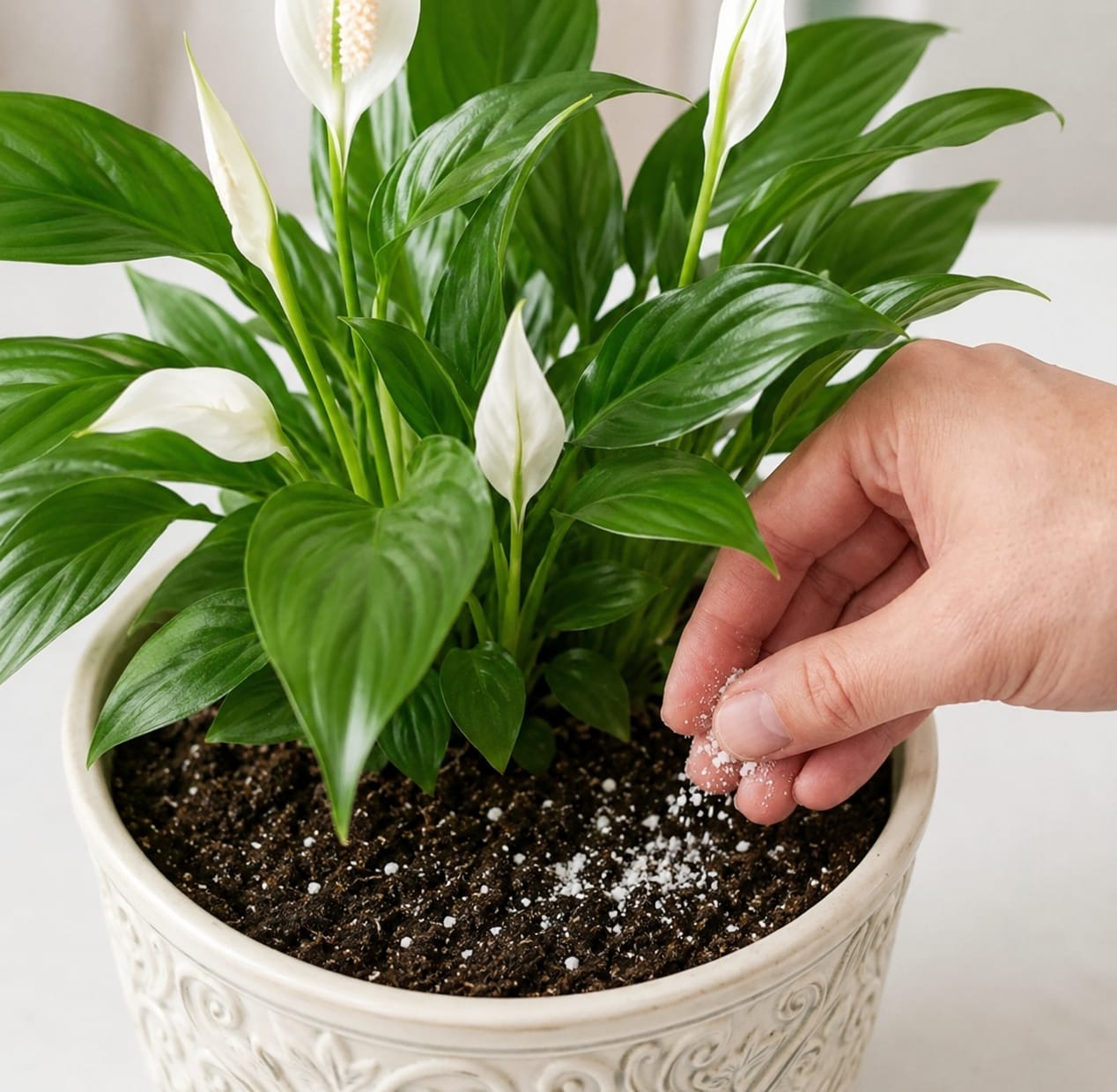
Peace lily is one of the most graceful indoor plants for homeowners who want glossy green leaves, soft white blooms, calm tropical foliage, and a clean decorative display that fits beautifully in living rooms, bedrooms, apartments, home offices, bright kitchens, entry corners, plant shelves, commercial interiors, luxury home staging, and premium indoor plant styling. Its deep green leaves and white spathes create a peaceful look that feels fresh, elegant, and easy to match with modern, rustic, minimalist, or cozy home decor.
Many plant lovers become curious when they see a light white powder being sprinkled across peace lily soil. The method is often described as a simple trick for stronger roots, cleaner soil, healthier leaves, and more elegant blooms. The white powder may be perlite, crushed eggshell powder, Epsom salt, slow-release fertilizer, diatomaceous earth, baking soda, or another household or garden material. Because many white powders look similar, the ingredient must be identified before it is used. Peace lilies are beautiful but sensitive tropical plants, and the wrong powder can damage roots, change soil balance, create salt buildup, or leave messy residue around the crown.
The safest way to understand this method is to treat white powder as an optional amendment, not a miracle bloom booster. A peace lily does not produce glossy leaves and white flowers because of one handful of powder. It grows best when it receives bright indirect light, steady moisture, drainage holes, airy potting mix, moderate humidity, clean leaves, and gentle balanced feeding during active growth. If the plant is yellowing, drooping, browning, or not blooming, the first step is not powder. The first step is checking watering, roots, light, soil condition, and drainage.
Why Peace Lily Roots Need Careful Treatment
Peace lilies like moisture, but they do not like soggy soil. Their roots need water and oxygen at the same time. When the potting mix stays too wet, becomes compacted, or collects too many salts, the plant can react with drooping leaves, yellowing foliage, brown tips, weak stems, or fewer blooms. This is why anything added to the soil should be used carefully.
A thick layer of white powder can hide the real condition of the soil. It may make it harder to see whether the mix is damp, dry, moldy, crusted, or compacted. If powder is piled close to the crown, where stems emerge from the soil, it can trap moisture and cause stress. The crown should stay clean, open, and breathable.
Before adding any powder, check the plant’s condition. If the soil smells sour, stays wet for many days, has fungus gnats, or the plant droops while the soil is damp, avoid additives. The roots may already be stressed. In that case, fresh airy soil and better watering habits are safer than sprinkling anything over the surface.
What the White Powder Might Be
The white powder may be perlite. Perlite is a lightweight volcanic material used to improve drainage and airflow in potting mixes. It is generally safe for peace lilies when mixed into the soil, but it does not feed the plant or force blooms. It works best inside the potting mix, not as a heavy decorative layer on top.
The powder may be crushed eggshell powder. Eggshell powder contains calcium carbonate, but it breaks down slowly. It is not an instant fertilizer and will not suddenly create blooms. If used too heavily, it can sit on the soil surface, create residue, and slightly affect soil balance over time.
The powder may be Epsom salt. Epsom salt contains magnesium sulfate, but it is not a complete fertilizer. Too much can create mineral buildup and root stress. Peace lilies do not need dry Epsom salt sprinkled heavily around their stems. If magnesium is needed, it should be used rarely, lightly, and only in a properly diluted form.
The powder may be slow-release fertilizer. If so, the label matters. Slow-release fertilizer can help when used correctly, but too much can burn roots or cause brown leaf tips. It should never be guessed by appearance or poured in a thick pile around the crown.
The powder may be baking soda. Baking soda should not be used as a regular peace lily soil treatment. It is alkaline and contains sodium. Repeated use can disturb soil chemistry, contribute to salt buildup, and stress the roots. Peace lilies generally prefer a slightly acidic to neutral potting environment, not a strong alkaline treatment.
Why Watering Over White Powder Can Be Risky
When water touches white powder, the material may dissolve and move into the root zone. If it is a safe material used lightly, the plant may tolerate it. If it is a salt, fertilizer, baking soda, or an unknown household powder, the roots can be exposed to a strong solution. Peace lily roots are sensitive, and concentrated minerals or chemicals can cause leaf tips to brown or leaves to yellow.
Some powders clump when wet. A clumped layer can block airflow at the soil surface and hold moisture around the base of the stems. This can encourage fungus gnats, mold, and crown stress. A peace lily should have a clean soil surface that allows air and moisture to move naturally.
If the ingredient is unknown, remove it before watering. Plain water should remain the main watering method. Unknown white powders should never be watered into a peace lily pot.
Best Light for Peace Lily Blooms
Peace lilies can survive in lower light, but they bloom best in bright indirect light. A plant kept in a dark corner may produce healthy-looking green leaves but few white spathes. If the goal is more blooms, light is usually more important than powder.
Place the peace lily near a bright window with filtered light. A sheer curtain can protect the leaves from direct sun while still giving the plant enough brightness. Harsh direct sunlight can scorch the leaves, but too little light can reduce flowering.
If the plant is not blooming, move it gradually into better indirect light before using fertilizer or amendments. A stronger light position often improves growth more safely than homemade soil treatments.
Watering Peace Lilies Correctly
Peace lilies like evenly moist soil, but the pot should never stay soggy. Water when the top part of the soil begins to dry. Water thoroughly, allow excess water to drain, and empty the saucer. If the pot has no drainage holes, root problems become much more likely.
Drooping can mean the plant is thirsty, but it can also mean the roots are stressed from wet soil. Always check the soil before watering. If the soil is dry, water normally. If the soil is wet and the plant is drooping, do not add more water or powder. Check the roots and drainage.
Good watering is more powerful than most plant hacks. A peace lily with healthy roots, correct moisture, and bright indirect light will look fuller and bloom more reliably.
Best Potting Mix for Peace Lilies
A good peace lily potting mix should hold light moisture while still draining well. A quality indoor potting mix can be improved with perlite, orchid bark, coco coir, or fine bark. The goal is a soft but breathable root environment.
If the soil is dense, muddy, or old, sprinkling powder on top will not fix the deeper problem. Repotting into fresh airy mix is usually better. Old compacted soil can suffocate roots and hold too much water.
The pot should have drainage holes. A decorative pot is fine, but it should not trap water. If using a decorative cover pot, remove the inner pot for watering and let it drain fully before placing it back.
Using Perlite Safely
If the white powder is perlite, it is safest when mixed into the soil during repotting. Perlite improves aeration and drainage. It does not feed the peace lily, but it can help roots breathe and reduce the risk of soggy soil.
A little perlite on the surface is usually not harmful, but a thick layer is not necessary. It may float when watered and make the pot look messy. For real root benefit, blend perlite through the potting mix rather than sprinkling it only on top.
Perlite dust can be irritating, so it should be handled gently. Lightly dampen it before mixing to reduce dust indoors.
Using Eggshell Powder Safely
If the white powder is eggshell powder, use it sparingly. Eggshell powder breaks down slowly and does not provide immediate results. It should be clean, dry, finely ground, and applied in a very light amount away from the crown.
Do not expect eggshell powder to force blooms. Peace lily flowers depend more on light, maturity, root health, and balanced feeding. A heavy eggshell layer can make the soil surface look messy and may not benefit the plant much.
If the goal is stronger growth, a proper diluted fertilizer is usually more reliable than eggshell powder.
Why Baking Soda Should Be Avoided
Baking soda is not a good regular treatment for peace lily soil. It is alkaline and contains sodium. Sodium buildup can stress roots and contribute to brown tips, yellow leaves, or poor growth. Peace lilies do not need sodium to thrive.
If baking soda has already been sprinkled on the soil, stop using it. If the pot drains well, water thoroughly with plain water and let excess drain out. If the plant begins to decline or the soil becomes crusty, repotting into fresh mix may be safer.
Baking soda is often promoted online as a quick plant trick, but peace lilies respond better to stable care, not alkaline household powders.
Feeding Peace Lilies the Right Way
Peace lilies benefit from gentle feeding during active growth. A balanced houseplant fertilizer diluted to a weak strength is usually enough. Too much fertilizer can cause brown tips and root burn, so less is better than more.
Do not fertilize a peace lily that is already stressed by wet soil, root rot, or poor light. Fertilizer helps healthy roots, but it does not rescue damaged roots. Fix the growing conditions first.
If the white powder is slow-release fertilizer, follow the label carefully. Do not pile granules against the stems. Apply lightly and water normally only when the soil needs moisture.
Cleaning Peace Lily Leaves
Peace lily leaves are naturally glossy and look best when clean. Dust can dull their shine and reduce light absorption. Wipe leaves gently with a soft damp cloth. Support each leaf while cleaning so the stem does not bend.
If white powder lands on the leaves, wipe it away with plain water. Powder residue can make the plant look dusty and can hide the natural shine of the foliage. Avoid oily leaf shine products because they can attract dust and create an artificial coating.
Clean leaves, tidy soil, and healthy blooms create a more elegant indoor display than visible powder or residue.
When White Powder Should Be Avoided
White powder should be avoided if the ingredient is unknown. It should also be avoided if the peace lily has wet soil, sour smell, fungus gnats, mold, yellowing leaves, drooping while damp, brown tips from salt buildup, or a pot without drainage. These signs suggest the plant may already be stressed.
Do not use table salt, cleaning powder, laundry powder, scented powder, baking soda, or random kitchen powders. Do not mix white powder with vinegar, lemon juice, milk, coffee, sugar, or oil. Household mixtures can damage roots and create unpleasant indoor conditions.
During winter or low-light periods, avoid extra treatments. Peace lilies grow more slowly when light is weak, so additives can sit in the soil longer and create buildup.
What to Do If Problems Appear
If the soil becomes crusty after powder use, remove the top layer gently and replace it with fresh airy mix. Return to plain water and avoid more additives. If the plant has brown tips, check water quality, fertilizer strength, humidity, and salt buildup.
If leaves yellow or the plant droops while the soil is wet, inspect the roots. Rotten roots may be brown, black, mushy, or foul-smelling. Trim damaged roots with clean tools and repot into fresh mix if needed.
If fungus gnats appear, stop adding powders or organic materials. Let the soil surface dry slightly between waterings, remove decaying material, and use sticky traps to monitor adult gnats.
Indoor Decor and Styling Ideas
Peace lilies are perfect for calm indoor styling because their white blooms and glossy leaves create a clean, peaceful look. A white ceramic pot gives a modern style. A textured cream planter adds softness. A terracotta pot brings warmth. A woven basket creates a relaxed natural look.
Place the peace lily where it receives bright indirect light and has enough space for the leaves to spread. It looks beautiful on plant stands, side tables, office corners, bedroom dressers, entry consoles, and bright windowsills.
A premium peace lily display should look clean and intentional. Avoid thick powder piles, crusty soil, or residue on leaves. Tidy soil and polished foliage make the plant look healthier and more elegant.
Continue to Page 2
Continue to page 2 for more details about this article and the key points many readers miss on the first page.