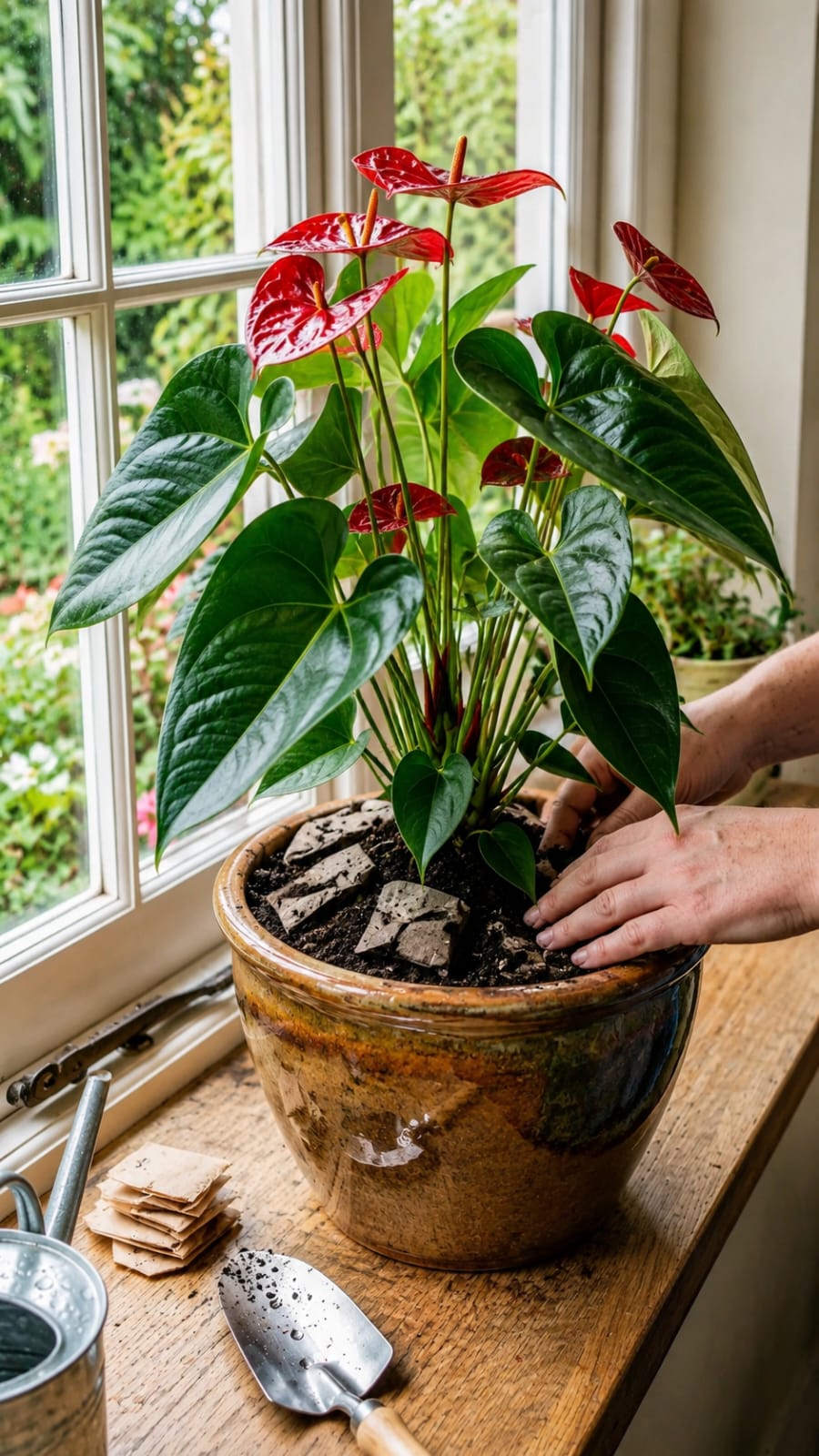
Anthurium is one of the most striking indoor plants for homeowners who want glossy heart-shaped leaves, colorful spathes, upright tropical stems, and a polished decorative display that fits beautifully in living rooms, bedrooms, bright kitchens, home offices, apartments, plant shelves, entry corners, commercial interiors, luxury home staging, and premium indoor plant styling. Its red, pink, white, coral, purple, and green spathes can look sculptural and refined, especially when the foliage is clean, the stems are strong, and the plant is placed near a bright window with soft filtered light.
Many plant lovers become curious when they see dark charcoal-like pieces placed across the soil surface of an anthurium. This method is often described as a simple support trick for cleaner soil, stronger roots, less odor, better drainage, and a more elegant bloom display. Charcoal can be useful in some potting mixes, especially for tropical plants that appreciate airflow and a fresh root environment. However, it must be the right type of charcoal, used in the right amount, and placed in a way that does not trap moisture around the crown.
The safest way to understand this method is to treat charcoal as a soil support material, not a miracle fertilizer. Anthuriums do not bloom because a few black pieces are placed on the soil. They bloom best when they receive bright indirect light, airy potting mix, drainage holes, balanced watering, moderate humidity, warm stable conditions, clean leaves, and gentle feeding during active growth. Charcoal may help improve the potting environment when used correctly, but it cannot replace the basics of good anthurium care.
Why Anthurium Roots Need an Airy Soil Environment
Anthuriums are tropical plants with roots that need both moisture and oxygen. They do not like heavy, muddy potting soil that stays wet for too long. In their preferred indoor care routine, the root zone should feel loose, breathable, and lightly moist rather than dense or swampy. This is why many plant owners use chunky aroid-style mixes with orchid bark, perlite, coco chips, charcoal, and a small amount of potting soil.
When anthurium roots are healthy, the plant can produce firm stems, glossy leaves, and long-lasting colorful spathes. When the root zone becomes compacted or sour, the plant may begin to droop, yellow, stop blooming, or develop brown edges. Adding the right charcoal can help keep a potting mix more open, but it should be part of a balanced mix rather than a heavy surface cover.
The crown of the plant, where the stems emerge from the soil, should remain clean and open. Charcoal pieces should not be piled tightly against this area. If any material traps moisture around the crown, it can increase the risk of rot, especially in a room with low airflow or a pot that drains poorly.
What Kind of Charcoal Is Safe for Anthuriums?
The best option for houseplants is horticultural charcoal. This is charcoal prepared for plant use and commonly added to orchid, terrarium, and aroid potting mixes. It is usually clean, lightweight, and free from additives. Horticultural charcoal can help create a fresher, more breathable mix when used in small amounts.
Activated charcoal is also sometimes used in terrariums and plant containers, especially where odor control and freshness are desired. It is usually more processed and porous. It can be helpful in small amounts, but it is not necessary to use large quantities in anthurium pots.
Barbecue charcoal should be avoided unless you are absolutely sure it is pure untreated lump charcoal with no lighter fluid, binders, chemicals, fragrance, or additives. Many barbecue products are not safe for houseplants. Charcoal briquettes are especially risky because they can contain binders and other substances that do not belong in potting soil.
Why Charcoal Is Not Fertilizer
Charcoal is not a complete fertilizer. It does not provide the balanced nutrients anthuriums need for strong foliage and blooms. It may help with soil structure and freshness, but it does not replace nitrogen, phosphorus, potassium, calcium, magnesium, or trace elements in a proper feeding routine.
If an anthurium is not blooming, charcoal is not the first solution. Low light is often a bigger reason for poor blooming. Weak roots, old potting mix, poor watering, or lack of gentle nutrition can also reduce flowers. Charcoal can support the root environment, but it cannot force spathes without proper overall care.
For feeding, use a diluted balanced houseplant fertilizer or orchid-style fertilizer during active growth. Keep the dose weak. Anthuriums are sensitive to overfeeding, and too much fertilizer can cause brown tips, salt buildup, and root stress.
How Charcoal Can Help the Potting Mix
Charcoal can help keep a potting mix more open and breathable when mixed with other chunky ingredients. It can create small air spaces around the roots, which helps reduce the risk of soggy conditions. This is useful for anthuriums because their roots need oxygen.
Charcoal may also help reduce unpleasant odors in some potting mixes. If a plant pot smells sour, however, charcoal is not enough by itself. Sour smell often means the soil is too wet, old, compacted, or beginning to rot. In that case, the plant may need repotting, not just a few pieces of charcoal on top.
Charcoal can also make the soil surface look clean and natural when used sparingly. A few pieces can create a tidy visual finish, especially in a decorative pot. However, a thick layer can hide the true moisture level of the soil and make watering harder to judge.
How to Use Charcoal Safely Around Anthuriums
The safest way to use charcoal is to mix a modest amount into the potting mix during repotting. It should be one part of a chunky blend, not the main ingredient. A healthy anthurium mix may include orchid bark, perlite, coco chips, a small amount of potting mix, and a little horticultural charcoal.
If using charcoal on the soil surface, keep the layer thin and loose. Do not press it down. Do not pile it against the stems. The soil should still be able to breathe, and you should still be able to check moisture. A few scattered pieces are safer than a thick sealed cover.
Before using charcoal, rinse dusty pieces lightly and let them drain. Fine black dust can make the pot messy and may stain surfaces. Use gloves if needed and protect light-colored tables or windowsills when handling it indoors.
When Charcoal Should Be Avoided
Charcoal should be avoided if you do not know what type it is. Unknown charcoal may contain chemicals, lighter fluid, fragrance, salt, or binders. It should also be avoided if the plant already has wet soil, root rot, fungus gnats, sour smell, mold, or poor drainage. In those cases, the root problem must be corrected first.
Do not add charcoal to a pot without drainage and expect it to solve water problems. Charcoal cannot fix trapped water. A pot with no drainage is still risky for anthuriums because water can collect at the bottom and suffocate roots.
Do not use ash as a substitute for charcoal. Wood ash is alkaline and can change soil pH quickly. Anthuriums generally prefer a slightly acidic to neutral environment, and ash can be too strong for indoor pots.
Best Light for Anthurium Blooms
Anthuriums bloom best in bright indirect light. A plant kept in low light may survive and produce green leaves, but it may bloom less often. A bright window with filtered light is usually ideal. Direct harsh sun can scorch leaves and fade spathes, especially through hot glass.
If the plant has healthy foliage but few blooms, improve light before adding more soil amendments. Move the plant gradually into a brighter position. A sheer curtain can soften strong sun while still giving the plant enough energy for growth and flowering.
Light also affects watering. An anthurium in bright indirect light uses water faster than one in a dim corner. If the plant is in low light and the soil is covered with a thick layer of charcoal, the mix may stay damp longer than expected. Always check the actual soil moisture before watering.
Watering Anthuriums Correctly
Anthuriums like evenly moist soil, but they do not like soggy roots. Water when the top part of the potting mix begins to dry. Water thoroughly and let excess drain away. Empty the saucer after watering. A decorative outer pot should not hold standing water around the inner pot.
If charcoal is used on the surface, do not let it hide the soil condition. Move a piece aside and feel the mix below. If the soil is still damp, wait before watering. If the top is dry and the pot feels lighter, water normally.
Overwatering is more dangerous than underwatering for many indoor anthuriums. If leaves droop while the soil is wet, do not add more water. Check drainage, roots, and soil structure. Charcoal can support airflow, but it cannot rescue roots sitting in stagnant moisture.
Best Potting Mix for Anthuriums
A good anthurium mix should be chunky and airy. Orchid bark provides structure. Perlite or pumice improves drainage. Coco chips help hold light moisture. Charcoal can add freshness and extra air pockets. A small amount of quality potting mix can help hold nutrients, but the blend should never become dense or muddy.
If the current soil is heavy and compacted, adding charcoal only on the surface will not solve the deeper issue. Repotting into a better mix is usually safer. During repotting, remove old sour soil gently and inspect the roots. Trim only rotten roots with clean tools.
A proper potting mix is one of the most important parts of anthurium care. Healthy roots create stronger leaves and more reliable blooms. Soil structure matters more than decorative surface treatments.
Feeding Anthuriums Safely
Anthuriums benefit from gentle feeding during active growth. Use a balanced houseplant fertilizer or orchid-style fertilizer diluted to a weak strength. Feeding should be light and consistent rather than strong and sudden.
Charcoal does not replace fertilizer. If the plant is actively growing and has healthy roots, gentle feeding can support new leaves and spathes. If the plant is stressed, do not fertilize immediately. Fix watering, roots, and light first.
Too much fertilizer can create salt buildup. If the soil surface becomes crusty or leaf tips turn brown, review your feeding strength and watering habits. A clean flush with plain water may help if the pot drains well, but severe buildup may require repotting.
Cleaning Anthurium Leaves
Anthurium leaves are naturally glossy and look best when clean. Dust can dull the surface and reduce light absorption. Wipe leaves gently with a soft damp cloth. Support each leaf while wiping so the stems do not bend or crack.
If charcoal dust lands on the leaves, wipe it away with plain water. Do not rub gritty dust into the leaf surface. The plant should look polished and fresh, not dusty or stained. Avoid oily leaf shine products because they can attract dust and create an artificial coating.
Clean leaves, tidy soil, and healthy spathes create the most elegant anthurium display. Good grooming is part of premium indoor plant care.
Humidity and Airflow
Anthuriums appreciate moderate humidity. Dry air can cause brown edges, dull leaves, and slower growth. A humidifier, plant grouping, or pebble tray can help. However, humidity must be balanced with airflow. Damp stagnant air can encourage leaf spots and fungal issues.
Charcoal can help the root zone stay fresher, but it cannot replace airflow. Keep the plant in a warm, bright room with gentle air movement. Avoid cold drafts, heating vents, and air-conditioning blasts.
If the soil surface remains wet for days under charcoal pieces, improve airflow and reduce watering. The surface should not stay soggy. Anthuriums like moisture, but the roots still need oxygen.
Using Charcoal During Repotting
Repotting is the best time to use charcoal properly. Choose a pot with drainage holes. Prepare a chunky mix with bark, perlite, coco chips, and a small amount of horticultural charcoal. Remove the anthurium gently from its old pot and inspect the roots. Healthy roots should be kept, while rotten roots can be trimmed with sterilized scissors.
Place the plant so the crown sits slightly above the mix rather than buried deeply. Add the potting mix around the roots without packing it too tightly. The mix should support the plant while staying airy. Water lightly after repotting if the roots are healthy and the mix is dry, then let excess drain completely.
After repotting, avoid heavy fertilizer for a few weeks. Let the plant settle first. Good light and stable moisture will help the roots adjust.
Common Mistakes With Charcoal Around Anthuriums
One common mistake is using barbecue briquettes instead of horticultural charcoal. Briquettes may contain additives that are not safe for plants. Another mistake is using too much charcoal on the surface. A thick layer can hide moisture and trap dampness.
A third mistake is using charcoal to cover up sour soil. If soil smells bad, the solution is repotting and better drainage, not hiding the smell. A fourth mistake is burying the crown under charcoal pieces. This can increase rot risk.
A fifth mistake is thinking charcoal is fertilizer. It is not. It supports the potting environment but does not provide complete nutrition. Anthuriums still need balanced care.
Continue to Page 2
Continue to page 2 for more details about this article and the key points many readers miss on the first page.