What to Do If Problems Appear
If the plant begins yellowing after charcoal was added, check soil moisture first. If the soil is wet, allow it to dry slightly and review drainage. If the plant continues to decline, inspect the roots. Root rot requires fresh mix and removal of damaged roots.
If fungus gnats appear, remove excess surface material and let the top layer dry a little more between waterings. Gnats usually indicate damp organic conditions. Charcoal alone will not control them if the soil stays too wet.
If the charcoal produces dust or stains the pot, remove the loose dust and wipe the leaves and pot rim. Use clean horticultural charcoal in smaller pieces next time. The display should stay tidy.
Indoor Decor and Styling Ideas
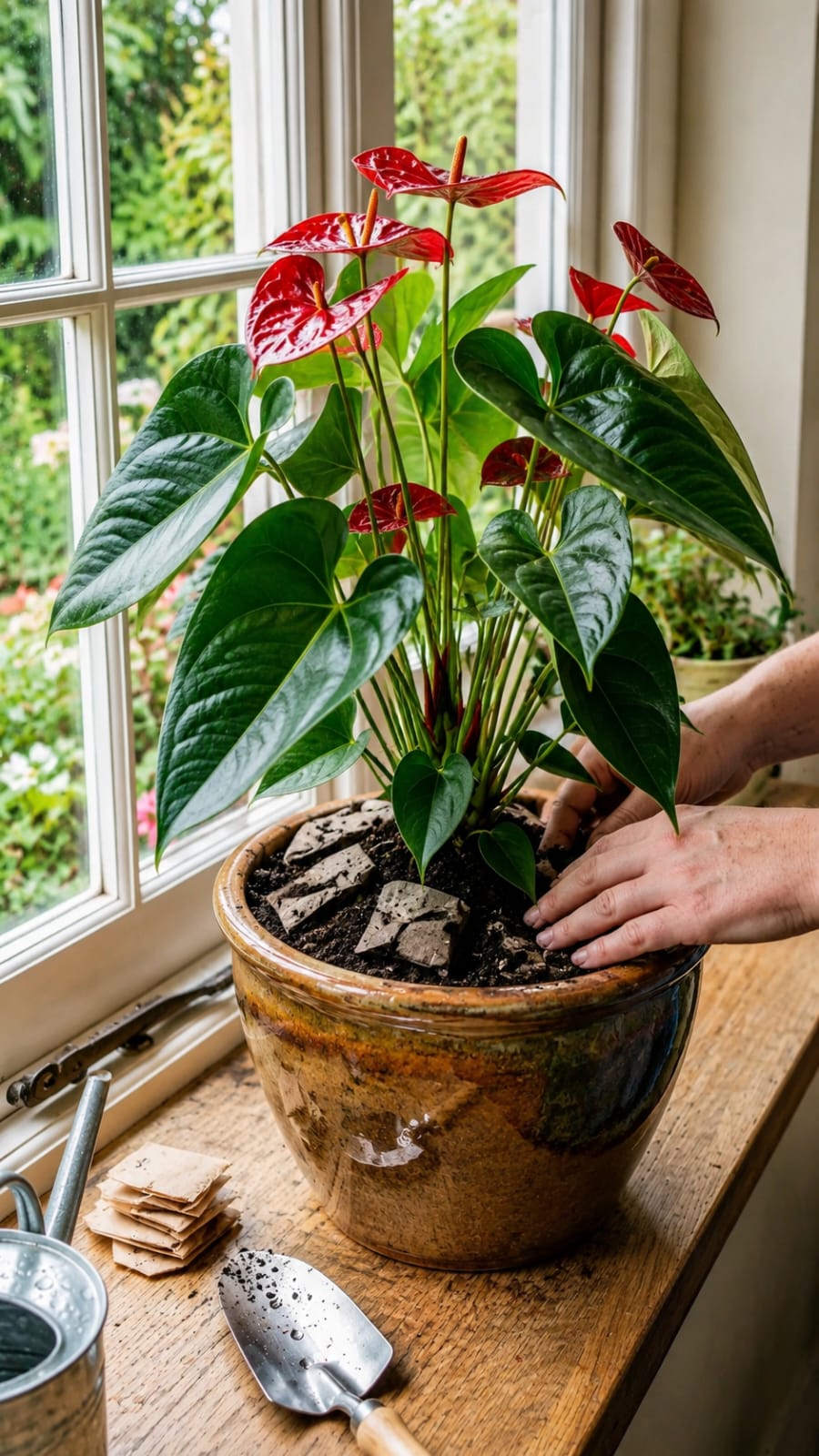
Anthuriums are excellent for indoor styling because their glossy leaves and colorful spathes look bold and tropical. A red anthurium in a warm ceramic pot feels classic and rich. A white planter creates a clean modern look. A terracotta pot feels natural and timeless. A woven basket softens the display and works well with wood, linen, and neutral interiors.
Charcoal pieces can give the soil surface a darker, cleaner appearance when used sparingly. They can pair nicely with terracotta, ceramic, and natural wood surfaces. However, the layer should look intentional, not heavy or messy.
Place the plant where it receives bright indirect light and where the leaves have space to spread. A windowsill, wooden plant table, sideboard, home office shelf, or entry console can work beautifully. Keep the leaves wiped, the spathes clean, and the soil surface tidy.
Better Alternatives for Stronger Growth
If the goal is stronger roots, use a chunky aroid mix and correct watering. If the goal is more blooms, improve bright indirect light. If the goal is cleaner leaves, wipe them with plain water. If the goal is nutrition, use a weak balanced fertilizer during active growth.
If the soil smells sour, repot into fresh mix. If the plant has brown edges, review water quality, humidity, and fertilizer strength. If the plant is not blooming, light is usually the first thing to correct.
Charcoal can be helpful, but only as one small part of a full care routine. Anthuriums reward balance, not extremes.
Final Thoughts
Adding charcoal pieces around an anthurium can be useful when the charcoal is clean, horticultural, and used lightly. It may help support a fresher, more breathable potting environment, especially when mixed into a chunky aroid blend. However, charcoal is not fertilizer, not a guaranteed bloom booster, and not a cure for poor drainage or root rot.
The real foundation of anthurium health is bright indirect light, airy potting mix, drainage holes, balanced watering, moderate humidity, clean leaves, warm stable conditions, and gentle feeding during active growth. If the plant is not blooming, improve light. If the soil is wet or sour, refresh the root zone. If the plant is healthy, use charcoal only as a light support material, not a heavy treatment.
With patient care and clean styling, anthuriums can remain stunning indoor plants for living rooms, bedrooms, apartments, home offices, bright windowsills, commercial interiors, luxury home staging, and premium plant displays. Glossy leaves, colorful spathes, tidy soil, and balanced maintenance will always create a safer and more elegant result than relying on heavy or unknown soil additives.