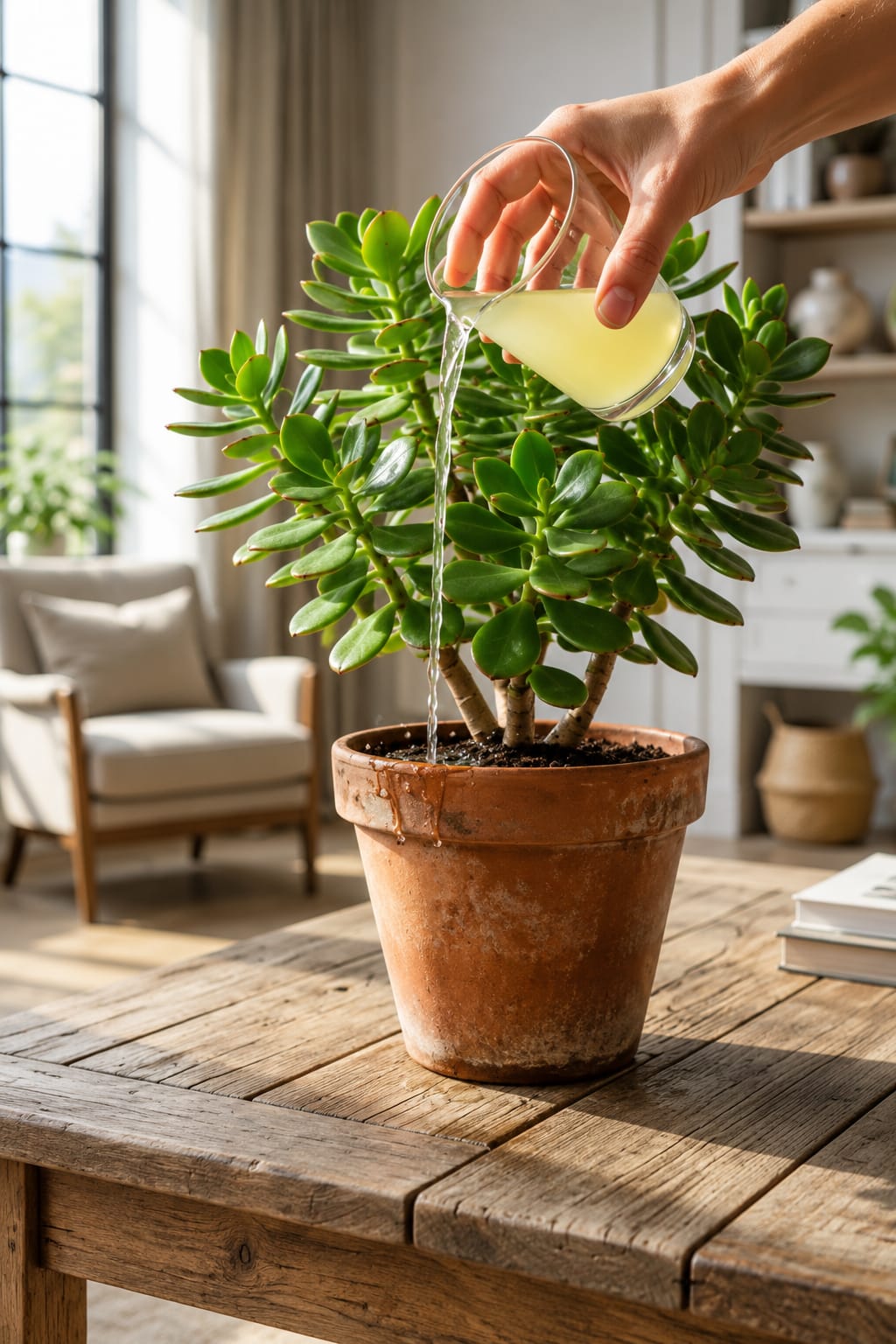
Jade plant is one of the most loved indoor succulents for homeowners who want thick glossy leaves, woody stems, a compact tree-like shape, and a calm decorative display that fits beautifully in living rooms, bedrooms, home offices, apartments, bright windowsills, sunrooms, plant shelves, entry tables, commercial interiors, luxury home staging, and premium indoor plant styling. Its rounded green leaves store water, its branches become stronger with age, and its natural bonsai-like structure can make a simple terracotta pot look warm, timeless, and elegant. When a jade plant is healthy, it does not need flowers to look beautiful. The shape alone brings structure, balance, and a natural feeling to the room.
Many plant lovers become curious when they see a light yellow liquid being poured around a jade plant. This mixture is often described as a homemade plant tonic for fuller leaves, stronger stems, brighter color, and faster growth. The liquid may be diluted banana peel water, rice water, aloe water, weak compost tea, diluted fertilizer, lemon water, or another kitchen-based mixture. Because several homemade liquids can look pale yellow, the exact ingredient matters. Jade plants are tough, but they are still succulents, and their roots can be damaged quickly by too much moisture, sour organic liquid, or strong fertilizer.
The safest way to understand this method is to treat any light yellow tonic as an optional experiment, not a miracle growth booster. A jade plant does not become fuller and stronger because of one dramatic pour. It grows best when it receives bright light, fast-draining succulent soil, drainage holes, infrequent watering, warm stable conditions, clean leaves, careful pruning, and gentle feeding during active growth. If the plant is weak, dropping leaves, turning yellow, or becoming soft, the first solution is not a homemade tonic. The first step is checking light, roots, soil moisture, drainage, and stem firmness.
Understanding Jade Plant Growth Before Using Any Tonic
Jade plants grow as drought-tolerant succulents. Their leaves and stems store water, which allows the plant to survive dry indoor conditions better than many tropical houseplants. This storage system is also the reason jade plants dislike frequent watering. Their roots need oxygen and dry-down time between waterings. When soil stays wet too long, roots can rot and the base of the stems can soften. Once the root system begins to rot, the plant may look thirsty even though the soil is wet, because damaged roots cannot absorb moisture correctly.
A healthy jade plant has firm plump leaves, sturdy branches, and a stable base. The leaves may feel slightly firm and smooth. If leaves become wrinkled, the plant may be thirsty, root-damaged, or kept too dry for too long. If leaves become yellow, mushy, and fall easily, the plant may be overwatered. These signs can be confusing, so the soil and roots should always be checked before adding any liquid. A jade plant should never be treated only by looking at the top leaves. The real story is often happening inside the pot.
A light yellow tonic may add nutrients, starches, acids, sugars, or organic residue depending on what it contains. In a succulent pot, that residue can become risky if the soil does not dry fast. Jade plants are often harmed more by extra liquid than by lack of plant food. A clean, breathable root zone is more important than a homemade mixture. This is why many experienced growers focus first on pot choice, soil texture, light exposure, and watering timing before thinking about any plant tonic.
What the Light Yellow Liquid Might Be
The yellow liquid may be banana peel water. This is often promoted as a potassium-rich plant tonic, but homemade banana peel water is unpredictable. If the peel has soaked too long, the mixture may ferment. Fermented liquid can smell sour, attract fungus gnats, and create unhealthy conditions around jade roots. Banana peel water is not a complete fertilizer, and it should not be used heavily on succulents. If it is used at all, it should be fresh, strained, very diluted, and used only when the plant already needs watering.
The liquid may be rice water. Rice water can look cloudy or pale yellow because of starch. Fresh diluted rice water may contain small traces of minerals, but it can also leave residue in the soil. If used repeatedly, that residue may encourage microbial activity or fungus gnats, especially when the potting mix stays damp. Jade plants are not heavy feeders, so repeated cloudy rice water is not usually necessary. Plain water is cleaner, safer, and easier to control.
The liquid may be aloe water. Aloe water is sometimes used as a mild homemade root-support liquid, but it should be fresh, strained, and very diluted. Thick aloe gel can become sticky in soil. Jade plants do not need sticky organic material around their roots. A light aloe rinse may seem gentle, but if the potting mix is dense or the room is cool, even mild organic liquid can remain too long around the roots. For succulents, dry airflow matters more than constant moisture.
The liquid may be diluted fertilizer. If it is a proper cactus or succulent fertilizer mixed weakly, it can be useful during spring or summer. However, jade plants are light feeders. Strong fertilizer can burn roots, cause salt buildup, and create brown edges or weak growth. Fertilizer should be applied only when the plant is actively growing, not when it is stressed, cold, shaded, newly repotted, or sitting in wet soil.
Why Succulents Need Extra Caution With Homemade Liquids
Succulents are different from moisture-loving houseplants. Jade plants prefer a dry-leaning routine. They should not be watered every time someone wants to apply a tonic. Any liquid added to the pot counts as watering. If the soil is already damp, adding more liquid can push the plant toward root rot. This is one of the most common mistakes with jade plants. People see thick leaves and assume the plant needs more food, when it often needs more light and less water.
Homemade liquids can also be inconsistent. One batch may be weak and harmless, while another may be too strong, sour, acidic, or full of residue. Store-bought fertilizer has measured nutrients, but kitchen tonics do not. This makes them harder to control in a small indoor pot. A garden bed has more soil volume and outdoor airflow. A small terracotta pot on a coffee table has much less room for mistakes. What seems natural can still become concentrated and stressful around the roots.
If a jade plant is in terracotta and gritty soil, it may tolerate occasional weak liquid better than a jade plant in dense soil or a pot without drainage. The condition of the potting mix matters more than the tonic itself. Before using any homemade mixture, it is better to ask whether the plant’s basic care is already correct. If light is weak, soil is heavy, and the pot has poor drainage, a tonic will not fix the plant. It may only add another problem.
Best Soil for Jade Plants
Jade plants need fast-draining soil. A cactus or succulent mix is a good base, but it can be improved with perlite, pumice, coarse sand, lava rock, or gritty mineral material. The goal is a mix that drains quickly and allows air to move around the roots. A good jade plant mix should not stay wet for a long time after watering. It should hold enough moisture for the roots to drink, then dry down before the next watering.
Dense regular potting soil can hold too much moisture. If a jade plant is planted in heavy soil, pouring yellow tonic into it can make the problem worse. The mixture may stay wet around the roots for too long. In that case, repotting into a gritty succulent mix is much safer than adding any homemade liquid. Many jade plant problems disappear once the soil is corrected, especially when the plant is also moved into brighter light.
Terracotta pots are often useful for jade plants because they allow moisture to evaporate through the sides. Ceramic and plastic pots can also work if they have drainage holes and the soil dries properly. A pot without drainage is risky for any jade plant, especially if tonics are used. If the decorative pot has no hole, use it only as a cover pot with a draining nursery pot inside. After watering, remove the inner pot, let it drain completely, and never allow the plant to sit in collected water.
How to Water Jade Plants Correctly
Jade plants should be watered only when the soil has dried well. Check deeper than the surface. The top may look dry while the lower soil remains damp. If the pot still feels heavy or the soil below the surface is moist, wait before watering. A moisture meter can help, but your finger, pot weight, and observation are often enough. A dry jade plant is usually easier to rescue than a rotten one.
When watering, soak the soil thoroughly and let all excess drain away. Then allow the soil to dry again before watering. Small frequent sips are not ideal. Constant surface moisture can weaken roots and encourage pests. Deep watering followed by a dry period teaches the root system to function properly. This pattern also matches the plant’s natural succulent rhythm better than constant dampness.
If using a yellow tonic, use it only when the plant already needs water. Do not add it between regular watering days. Do not pour it over wet soil. Plain water should remain the main watering method for jade plants. If a homemade liquid is used once, the next several waterings should usually be plain water so residue does not build up. The plant does not need a different kitchen mixture every week.
Best Light for Fuller Jade Growth
Bright light is one of the biggest factors in jade plant health. A jade plant kept in strong bright indirect light or gentle direct morning sun usually grows more compact and sturdy. A plant kept in low light may stretch, lean, and produce weaker stems. Light is the true energy source for growth. Without enough light, fertilizer or homemade tonics cannot create strong branches.
If the jade plant looks thin, leggy, or pale, improve light before adding fertilizer or tonic. Move it gradually to a brighter window. Sudden intense sun can burn leaves, especially if the plant has been indoors in shade for a long time. Gradual adjustment is safer. Start with brighter indirect light, then introduce gentle morning sun if the plant responds well. Rotate the pot occasionally so the plant does not lean in one direction.
Light also controls water use. A jade plant in bright light uses water faster than one in a dim room. If a plant is in low light and receives repeated yellow tonic, the soil may stay wet too long. Better light supports healthier roots and stronger leaves. This is why a bright windowsill often does more for jade plant growth than any homemade feeding trick.
Feeding Jade Plants Safely
Jade plants do not need heavy feeding. During spring and summer, a diluted cactus or succulent fertilizer can support healthy growth. The dose should be weak. Too much fertilizer can create salt buildup and root stress. A jade plant growing in bright light may appreciate light feeding during active growth, but a plant in a dim room or cold season should not be pushed with fertilizer.
Do not fertilize during winter if the plant is resting or receiving less light. Do not fertilize a plant with soft stems, wet soil, or root rot. Fertilizer helps healthy plants grow; it does not rescue damaged roots. If the plant is already struggling, feeding can make stress worse. First correct the environment, then feed later when new growth shows the plant is ready.
Homemade yellow liquids should not replace a balanced fertilizer. Banana peel water, rice water, and aloe water do not provide a reliable nutrient profile. If the plant needs feeding, use a measured fertilizer designed for plants. If the plant is already healthy and you still want to experiment, keep the mixture weak, rare, and never stronger than the plant can tolerate.
Why Banana Peel Water Is Not a Miracle
Banana peel water is often promoted as a quick potassium booster. However, soaking banana peels in water does not create a balanced fertilizer. The nutrient amount is uncertain, and the mixture may contain sugars or organic compounds that break down in the soil. In a small pot, these compounds can become a problem if used repeatedly. Jade roots do not need sweet liquid around them.
For a jade plant, the biggest risk is moisture and residue. If banana peel water is used too often, the soil can become sour or sticky. Fungus gnats may become more likely if the surface stays damp and organic residue accumulates. A fresh banana peel liquid may seem harmless, but if it smells fermented or unpleasant, it should be discarded. A plant tonic should never smell like spoiled food.
If banana peel water is used at all, it should be fresh, strained, diluted, and rare. It should never smell fermented. It should never be poured into wet soil. For most jade plants, proper light and a weak succulent fertilizer are better options. The plant’s thick leaves and woody stems are built by months of steady care, not one banana peel soak.
Why Lemon Water Should Be Avoided
If the yellow liquid is lemon water, it should be avoided for jade plants. Lemon juice is acidic and can irritate roots if used strongly. It can also disturb the soil environment. Jade plants do not need acidic citrus treatments to grow well. The root system prefers stability, drainage, and oxygen.
Lemon water may also leave residue and can damage leaves if splashed onto them in bright light. If lemon touches the foliage, wipe it away with plain water. The leaves should remain clean and natural. Citrus liquid should not be used as a leaf shine, soil drench, or pest treatment for jade plants. There are safer options for all of those goals.
Jade plants grow best with stable, simple care. Citrus shortcuts are unnecessary and can create stress in a small succulent pot. If the plant is weak, the problem is more likely light, watering, soil, or roots. Lemon will not solve those issues.
When Yellow Tonic Should Be Avoided Completely
Yellow tonic should be avoided if the soil is damp, the pot has no drainage, the plant has yellow soft leaves, leaves are dropping easily, stems are mushy, the base is soft, fungus gnats are present, the soil smells sour, or the plant is in low light. These signs suggest the plant is already vulnerable. Adding more liquid during this stage can push the plant further into decline.
It should also be avoided during cold weather or winter dormancy. Jade plants use less water when growth slows. Extra liquid can stay around the roots too long. During short days, lower temperatures, and weak indoor light, a jade plant should usually be watered less often, not treated more often. Rest is part of the plant’s natural rhythm.
Do not use fermented mixtures, sweetened mixtures, salty liquids, oily mixtures, milk-based liquids, vinegar, lemon juice, or unknown kitchen tonics. If the liquid smells bad, it does not belong in the pot. If you cannot identify the mixture clearly, do not use it. Simple plain water is safer than guessing.
What to Do If Too Much Tonic Was Used
If a small amount was used once and the plant looks healthy, stop using it and let the soil dry properly before watering again. Watch for leaf drop, softness, sour odor, mold, or fungus gnats over the next few weeks. Do not panic immediately. One small mistake may not harm a healthy jade plant if the soil drains well and the pot dries quickly.
If a large amount was poured into a pot with drainage, let the excess drain fully. Do not water again until the soil dries well. If the liquid was thick, sugary, or fermented, repotting may be safer because residue can stay in the soil. When repotting, handle the plant gently and avoid breaking heavy branches. Jade stems can snap if the plant is tilted roughly.
If the stems soften or the leaves become mushy, remove the plant from the pot and inspect the roots. Healthy roots should be firm. Rotten roots should be removed with clean tools. Repot into fresh dry succulent mix and wait before watering so damaged areas can callus and stabilize. A recovering jade plant needs warmth, bright indirect light, and patience. It should not receive more tonic while it is recovering.
Continue to Page 2
Continue to page 2 for more details about this article and the key points many readers miss on the first page.