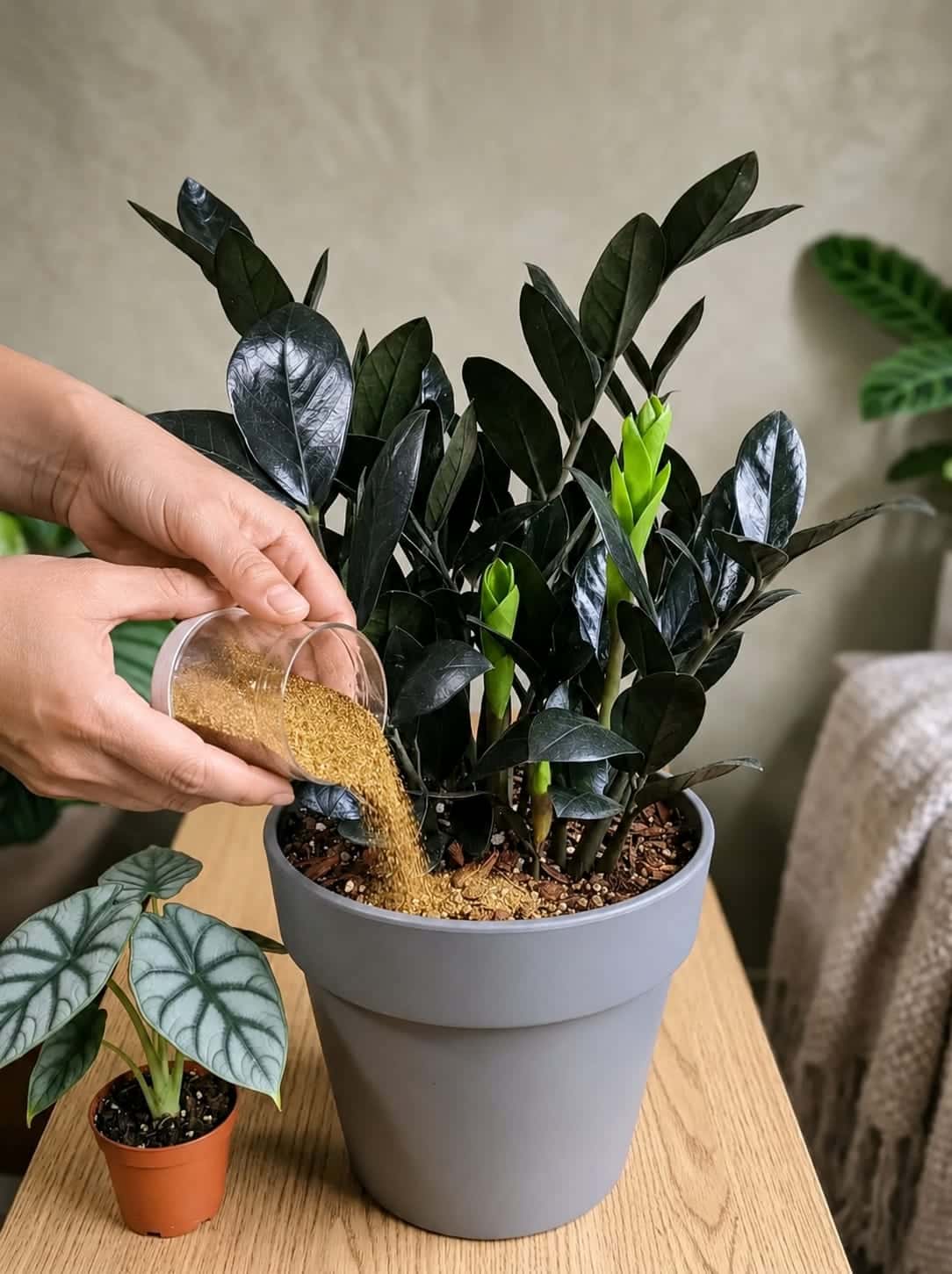
ZZ plant is one of the most dependable indoor plants for homeowners who want glossy leaves, upright stems, slow but strong growth, and a polished decorative display that fits beautifully in living rooms, bedrooms, home offices, apartments, entry corners, bright shelves, commercial interiors, luxury home staging, and premium indoor plant styling. Its thick stems and waxy leaves create a sculptural look that feels modern, calm, and expensive even when the plant is placed in a simple gray, white, black, terracotta, or woven planter.
Many plant lovers become curious when they see a golden brown powder being poured around a ZZ plant. This type of powder is often described as a homemade soil booster for stronger roots, darker leaves, more new shoots, cleaner growth, and a fresher indoor display. The powder may be cinnamon, crushed dried banana peel, coffee grounds, turmeric, worm castings, organic fertilizer, slow-release fertilizer, or another dry plant amendment. Because many powders can look similar, the exact ingredient matters. ZZ plants are tough, but their underground rhizomes are sensitive to wet soil, strong fertilizer, salt buildup, and decaying organic residue.
The safest way to understand this method is to treat golden powder as an optional soil amendment, not a miracle growth trick. A ZZ plant does not produce new shoots because one cup of powder is poured across the soil. It grows best when it receives bright indirect light, a pot with drainage holes, fast-draining soil, infrequent watering, warm stable conditions, clean leaves, and gentle feeding only during active growth. If the plant is already healthy, it may not need anything extra. If the plant is weak, yellowing, soft at the base, or not producing new growth, the first step is checking roots, soil moisture, light, and drainage.
Understanding ZZ Plant Roots Before Adding Powder
ZZ plants grow from thick underground rhizomes that store water and energy. These rhizomes are one of the reasons the plant survives dry indoor air and missed waterings so well. They also explain why ZZ plants can decline when the soil remains wet for too long. The rhizomes should feel firm and healthy. If they become soft, mushy, dark, or foul-smelling, the plant may have root or rhizome rot.
A healthy ZZ plant often grows slowly. New shoots can appear suddenly after a long quiet period, especially when the plant is warm, stable, and receiving enough indirect light. Slow growth does not always mean the plant needs powder. ZZ plants naturally take their time, and trying to force them with heavy homemade amendments can cause more harm than good.
Before adding any golden powder, the soil should be checked carefully. If the soil is damp, compacted, sour-smelling, moldy, or full of fungus gnats, do not add powder. The plant may already have a root-zone problem. Adding organic material to unhealthy soil can make the situation worse by feeding mold, trapping moisture, or attracting pests.
What the Golden Powder Might Be
The golden powder may be cinnamon. Cinnamon is often used by plant owners because it has a clean scent and is commonly described as a natural freshness support. A tiny amount may be used on cut surfaces or lightly on dry soil, but heavy cinnamon powder across a ZZ plant pot is unnecessary. It can create residue and does not feed the plant.
The powder may be crushed dried banana peel. Banana peel powder is often promoted as a potassium-rich fertilizer, but homemade banana peel powder is not a balanced plant food. If it is not fully dried and finely processed, it can mold or attract gnats. ZZ plants do not need heavy fruit-based soil amendments.
The powder may be coffee grounds. Used coffee grounds can look brown and granular. They are often promoted online as a natural fertilizer, but they can compact, hold moisture, and encourage fungus gnats in indoor pots if used heavily. ZZ plants are dry-leaning plants and do not benefit from thick layers of damp coffee grounds.
The powder may be worm castings or organic fertilizer. Worm castings can be useful when used lightly, but they still add organic matter and moisture-holding material. A thin amount mixed into soil is different from a heavy layer poured over the surface. Slow-release fertilizer may also appear tan or golden, but it must be used according to the label because too much can burn roots.
Why Heavy Powder Layers Can Be Risky
A thick layer of powder on top of ZZ plant soil can hide the real moisture condition below. The surface may look dry while the lower soil stays wet. This can lead to accidental overwatering. ZZ plants are especially vulnerable to hidden wetness because their rhizomes dislike constant moisture.
Powders can also clump when watered. Clumps may create a crust on the soil surface, reducing airflow and keeping moisture trapped. If the powder is organic, such as banana peel, coffee grounds, flour-like plant material, or unprocessed compost, it can break down and create odor or fungus gnats.
If the powder is fertilizer, too much can create salt buildup. ZZ plants are light feeders. Strong feeding can cause yellowing, brown leaf tips, weak growth, and root stress. The plant may look like it needs more care, when the real issue is too much added material.
Why Cinnamon Should Be Used Carefully
Cinnamon is often shown in houseplant care because it feels safe and natural. It may be useful in tiny amounts for surface freshness, but it should not be treated as a complete soil treatment. It does not replace fertilizer, drainage, light, or correct watering.
If cinnamon is poured heavily into a ZZ plant pot, it can sit on the soil and create a dusty layer. When watered, it can form clumps. It may also irritate sensitive roots if used excessively. A small dusting is very different from a large amount.
For ZZ plants, cinnamon is usually unnecessary unless there is a specific reason, such as lightly dusting a cut stem or small wound after trimming. Even then, the plant should be kept dry and clean afterward.
Why Coffee Grounds Are Not Ideal for ZZ Plants
Coffee grounds are often promoted as a plant fertilizer, but they are not ideal for ZZ plants in indoor pots. They can hold moisture, compact the soil surface, and encourage fungus gnats if used in thick layers. ZZ plants need a breathable root zone, not a dense organic blanket.
Used coffee grounds may also contribute to uneven moisture. A damp layer on top can stay wet while the deeper potting mix dries differently. This makes watering harder to judge. If the pot is already slow to dry, coffee grounds can increase root risk.
If coffee grounds are used at all, they should be composted first and used as part of a well-balanced compost system, not poured directly and heavily into a ZZ plant pot. For most indoor ZZ plants, a measured fertilizer is safer.
Why Banana Peel Powder Needs Caution
Banana peel powder may sound like a natural potassium booster, but it should be used with caution. It must be fully dried, finely ground, and applied very lightly. If any moisture remains in the peel material, it can mold. If the powder is used too heavily, it may attract pests or create residue.
ZZ plants do not need large amounts of potassium from homemade peel powder. They need balanced care. A plant with poor light will not produce strong new shoots just because banana peel powder is added. A plant with wet soil will not recover because fruit powder is poured on top.
If the goal is feeding, a diluted balanced houseplant fertilizer during active growth is more predictable. Homemade fruit powders can be inconsistent and may create more problems than benefits in a small pot.
When Worm Castings Can Be Useful
Worm castings are one of the safer organic amendments when used correctly. They can add mild nutrients and improve soil biology. However, ZZ plants still need a dry-leaning, fast-draining mix. A heavy layer of worm castings can hold moisture and make the surface dense.
If using worm castings, apply a very thin layer and gently work it into the top of the mix without damaging roots. Use it during active growth, not in winter or when the plant is stressed. Do not pile it directly against stems.
Worm castings should smell earthy, not sour or rotten. If any organic amendment smells bad, do not use it indoors. A clean plant display should never smell like decay.
Best Soil for ZZ Plants
ZZ plants prefer a fast-draining mix. A regular indoor potting mix can be improved with perlite, pumice, orchid bark, lava rock, or cactus mix. The goal is a soil blend that drains well and allows oxygen around the rhizomes. A dense, muddy mix can hold too much water and create rot risk.
If the soil is old, compacted, or sour-smelling, adding golden powder will not fix it. Repotting into fresh airy mix is safer. During repotting, inspect the rhizomes and roots. Healthy rhizomes should be firm. Rotten sections should be removed with clean tools.
The pot should have drainage holes. Decorative pots without drainage are risky because water can collect at the bottom. For a stylish display, use a draining inner pot inside a decorative outer pot and empty any runoff after watering.
Watering ZZ Plants Correctly
ZZ plants should be watered only after the soil has dried well. They store water in their rhizomes, so they do not need frequent watering. Water thoroughly when needed, allow excess to drain completely, and then wait until the soil dries again.
If a powder has been added to the soil surface, watering should be done even more carefully. Water can dissolve fertilizer, activate organic material, or create clumps. If the powder is unknown, remove it before watering. Plain water should remain the main watering method.
Do not give frequent small sips. Light surface watering can keep powder damp while leaving the deeper root zone uneven. ZZ plants prefer a clear wet-dry cycle, not constant surface moisture.
Best Light for New ZZ Plant Shoots
ZZ plants tolerate low light, but they grow better in bright indirect light. A plant in a brighter position is more likely to produce new shoots than one kept in a dark corner. Low-light survival is not the same as active growth.
If the plant is not producing new stems, improve light before adding powder. Move it gradually near a brighter window with filtered light. Avoid harsh direct afternoon sun because leaves can scorch, especially if the plant has been kept in shade.
Good light also helps soil dry properly. A ZZ plant in low light uses water slowly. Adding powder and water in a dim room can keep the soil damp longer than expected. Better light supports healthier roots and more balanced growth.
Feeding ZZ Plants Safely
ZZ plants are light feeders. During spring and summer, a diluted balanced houseplant fertilizer can support growth. Use a weak dose. Too much fertilizer can burn roots and cause leaf problems. Fertilizer should support healthy growth, not force it.
Do not fertilize a ZZ plant with wet soil, root rot, yellowing from overwatering, or soft rhizomes. Feeding a stressed plant can make the problem worse. Correct the root environment first.
If the golden powder is slow-release fertilizer, use only the recommended amount. Do not guess. Do not pour a full cup around the plant unless the product label specifically says that amount is safe for that pot size. Most indoor pots need much less.
How to Keep ZZ Plant Leaves Glossy
ZZ plant leaves are naturally shiny. Dust can dull their surface and reduce light absorption. Wipe the leaves gently with a soft damp cloth. Support stems while cleaning so they do not bend or snap.
If golden powder lands on the leaves, wipe it away. Powder residue can make the plant look dusty and neglected. A premium ZZ plant display should show clean, dark, glossy leaves.
Avoid oily leaf shine products. They can attract dust and create an artificial coating. Plain water and a soft cloth are enough to keep ZZ leaves looking elegant.
When Golden Powder Should Be Avoided Completely
Golden powder should be avoided if the ingredient is unknown. It should also be avoided if the soil is damp, the pot lacks drainage, the plant has soft stems, yellowing leaves, fungus gnats, mold, sour smell, or slow-drying soil. These signs suggest the root zone may already be stressed.
It should also be avoided during winter or low-light periods when the plant is growing slowly. Extra amendments can sit in the soil longer and create buildup. ZZ plants need less feeding and less water during slow seasons.
Do not use turmeric, flour, sugar, spice blends, curry powder, table salt, baking soda, coffee grounds, spoiled kitchen scraps, or unknown powders. Kitchen ingredients can look natural but still damage indoor plant soil.
What to Do If Too Much Powder Was Added
If a small amount was added once and the plant looks healthy, stop adding more and monitor the soil. Let the pot dry properly before watering again. Watch for odor, gnats, mold, yellowing, or soft stems.
If a heavy layer was added, gently remove the excess from the soil surface. Replace the top layer with fresh airy mix if needed. If the powder was fertilizer and the plant was watered afterward, watch for signs of fertilizer burn such as yellowing or brown tips.
If the soil smells sour or gnats appear, repotting may be safer. Remove the plant from the pot, inspect the rhizomes, remove damaged roots, and repot into fresh fast-draining mix. Do not add more powder during recovery.
Indoor Decor and Styling Ideas
ZZ plants are perfect for modern indoor styling because their upright stems and glossy leaves create a bold, clean shape. A gray pot gives a calm contemporary look. A black planter creates dramatic contrast. A white ceramic pot feels bright and minimal. A terracotta pot adds warmth. A woven basket softens the display.
Place the plant where it receives bright indirect light and where the leaves can reflect natural brightness. A living room side table, bedroom corner, office shelf, entry console, or plant stand can work beautifully. ZZ plants also pair well with calatheas, pothos, snake plants, peace lilies, and philodendrons.
For a premium display, keep the soil surface tidy. A thin, clean top dressing may look nice, but piles of powder can look messy and make care harder. Healthy glossy leaves and clean soil create the best luxury plant look.
Continue to Page 2
Continue to page 2 for more details about this article and the key points many readers miss on the first page.