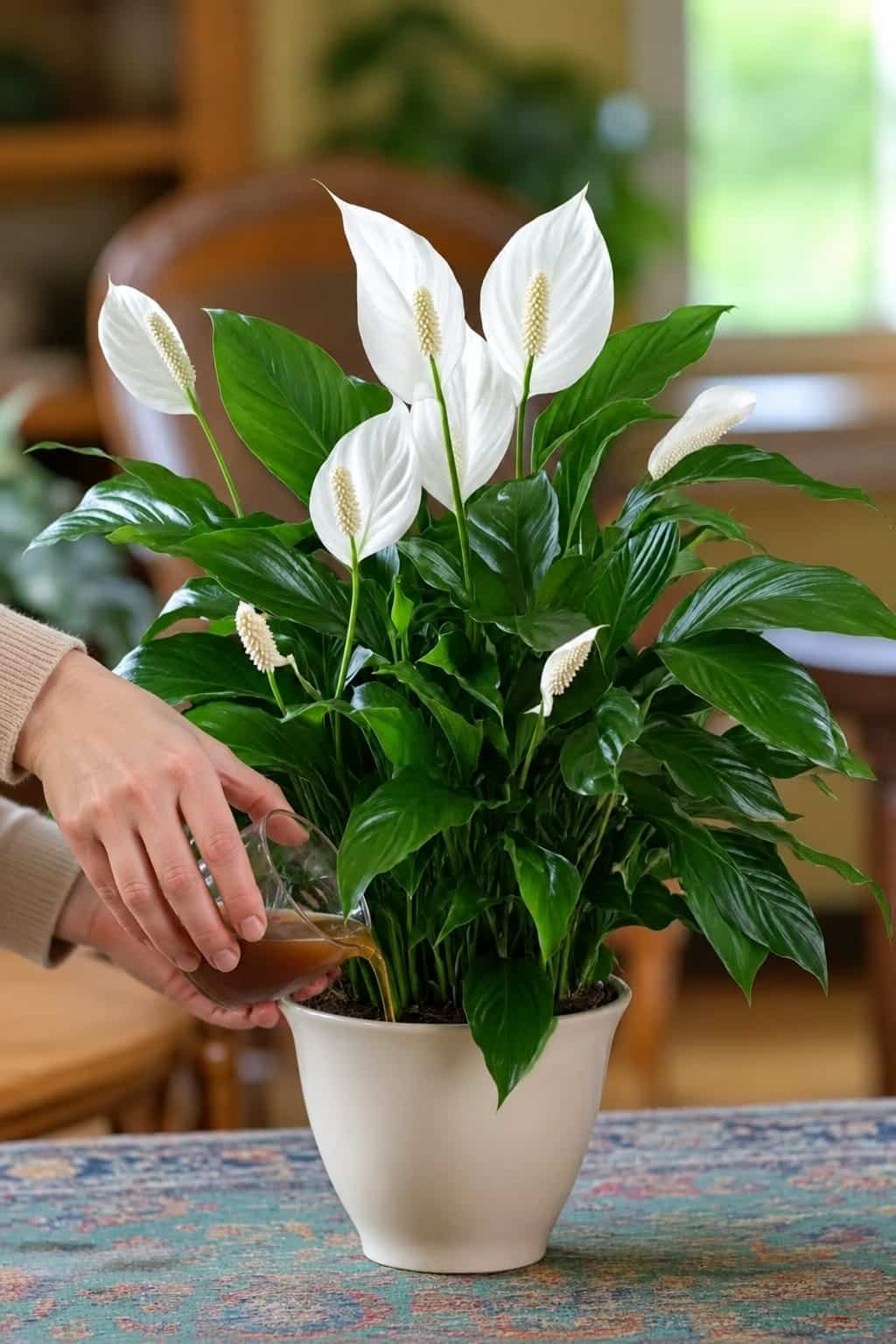
Peace lily is one of the most elegant indoor plants for homeowners who want glossy green leaves, graceful white blooms, soft tropical texture, and a clean decorative display that fits beautifully in living rooms, bedrooms, apartments, home offices, bright kitchens, entry tables, plant shelves, commercial interiors, luxury home staging, and premium indoor plant styling. Its deep green foliage brings freshness into a room, while the white spathes create a calm, polished look that feels simple, bright, and refined.
Many plant lovers become curious when they see a brown liquid being poured around the base of a peace lily. This type of mixture is often described as a homemade tonic for bigger blooms, darker leaves, stronger roots, and healthier indoor growth. The brown liquid may be compost tea, diluted liquid fertilizer, worm casting tea, banana peel water, coffee water, black tea, cinnamon water, seaweed fertilizer, or another homemade mixture. Because many brown liquids look similar, the exact ingredient matters. Peace lilies enjoy consistent moisture more than succulents, but they can still be harmed by strong fertilizer, sour organic liquids, stale mixtures, and anything that damages the root zone.
The safest way to understand this method is to treat the brown liquid as an optional feeding or soil-refreshing idea, not a miracle bloom booster. A peace lily does not become full of flowers because of one dramatic pour. It grows and blooms best when it receives bright indirect light, evenly moist but not soggy soil, drainage holes, moderate humidity, clean leaves, stable warmth, and gentle feeding during active growth. If the plant is already blooming and healthy, the routine should stay simple. If the plant is weak, drooping, yellowing, or not flowering, the first step is checking light, watering, soil condition, drainage, and root health before adding homemade tonics.
Why Peace Lilies Respond Strongly to Root Care
Peace lilies are tropical foliage plants with root systems that prefer steady moisture and oxygen. They are not dry-loving succulents, but they also do not like sitting in stagnant water. Their roots need a balanced environment where the soil stays lightly moist, drains well, and allows air movement. When the soil becomes waterlogged, the roots can suffocate and rot. When the soil becomes too dry for too long, the leaves can collapse dramatically.
This is why peace lily care often feels emotional to plant owners. A peace lily can droop suddenly when thirsty, then lift again after proper watering. However, repeated drooping can stress the plant. The goal is not to let it wilt every time before watering. The goal is to keep the soil evenly moist without turning it soggy.
Any brown liquid poured into the pot affects this root environment. If the mixture is gentle, fresh, and used only when the plant needs watering, it may be tolerated. If the mixture is strong, fermented, thick, sugary, or used too often, it can create root stress, fungus gnats, odor, salt buildup, and yellow leaves.
What the Brown Liquid Might Be
The brown liquid may be compost tea. Compost tea can contain mild nutrients and organic compounds, but its safety depends on how it was made. A fresh, weak, earthy-smelling compost tea may be less risky than a sour or fermented one. If it smells rotten, alcoholic, or unpleasant, it should not be poured into an indoor peace lily pot.
The liquid may be worm casting tea. Worm castings are often gentle compared with strong fertilizers, and a weak worm casting tea may support soil life when used carefully. However, it should still be fresh and diluted. Too much organic liquid can encourage fungus gnats if the soil stays wet.
The brown liquid may be coffee water or weak black tea. These are often promoted as natural plant tonics, but they should be used cautiously. Coffee and tea can contain compounds that affect soil conditions, and repeated use may contribute to buildup. Peace lilies do not need coffee to bloom. If used at all, it should be very weak, unsweetened, cooled, and rare.
The liquid may also be diluted fertilizer or seaweed fertilizer. These can be useful if measured correctly. Peace lilies can benefit from gentle feeding during spring and summer, but strong fertilizer can burn roots and cause brown leaf tips. A weak, balanced houseplant fertilizer is usually safer than unknown homemade brown liquids.
Why Brown Tonics Can Be Helpful Only When Used Correctly
A brown tonic may help only if it is clean, weak, fresh, and used at the right time. Peace lilies can appreciate gentle nutrients during active growth, especially when they have enough light to use those nutrients. If the plant is producing fresh leaves and flowers, a mild feeding routine can support continued growth.
However, feeding is not the same as fixing problems. If a peace lily is drooping because the soil is dry, it needs water. If it is yellowing because the roots are soggy, it needs better drainage and root care. If it is not blooming because the room is too dark, it needs brighter indirect light. A brown liquid cannot replace correct diagnosis.
The best use of any mild tonic is as a rare supplement for a healthy plant, not a rescue treatment for a stressed plant. If the plant is already struggling, keep the care simple until the root zone is stable.
Why Homemade Brown Liquids Can Be Risky Indoors
Indoor pots are small environments. Anything added to the soil can remain around the roots longer than expected. Organic liquids can break down, smell sour, attract fungus gnats, and encourage mold when the potting mix stays wet. Peace lilies like moisture, but they still need clean moisture.
Homemade tonics can also vary in strength. One batch may be weak, while another may be too concentrated. A mixture made from banana peels, coffee grounds, compost, tea leaves, or kitchen scraps can become unpredictable quickly. If the liquid is old or has been sitting too long, it may be fermenting.
A plant tonic should smell mild and clean. If it smells spoiled, it should be discarded. A sour homemade mixture is not plant food. It is decay, and decay inside a decorative indoor pot can create root problems and unpleasant odors in the home.
Best Light for Peace Lily Blooms
Bright indirect light is one of the most important factors for peace lily blooming. A peace lily can survive in lower light, but it usually blooms better when it receives more brightness without harsh direct sun. If the plant has glossy leaves but few flowers, the issue is often light, not lack of tonic.
A bright room near a window with filtered light is ideal. Morning light can be helpful. Harsh afternoon sun can scorch leaves and brown the white spathes. If the plant is near a window, a sheer curtain can soften strong light while still giving the plant the energy it needs.
Brown liquid will not create blooms in a dark corner. Flowers require energy, and light is the plant’s main energy source. Before feeding, make sure the plant has enough brightness to use the nutrients.
Watering Peace Lilies Correctly
Peace lilies prefer evenly moist soil, but the pot should never stay soggy. Water when the top part of the soil begins to dry, then water thoroughly until excess drains from the bottom. Empty the saucer after watering so the roots do not sit in standing water.
If a brown liquid is used, it should count as watering. Do not water the plant first and then add tonic on top unless the pot is dry enough to need that amount of moisture. Too much liquid can suffocate roots even when the plant is moisture-loving.
The soil should feel lightly moist, not muddy. If the leaves droop and the soil is dry, the plant likely needs water. If the leaves droop and the soil is wet, the roots may be stressed. These two situations look similar above the soil but require opposite responses.
Best Soil for Peace Lilies
Peace lilies grow best in a rich but airy potting mix. A good indoor mix should hold moisture while still draining well. Regular potting soil can be improved with perlite, orchid bark, coco coir, or fine bark to create better air movement around the roots.
If the soil is dense, compacted, sour-smelling, or slow to dry, brown tonic will not fix it. The plant may need fresh soil. Old soil can hold too much water, collect salts, and make root problems more likely. Repotting into a fresh airy mix often helps more than any homemade liquid.
The pot should have drainage holes. A decorative pot without drainage can trap water at the bottom. Peace lilies need moisture, but they do not want stagnant water. A draining inner pot inside a decorative cover pot is usually the safest and most stylish option.
Feeding Peace Lilies Safely
Peace lilies can benefit from gentle feeding during active growth, especially in spring and summer. Use a balanced houseplant fertilizer at a weak dose. Too much fertilizer can cause brown leaf tips, yellowing, salt buildup, and root burn. More feeding does not mean more flowers.
If the brown liquid is diluted fertilizer, follow the label carefully. Use less rather than more. Peace lilies are sensitive to overfeeding, and white blooms can be affected when the plant is stressed. A light feeding schedule is better than strong occasional doses.
Do not fertilize a peace lily that is wilted from dry soil, sitting in wet soil, recently repotted, or showing root rot symptoms. Stabilize watering and roots first. Fertilizer supports healthy growth, but it does not rescue damaged roots.
Can Coffee Help Peace Lilies?
Coffee is often promoted as a plant booster, but it should be used carefully. Used coffee water may be acidic and may contain compounds that are not necessary for peace lily care. Repeated coffee use can contribute to soil imbalance or buildup. Coffee grounds can compact and encourage fungus gnats if placed heavily on the soil surface.
If coffee is used at all, it should be plain, unsweetened, cooled, very diluted, and rare. It should never contain milk, sugar, cream, flavoring, or artificial sweetener. These additions can harm the soil and attract pests.
For most peace lilies, coffee is unnecessary. A proper balanced fertilizer is cleaner and more predictable. If the plant is not blooming, improve light before trying coffee.
Can Compost Tea Help Peace Lilies?
Compost tea may support soil health when it is fresh, weak, and clean-smelling. Peace lilies can tolerate richer conditions than snake plants or ZZ plants, but indoor pots still need caution. Compost tea that is too strong or old can smell bad and introduce unwanted problems.
If compost tea is used, apply it only when the plant needs watering. Do not use it weekly unless the plant is actively growing, the mix drains well, and there are no signs of fungus gnats or odor. A little is enough.
If the potting mix is already old or compacted, compost tea is not the answer. Fresh soil and correct watering are more important.
Can Banana Peel Water Help Peace Lilies?
Banana peel water is often described as a potassium source. Potassium is part of plant nutrition, but banana peel water is not a complete fertilizer. It can also ferment if left too long. Fermented peel water may smell sour and attract pests.
If banana peel water is used, it should be fresh, strained, diluted, and rare. It should never be thick, cloudy with pulp, or unpleasant-smelling. Do not pour banana peel water into already wet soil.
A peace lily that needs blooms will benefit more from bright indirect light and balanced feeding than from banana peel water alone. Homemade peel water cannot replace a complete care routine.
When Brown Liquid Should Be Avoided Completely
Brown liquid should be avoided if the soil is already wet, the pot lacks drainage, the plant has yellowing lower leaves, sour-smelling soil, fungus gnats, mold, black roots, or mushy stems. These signs suggest the root zone may already be stressed. Adding more organic liquid can make the problem worse.
It should also be avoided in low-light rooms, cold rooms, and during winter if the plant is growing slowly. When light is weak, the plant uses water and nutrients more slowly. Extra feeding can build up in the soil instead of helping growth.
Do not use liquids made with sugar, milk, cream, salt, oil, vinegar, lemon juice, alcohol, spoiled food scraps, or unknown ingredients. If the mixture smells bad, do not use it.
What to Do If Too Much Brown Liquid Was Used
If a small amount was used once and the plant looks healthy, stop using it and return to plain water. Let the soil reach the correct moisture level before watering again. Watch for odor, fungus gnats, yellowing, or drooping.
If a large amount was poured into the pot, check drainage. If the pot drains well, let the liquid run through and remove all runoff. Do not let the plant sit in the tray. If the liquid was thick, sour, or full of particles, repotting may be safer.
If the soil smells unpleasant or gnats appear, remove the top layer of soil and replace it with fresh mix. If the problem continues, repot completely and inspect the roots. Rotten roots should be trimmed with clean tools.
Cleaning Peace Lily Leaves
Peace lily leaves are glossy and beautiful when clean. Dust can dull their appearance and reduce light absorption. Wipe the leaves gently with a soft damp cloth. Support each leaf while cleaning so it does not tear.
If brown liquid splashes onto the leaves, wipe it away before it dries. Homemade liquids can leave residue or sticky marks. The leaves should look naturally shiny, not coated.
Avoid oily leaf shine products. They can attract dust and interfere with the leaf surface. Plain water and a soft cloth are enough to keep peace lily leaves fresh and polished.
How to Keep White Blooms Looking Elegant
Peace lily white spathes look best when they are kept dry and clean. Avoid pouring or spraying tonic over the blooms. Liquid can spot the white surface and make the flowers age faster. Water should go into the soil, not over the flowers.
As blooms mature, they naturally turn green, cream, or brown. This is normal. Remove old spent blooms by cutting the stem near the base with clean scissors. This keeps the plant tidy and allows energy to support new leaves and future blooms.
If blooms are small or rare, improve light and use gentle feeding during active growth. Do not rely on heavy brown tonics. Healthy blooms come from steady care.
Continue to Page 2
Continue to page 2 for more details about this article and the key points many readers miss on the first page.