Humidity and Airflow
Peace lilies appreciate moderate humidity. Dry indoor air can cause brown leaf tips or curled edges. A humidifier, pebble tray, or grouping plants together can help. However, humidity should not mean stagnant wet conditions. Airflow is still important.
If the room is humid and the soil stays wet, reduce watering frequency. A peace lily likes moisture, but roots still need oxygen. If the plant is in a bathroom or kitchen, check soil carefully before adding any tonic.
Good airflow helps prevent mold, stale soil, and fungal problems. A fresh, balanced environment is better than repeated homemade treatments.
Indoor Decor and Styling Ideas
Peace lilies are perfect for soft elegant indoor styling because their glossy leaves and white blooms suit many decor styles. A white ceramic pot creates a clean classic look. A textured cream planter feels warm and modern. A black pot creates strong contrast. A woven basket adds natural softness.
Place the plant where it receives bright indirect light and can be seen from the room. A dining table, living room side table, bedroom dresser, office shelf, entry console, or plant stand can work beautifully. Peace lilies also pair well with pothos, snake plants, ZZ plants, calatheas, and rubber plants.
For a premium display, keep the leaves clean, remove old blooms, wipe the pot, and avoid visible tonic spills. A tidy peace lily looks more luxurious than one with sticky soil residue or stained leaves.
Common Mistakes With Brown Tonics
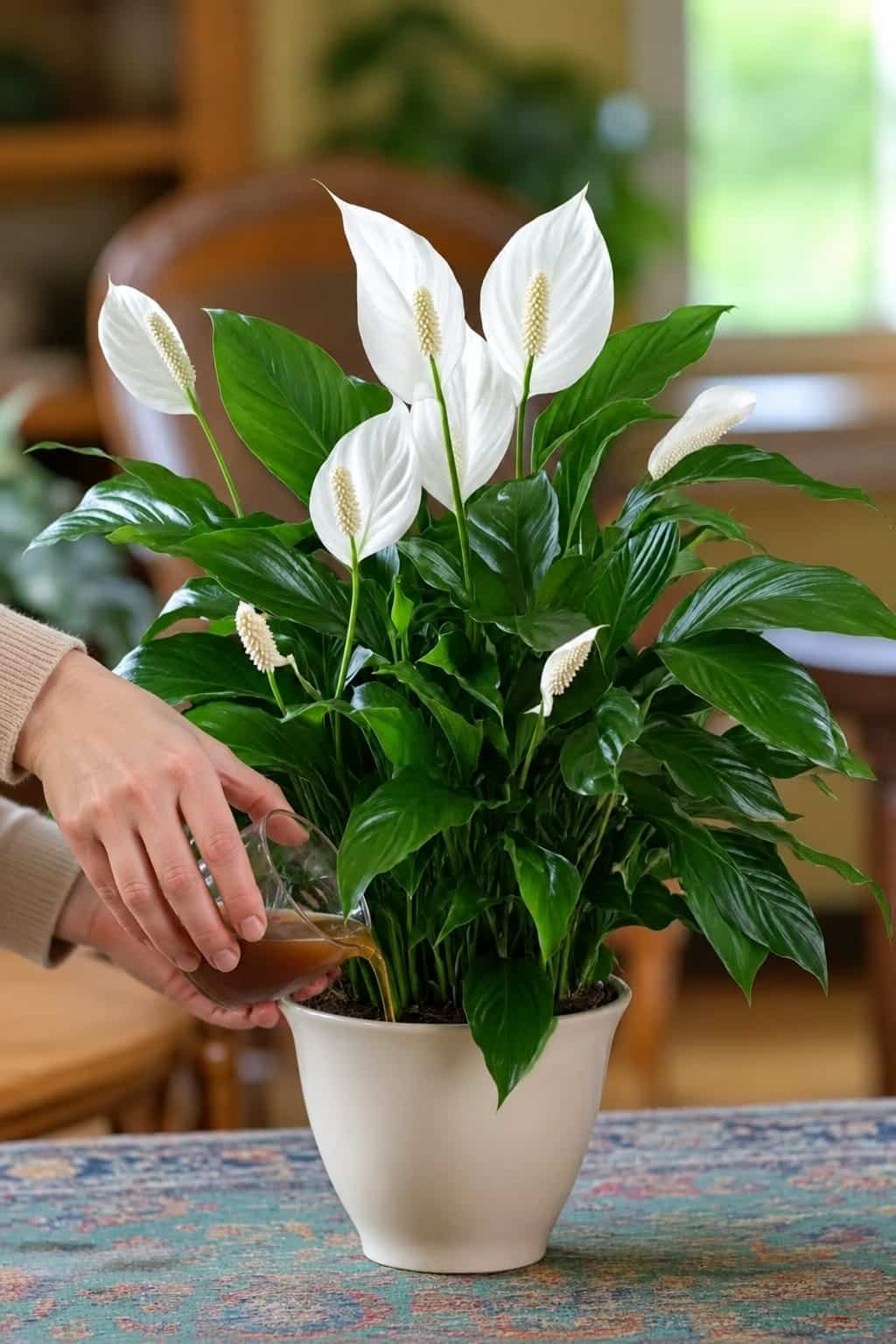
One common mistake is using brown tonic too often. Peace lilies can benefit from feeding, but they do not need constant homemade liquids. Another mistake is pouring tonic into wet soil. This can create soggy roots. A third mistake is using fermented mixtures that smell sour.
A fourth mistake is using tonic to fix low light. No liquid can replace brightness. A fifth mistake is using coffee or tea with sugar, milk, or flavoring. A sixth mistake is ignoring drainage. Without drainage, any liquid can become dangerous.
A seventh mistake is expecting instant blooms. Peace lilies bloom when mature, healthy, well lit, and properly cared for. Blooms are the result of steady conditions, not one quick pour.
Better Alternatives for Stronger Peace Lily Growth
If the goal is fuller leaves, provide bright indirect light and consistent moisture. If the goal is bigger blooms, improve light and feed gently during active growth. If the goal is healthier roots, use airy soil and a pot with drainage. If the goal is glossy leaves, clean them with plain water.
If the plant is drooping, check whether the soil is dry or wet before responding. If yellow leaves appear, inspect watering and roots. If leaf tips turn brown, review water quality, humidity, and fertilizer strength. If the soil smells sour, repot.
These steps solve real problems more safely than unknown brown liquids. Peace lilies reward stable care, not constant experiments.
Final Thoughts
A brown liquid around a peace lily may look like a simple natural bloom booster, but it should be used carefully. The mixture could be compost tea, worm casting tea, coffee water, black tea, banana peel water, cinnamon water, seaweed fertilizer, or diluted plant food. Some fresh weak mixtures may be tolerated occasionally, but strong, fermented, sugary, sour, or unknown liquids can damage roots, attract fungus gnats, create odor, and leave residue.
The real foundation of peace lily health is bright indirect light, evenly moist but not soggy soil, drainage holes, airy potting mix, clean leaves, moderate humidity, stable warmth, and gentle feeding during active growth. If the soil is wet, do not add more liquid. If the plant is not blooming, improve light. If the plant is drooping, check moisture. If the plant is healthy, keep the routine simple.
With patient care and clean styling, peace lilies can remain beautiful indoor plants for living rooms, bedrooms, home offices, apartments, dining areas, bright windowsills, commercial interiors, luxury home staging, and premium plant displays. Glossy leaves, elegant white blooms, healthy roots, tidy soil, and balanced maintenance will always create a safer and more elegant result than relying on risky brown tonic shortcuts.