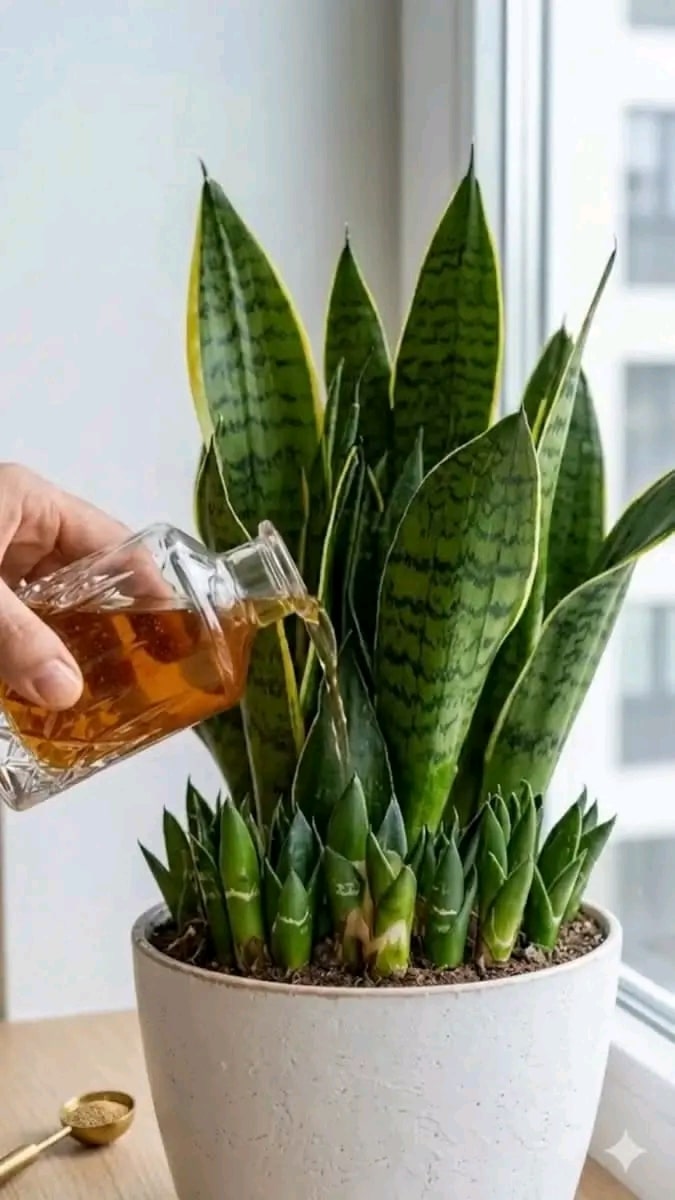
Snake plant is one of the most reliable indoor plants for homeowners who want strong upright leaves, bold green patterns, yellow-edged variegation, simple care, and a clean decorative display that fits beautifully in living rooms, bedrooms, apartments, home offices, bright kitchens, entry corners, plant shelves, commercial interiors, luxury home staging, and premium indoor plant styling. Its tall sword-shaped leaves create height and structure, while its small new shoots, often called pups, make the plant look fuller and more alive over time.
Many plant lovers become curious when they see an amber liquid being poured around a snake plant that already has many young shoots near the soil line. This kind of liquid is often described as a homemade tonic for more pups, stronger rhizomes, faster growth, greener leaves, and cleaner roots. The amber color may come from compost tea, banana peel water, cinnamon water, diluted seaweed fertilizer, worm casting tea, weak black tea, onion skin water, rice water, or another homemade mixture. Because many amber liquids look similar, the ingredient matters. Snake plants are tough, but their roots and underground rhizomes can still be damaged by too much moisture, fermented organic liquid, strong fertilizer, or anything that keeps the soil wet for too long.
The safest way to understand this method is to treat amber liquid as an optional support idea, not a miracle pup-producing trick. A snake plant does not create unlimited babies because of one dramatic pour. It produces offshoots when the rhizome system is mature, healthy, warm, slightly snug, well lit, and protected from rot. If the plant is already producing pups, the best thing to do is protect the root zone, keep watering controlled, and avoid heavy treatments that could damage the new growth.
Why Snake Plants Produce Pups
Snake plant pups grow from underground rhizomes. These rhizomes spread slowly through the soil and push up new shoots when the plant has enough stored energy. A healthy mature plant may produce several pups around the mother leaves, especially when it receives bright indirect light and has a stable growing routine. Pup production is not instant. It usually develops over time as the plant becomes established.
A slightly snug pot can sometimes encourage offshoots because the rhizomes fill the available space. This does not mean the plant should be trapped in bad soil or left root-bound until it suffers. The goal is a healthy, firm, established plant, not a plant stressed by rot, compaction, or extreme dryness. A snake plant that is slightly snug and growing in fast-draining soil is very different from a snake plant stuck in a wet heavy pot.
If a snake plant already has many pups, it is showing that the rhizomes are active. At this stage, too much amber liquid can be risky. Young shoots are connected to the same underground system as the main plant. If the root zone becomes wet, sour, or overloaded with fertilizer, the new pups can soften, yellow, or rot before they mature.
What the Amber Liquid Might Be
The amber liquid may be compost tea. Compost tea can contain mild nutrients and organic compounds, but its strength varies widely. If it is fresh, weak, and clean-smelling, it may be tolerated by some plants. If it smells sour, rotten, or fermented, it should not be poured into an indoor pot. Snake plants do not need strong compost tea to produce pups.
The liquid may be banana peel water. Banana peel water is often promoted for potassium, but homemade banana peel water is unpredictable. If peels are soaked too long, the liquid can ferment and create residue. In a small snake plant pot, this may attract fungus gnats, sour the soil, and stress the rhizomes.
The liquid may be cinnamon water. Cinnamon water can look pale amber and may smell pleasant, but it is not a balanced fertilizer. A mild cinnamon rinse may support freshness around a plant area, but it does not force root growth or pup production. Strong cinnamon mixtures or repeated use can leave residue.
The liquid may be diluted seaweed fertilizer or worm casting tea. These can be useful when used lightly and correctly, but snake plants are light feeders. A weak dose during active growth is safer than a strong pour. The plant does not need frequent feeding, especially in low light or during cooler months.
Why Amber Tonics Can Be Risky Indoors
Indoor pots are small, controlled root environments. A homemade liquid that might seem harmless outdoors can behave differently in a container. In a garden bed, extra organic liquid has more soil, more airflow, and more microbial balance. In a decorative indoor pot, organic residue can remain concentrated around the roots.
Snake plants are dry-leaning plants. They store water in thick leaves and rhizomes. Their roots need oxygen and dry-down time. When amber liquid is poured into soil that is already damp, the plant may not be able to use the moisture quickly enough. The lower soil can stay wet, and rhizomes may begin to soften.
Another risk is fermentation. Many homemade amber liquids are made by soaking fruit peels, tea, herbs, compost, or kitchen scraps. If the mixture smells unpleasant, it has already changed. Spoiled liquid should never be used in an indoor plant pot. A plant tonic should smell clean, mild, and fresh, not sour or rotten.
Best Soil for Snake Plant Pups
Snake plants need fast-draining soil, especially when they are producing pups. A cactus or succulent mix is a good starting point. It can be improved with perlite, pumice, coarse sand, lava rock, or small bark pieces. The mix should drain quickly and allow air to reach the rhizomes. Heavy soil can hold too much water around the young shoots.
If the soil is dense, muddy, compacted, or slow to dry, amber tonic will not solve the problem. The liquid may stay trapped and increase the risk of rot. Repotting into a gritty, breathable mix is usually safer and more useful for long-term growth. Healthy pups need healthy rhizomes, and healthy rhizomes need oxygen.
A decorative top layer should also be used carefully. Small stones can look clean, but they can make it harder to judge soil moisture. If the surface is covered, move a little top dressing aside before watering so you can check the real soil below. A beautiful display should still allow practical care.
Drainage Holes Matter More Than Any Tonic
A snake plant pot should have drainage holes. This is one of the most important rules for preventing root rot. When water or tonic enters the pot, excess liquid needs a way to escape. If there is no drainage, moisture can collect at the bottom where the roots cannot breathe.
A pot without drainage can look beautiful, but it is risky for snake plants. Even a small amount of amber liquid can build up over time. The top of the soil may look dry while the lower section remains wet. This hidden moisture is one of the most common causes of snake plant decline.
For a premium indoor look, use a draining inner pot inside a decorative outer container. Water the plant separately, let it drain completely, and return it only when no runoff remains. This keeps the display elegant while protecting the roots.
How to Water a Snake Plant With Pups
A snake plant with pups should still be watered only when the soil has dried well. The presence of new shoots does not mean the plant needs constant moisture. In fact, baby shoots can rot quickly if the soil stays wet around their bases. Check the soil before watering and avoid pouring liquid directly onto the young crowns.
When the plant truly needs water, use room-temperature water and water evenly around the soil. Let excess water drain out completely. Then allow the pot to dry again before the next watering. This deep-and-dry rhythm is healthier than frequent small pours.
If an amber liquid is used, it should replace a normal watering, not be added as an extra treatment. Do not water with plain water and then add tonic on top. Do not use tonic if the soil is damp. For most snake plants, plain water remains the safest regular choice.
Best Light for More Snake Plant Offshoots
Snake plants tolerate low light, but they produce stronger growth in bright indirect light. A plant kept near a bright window with filtered light is more likely to develop firm leaves and active rhizomes. A plant in a dark corner may survive, but it usually grows slowly and produces fewer pups.
If the goal is more offshoots, improve light before relying on any amber tonic. Light is the plant’s main energy source. Without enough light, the plant cannot build strong rhizomes or support many new shoots. A homemade liquid cannot replace sunlight or bright filtered indoor light.
Move the plant gradually if it has been in low light. Sudden harsh sun can scorch leaves, especially through hot glass. Morning sun may be helpful if the plant is slowly acclimated. Bright indirect light is usually the safest and most reliable condition for indoor snake plants.
Can Banana Peel Water Help Snake Plant Pups?
Banana peel water is often described as a potassium booster. Potassium is important for plant health, but banana peel water is not a complete or predictable fertilizer. The amount of nutrients released into water is uncertain. The mixture can also contain organic residue that may break down in the soil.
For snake plants, banana peel water should be used with extreme caution, if at all. It should be fresh, strained, diluted, and used rarely. It should never smell fermented. It should never be poured into wet soil or into a pot without drainage.
If the goal is healthier pups, correct light, soil, and watering are more important. A weak balanced fertilizer during active growth is more predictable than banana peel water. Snake plants are not heavy feeders, so even proper fertilizer should be used lightly.
Can Compost Tea Help Snake Plants?
Compost tea can contain nutrients and beneficial organic compounds, but it is not always ideal for indoor snake plants. Its quality depends on how it was made, how fresh it is, and whether it is clean. A bad batch can introduce odor, fungus gnats, mold, or unhealthy microbes into the pot.
If compost tea is used, it should be very weak and fresh. It should smell earthy, not sour. It should be applied only during active growth and only when the plant needs watering. Strong compost tea should be avoided.
For indoor snake plants, a clean potting mix and careful watering usually matter more than compost tea. These plants prefer dry-leaning care and do not need rich organic soil to thrive.
Can Cinnamon Water Help?
Cinnamon water may look amber and smell pleasant. It is sometimes used in plant care for surface freshness, but it is not a complete fertilizer and does not directly create pups. A mild cinnamon rinse may be less risky than spoiled kitchen liquids, but it is still unnecessary for most snake plants.
Strong cinnamon mixtures can leave residue. Repeated use can also make the soil surface dusty or uneven if powder is involved. If cinnamon water is used, it should be weak, strained, and rare.
Do not pour cinnamon water into a plant that is already wet or showing signs of rot. Cinnamon cannot fix mushy rhizomes. Rotten tissue must be removed, and the plant must be placed in fresh, dry, airy soil.
Feeding Snake Plants Safely
Snake plants are light feeders. During spring and summer, a diluted cactus fertilizer or balanced houseplant fertilizer can support growth. The dose should be weak. Too much fertilizer can cause salt buildup, brown tips, and root stress.
Do not fertilize during winter or when the plant is in low light. Do not fertilize a snake plant with wet soil, soft leaf bases, yellowing leaves, or suspected root rot. Fertilizer helps healthy plants grow; it does not rescue damaged roots.
If the amber liquid is actually fertilizer, it should be measured and diluted correctly. Unknown fertilizer strength is risky. A snake plant with many pups may look like it needs more food, but overfeeding can damage both the mother plant and the baby shoots.
When Amber Liquid Should Be Avoided Completely
Amber liquid should be avoided if the soil is damp, the pot lacks drainage, the plant has soft leaf bases, yellowing leaves, mushy rhizomes, fungus gnats, mold, sour smell, or slow-drying soil. These signs suggest the root zone may already be stressed. Adding more liquid can make the problem worse.
It should also be avoided in winter, cold rooms, dark corners, and immediately after repotting. Snake plants use water more slowly under these conditions. Any extra liquid can remain around the roots longer than expected.
Do not use amber liquids made with sugar, salt, oil, vinegar, lemon juice, milk, alcohol, spoiled fruit peels, fermented tea, or unknown scraps. If you are not sure what the liquid contains, do not use it. Plain water is safer than guessing.
What to Do If Too Much Amber Liquid Was Used
If a small amount was used once and the plant looks healthy, stop using it and return to plain water. Let the soil dry fully before watering again. Watch for odor, fungus gnats, mold, yellowing, or soft leaves. A single small use may not harm a healthy plant in a draining pot.
If a large amount was poured into the pot, check drainage immediately. Let the liquid drain completely if the pot has holes. Do not water again until the soil dries well. If the liquid was thick, sweet, fermented, or full of particles, repotting may be safer because residue can remain in the soil.
If baby shoots begin to soften or turn yellow at the base, inspect the root zone. Remove the plant gently from the pot and check the rhizomes. Healthy rhizomes should be firm. Rotten sections should be cut away with clean tools. Let cut areas dry before repotting into fresh dry succulent mix.
How to Protect New Snake Plant Pups
New pups are tender when they first emerge. Their bases should stay clean and not be buried under wet organic material. Avoid piling compost, powder, peel pieces, or thick mulch around them. The base of each pup should have airflow and should not remain constantly damp.
Do not separate pups too early unless necessary. Small pups are stronger when they remain attached to the mother rhizome until they have their own roots. If division is needed, wait until the pup is large enough to handle and has a visible root connection. Use clean tools and let cuts dry before repotting.
After division, do not overwater. Freshly divided snake plants need time to settle. A gentle dry period helps cut areas callus and reduces rot risk. New plants should be placed in a fast-draining mix and bright indirect light.
Cleaning Snake Plant Leaves
Snake plant leaves collect dust, especially near windows and in quiet indoor corners. Dust can dull the leaf pattern and reduce light absorption. Wipe the leaves gently with a soft damp cloth. Support each leaf while cleaning so it does not bend or crack.
If amber liquid splashes onto the leaves, wipe it away immediately. Colored liquids can leave sticky marks, stains, or residue. A snake plant’s beauty comes from its upright form and patterned foliage, not from visible treatments on the leaves.
Avoid oily leaf shine products. They can attract dust and make the plant look artificial. Plain water and a soft cloth are enough for a polished display.
Indoor Styling for a Snake Plant With Pups
A snake plant with many pups can look especially beautiful because the small shoots create a full, layered base around the tall mature leaves. A white, cream, black, terracotta, or stone-style planter can make the plant feel clean and intentional. The contrast between tall leaves and small new shoots gives the display natural movement.
Place the plant near bright indirect light where the leaves can stand upright without being crowded. A windowsill, plant stand, living room corner, office shelf, bedroom corner, or entry table can work well. Keep the pot clean and the soil surface tidy. Avoid sticky tonic spills on furniture, windowsills, or decorative containers.
For a premium display, let the plant’s natural shape be the focus. Healthy pups, clean leaves, and a simple pot create a more elegant look than messy homemade mixtures or visible residue on the soil.
Continue to Page 2
Continue to page 2 for more details about this article and the key points many readers miss on the first page.