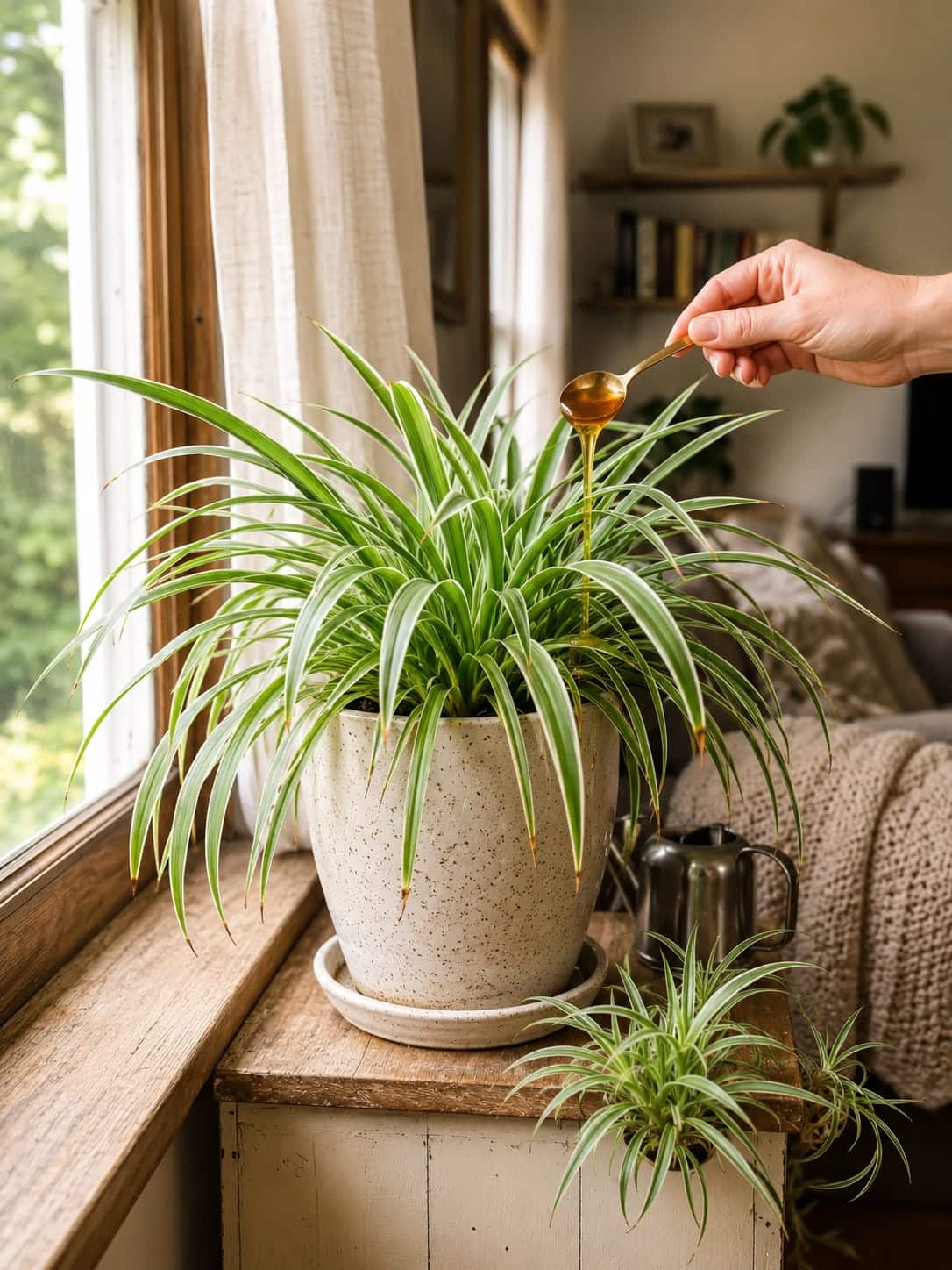
Spider plant is one of the most charming indoor plants for homeowners who want bright striped leaves, soft arching growth, easy care, and a fresh decorative display that fits beautifully in living rooms, bedrooms, apartments, kitchens, home offices, bright windowsills, plant shelves, hanging baskets, commercial interiors, luxury home staging, and premium indoor plant styling. Its green and white leaves bring movement into a room, while the small baby plantlets hanging from long runners create a full, lively look that makes the plant feel generous and healthy.
Many plant lovers become curious when they see a golden amber liquid being poured from a spoon over a spider plant. This type of mixture is often described as a homemade booster for fuller leaves, stronger roots, brighter variegation, and more baby spider plants. The sticky amber liquid may be honey water, syrup, molasses water, banana peel liquid, compost tea, diluted fertilizer, or another homemade plant tonic. Because many amber liquids can look similar, the exact ingredient matters. Spider plants are forgiving, but they can still be damaged by sugary residue, sticky mixtures, overwatering, fungus gnats, sour soil, and strong fertilizer.
The safest way to understand this method is to treat any sticky amber mixture as a risky experiment, not a guaranteed spider plant growth trick. A spider plant becomes fuller because it has healthy roots, bright indirect light, a pot with drainage, evenly moist but not soggy soil, regular grooming, and gentle feeding during active growth. A spoonful of honey or syrup will not fix poor light, compacted soil, brown tips, weak roots, or an old tired potting mix. If the plant already looks healthy, the best routine is usually simple. If it looks stressed, the first step is checking the real growing conditions before adding anything sweet or sticky.
Why Spider Plants Become Full and Vibrant
A full spider plant is usually the result of strong root growth and steady leaf production. Spider plants grow from thick, fleshy roots that store water and energy. These roots help the plant handle short dry periods, but they can also suffer when the soil remains soggy for too long. When the roots are healthy, the plant can produce fresh leaves from the center and send out long runners with baby plantlets.
Spider plants like bright indirect light, consistent moisture, and breathable soil. They do not need heavy feeding or complicated homemade mixtures. A plant near a bright window with filtered light usually grows fuller than one kept in a dark corner. A plant in a pot with drainage usually stays healthier than one sitting in trapped water. A plant in fresh airy soil usually responds better than one sitting in old compacted mix.
Fullness also depends on age and maturity. Young spider plants may need time before they produce many plantlets. A mature spider plant with good light and stable care is more likely to send out babies. If a spider plant is not producing runners, the issue is often light, age, or stress rather than lack of a sweet tonic.
What the Amber Mixture Might Be
The amber liquid may be honey water. Honey is often shown in plant-care content because it looks natural, rich, and soothing. However, honey is not a balanced fertilizer for spider plants. It contains sugars that can leave sticky residue in the soil, attract fungus gnats, and encourage microbial growth if the pot stays damp.
The mixture may be molasses water. Molasses is sometimes used in outdoor soil systems, but indoor pots are different. A small spider plant pot does not have the same soil volume, airflow, drainage, and microbial balance as an outdoor garden bed. In an indoor container, molasses can become sticky, sour, and attractive to pests when used incorrectly.
The liquid may be banana peel water or compost tea. These mixtures can look amber and may contain some organic material, but they can also ferment. If they smell sour, alcoholic, rotten, or unpleasant, they should not be used. Spider plants like moisture, but they do not need spoiled kitchen liquids around their roots.
The amber liquid may also be diluted fertilizer. If it is a measured fertilizer used properly, it can support growth during spring and summer. However, strong fertilizer can cause brown tips and root stress. Spider plants respond best to weak, balanced feeding, not heavy doses.
Why Honey Is Usually Not Ideal for Spider Plants
Honey may sound gentle because it is natural, but natural does not always mean safe for indoor plant soil. Honey is sticky and sugary. When it enters potting mix, it can cling to particles and stay around the roots. This can create residue, especially if the plant is watered often or the soil does not dry well.
Spider plants prefer a clean, lightly moist root environment. Their roots need both water and oxygen. Sticky sweet liquid can interfere with that balance by encouraging soil surface problems. Fungus gnats are especially attracted to damp organic conditions. If honey water keeps the top of the soil moist and sweet, it may make gnats more likely.
Honey will not turn brown tips green again. It will not force runners overnight. It will not repair rotten roots. If the plant needs nutrition, a weak measured fertilizer is safer. If the plant needs recovery, better soil, drainage, light, and watering are more important than honey.
Why Sticky Liquids Can Create Fungus Gnats
Fungus gnats are tiny flies that often appear around damp indoor plant soil. Their larvae live in moist organic material. A sticky amber mixture can make the soil surface more attractive to them, especially if the plant is watered too often. Spider plants like moisture, but the top of the soil should not stay constantly wet and sugary.
If fungus gnats appear, stop using homemade sweet mixtures immediately. Let the soil dry a little more between waterings, remove decaying leaves from the surface, and use yellow sticky traps to monitor adults. If the problem continues, use a targeted houseplant-safe fungus gnat method rather than pouring more home remedies into the pot.
The best prevention is simple. Use a draining pot, avoid overwatering, keep the soil surface clean, and do not add sugary liquids. A clean plant display should not smell sour or attract insects.
Why Brown Tips Happen on Spider Plants
Brown tips are one of the most common spider plant issues. They can happen from inconsistent watering, dry air, mineral-heavy tap water, fluoride sensitivity, fertilizer buildup, harsh sun, physical damage, or old leaf age. A sticky amber tonic will not reverse brown tips. Damaged leaf tips stay brown.
To reduce future brown tips, focus on the basics. Water consistently, but do not keep the plant soggy. Avoid strong fertilizer. Consider filtered water or rainwater if your tap water is very hard. Keep the plant away from heat vents, cold drafts, and harsh afternoon sun.
Brown tips can be trimmed with clean scissors if they bother you visually. Follow the natural pointed shape of the leaf so the trim looks neat. Do not cut too far into healthy green tissue. Trimming improves appearance, but correcting the cause prevents new damage.
Best Light for Fuller Spider Plants
Bright indirect light is one of the most important factors for fuller spider plant growth. A plant near a bright window with filtered light usually produces stronger leaves and more plantlets than one placed in a dim room. Spider plants can survive in lower light, but they often become thinner and slower.
Morning light can be helpful when the plant is acclimated. Harsh afternoon sun can scorch the leaves and create dry brown patches. A sheer curtain can soften direct light while still giving the plant enough brightness. If the variegation looks dull or growth is weak, the plant may need a brighter position.
Light also affects watering. A spider plant in bright light uses water more quickly. A plant in low light dries more slowly. If sticky amber liquid is added to a plant in low light, the soil may stay damp longer and increase pest or root problems. Good light makes the entire care routine easier.
Watering Spider Plants Correctly
Spider plants prefer soil that is lightly moist but not soggy. Let the top layer dry slightly before watering again. When the plant needs water, water thoroughly until excess drains from the bottom. Then empty the saucer. Do not let the pot sit in standing water.
If a sticky amber liquid is used, it counts as watering. It should not be added on top of an already wet pot. It should never be poured repeatedly in small spoonfuls because that can keep one area damp and sticky. For regular care, plain room-temperature water is safer.
Spider plants can droop when dry, but they can also suffer when overwatered. Always check the soil before responding. If the plant is limp and the soil is dry, it likely needs water. If the plant is limp and the soil is wet, the roots may be stressed.
Best Soil for Spider Plants
Spider plants grow well in a light indoor potting mix that holds some moisture but still drains well. A standard houseplant mix can be improved with perlite, fine bark, or coco coir to create better structure. The mix should not become muddy, sour, or compacted.
If the soil is old and dense, adding honey or amber liquid will not fix it. In fact, sticky liquid may make the surface worse. Repotting into fresh airy soil is usually a better solution for a tired spider plant. Fresh soil improves oxygen around the roots and helps water move evenly.
Spider plants often develop thick fleshy roots that fill the pot. If roots are circling tightly, pushing the plant upward, or causing water to run straight through, the plant may need a slightly larger pot. Repotting can refresh growth more effectively than homemade tonic.
Choosing the Right Pot
A spider plant pot should have drainage holes. Drainage is important because the plant enjoys moisture but does not want stagnant water. A decorative pot without drainage can trap liquid at the bottom, creating root problems that may not be visible until the plant declines.
The pot should be only slightly larger than the root ball when repotting. A pot that is too large can hold excess wet soil. A pot that is too small can dry too quickly and restrict growth. Balance is important.
For styling, spider plants look beautiful in speckled ceramic pots, terracotta, hanging baskets, white planters, woven baskets, and raised stands. A raised position lets the arching leaves and plantlets cascade naturally, creating a fuller display.
How to Encourage More Baby Spider Plants
Spider plant babies usually appear when the plant is mature, healthy, and receiving enough light. Bright indirect light is the strongest encouragement. A plant in a dim corner may stay alive but produce fewer runners. A plant near a bright window often grows more actively.
Gentle feeding during active growth can help, but too much fertilizer may cause brown tips or overly soft growth. Use a weak balanced houseplant fertilizer during spring and summer. Avoid heavy feeding during winter or low-light months.
If you want a fuller pot, let some baby plantlets develop roots and plant them back into the mother pot. This is one of the safest ways to make a spider plant look thick and lush. It works better than adding sticky liquids to the soil.
Should You Use Molasses Water?
Molasses water is sometimes used in outdoor gardening, but it is not usually necessary for indoor spider plants. It can be sticky and rich, and if used heavily it may attract pests or create buildup. Indoor pots are small and can become unbalanced quickly.
If molasses water is used at all, it should be extremely diluted and rare. It should never smell fermented. It should never be poured into wet soil. However, for most houseplant owners, a weak balanced fertilizer is cleaner, safer, and easier to control.
Spider plants do not need sweet soil. They need healthy roots, bright light, and steady care.
Should You Use Banana Peel Water?
Banana peel water is often promoted as a natural potassium booster. Potassium is part of plant nutrition, but banana peel water is not a balanced fertilizer. It can also ferment quickly if left sitting. Fermented peel water can smell sour and attract gnats.
If banana peel water is used, it should be fresh, strained, diluted, and used rarely. It should not contain fruit pulp or pieces. It should not be thick or sticky. It should never replace a proper watering and feeding routine.
A spider plant with brown tips or weak growth usually needs better light, water quality, soil, or fertilizer control rather than banana peel water.
When Amber Liquid Should Be Avoided Completely
Amber liquid should be avoided if the soil is already wet, the pot lacks drainage, the plant has yellow leaves, fungus gnats, mold, sour smell, or soft roots. These signs suggest the root zone may already be stressed. Adding more organic liquid can make the problem worse.
It should also be avoided in cold rooms, dark corners, and winter conditions when the plant is growing slowly. During slow growth, the plant uses water and nutrients more slowly, so extra liquid may sit in the soil longer.
Do not use honey, syrup, sugar water, molasses, sweet tea, milk, cream, salty water, vinegar, lemon juice, oil, spoiled mixtures, or unknown liquids in spider plant soil. If the mixture smells bad or feels sticky, it is not a good routine plant treatment.
Continue to Page 2
Continue to page 2 for more details about this article and the key points many readers miss on the first page.