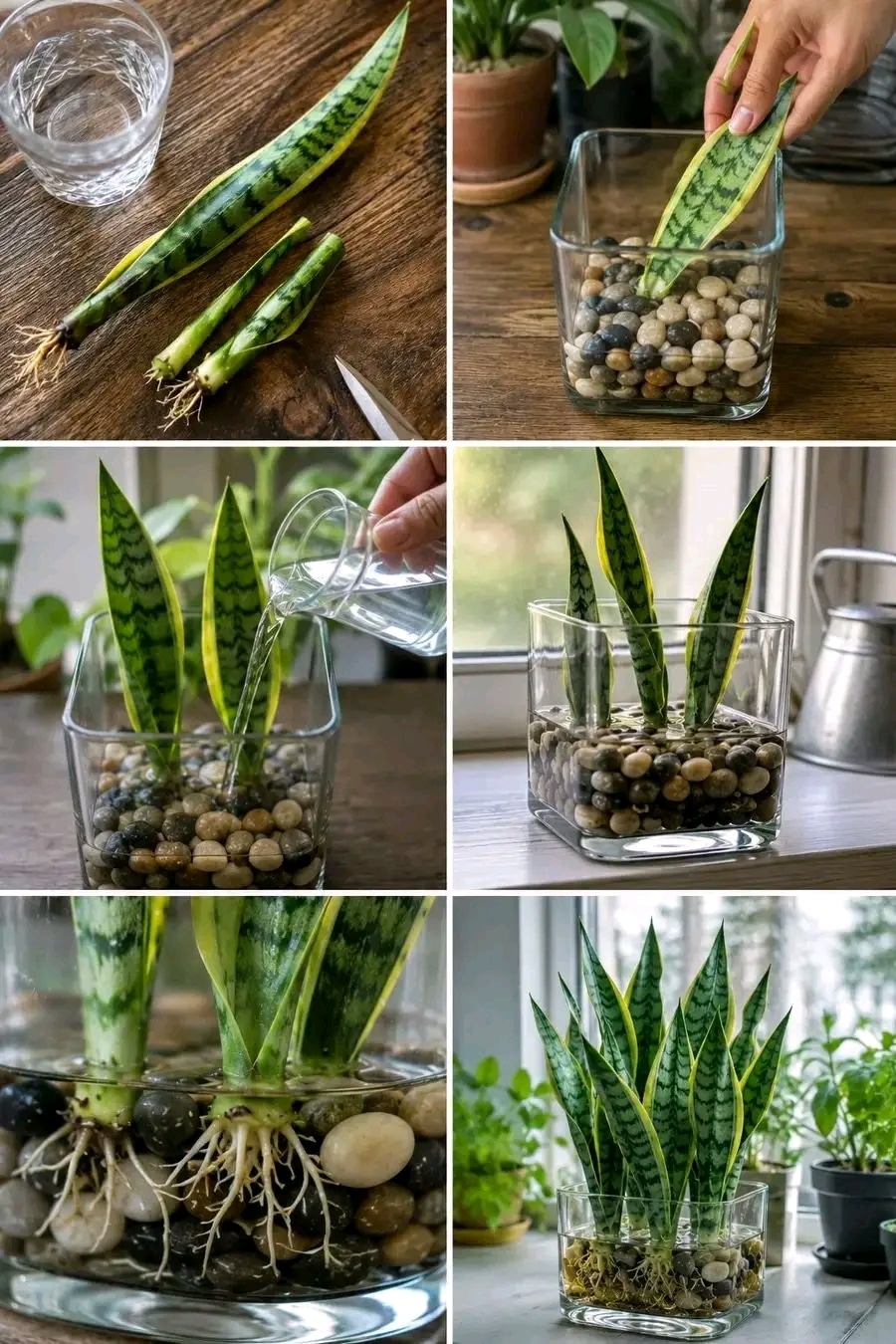
Snake plant is one of the most reliable indoor plants for homeowners who want strong upright leaves, bold green patterning, yellow-edged variegation, simple maintenance, and a modern decorative display that works beautifully in living rooms, bedrooms, apartments, home offices, bright kitchens, entry corners, windowsills, plant shelves, commercial interiors, luxury home staging, and premium indoor plant styling. It is loved because it can handle low attention, dry indoor air, and missed waterings better than many tropical houseplants, yet it still looks sharp, architectural, and elegant in almost any home.
One of the most interesting ways to display snake plant is by growing leaf sections or rooted divisions in water with decorative pebbles. The look is clean and modern because the roots are visible through the glass, the pebbles hold the leaves upright, and the plant becomes part of the room design rather than just another pot on a shelf. A glass container with pebbles can make a snake plant cutting look like a small indoor water garden, especially when placed near a bright window with soft filtered light.
This method is often shown as an easy snake plant propagation trick, but it should be understood carefully. Snake plant can root in water, but it is still a dry-leaning plant by nature. Its leaves and rhizomes store water, and it does not like rotting, stagnant water, dirty jars, submerged leaf tissue, or trapped moisture around damaged cuts. The method can work beautifully when the cuttings are prepared correctly, the water is kept clean, and the container is placed in the right light. It can fail quickly when leaves are inserted too deeply, old water is left unchanged, or the cut ends rot before roots have time to form.
Why Snake Plant Can Grow Roots in Water
Snake plant can form roots from leaf cuttings, divisions, and small pups. When a healthy cut section is placed in clean water, the base may slowly produce roots. This process is not instant. Snake plant roots can take weeks or even months to appear, depending on the season, light, temperature, cutting quality, and water cleanliness. Patience is important because snake plant is naturally slower than pothos, spider plant, or basil cuttings.
Water propagation works because the cut base stays hydrated while it develops new root tissue. However, the same moisture that supports rooting can also cause rot if the cutting is not prepared properly. A fresh cut placed directly into water may soften before it roots. This is why many growers allow the cut end to dry and callus first. That dry callused layer helps protect the cutting when it enters water.
Once roots develop, the cutting can remain in water for a decorative display or be moved into soil later. Water roots and soil roots are different, so any transition should be done gently. A snake plant that grows long water roots can look beautiful in glass, but it still needs clean water and careful positioning.
Choosing the Right Snake Plant Cutting
A strong cutting begins with a healthy leaf. Choose a firm, mature leaf with good color and no mushy areas. Avoid leaves that are yellowing, soft at the base, badly scarred, or already rotting. A damaged leaf may not have enough stored energy to root well. If a leaf has only a dry tip but the rest is firm, it may still be usable, but the healthiest sections usually root better.
When cutting a leaf, use clean scissors or a clean knife. Dirty tools can introduce bacteria into the cut tissue. The cut should be straight and clean, not crushed. A crushed cut is more likely to rot in water. If the leaf is very long, it can be divided into sections, but the orientation must be remembered. The bottom end must go into the water. If a section is turned upside down, it usually will not root correctly.
For variegated snake plants with yellow edges, leaf cuttings may not always reproduce the exact same variegation. Some new plants from leaf cuttings may return to green. If keeping the yellow edges is important, division from a pup or rhizome is more reliable than leaf propagation. This is an important detail for homeowners who want a decorative plant that matches the parent plant.
Letting the Cut End Callus
Callusing is one of the most important steps for snake plant water propagation. After cutting the leaf, place it somewhere dry and shaded for a few days. The cut end should dry and seal slightly. This reduces the chance of rot when the cutting is placed in water.
Do not place the fresh cutting in direct sun while it calluses. Strong sun can dry the leaf unevenly or stress it. A dry indoor surface with good airflow is enough. The cut end should not be wet, sticky, or mushy when it goes into the container.
If the cut end begins to smell bad or turn soft before planting, trim it back to healthy firm tissue and let it dry again. Starting with a clean dry base gives the cutting a much better chance.
Using Pebbles in a Glass Container
Decorative pebbles are useful because they hold snake plant leaves upright. Snake plant leaves are tall and firm, and they can tip over in plain water if the container is wide or shallow. Pebbles create support around the base without burying the cutting in soil. They also add weight to the container, making the display more stable.
Choose smooth clean pebbles that will not scratch or bruise the leaf base. Rinse them thoroughly before use. Dust and mineral residue can cloud the water. If the pebbles were collected outdoors, they should be cleaned especially well because they may carry soil, algae, or organic debris.
The pebbles should support the cuttings, not crush them. Place the cuttings gently between the stones and avoid forcing them downward. The base should touch the water, but too much of the leaf should not be submerged. Submerging a large portion of leaf tissue increases the risk of rot.
Choosing the Right Glass Container
A glass container should be stable, clean, and easy to rinse. A square glass vase can look modern and structured. A round bowl can look softer. A tall cylinder can support taller leaves. A wide shallow container can work if the pebbles are heavy enough to keep the cuttings upright.
The container should allow light to reach the leaves, but the water should not sit in harsh direct sun all day. Strong sun can heat the water and encourage algae. A bright windowsill with filtered light is ideal. If algae becomes a problem, the container can be moved slightly away from the window or cleaned more often.
A clear container makes root development visible, which is part of the beauty of the method. It also helps you notice problems quickly. If roots turn mushy or the water becomes cloudy, you can respond before the cutting is lost.
How Much Water to Add
The water level should cover only the lower part of the cutting where roots will form. It should not cover large sections of the leaf. For leaf cuttings, a small amount of water around the base is enough. For rooted divisions, the roots should be in water, but the crown and leaf bases should stay above the waterline.
If water covers too much of the leaf, the tissue may soften. Snake plant leaves are not designed to sit underwater for long periods. The visible water line should be low and controlled. As water evaporates, top it off with fresh room-temperature water.
When changing water, avoid shocking the plant with cold water. Room-temperature water is safer. Very cold water can stress roots and slow growth, especially during cooler months.
Best Water for Snake Plant Propagation
Clean water is the best foundation. Tap water may work in many homes, but if your water is very hard or heavily treated, filtered water or rainwater may be gentler. Minerals can build up in glass containers and leave white marks on pebbles and roots. If you notice crusty deposits, clean the container more often.
Do not add sugar, milk, honey, baking soda, coffee, salt, or unknown homemade mixtures to the water. Snake plant cuttings do not need these additives to root. Many of them can cloud the water, feed bacteria, or damage the cut base.
If fertilizer is used for a long-term water display, it should be extremely weak and only after roots are established. A fresh cutting trying to root does not need fertilizer immediately. Too much nutrient in water can encourage algae and root stress.
Changing the Water
Water should be changed regularly to prevent stagnation. In the early rooting stage, change the water every several days or whenever it becomes cloudy. Clean water helps reduce bacteria around the cut end. If the water smells bad, change it immediately and inspect the base of the cutting.
When changing water, lift the cuttings gently or pour the water out carefully while keeping the pebbles and leaves stable. If the container is heavy, use a small cup or baster to remove old water. Rinse the container when possible. If algae or slime forms on the glass, clean it before refilling.
Do not let the water become a stagnant swamp. A clean water routine is more important than any propagation trick. Most snake plant cuttings fail from rot, not from lack of powders or tonics.
Best Light for Water-Grown Snake Plant
Bright indirect light is ideal for snake plant water propagation. The plant needs energy to produce roots and eventually new growth. A cutting placed in a dark corner may remain alive for a long time but root slowly. A cutting placed in harsh sun may become stressed or the water may heat up.
A window with filtered morning light can be excellent. A sheer curtain can soften strong sunlight. If the leaves begin to bleach, scorch, or develop dry sun patches, move the container farther from the window. If the cutting is not rooting after a long time and the room is dim, increase the brightness.
Light is one of the real growth boosters. Clean water and bright indirect light usually do more for propagation than any homemade additive.
Temperature and Rooting Speed
Snake plant cuttings root faster in warm stable conditions. A cool room or cold windowsill can slow the process significantly. Keep the container away from cold drafts, air-conditioning vents, winter window glass, and sudden temperature swings. Warmth helps the cutting remain active.
Warm does not mean hot. A glass container in direct sun can heat up quickly. Hot water can damage developing roots and encourage algae. The best condition is comfortable indoor warmth with soft light.
If the cutting seems slow but remains firm and green, patience may be all that is needed. Snake plant propagation can be slow, and firm tissue is a good sign.
How to Recognize Healthy Root Growth
Healthy snake plant water roots are usually pale, firm, and fresh-looking. They may begin as small bumps at the base before stretching into longer roots. Over time, roots may branch. Some roots may be slightly tan or cream rather than bright white, especially if they are older or near pebbles.
The cutting itself should stay firm. The leaf should not become mushy at the base. Some older leaf sections may look slightly wrinkled over time, but severe softness or bad smell is a warning sign.
If roots are forming and the water stays clean, continue the routine. Avoid unnecessary changes. A stable setup allows the cutting to keep growing.
Signs of Rot
Rot is the biggest risk in snake plant water propagation. The first signs may be a soft base, cloudy water, a sour smell, brown mushy tissue, or a cutting that collapses near the waterline. If this happens, remove the cutting immediately.
Trim away the soft tissue with a clean blade until only firm healthy leaf remains. Let the cutting dry and callus again before returning it to water. Clean the pebbles and container thoroughly. Do not reuse cloudy water or dirty stones without washing them.
If the rot has traveled too far up the leaf, the cutting may not recover. It is better to restart with a healthy firm section than to keep a rotting piece in the container and risk contaminating the whole display.
Using Rooted Divisions Instead of Leaf Cuttings
A rooted division is often easier than a leaf cutting because it already has roots or a rhizome. If you separate a small snake plant pup from the mother plant with roots attached, it can adapt more quickly to a water display. It may also preserve variegation better than leaf cuttings.
When placing a rooted division in water, keep only the roots submerged. The rhizome and leaf bases should stay above the waterline as much as possible. If the rhizome sits constantly underwater, it may rot. Pebbles can help hold the plant upright while keeping the crown higher.
Rooted divisions can look beautiful in glass because the roots spread between the pebbles. They also tend to establish faster than plain leaf sections.
Continue to Page 2
Continue to page 2 for more details about this article and the key points many readers miss on the first page.