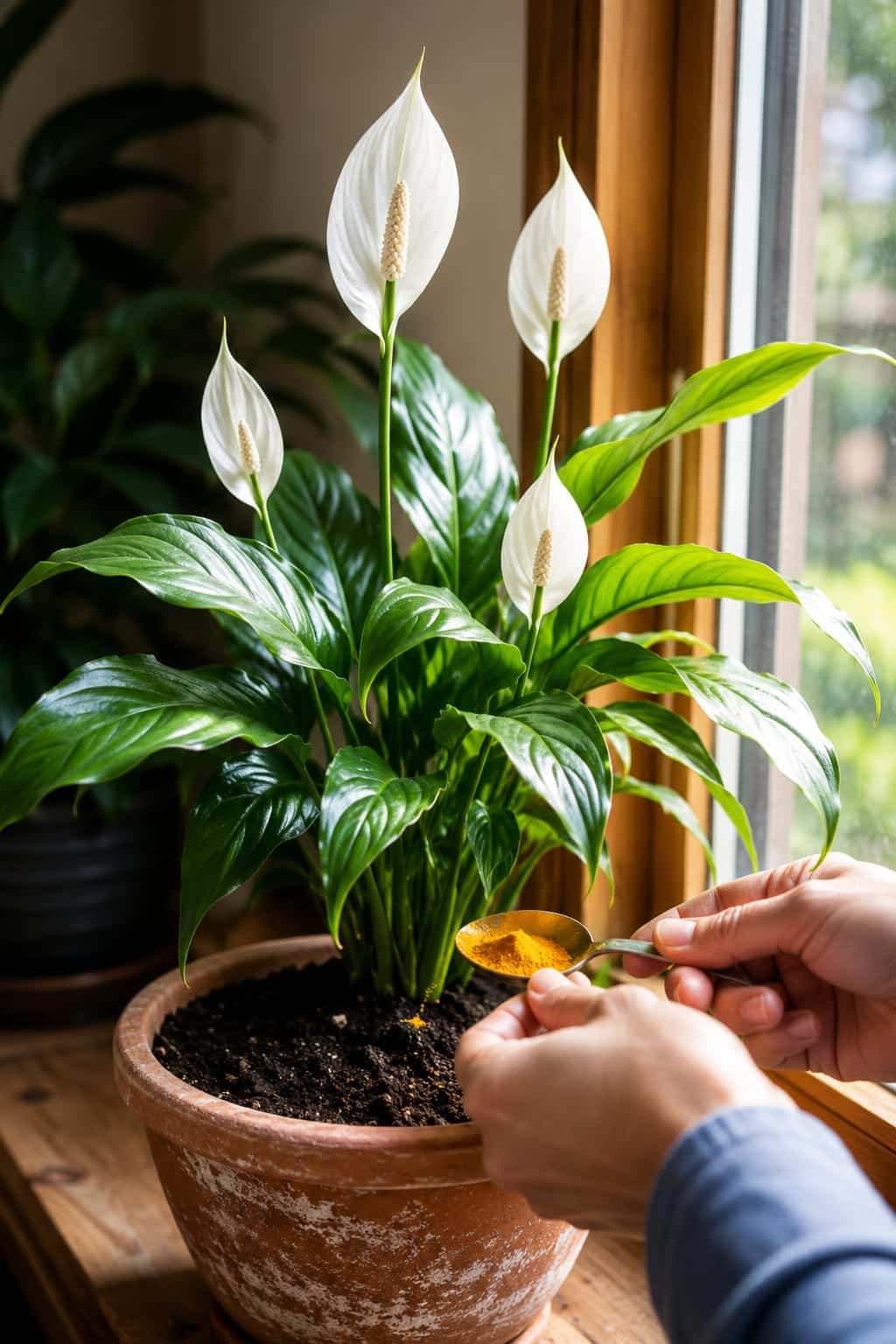
Peace lily is one of the most elegant indoor plants for homeowners who want glossy green leaves, graceful white flowers, simple styling, and a fresh decorative display that fits beautifully in living rooms, bedrooms, apartments, home offices, bright kitchens, entry corners, plant shelves, commercial interiors, luxury home staging, and premium indoor plant styling. Its dark foliage creates a calm tropical look, while its white spathes bring a soft, clean, refined feeling to the room. A healthy peace lily can make a simple terracotta pot, ceramic planter, or modern decorative container look naturally luxurious.
Many plant lovers become curious when they see a yellow powder being added around the base of a peace lily. This type of powder is often described online as a simple trick for more blooms, stronger roots, greener leaves, fewer yellow leaves, or a brighter indoor plant display. The yellow powder may be turmeric, mustard powder, cornmeal, curry powder, banana peel powder, sulfur powder, pollen-like fertilizer, slow-release plant food, or another homemade amendment. Because many yellow powders look similar, the exact ingredient matters. Peace lilies are forgiving in some ways, but their roots are sensitive to strong salts, soggy soil, food powders, fungal residue, and materials that change the potting mix too quickly.
The safest way to understand this method is to treat yellow powder as something that should only be used when you know exactly what it is and why the plant needs it. A peace lily does not become lush or bloom heavily because random kitchen powder is sprinkled on the soil. It grows best with bright indirect light, evenly moist but not soggy soil, a pot with drainage holes, warm stable temperatures, moderate humidity, clean leaves, and gentle feeding during active growth. If the plant already has white blooms, the best care is calm and consistent. Heavy powder treatments during blooming can create stress, especially if they affect moisture or root health.
Why Peace Lily Care Depends on Balance
Peace lilies like a balanced environment. They are not desert plants that want long dry periods, and they are not water plants that want roots sitting in stagnant water. They prefer soil that stays lightly moist, then dries slightly before the next watering. When this balance is right, the leaves stay upright and glossy, the roots remain active, and the plant can produce new growth and white spathes.
When the soil becomes too dry, peace lily leaves often droop dramatically. This can make the plant look like it is dying, even if it can recover after watering. When the soil stays too wet, the roots may begin to rot quietly. This can lead to yellowing leaves, blackened leaf tips, weak stems, and fewer flowers. The plant tells you a lot through its leaves, but the cause is not always lack of nutrients.
Because peace lilies react strongly to water and root conditions, random powders can create confusion. If a powder clumps, holds moisture, feeds fungus gnats, or dissolves into strong minerals, the plant may decline. The first step in peace lily care should always be checking light, water, soil, pot drainage, and root health before adding anything extra.
What the Yellow Powder Might Be
The yellow powder may be turmeric. Turmeric is often promoted in home gardening content because it is natural and brightly colored. However, turmeric is not a balanced fertilizer for peace lilies. It can stain the soil surface, leave residue, and create a dusty layer if used heavily. It should not be treated as a guaranteed bloom booster.
The powder may be mustard powder or curry powder. These kitchen powders should not be used in peace lily soil. They may contain spices, salts, oils, or compounds that are not meant for plant roots. They can also smell, stain, and attract pests when damp.
The yellow powder may be banana peel powder. Banana peel powder is often described as a potassium source, but in an indoor pot it can mold or attract fungus gnats if it is not fully composted and used carefully. Peace lilies do not need piles of banana powder on the soil to bloom.
The powder may be sulfur. Sulfur products may have specific horticultural uses, but they should not be added randomly to peace lily pots. They can affect soil chemistry and may damage sensitive roots if misused.
The powder may be slow-release fertilizer. If so, it should be used only according to label directions. Too much fertilizer can burn peace lily roots and cause brown tips, yellow leaves, or weak growth. Peace lilies prefer gentle feeding rather than heavy doses.
Why Turmeric Is Not a Peace Lily Miracle Treatment
Turmeric may look like a natural plant remedy, but it is not a complete plant food. It does not provide the balanced nitrogen, phosphorus, potassium, and micronutrients that a peace lily needs for steady growth. It may have some traditional household uses, but sprinkling turmeric into a pot is not the same as using a measured plant fertilizer.
Another problem is residue. Turmeric can stain soil, pots, saucers, hands, and furniture. If it gets wet, it may create a yellow paste on the soil surface. This can make the plant display look messy rather than premium. If too much remains damp, it may contribute to surface mold or unwanted odor.
If the goal is stronger roots and blooms, turmeric is not the best solution. Better light, proper watering, fresh potting mix, and weak balanced fertilizer are safer and more reliable.
Why Kitchen Powders Can Create Problems
Many yellow powders come from kitchens. Mustard powder, curry powder, cornmeal, and spice blends are not designed for houseplant roots. Some contain salt. Some contain oils. Some contain strong compounds. Some may decay when wet. A peace lily pot is not a compost bin, and indoor soil does not break down food powders the same way an outdoor compost system does.
When kitchen powder sits on damp soil, it can become food for microbes and fungus gnats. It can clump and form a crust. It can smell unpleasant. It can also make it harder to judge whether the soil is clean and healthy.
Natural does not always mean safe for plants. The safest indoor plant care is clean, measured, and specific. If the ingredient is not meant for houseplants, it should not be poured around peace lily roots.
Can Banana Peel Powder Help Peace Lily?
Banana peel powder is often promoted because banana peels contain potassium. Potassium is important for plants, but banana peel powder is not a complete fertilizer. It may break down slowly, and if it is not fully dried or composted, it can attract gnats and mold. In a small indoor pot, too much organic powder can create more problems than benefits.
Peace lilies bloom from overall plant health, not from one nutrient alone. They need good light, stable watering, root health, and gentle nutrition. A plant in low light will not bloom heavily just because banana powder is added. A plant with soggy roots will not recover because potassium is sprinkled on top.
If banana peel powder is used at all, it should be fully dried, finely processed, and used sparingly. Even then, it is usually unnecessary. A weak balanced houseplant fertilizer is cleaner and more predictable.
Why Fertilizer Must Be Gentle
Peace lilies are not heavy feeders. They can benefit from gentle feeding during active growth, usually in spring and summer, but strong fertilizer can burn roots and leaf tips. If the yellow powder is a fertilizer product, the label directions matter. A random spoonful may be too much for the pot size.
Too much fertilizer can cause brown leaf tips, yellowing, and salt buildup. These symptoms are sometimes mistaken for nutrient deficiency, causing people to add even more fertilizer. This creates a cycle of stress. Peace lilies respond better to weak, consistent feeding than heavy treatments.
If the plant is already blooming, avoid strong feeding. A light routine during the growing season is enough. Do not try to force flowers with concentrated powder while the plant is actively displaying blooms.
Best Light for Peace Lily Blooms
Peace lilies tolerate lower light better than many flowering houseplants, but tolerance is not the same as blooming well. A peace lily kept in a dark corner may survive with green leaves but produce few or no white flowers. Bright indirect light is much better for blooming and fuller growth.
A position near a window with filtered light is ideal. Morning light can be helpful if it is gentle. Harsh direct afternoon sun can scorch leaves and fade the plant. If leaves become pale, crispy, or sunburned, move the plant away from direct rays. If the plant is dark green but not blooming, it may need more brightness.
Light is one of the real bloom boosters. Yellow powder cannot replace light. If a peace lily is not producing flowers, the first question should be whether it receives enough bright indirect light.
Watering Peace Lily Correctly
Peace lily likes consistently moist soil, but it should never sit in soggy soil. Water when the top layer begins to dry. If the plant droops and the soil is dry, it likely needs water. If the plant droops and the soil is wet, the roots may be stressed from too much moisture.
Water thoroughly until excess drains from the bottom, then empty the saucer. Do not leave the pot standing in water. A pot with drainage holes is important because trapped water can lead to root rot.
If yellow powder has been added, watering can move it deeper into the soil. If the powder is unknown, remove as much as possible before watering. Do not wash random powder into the root zone. Clean water and proper drainage are safer.
Best Water Quality for Peace Lily
Peace lilies can be sensitive to water quality. Hard tap water, chlorine, fluoride, and mineral buildup can contribute to brown tips or dull growth. If your peace lily develops repeated brown tips even when watering seems correct, water quality may be part of the issue.
Filtered water, rainwater, or distilled water can be gentler. Room-temperature water is best. Very cold water can shock roots. If using tap water, letting it sit for a while may help with chlorine, though it does not remove all minerals.
Better water quality often improves peace lily appearance more than homemade powders. Clean hydration supports glossy leaves and healthy roots.
Best Soil for Peace Lily
Peace lily grows best in a light, airy potting mix that holds moisture without becoming muddy. A quality indoor potting mix can be improved with perlite, fine bark, coco coir, or a small amount of orchid mix. The goal is a mix that drains well while staying lightly moist.
If the soil is compacted, sour-smelling, or slow to dry, powder will not fix the problem. Repotting into fresh airy soil is safer. Old soil can suffocate roots and hold too much water, especially in decorative pots with poor drainage.
When repotting, inspect the roots. Healthy peace lily roots are usually firm and light-colored. Rotten roots may be brown, black, mushy, or foul-smelling. Remove damaged roots with clean scissors and repot into fresh mix.
Drainage Holes Are Essential
A peace lily pot should have drainage holes. Decorative pots are beautiful, but drainage protects the roots. If the pot has no drainage, water collects at the bottom and creates hidden root rot. The top may look normal while the lower roots are sitting in stagnant water.
Use a draining inner pot inside a decorative outer pot if needed. After watering, let the plant drain completely before placing it back. Empty any water that collects in the outer pot or saucer.
No powder can replace drainage. Healthy peace lily roots need moisture and oxygen together.
Why Leaves Turn Yellow
Peace lily leaves can turn yellow for many reasons. The most common causes include overwatering, underwatering, old leaf age, low light, root stress, temperature swings, or fertilizer buildup. A yellow leaf does not automatically mean the plant needs more nutrients.
If only one lower leaf turns yellow occasionally, it may simply be old growth. If many leaves yellow at once, check soil moisture and roots. If the soil is wet and the plant is yellowing, root stress may be developing. If the soil is dry and the plant is drooping, it may need a better watering rhythm.
Do not respond to yellow leaves by adding random yellow powder. Diagnose the cause first. Peace lilies communicate through their leaves, but the message must be read carefully.
Why Brown Tips Happen
Brown tips are common on peace lilies. They can happen from dry air, inconsistent watering, mineral-heavy water, too much fertilizer, direct sun, or root stress. Brown tips will not turn green again. A powder will not repair them.
Trim brown tips with clean scissors if they bother you visually. Follow the natural shape of the leaf so the trim looks neat. Do not remove too much healthy green tissue. If a leaf is mostly brown or yellow, remove it at the base.
Preventing new brown tips requires better water quality, consistent moisture, moderate humidity, gentle feeding, and the right light. These steps work better than powders.
Humidity and Peace Lily Growth
Peace lilies appreciate moderate humidity. Very dry indoor air can make leaf edges crisp and flowers fade faster. A humidifier, plant grouping, or naturally humid room can help. A bright bathroom with filtered light can be a good location if temperatures are stable.
Humidity should not mean wet soil. Do not compensate for dry air by overwatering the pot. Leaves and roots have different needs. Air humidity helps foliage, while soil moisture must be controlled to prevent rot.
If the plant is near a heating vent, fireplace, or air conditioner, move it to a calmer location. Stable humidity and temperature support healthier leaves.
How to Encourage More Peace Lily Blooms
Peace lily blooms when the plant is mature, healthy, and receiving enough bright indirect light. Feeding can help, but only when the rest of the care is correct. If a peace lily is kept in a dim corner, it may produce lush leaves but few flowers. Moving it to brighter filtered light can make a major difference.
Use a weak balanced fertilizer during active growth. Avoid strong doses. Remove spent blooms by cutting the flower stem near the base. This keeps the plant tidy and allows energy to support new growth.
Do not try to force blooms with kitchen powders. The safest bloom plan is light, gentle feeding, clean roots, and stable moisture.
Continue to Page 2
Continue to page 2 for more details about this article and the key points many readers miss on the first page.