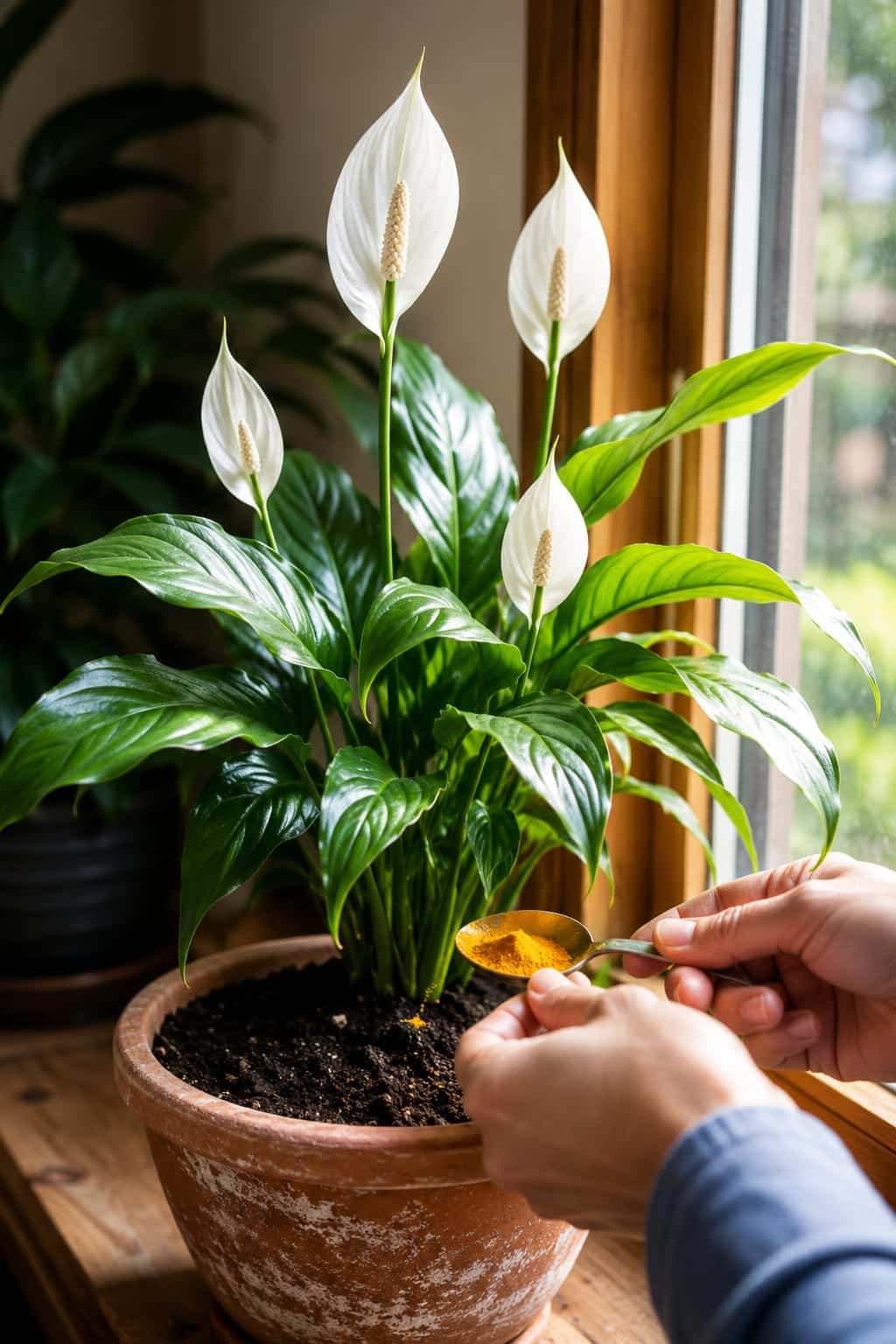
When Yellow Powder Should Be Avoided Completely
Yellow powder should be avoided if you do not know exactly what it is. It should also be avoided if the soil is wet, the pot has no drainage, fungus gnats are present, mold is visible, the plant is drooping in wet soil, or the soil smells sour. These signs suggest root-zone stress.
It should also be avoided when the plant is actively blooming unless the material is a known fertilizer used properly. Strong amendments can stress the plant and reduce flower quality.
Do not use turmeric, curry powder, mustard powder, cornmeal, sugar, salt, baking soda, strong sulfur, heavy fertilizer, or unknown kitchen powders in peace lily soil. If it is not made for plants, keep it away from the roots.
What to Do If Too Much Yellow Powder Was Added
If a small amount of harmless dry organic powder was added once, remove as much as possible from the soil surface and monitor the plant. Do not water it deeper into the pot. Replace the removed surface with fresh potting mix if needed.
If the powder was spice, curry, mustard, sulfur, strong fertilizer, or anything with salt, remove the top layer of soil immediately. If the plant begins to droop, yellow, smell sour, or show stress, inspect the roots and consider repotting into fresh soil.
If the powder has already become wet and sticky, repotting may be safer. Remove old contaminated soil gently, rinse roots only if needed, trim rotten roots, and replant in a clean airy mix with drainage.
Cleaning Peace Lily Leaves
Peace lily leaves are broad and glossy, so dust shows easily. Dust can make the plant look tired and reduce light absorption. Wipe leaves with a soft damp cloth. Support the leaf with one hand while wiping with the other to avoid bending the stem.
If yellow powder lands on the leaves, wipe it away quickly. Turmeric and other powders can stain. Powder residue can settle into leaf veins and make the plant look dirty. A clean peace lily should look glossy and fresh.
Avoid oily leaf shine sprays. They can attract dust and clog the leaf surface. Plain water and a soft cloth are enough for a natural polished look.
Removing Spent Peace Lily Flowers
Peace lily flowers naturally fade from white to green, then brown. Once a bloom is old, cut the stem near the base with clean scissors. Removing spent blooms keeps the plant tidy and prevents old flower parts from falling onto the soil.
Do not pull flower stems hard because this can damage the crown. A clean cut is better. Removing old blooms also helps the display look fresh and premium.
If faded blooms fall on the soil, remove them. Decaying plant material on damp soil can attract fungus gnats or mold.
Indoor Decor and Styling Ideas
Peace lily looks beautiful in terracotta, white ceramic, stone-style pots, speckled planters, woven baskets, and modern minimalist containers. A terracotta pot creates a warm natural look. A white pot makes the white blooms feel clean and elegant. A dark pot creates dramatic contrast with the glossy leaves.
Place peace lily where it receives bright indirect light and where its flowers can be seen. It works well on a plant stand, side table, bedroom dresser, living room console, office shelf, or bright bathroom counter. Avoid harsh direct sun, cold drafts, and heating vents.
For a premium display, keep the pot clean, remove yellow leaves, trim brown tips, wipe the foliage, and keep the soil surface tidy. Visible powder piles usually make the plant look messy rather than cared for.
Common Mistakes With Yellow Powder Tricks
One common mistake is assuming yellow powder is always natural fertilizer. Many yellow powders are kitchen ingredients, not plant food. Another mistake is using turmeric or curry powder in soil because it looks like a remedy. These materials can stain and create residue.
A third mistake is adding powder to wet soil. This can create clumps and mold. A fourth mistake is using powder to fix low light. No amendment can replace brightness. A fifth mistake is feeding heavily while the plant is stressed. A sixth mistake is ignoring drainage.
Peace lily care is most successful when it is steady, clean, and gentle. Too many homemade treatments can create more problems than they solve.
Better Alternatives for Lush Leaves and Blooms
If the goal is lush leaves, give the plant bright indirect light, consistent moisture, clean water, and moderate humidity. If the goal is more blooms, increase light gently and feed weakly during active growth. If the goal is stronger roots, use airy soil and a pot with drainage holes. If the goal is fewer yellow leaves, check watering and root health.
If the plant droops, check whether the soil is dry or wet before watering. If the soil smells bad, repot. If brown tips appear, review water quality and fertilizer strength. If flowers are fading, remove old stems and continue steady care.
These steps solve real problems more safely than unknown yellow powder. Peace lilies reward consistent care more than dramatic shortcuts.
Final Thoughts
A yellow powder around a peace lily may look like a simple natural trick for more blooms and lush leaves, but it should be used carefully. The powder could be turmeric, mustard powder, curry powder, banana peel powder, sulfur, cornmeal, slow-release fertilizer, or another unknown material. Some plant-specific products can help when measured correctly, but many kitchen powders can stain, clump, attract pests, feed mold, or stress roots.
The real foundation of peace lily health is bright indirect light, evenly moist but not soggy soil, drainage holes, airy potting mix, room-temperature water, moderate humidity, clean leaves, and gentle feeding during active growth. If the soil is wet, do not add powder. If the plant has yellow leaves, check water and roots. If the plant is not blooming, improve light. If the plant is healthy, keep the routine simple.
With patient care and clean styling, peace lilies can remain beautiful indoor plants for living rooms, bedrooms, home offices, apartments, bright kitchens, entry corners, commercial interiors, luxury home staging, and premium plant displays. Glossy leaves, elegant white flowers, healthy roots, tidy soil, and balanced maintenance will always create a safer and more elegant result than relying on risky yellow powder shortcuts.