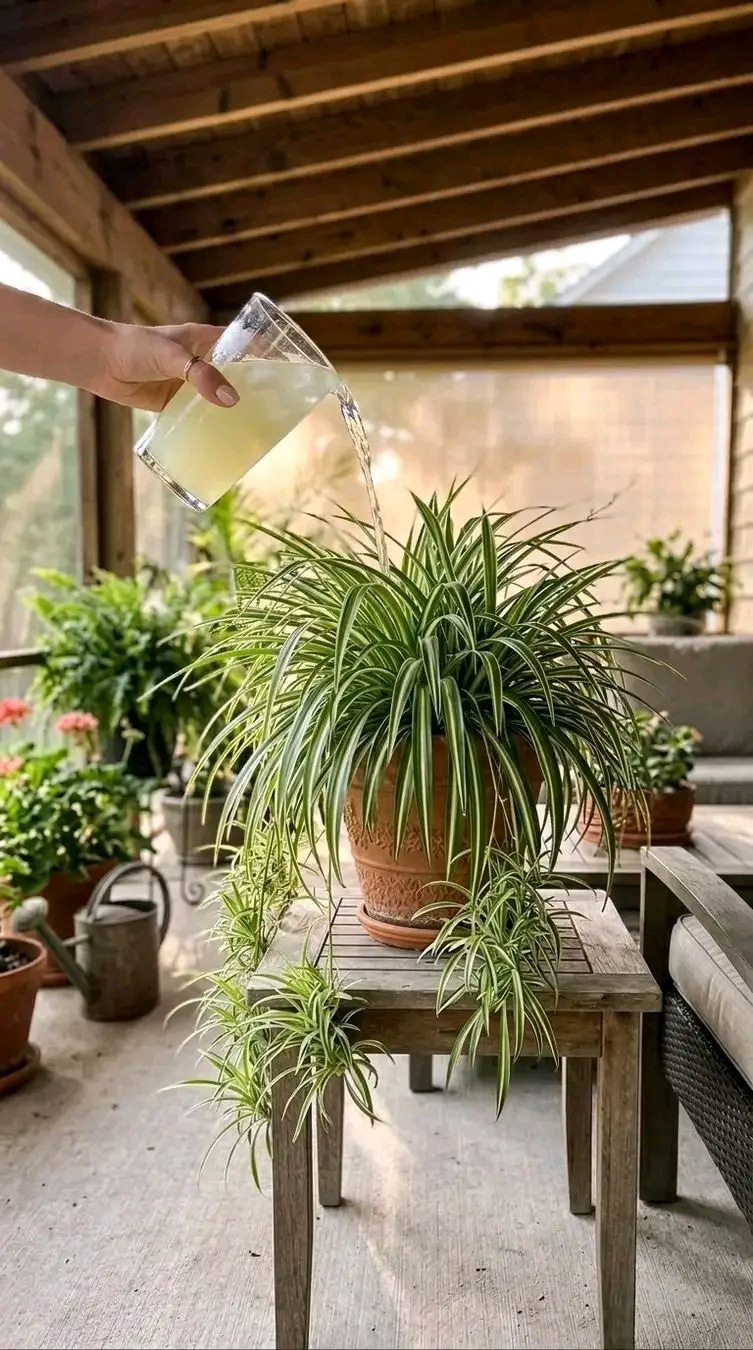
Spider plant is one of the most cheerful indoor plants for homeowners who want long arching leaves, bright green-and-white variegation, easy plant babies, and a full decorative display that looks beautiful in living rooms, bedrooms, apartments, home offices, bright kitchens, covered patios, sunrooms, plant shelves, hanging baskets, commercial interiors, luxury home staging, and premium indoor plant styling. Its soft striped foliage creates movement, and the baby plantlets hanging from long stems can make even one pot look like a full indoor garden.
Many plant lovers become curious when they see a pale homemade liquid being poured over a spider plant. This kind of liquid is often described online as a simple trick for fuller foliage, stronger roots, more baby spider plants, greener leaves, and faster growth. The liquid may be rice water, diluted milk water, banana peel water, compost tea, diluted fertilizer, eggshell water, pasta water, or another homemade plant tonic. Because many pale liquids look similar, the exact ingredient matters. Spider plants are forgiving, but they can still suffer from sour soil, fungus gnats, sticky residue, mineral buildup, root rot, and brown tips when liquids are used incorrectly.
The safest way to understand this method is to treat any pale homemade liquid as an optional experiment, not a guaranteed growth booster. A spider plant becomes full and vibrant because it has bright indirect light, a pot with drainage holes, fresh airy soil, consistent watering, clean leaves, healthy roots, and gentle feeding during active growth. A liquid poured from a glass cannot replace those basics. If the plant is already healthy, the best routine is usually simple. If the plant is weak, brown-tipped, pale, or drooping, the first step is checking light, water, soil, drainage, and roots before adding homemade mixtures.
Why Spider Plants Become Full and Cascading
A full spider plant is usually the result of steady root growth and enough light. Spider plants grow from thick roots that store water and energy. When the roots are healthy, the plant produces more leaves from the center and sends out long runners with baby plantlets. Those babies create the famous cascading look that makes spider plants so decorative in hanging baskets and tall planters.
Spider plants can tolerate many indoor conditions, but they grow best in bright indirect light. A plant in a dim corner may stay alive but grow slowly, produce fewer baby plants, and lose some of its vibrant striped look. A plant near a bright window with filtered light usually becomes fuller and more active. Light is one of the most important growth boosters, and no homemade liquid can replace it.
Fullness also comes from time and maturity. Young spider plants may need months before they begin producing many plantlets. A mature plant with a strong root system and steady care can send out several runners. If a spider plant is not producing babies, it may not be a problem. It may simply need more maturity, more light, or a more stable routine.
What the Light Liquid Might Be
The pale liquid may be rice water. Rice water is commonly promoted as a gentle plant tonic because it may contain small amounts of starch and trace nutrients. However, rice water can ferment if left sitting too long. Fermented rice water can smell sour, attract fungus gnats, and create microbial buildup in indoor pots. Fresh, diluted rice water is less risky than old or thick rice water, but it should still be used carefully.
The liquid may be diluted milk water. Milk contains proteins, fats, and sugars that can spoil in soil. A very diluted milk-water mixture is sometimes shown online, but it can create odor, residue, mold, and pests if used too often or too strongly. Spider plants do not need milk to grow fuller.
The liquid may be banana peel water. Banana peel water may contain some potassium, but it can ferment and become smelly. It is not a complete fertilizer. If pieces of peel or pulp remain in the liquid, they can attract insects and create soil problems.
The liquid may be compost tea or diluted fertilizer. If it is a properly prepared plant fertilizer used at a weak dose, it may help during active growth. If it is too strong or homemade without control, it may burn roots or cause salt buildup. Spider plants prefer gentle nutrition, not heavy feeding.
Why Homemade Liquids Can Be Risky Indoors
Outdoor garden beds have more soil volume, airflow, microbes, rain, and drainage than a small indoor pot. A homemade liquid that seems harmless outside can behave differently inside a container. In a pot, residue stays close to the roots. If the liquid is thick, sugary, milky, or fermented, it can sour the soil and attract fungus gnats.
Spider plants like moisture, but they do not want stagnant damp soil. Their roots need oxygen. When homemade liquids leave residue, the soil surface can stay wet or sticky. This creates conditions where gnats and mold can appear. A plant may look like it needs more help, but the real issue may become too much organic material in the pot.
If a liquid smells sour, spoiled, alcoholic, rotten, or unpleasant, it should not be poured into a spider plant. A healthy plant-care liquid should not make the room smell bad. For indoor plants, clean water and measured fertilizer are usually safer than kitchen mixtures.
Rice Water for Spider Plants
Rice water is one of the most common pale liquids used on houseplants. Some homeowners use the water left after rinsing rice. Others use water from soaked rice. The safest version is fresh, very diluted, and strained. It should not contain grains or thick starch. It should not be left to ferment on the counter for days before use.
If rice water is used, it should be occasional. It should never replace a balanced care routine. Pouring rice water every time can lead to residue in the soil, especially if the plant is not drying properly. Spider plants are not heavy feeders, and too much organic liquid can create more problems than benefits.
The best time to use a gentle liquid is during active growth, when the plant is receiving good light and the soil is ready for watering. Do not pour rice water into already wet soil. Do not use it in a cold, dark room. Do not use it if fungus gnats are present.
Milk Water for Spider Plants
Milk water is often shown as a simple plant hack, but it should be approached with caution. Milk can spoil. It can leave residue in the soil, attract insects, and create odor. A spider plant does not need dairy to produce fuller leaves. The plant’s roots are designed to absorb water and mineral nutrients, not milk proteins and fats.
If milk water is used too strongly, the soil may smell sour after a few days. This is especially likely in warm rooms, pots without good drainage, or soil that stays damp. Sour soil is not a sign of healthy plant feeding. It is a sign that the potting environment is becoming unclean.
For spider plants, plain water and a weak houseplant fertilizer are safer. The plant can become lush without milk. A clean root zone is more important than a dramatic homemade trick.
Banana Peel Water for Spider Plants
Banana peel water is popular because banana peels are associated with potassium. Potassium matters for plants, but banana peel water is not a complete fertilizer. It may contain some soluble material, but it can also ferment quickly. If peel pieces remain in the water, the risk of odor and pests increases.
If someone chooses to use banana peel water, it should be fresh, strained, diluted, and used rarely. It should never be thick, sticky, or sour-smelling. It should not be poured onto a plant that already has wet soil or fungus gnats.
A spider plant that needs better growth usually benefits more from light, drainage, fresh soil, and gentle balanced fertilizer than from banana peel water. Potassium alone does not create a full plant if roots and light are not right.
Compost Tea and Organic Liquids
Compost tea can be useful in some gardening systems, but indoor use requires caution. If it is not prepared correctly, it can smell bad and introduce too much organic material into a small pot. A spider plant on a covered patio or bright sunroom may tolerate occasional gentle organic feeding better than a plant in a dark indoor corner, but cleanliness still matters.
Any compost-based liquid should be mild, strained, fresh, and odor-free. It should not contain sludge. It should not be poured over the leaves and crown. It should be used only when the soil actually needs water.
For most indoor spider plants, a weak liquid houseplant fertilizer is easier to control. It gives predictable nutrients without adding decaying kitchen material to the pot.
Best Watering Routine for Spider Plants
Spider plants prefer soil that is lightly moist but not soggy. Water when the top layer begins to dry. When watering, water thoroughly until excess drains from the bottom, then empty the saucer. This keeps the roots hydrated while preventing stagnant water.
Frequent small pours can create uneven moisture. The top may stay damp while the deeper roots remain dry, or one side of the pot may become constantly wet. A full watering followed by partial drying is usually better. If a homemade liquid is used, it should count as a watering and should be applied evenly and sparingly.
Always check the soil before watering. A spider plant with drooping leaves and dry soil may need water. A spider plant with drooping leaves and wet soil may have root stress. Adding more liquid without checking can make the problem worse.
Best Light for Fuller Spider Plant Growth
Bright indirect light is one of the strongest ways to encourage fuller spider plant growth. A bright window with filtered light helps the plant produce more energy. More energy supports new leaves, stronger roots, and more runners. A dim room slows everything down.
Spider plants can tolerate some morning light, but harsh afternoon sun can scorch the leaves or create dry brown tips. A covered patio, sunroom, or bright window with soft light can be ideal. If the plant’s variegation looks dull or growth seems weak, it may need more brightness.
Light affects water use. A spider plant in bright light dries faster and can use nutrients better. A plant in low light stays wet longer and is more vulnerable to problems from homemade liquids. Before adding any tonic, improve the light.
Best Soil for Spider Plants
Spider plants grow well in a light indoor potting mix that holds some moisture while draining well. A standard houseplant mix can be improved with perlite, fine bark, coco coir, or pumice. The soil should feel airy, not muddy or compacted.
If the soil is old, dense, sour-smelling, or slow to dry, homemade liquids will not fix it. They may make it worse. Repotting into fresh soil is usually a better solution. Fresh soil improves oxygen around the roots and helps water move evenly.
When repotting, choose a pot only slightly larger than the root system. Spider plants have thick roots, but a pot that is too large can hold too much wet soil. A pot with drainage holes is essential.
Drainage Holes Matter
Spider plants need drainage holes. A decorative pot without drainage can trap water at the bottom. The top may look dry while the lower roots sit in stagnant moisture. This can cause root rot, yellowing leaves, and weak growth.
A beautiful setup can still be safe. Use a draining inner pot inside a decorative basket, ceramic pot, or cover pot. Water the plant, let it drain fully, then place it back. Always empty standing water from saucers.
No homemade liquid can protect a spider plant from poor drainage. Root health begins with water being able to leave the pot.
Why Brown Tips Happen
Brown tips are common on spider plants. They can happen from inconsistent watering, mineral-heavy tap water, dry air, excess fertilizer, direct sun, old leaf age, or physical damage. Brown tips do not automatically mean the plant needs a homemade liquid.
Once a tip turns brown, it will not become green again. It can be trimmed with clean scissors if it bothers you visually. Follow the natural shape of the leaf to keep the trim neat. The important step is preventing new damage.
To reduce brown tips, water consistently, avoid strong fertilizer, protect the plant from harsh sun, and consider filtered water if your tap water is very hard. Clean care prevents more browning better than milk or rice water.
How to Encourage More Baby Spider Plants
Spider plant babies usually appear when the plant is mature and healthy. Bright indirect light is the most important trigger. A plant in low light may grow leaves but produce fewer runners. A mature plant near a bright window often creates more plantlets.
Gentle feeding during active growth can support growth, but too much fertilizer can cause brown tips. Use weak fertilizer during spring and summer. Avoid heavy feeding during winter or low-light periods.
Letting a few plantlets remain on the runners creates the classic cascading look. Rooting some baby plants and planting them back into the main pot can make the display look fuller. This is one of the safest ways to create a thick plant.
Continue to Page 2
Continue to page 2 for more details about this article and the key points many readers miss on the first page.