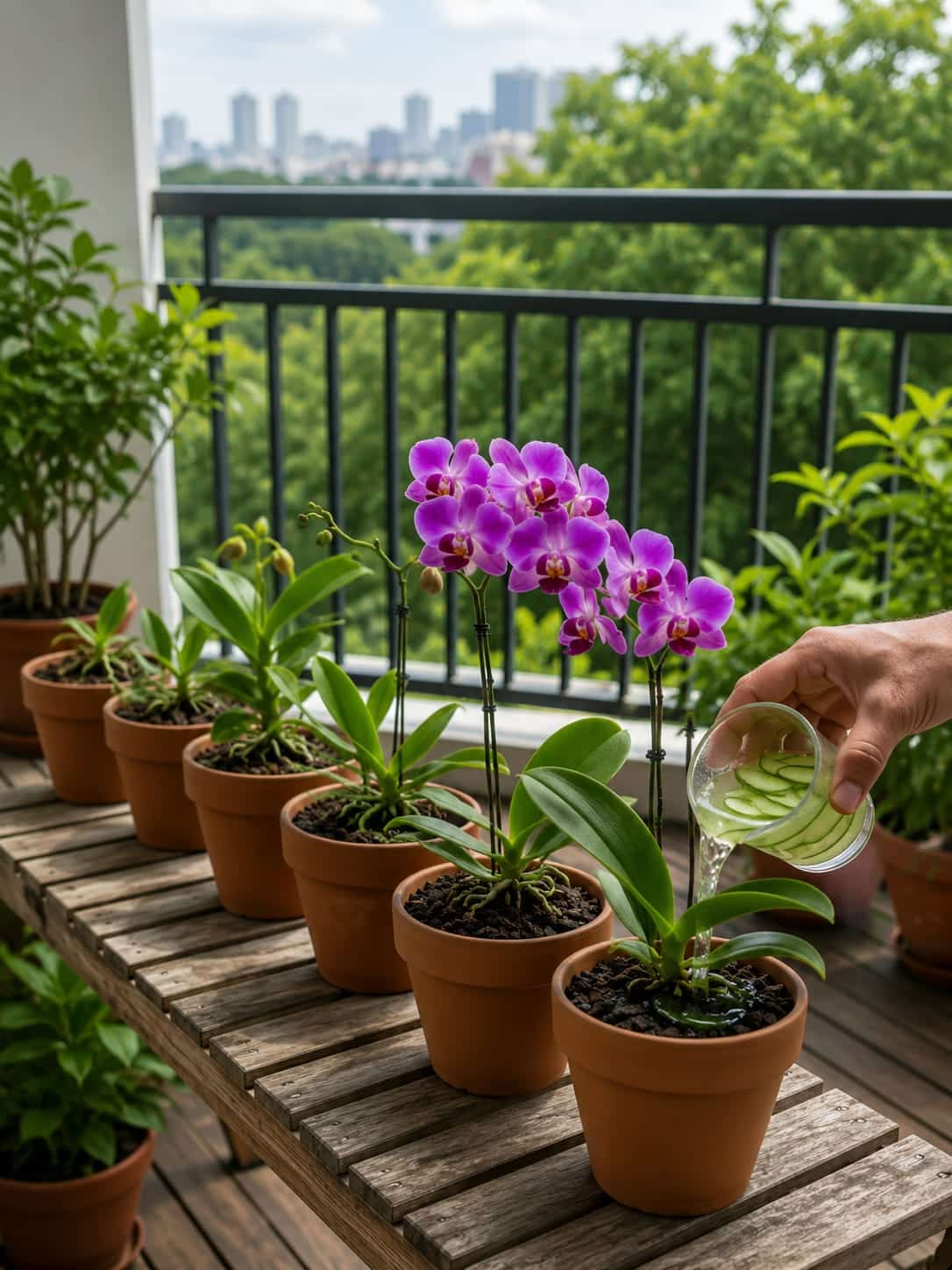
Orchids are among the most elegant indoor flowering plants for homeowners who want graceful blooms, sculptural roots, glossy leaves, and a premium decorative display that fits beautifully in living rooms, bedrooms, apartments, home offices, bright kitchens, balcony gardens, covered patios, commercial interiors, luxury home staging, and refined indoor plant styling. A healthy orchid can make a simple terracotta pot, ceramic planter, or clear nursery pot look expensive because the flowers rise above the leaves like a natural bouquet.
Many plant lovers become curious when they see a pale green liquid being poured around an orchid. This type of liquid is often described online as a simple homemade trick for stronger roots, better blooms, greener leaves, and faster recovery. The liquid may be aloe vera water, cucumber water, diluted seaweed extract, rice water, banana peel water, green tea water, or another homemade plant tonic. Because many light green liquids look similar, the exact ingredient matters. Orchids are not grown like ordinary houseplants in heavy soil. Their roots need air, drainage, and clean moisture. A liquid that seems gentle can still cause problems if it is thick, sugary, fermented, or poured too often.
The safest way to understand this method is to treat aloe water or any pale green liquid as an optional mild supplement, not a guaranteed orchid bloom booster. An orchid blooms well when it has bright indirect light, airy orchid bark, drainage, correct watering, healthy roots, stable temperature, moderate humidity, and gentle feeding during active growth. A homemade liquid cannot replace those basics. If the orchid is already blooming, the best care is calm and consistent. Too much extra liquid around the roots can shorten blooms or increase rot risk.
Why Orchid Roots Need Air
Orchid roots are different from the roots of many common indoor plants. Many popular orchids, especially Phalaenopsis orchids, naturally grow attached to trees rather than buried in dense soil. Their roots are used to airflow, moisture, and quick drying. This is why orchids are usually grown in bark, chunky orchid mix, sphagnum moss, or clear pots with ventilation instead of ordinary garden soil.
When orchid roots receive air and moisture in balance, they stay firm and healthy. Healthy roots may appear green when wet and silvery-gray when dry. If roots remain wet for too long, they can turn brown, black, hollow, or mushy. Once root rot begins, the plant may lose leaves, drop flowers, or stop growing even if it still looks beautiful from above.
This is why any homemade liquid must be used carefully. Orchids do not need their potting medium soaked constantly. They need water to pass through the bark, hydrate the roots, and drain away. Air should return around the roots after watering.
What the Pale Green Liquid Might Be
The pale green liquid may be aloe vera water. Aloe is often used in plant-care content because it contains moisture and natural compounds that people associate with soothing and recovery. A very diluted, strained aloe water may be tolerated occasionally, but thick aloe gel should not be poured into orchid bark because it can leave residue and block airflow.
The liquid may be cucumber water. Cucumber water is mostly water with mild plant material, but it is not a complete fertilizer. If it contains pulp or sits too long, it can spoil and smell. Orchids do not need cucumber water to bloom.
The liquid may be seaweed extract. This can be useful if it is a real plant product used at the correct dilution. Seaweed extract is often brownish-green and should be measured carefully. Too strong a dose can stress roots.
The liquid may be rice water or banana peel water. These homemade liquids can ferment and leave residue. They are risky for orchids if used thick, old, or often. Orchid bark should not become a place for decaying kitchen liquids.
Aloe Water for Orchids
Aloe water is one of the most common green homemade liquids shown for orchids. The idea is usually to blend or soak aloe gel in water, strain it, and use a very diluted liquid as a gentle root rinse. If used carefully, a weak aloe water may not harm a healthy orchid. The problem comes when it is used too thick, too often, or without straining.
Aloe gel is sticky. If thick gel coats orchid roots or settles inside bark, it can reduce airflow and encourage residue buildup. Orchids need roots that can breathe. A sticky layer around the roots is not helpful. If aloe is used, it should be extremely diluted and fully strained so the liquid is watery, not slimy.
Aloe water should never smell sour or fermented. It should be fresh. It should not contain chunks. It should not be stored for days and then poured into the pot. Fresh, clean, light, and occasional is the safest approach.
Why Homemade Liquids Can Be Risky for Orchids
Homemade liquids often sound natural and harmless, but orchids are sensitive to residue around their roots. A small indoor orchid pot has limited airflow compared with an outdoor garden. If a liquid contains sugars, pulp, starch, gel, or decomposing plant material, it can stay inside the bark and create odor, mold, or root problems.
Orchid bark is supposed to be chunky and airy. It should not become sticky, muddy, or sour. When homemade liquids build up, they can make the potting medium break down faster. Old broken-down bark holds more water and less air, which increases root rot risk.
If a liquid smells bad, feels sticky, looks cloudy, or contains particles, it should not be used on orchids. Clean water and a weak orchid fertilizer are safer and more predictable.
Best Watering Routine for Orchids
Orchids should usually be watered thoroughly, then allowed to drain. The exact timing depends on the potting medium, pot size, temperature, humidity, and light. An orchid in bark may dry faster than one in sphagnum moss. A clear pot helps because you can see root color and moisture inside the pot.
Water when the roots look silvery and the potting medium is approaching dry. If the roots are still green and the bark is wet, wait. Overwatering is one of the most common orchid problems. A plant can lose roots from too much moisture even when the leaves still look firm for a while.
When watering, use room-temperature water. Let water flow through the pot and drain completely. Do not let the orchid sit in a saucer of water. Standing water around the roots can cause rot.
How to Use Aloe Water More Safely
If aloe water is used, prepare it as a very weak rinse. Use a small amount of clear aloe gel mixed with plenty of water, then strain it carefully. The final liquid should be thin and watery. It should not be thick, sticky, or full of pulp.
Apply it only when the orchid actually needs watering. Do not pour it into already wet bark. Let it drain completely. Use it rarely, not every watering. After using it once, return to plain water for the next several waterings and watch how the roots respond.
If the bark smells sour, roots turn brown, or mold appears, stop using homemade liquids. Rinse the pot with clean water, let it drain well, and allow the medium to dry properly.
When Aloe Water Should Be Avoided
Aloe water should be avoided if the orchid is in old compacted bark, if the roots are already mushy, if the pot has poor drainage, if the plant is sitting in decorative water, or if the room is cool and dim. These conditions already increase rot risk. Adding extra organic liquid can make the problem worse.
It should also be avoided if the orchid is blooming beautifully and stable. A plant in full bloom does not need sudden treatments. Keep care consistent. Major changes during bloom can lead to flower drop.
Do not use aloe water that has fermented, changed smell, or sat for days. Do not use thick blended gel. Do not pour aloe directly into the crown of the orchid. The crown should stay dry to prevent crown rot.
Best Light for Orchid Blooms
Orchids need bright indirect light to bloom well. A bright balcony, covered patio, or window with filtered light can be excellent. Too much harsh direct sun can burn leaves, while too little light can prevent blooming. A healthy orchid with strong roots may still refuse to flower if it is kept too dark.
Leaves can help show whether the light is right. Deep dark green leaves may mean the orchid needs more brightness. Yellowish or scorched leaves may mean too much direct sun. A balanced medium green is often a good sign for many Phalaenopsis orchids.
Light is one of the real bloom boosters. Aloe water cannot replace it. If an orchid is not reblooming, review light before adding homemade liquids.
Temperature and Airflow
Orchids prefer stable warmth and gentle airflow. They do not like cold drafts, hot dry blasts, or stagnant damp air. A balcony or covered patio can work if temperatures are mild and the plant is protected from harsh sun, heavy rain, and strong wind.
Good airflow helps potting medium dry properly. It also reduces mold and fungal problems. Indoors, avoid placing orchids tightly against curtains or in closed corners where air does not move.
Some orchids need a slight temperature difference between day and night to encourage blooming. A stable bright location with mild night cooling can help, but cold stress should be avoided.
Humidity for Orchids
Orchids appreciate moderate humidity, but humidity should not mean wet roots all the time. A humid environment helps leaves and aerial roots, while the potting medium still needs airflow and drying. This balance is important.
If indoor air is very dry, a humidity tray can help if the pot sits above the water and not in it. A small humidifier can also help. Misting should be done carefully because water sitting in the crown or between leaves can cause rot.
Do not use aloe water as a humidity solution. It belongs, if used at all, as a very diluted root rinse, not as a spray that coats leaves and flowers.
Best Potting Medium for Orchids
Most common orchids grow best in a chunky orchid mix. Bark is popular because it provides air around roots. Some mixes include perlite, charcoal, coco chips, or sphagnum moss. The best medium depends on your watering habits and climate.
If you water often, a bark-heavy mix may be safer. If your home is very dry, a small amount of moss can help hold moisture, but too much moss can stay wet too long. The medium should never become dense and muddy.
Old bark breaks down over time. When bark becomes fine, dark, and compacted, it holds too much water and too little air. Repotting into fresh orchid mix can do more for root health than any homemade liquid.
Why Clear Pots Help
Clear orchid pots are useful because they allow you to see the roots. You can tell whether roots are green and wet or silvery and dry. You can also notice rot earlier. A clear pot inside a decorative outer pot gives both function and style.
If using a decorative pot, make sure water does not collect at the bottom. After watering, remove the clear pot, let it drain completely, and then return it to the decorative container. Hidden standing water is a common cause of orchid decline.
A beautiful orchid display should still be practical. Style should support root health, not hide problems.
Feeding Orchids Safely
Orchids benefit from gentle feeding during active growth. A balanced orchid fertilizer diluted weakly is usually safer than homemade tonics. Many growers prefer feeding weakly and regularly during growth rather than giving strong doses.
Do not overfeed. Orchid roots can burn from strong fertilizer. Salt buildup can damage root tips and create leaf problems. Flush the pot with plain water occasionally to remove buildup.
If the pale green liquid is actually seaweed extract or fertilizer, follow the product label. More is not better. Weak and measured is safer.
How to Support Reblooming
Reblooming depends on plant health, light, temperature, and maturity. After flowers fade, keep caring for the leaves and roots. The plant needs time to store energy before it blooms again. A weak plant with poor roots may not rebloom until it recovers.
Provide bright indirect light, gentle feeding during active growth, and stable care. Avoid cutting healthy green flower spikes too quickly if your orchid type can rebloom from them. If the spike turns brown and dry, it can be trimmed.
Homemade liquid is not the main reblooming factor. Strong roots and good light are far more important.
Signs of Healthy Orchid Roots
Healthy orchid roots are firm. They may appear green when wet and silvery when dry. Active growing root tips may look bright green or light-colored. Aerial roots are normal and should not be cut unless they are dead.
Roots that are brown, black, mushy, hollow, or foul-smelling are unhealthy. If many roots are damaged, the plant may struggle to support leaves and blooms. In that case, watering tricks will not fix the plant. Root cleanup and fresh medium may be needed.
When roots are healthy, the plant can handle normal watering and gentle feeding. Protecting roots is the most important part of orchid care.
Signs the Liquid Is Causing Problems
Warning signs include sour smell, sticky bark, mold on the medium, fungus gnats, brown mushy roots, yellowing leaves, flower drop, or water sitting too long in the pot. If these appear after using a homemade liquid, stop immediately.
Flush the pot with clean room-temperature water and let it drain completely. Allow the medium to dry to the correct level before watering again. If the potting mix remains sticky or sour, repotting may be necessary.
Do not keep adding different remedies. Too many treatments can stress the orchid more. Return to clean basics.
What to Do If Too Much Aloe Water Was Added
If too much diluted aloe water was poured into the pot, let it drain fully. Do not let the orchid sit in the runoff. If the liquid was thick or sticky, flush the pot gently with plain water and drain again. Then allow the medium to dry normally.
If the bark begins to smell sour or feels slimy, remove the orchid from the pot and inspect the roots. Trim mushy roots with clean scissors. Repot into fresh orchid bark. Keep the crown dry and avoid heavy watering immediately after repotting.
If the orchid is blooming, handle it gently. Root disturbance can shorten bloom life, but saving roots is more important if rot is present.
Cleaning Orchid Leaves
Orchid leaves should be kept clean so they can absorb light. Wipe them gently with a soft damp cloth. Support the leaf while cleaning. Avoid leaving water in the crown where the leaves meet. Crown rot can develop if water sits there too long.
If aloe water or any homemade liquid splashes onto the leaves, wipe it away. Sticky residue can attract dust and make leaves look dull. Do not coat flowers with homemade mixtures. Orchid flowers are delicate and can spot or fade if sprayed with residue.
Plain water and gentle cleaning are enough for leaf care.
Balcony and Patio Orchid Styling
Orchids can look beautiful on a protected balcony or covered patio when the conditions are right. Terracotta pots, clear inner pots, wooden benches, ceramic planters, and grouped plant displays create a relaxed tropical style. A blooming orchid placed among green foliage plants can become the focal point of the entire space.
Protection is important. Keep orchids out of harsh midday sun, strong wind, heavy rain, and cold nights. A balcony with bright filtered light can be excellent. The plant should receive airflow but not drying wind that damages flowers.
For a premium display, keep pots clean, remove old flower spikes when dry, wipe leaves, and avoid messy homemade liquid spills. The orchid’s blooms and roots should look fresh and intentional.
Continue to Page 2
Continue to page 2 for more details about this article and the key points many readers miss on the first page.