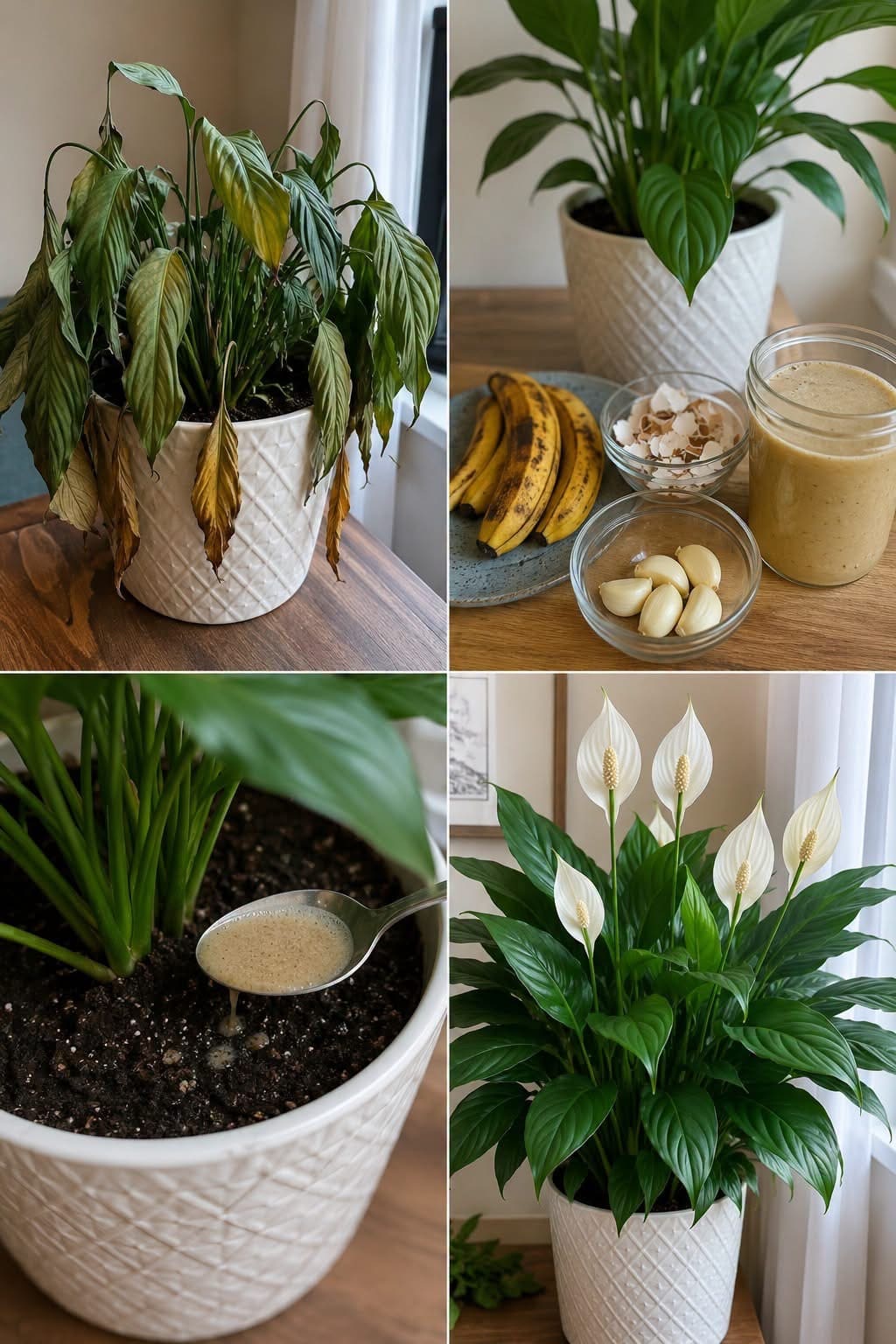
A Peace Lily can look dramatically wilted when it is thirsty, stressed, sitting in poor light, or growing in soil that stays wet for too long. Its leaves may bend downward, turn yellow, develop brown tips, or lose their glossy green color. The good news is that this popular indoor plant is usually very responsive once the real cause is corrected.
Photos online sometimes show banana peels, garlic, coconut scraps, or homemade blended mixtures being poured into plant soil. Although these ingredients may look natural, they are not a safe or reliable fertilizer for a Peace Lily. Food mixtures can rot in the pot, attract fungus gnats, create unpleasant odors, and make drainage problems worse. A healthier approach is simple: correct watering, bright indirect light, clean well-draining soil, and a labeled houseplant fertilizer used at the proper strength.
This guide explains how to identify why your Peace Lily is drooping, how to help it recover safely, and how to keep it looking lush and elegant in your home.
Why Peace Lilies Droop So Easily
Peace Lilies are known for their expressive leaves. When they need water, they often droop noticeably. This can make the plant look alarming, but a thirsty Peace Lily frequently perks up after proper watering.
However, drooping does not always mean the plant needs more water. Too much water can also make leaves wilt because constantly wet soil prevents roots from receiving enough oxygen. The roots may weaken, and the plant can no longer move moisture effectively through its stems and leaves.
Other common causes include low light, compacted soil, a pot without drainage holes, cold drafts, heat from a radiator, and roots that have become crowded inside the pot. The best way to revive the plant is to check these conditions one by one instead of adding a strong homemade mixture.
Signs Your Peace Lily Needs Attention
A Peace Lily may need care if you notice several of these signs:
- Leaves hanging downward or looking limp
- Yellow lower leaves
- Brown leaf tips or edges
- Soil that is very dry and pulling away from the sides of the pot
- Soil that stays wet for many days
- A sour smell coming from the pot
- Small flies hovering around the soil
- Roots growing through the drainage holes
- Slow growth during the active growing season
- Fewer or smaller flowers than usual
One yellow leaf alone is not always a major problem. Older leaves naturally fade as the plant grows. But repeated yellowing, soft stems, or constantly wet soil should be addressed quickly.
Do Not Use Banana, Garlic, or Food Blends in the Pot
Banana peels and garlic are often promoted as plant “boosters,” but they are not a balanced fertilizer. A Peace Lily needs nutrients in predictable amounts, especially nitrogen, phosphorus, potassium, and trace minerals. Food scraps do not provide those nutrients in a controlled form.
Blended banana mixtures can leave sugars and organic residue in the soil. This may encourage mold, bacteria, and fungus gnats. Garlic can also create a strong odor and does not solve problems caused by poor drainage, overwatering, or low light.
Coconut pieces, kitchen leftovers, milk, coffee, tea, sugary water, and crushed tablets should also be avoided unless they are part of a properly tested commercial plant product. Indoor pots have limited airflow and limited soil volume, so decomposing food can cause more stress than benefit.
The safest plant food is a balanced liquid houseplant fertilizer used exactly according to the product label. Apply it only to a healthy, actively growing plant and never to dry or severely stressed roots.
Step One: Check the Soil Before Watering
Insert a clean finger about one to two inches into the soil. If the top layer is dry but the soil below is slightly moist, your Peace Lily may be ready for water. If the soil is still wet or feels heavy and muddy, wait before watering again.
When the plant is thirsty, take it to a sink or tub. Slowly water the soil surface with room-temperature water until water flows from the drainage holes. Let the pot drain completely before returning it to its saucer or decorative cover.
Never leave the plant standing in a tray of water. Empty the saucer after 10 to 15 minutes. Peace Lily roots need moisture, but they also need oxygen.
If the soil is extremely dry and water runs down the inside edge of the pot without soaking in, water slowly in two or three rounds. Give the soil a minute to absorb water between each round.
Step Two: Give It the Right Light
Peace Lilies grow best in bright, indirect light. Place the plant near a bright window where it receives filtered daylight rather than harsh direct sun.
Strong afternoon sunlight can scorch the leaves, leaving brown patches or faded areas. A dark corner, on the other hand, can lead to weak stems, slow growth, and fewer blooms.
A good location is a few feet from an east-facing window, near a north-facing window, or behind a sheer curtain at a brighter window. If you can comfortably read a book near the plant during the day without turning on a lamp, the light level is often suitable.
Turn the pot a quarter turn every week or two. This helps the leaves grow evenly instead of leaning toward one side.
Step Three: Make Sure the Pot Drains Well
A decorative pot is fine, but the actual growing pot should have drainage holes. Without drainage, excess water sits around the roots and can cause root rot.
If your Peace Lily is planted directly in a pot with no holes, move it into a nursery pot or a proper planter with drainage. Choose a container only one or two inches wider than the current root ball. A pot that is too large holds too much soil and stays wet longer than necessary.
Use a loose indoor-potting mix. For better drainage, you can mix regular houseplant soil with perlite or orchid bark. The goal is soil that holds some moisture but does not become dense and soggy.
Step Four: Remove Damaged Leaves Carefully
Use clean scissors or pruners to remove leaves that are fully yellow, brown, or badly damaged. Cut the leaf stem close to the base of the plant without cutting healthy new growth.
Removing dead leaves helps the plant direct energy toward stronger leaves and roots. It also improves the overall appearance of the plant, especially when it is displayed in a living room, bedroom, entryway, or office.
Do not remove more than one-third of the plant at once. If many leaves are damaged, focus first on correcting watering and light. Healthy new leaves should gradually replace the old ones.
Step Five: Feed Only When the Plant Is Growing Well
Once your Peace Lily has recovered and is producing healthy leaves, you can feed it with a balanced liquid houseplant fertilizer. Choose one labeled for indoor foliage plants and dilute it according to the label.
Apply fertilizer after watering, never to dry soil. Fertilizing dry roots can cause root burn and brown leaf tips.
During spring and summer, feeding once every four to six weeks is usually enough. In fall and winter, growth slows because daylight levels are lower, so reduce fertilizer or pause it until the plant begins growing actively again.
More fertilizer does not mean faster recovery. Too much can leave mineral salts in the soil and damage the roots. A gentle, consistent routine is best.
How to Tell Whether Your Plant Is Underwatered or Overwatered
Underwatered Peace Lily leaves often look limp but remain mostly green. The soil feels dry, the pot feels light, and the plant may recover noticeably within several hours after a thorough watering.
Overwatered Peace Lily leaves may also droop, but they are more likely to turn yellow. The soil remains wet for a long time, and stems may feel soft near the base. You may also notice a musty smell or fungus gnats.
If you suspect overwatering, stop watering and allow the soil to dry partially. Make sure drainage holes are open. If the roots are brown, mushy, or smell unpleasant, repot the plant in fresh, airy soil after trimming away the damaged roots with clean scissors.
Best Places to Display a Peace Lily
A healthy Peace Lily looks elegant in many rooms because its deep green leaves and white blooms add a calm, polished look.
Place it on a side table near a bright window to create a relaxed living-room display. A white or terracotta pot can make the green leaves stand out beautifully.
A Peace Lily also works well in a bedroom with filtered morning light. Its soft leaf shape gives the room a peaceful, natural feel without taking up much space.
In an entryway, place it on a small stand or console table where it receives indirect light. It creates a welcoming first impression and looks especially attractive beside natural wood, light walls, or neutral decor.
For an office, choose a bright location away from direct sunlight and air-conditioning vents. The plant’s tidy, upright growth helps bring warmth to a work space.
Common Peace Lily Problems and Simple Fixes
Brown leaf tips often come from inconsistent watering, dry indoor air, excess fertilizer salts, or minerals in tap water. Water consistently, avoid overfeeding, and consider using filtered water if your tap water is heavily treated.
Yellow leaves usually point to overwatering, poor drainage, or an older leaf naturally finishing its life cycle. Check the soil before watering and remove fully yellow leaves.
No flowers can be caused by insufficient light. Move the plant to brighter indirect light. Mature Peace Lilies flower more reliably when they receive enough light without direct sun.
Leaf edges that look burned may be caused by harsh sunlight or too much fertilizer. Move the plant away from direct rays and flush the soil with clean water if you believe fertilizer salts have built up.
Small flies around the soil are often fungus gnats. Let the top inch of soil dry before watering, remove decaying material from the surface, and avoid adding food scraps or homemade blends to the pot.
Peace Lily Care Routine for Beginners
Check the soil once or twice each week rather than watering on a strict calendar. Water when the upper layer has dried slightly.
Keep the plant in bright indirect light. Avoid placing it in a dark corner, directly against a sunny window, or next to a heater or cold draft.
Wipe dust from the leaves every few weeks with a soft damp cloth. Clean leaves can capture light more effectively and make the plant look fresh.
Rotate the pot regularly for balanced growth. Feed lightly during the active growing season, and repot only when the plant has truly outgrown its pot.
Frequently Asked Questions
Can a badly drooping Peace Lily recover?
Yes, many Peace Lilies recover quickly if they were simply underwatered. If the issue is overwatering or root rot, recovery may take longer, but the plant can still improve with fresh soil, proper drainage, and careful watering.
Should I water my Peace Lily every day?
No. Daily watering is usually too much for an indoor Peace Lily. Check the soil first and water only when the top layer has begun to dry.
Can I use banana peel water as fertilizer?
It is better not to use it in indoor pots. Banana water and blended banana mixtures can spoil in the soil and attract pests. Use a labeled houseplant fertilizer for a safer and more predictable result.
How often should I fertilize a Peace Lily?
During active growth, fertilize lightly about once every four to six weeks. Always follow the product label and avoid fertilizing a weak, dry, or newly repotted plant.
Are Peace Lilies safe around pets?
Peace Lilies can irritate the mouth and stomach if chewed by cats or dogs. Keep the plant out of reach of pets and young children, and contact a veterinarian or medical professional if ingestion occurs.
Final Thoughts
A drooping Peace Lily does not need a kitchen remedy to become healthy again. The most effective care is simple and safe: check the soil, water thoroughly only when needed, provide bright indirect light, use a pot with drainage, and feed lightly with a proper houseplant fertilizer.
Skip banana, garlic, coconut, and other food mixtures in the soil. By giving your Peace Lily clean water, breathable soil, and a stable routine, you give it the best chance to grow fuller green leaves and produce its graceful white blooms again.