Common Anthurium Pests
Anthuriums can attract pests, especially if the air is dry or the plant is stressed.
Common Pests
- Spider mites
- Mealybugs
- Aphids
- Scale insects
- Thrips
- Fungus gnats
Simple Pest Care
- Isolate the plant.
- Wipe leaves with a damp cloth.
- Remove visible pests.
- Use insecticidal soap if needed.
- Repeat weekly until pests are gone.
- Improve airflow and avoid wet soil.
Best Indoor Styling Ideas
A red Anthurium already looks bold and elegant. The glossy leaves and red flowers work well in many decor styles.
- Place in a white ceramic pot for modern style.
- Use a woven basket for natural warmth.
- Set near a bright filtered window.
- Place on a wooden plant stand.
- Group with peace lilies and pothos.
- Use as a table centerpiece in bright indirect light.
- Pair with neutral decor to make red flowers pop.
- Keep leaves clean for a polished look.
Seasonal Anthurium Care
Spring
Spring is a good time for repotting, feeding, cleaning leaves, and encouraging new growth. Use balanced fertilizer lightly.
Summer
Growth is active. Maintain humidity, water carefully, and protect from strong sun.
Fall
Reduce feeding slightly as growth slows. Keep light bright and indirect.
Winter
Water less often because soil dries slower. Keep the plant warm and away from drafts. Avoid experimenting with ash in winter.
Common Mistakes to Avoid
- Adding too much wood ash
- Using ash from treated wood
- Using ash in a pot without drainage
- Sprinkling ash directly on stems
- Using ash on a sick plant
- Keeping the plant in low light
- Overwatering after adding powder
- Using heavy soil
- Ignoring yellow leaves
- Expecting instant blooms from one trick
Safe Ash Method Summary
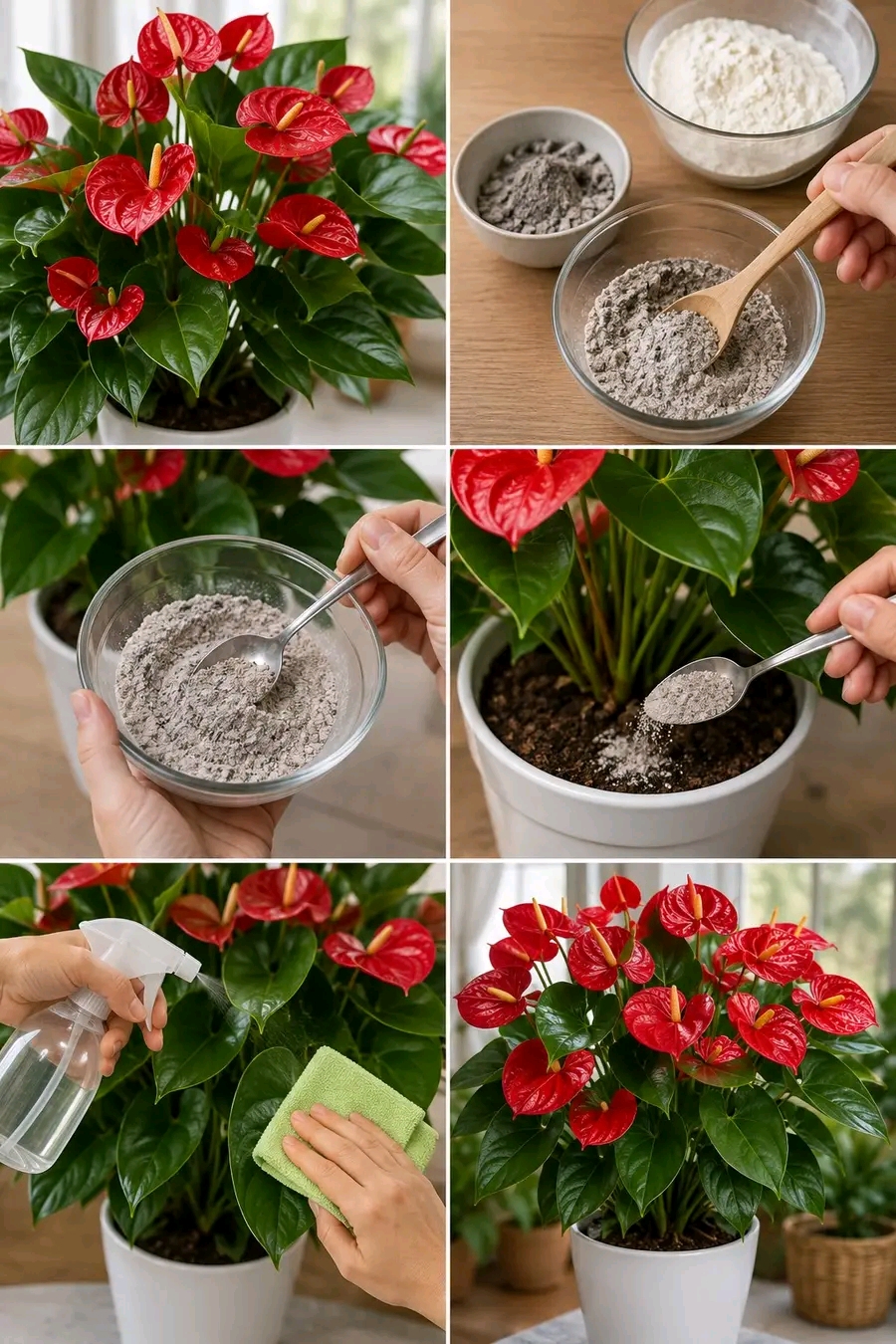
- Use only clean untreated wood ash.
- Sift it into a fine powder.
- Use only a tiny pinch or up to 1/4 teaspoon for a medium pot.
- Sprinkle lightly on the outer soil surface.
- Keep away from stems and leaves.
- Do not repeat often.
- Do not use on wet or unhealthy plants.
- Stop immediately if leaves yellow or tips brown.
- Use proper fertilizer for regular feeding.
- Focus on light, soil, water, and humidity first.
Frequently Asked Questions
Is wood ash good for Anthuriums?
Only in very tiny amounts and only rarely. Wood ash is alkaline and can damage Anthuriums if overused.
Can ash make Anthuriums bloom?
Ash cannot force blooms by itself. Anthuriums need bright indirect light, healthy roots, correct watering, warmth, humidity, and balanced feeding.
How much ash should I use?
For a medium indoor pot, use no more than a tiny pinch or about 1/4 teaspoon, and only once every few months. Less is safer.
Can I use charcoal ash?
No. Do not use ash from charcoal briquettes, treated wood, painted wood, trash, or chemical fire starters.
Why did my Anthurium leaves turn yellow?
Yellow leaves may come from overwatering, low light, root rot, nutrient issues, or too much ash changing the soil pH.
Should I spray the leaves after using ash?
You can clean leaves with plain water and a soft cloth. Do not spray ash water on the leaves.
What is safer than ash?
A diluted balanced houseplant fertilizer, small amount of worm castings, or fresh chunky soil mix is usually safer for indoor Anthuriums.
Final Thoughts
The ash powder trick for Anthuriums can look impressive, but it must be used carefully. Wood ash may contain minerals that support plants, but it is also alkaline and can harm sensitive roots if used too much. In a small indoor pot, even a little can have a strong effect.
The safest approach is to use only a tiny amount of clean untreated wood ash, only rarely, and only on a healthy plant. Keep it away from stems and leaves. Do not use it as a regular fertilizer. Do not use it on sick plants, wet soil, or pots without drainage.
For real Anthurium success, focus on the basics. Give bright indirect light, airy chunky soil, correct watering, warm temperatures, moderate humidity, clean glossy leaves, and gentle balanced feeding. When these needs are met, your Anthurium can grow strong roots, deep green leaves, and bright red flowers that make your home feel tropical, fresh, and beautiful.