Pests to Watch For
Anthuriums can attract pests such as mealybugs, spider mites, scale, thrips, and fungus gnats. Fungus gnats are especially common when soil stays wet or organic liquids are used too often. Milk residue in soil can make this problem worse.
Check the plant regularly. Mealybugs look like small white cottony patches. Scale can look like brown bumps on stems or leaves. Spider mites may cause speckled leaves and fine webbing. Thrips can damage new leaves and flowers. Early treatment is much easier than waiting.
Keep the plant clean, avoid soggy soil, and isolate any plant with pests. Use a plant-safe treatment if needed and follow the label directions.
How to Encourage More Blooms Naturally
To encourage more anthurium blooms, improve the basics. Give the plant bright indirect light. Keep it warm. Use airy soil. Water when the top part of the mix begins to dry. Feed gently during active growth. Keep humidity moderate. Remove old flowers after they fade.
Do not expect instant blooms from one feeding. Anthuriums grow steadily when conditions are right. The plant needs time to produce healthy roots and leaves before it can flower more. A stressed plant may need weeks or months to recover before blooming again.
If the plant has not bloomed for a long time, light is usually the first thing to improve. Move it gradually to a brighter spot. Do not place it in harsh direct sun. Give it stable care and watch new growth. New flowers often come after the plant has built enough energy.
What to Do If You Already Poured Milk Into the Pot
If you poured a small amount of very diluted milk water once, do not panic. Let the soil dry normally and watch for odor, mold, fungus gnats, or yellow leaves. Do not repeat the treatment. Use plain water next time.
If you poured strong milk or used it several times, check the soil. If the soil smells sour, has mold, or attracts gnats, repotting may be the safest choice. Remove the plant, gently loosen the old soil, inspect the roots, trim any rotten roots, and repot into fresh airy mix. Do not fertilize immediately after repotting.
If the plant still looks healthy and the soil smells normal, you can flush the pot gently with plain water and let it drain fully. Then return to normal care. The goal is to remove residue and prevent the soil from becoming sour.
Final Thoughts
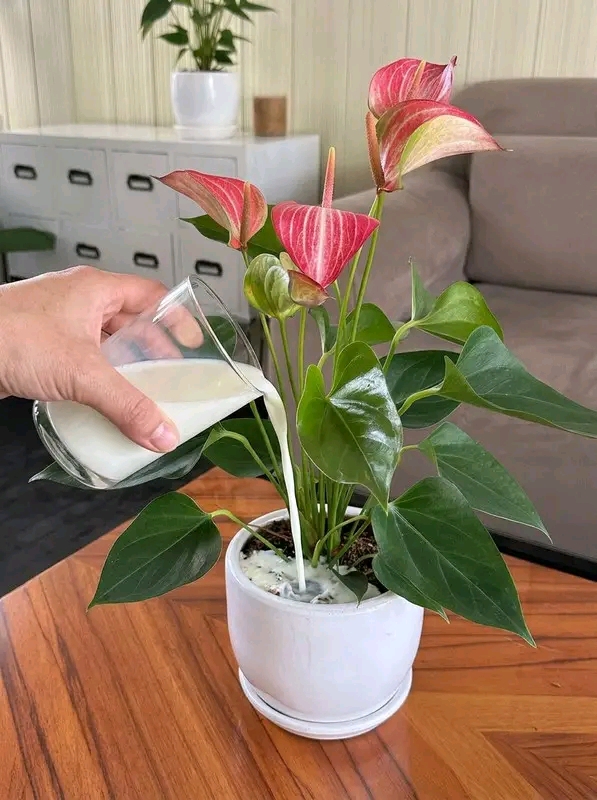
The image of milk being poured onto a pink anthurium looks like a simple secret for lush growth and flowers, but anthuriums do not need milk to thrive. Milk can spoil in the soil, attract pests, create odor, and stress sensitive roots. It is not a reliable bloom fertilizer and should not be used as a regular plant treatment.
The real secret to a beautiful anthurium is balanced care. Give it bright indirect light, warm temperatures, airy soil, a pot with drainage, moderate humidity, and gentle fertilizer during active growth. Water only when the top part of the soil begins to dry, and never let the roots sit in soggy soil. Clean the leaves with plain water and remove old blooms when they fade.
With steady care, an anthurium can keep its glossy leaves, produce strong new stems, and bloom again with colorful spathes. Skip the risky milk trick and focus on healthy roots, good light, and clean watering. That is the safest way to keep your pink anthurium vibrant, elegant, and full of tropical charm.