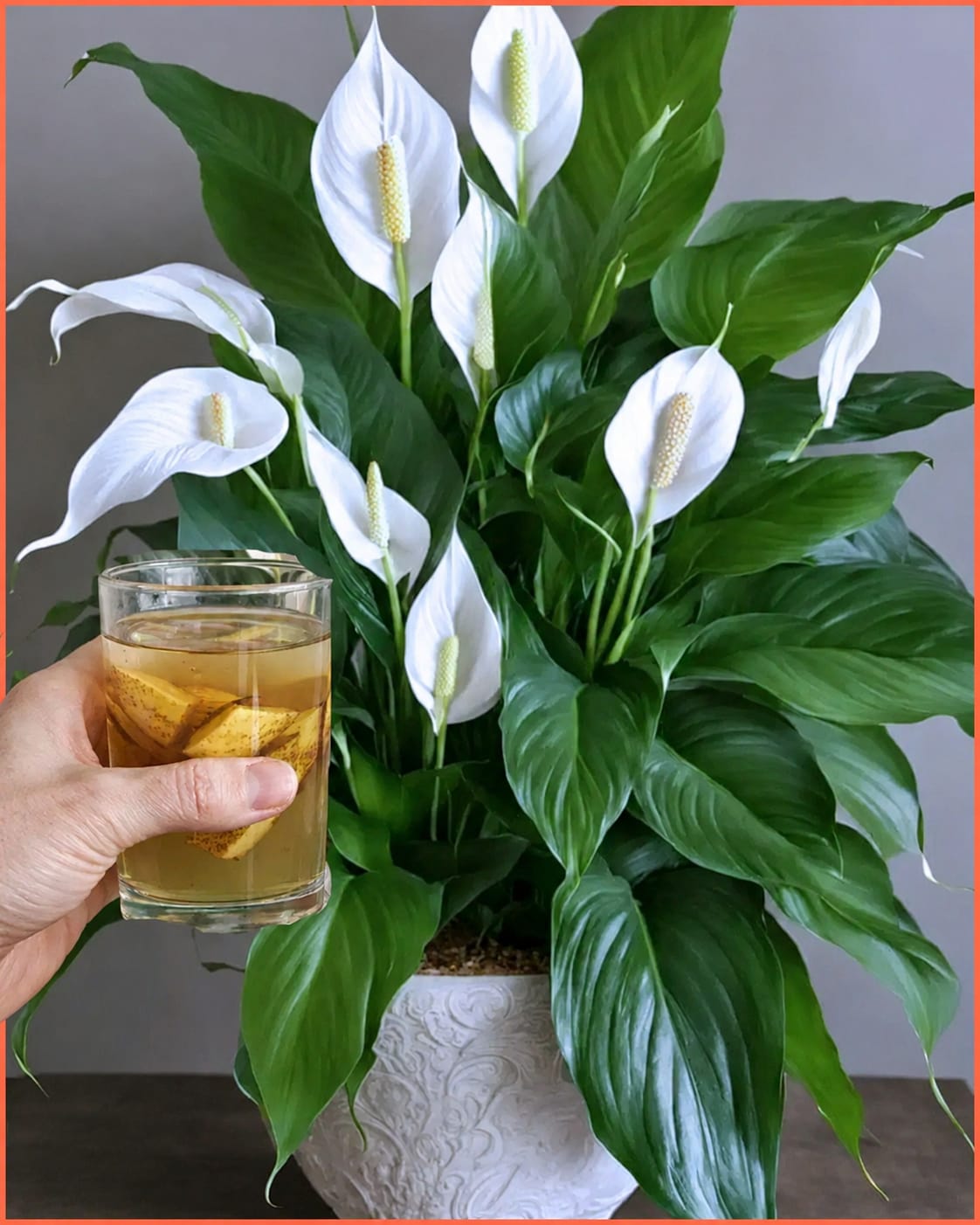
Peace lilies are one of the most loved indoor plants because they look elegant, clean, and peaceful. Their deep green leaves and white flowers can make any room feel fresh and calm. A healthy peace lily can brighten a living room, bedroom, office, kitchen corner, bathroom, or plant shelf with very little effort.
Many home gardeners look for natural ways to make peace lilies bloom more often. One popular trick is banana peel water. The image shows a beautiful peace lily with many white blooms and a glass of banana peel liquid. It looks simple and powerful, but the truth is that banana peel water must be used carefully. It can support plant care in a gentle way, but it is not a magic solution by itself.
The real secret to a blooming peace lily is a mix of proper light, steady moisture, healthy roots, good drainage, warm temperatures, humidity, and light feeding. Banana peel water may help as a mild natural supplement, but only when the plant already has good growing conditions.
This guide explains how banana peel water works, how to prepare it safely, how to use it on peace lilies, what mistakes to avoid, how to make peace lilies bloom, how to prevent root rot, and how to keep the plant looking lush and beautiful indoors.
What Is Banana Peel Water?
Banana peel water is a homemade plant liquid made by soaking banana peels in water. The idea is that some nutrients from the peel move into the water. Banana peels contain potassium and small amounts of other minerals. Potassium is often connected with flowering, root health, and general plant strength.
However, banana peel water is not a complete fertilizer. It does not replace a balanced plant food. It is also not always clean or safe if prepared badly. If banana peel water ferments, smells sour, or sits too long, it can attract fungus gnats, mold, bacteria, and bad odors.
For peace lilies, banana peel water should be used as a light occasional supplement, not as the main care routine.
Can Banana Peel Water Make Peace Lily Bloom?
Banana peel water alone will not force a peace lily to bloom. A peace lily needs bright indirect light to produce flowers. If the plant is kept in a dark corner, it may grow leaves but produce few or no blooms. Many people think their peace lily needs fertilizer, but the real problem is often low light.
Banana peel water may support the plant if it is already healthy, but blooms depend mostly on light and root health. A peace lily with strong roots, airy soil, correct watering, and bright indirect light has a better chance of producing white flowers.
The Real Secret to Peace Lily Blooms
- Bright indirect light
- Consistent but not soggy moisture
- Well-draining soil
- A pot with drainage holes
- Warm indoor temperature
- Moderate humidity
- Light feeding during active growth
- Healthy roots
- Removal of old flowers
- Stable care without sudden stress
Banana peel water can be one small part of this routine, but it should never replace good basic plant care.
Benefits of Banana Peel Water for Peace Lily
When used correctly and rarely, banana peel water may offer a gentle nutrient boost. It can be useful for gardeners who prefer natural plant care methods. It may support greener leaves, stronger roots, and flowering when combined with proper light and watering.
Possible Benefits
- Provides a mild potassium source
- Supports general plant strength
- May help flowering plants when used lightly
- Uses kitchen waste in a practical way
- Can be part of an eco-friendly plant routine
- May improve soil life when used fresh and diluted
The key word is mild. More is not better. Too much banana peel water can create problems in indoor pots.
Risks of Banana Peel Water
Banana peel water can cause issues if used too often or prepared incorrectly. Indoor pots are small closed environments compared to outdoor soil. Organic liquids can spoil quickly and attract pests.
Possible Problems
- Fungus gnats
- Mold on soil
- Sour smell
- Sticky soil surface
- Root stress
- Overwatering
- Bacterial growth
- Fermented liquid damaging roots
To avoid these problems, always use fresh banana peel water, dilute it, and apply it only when the plant already needs watering.
How to Make Banana Peel Water Safely
The safest banana peel water is fresh, mild, and diluted. Do not leave banana peels soaking for many days in a warm room. Long soaking can create fermentation and odor.
Simple Safe Recipe
- 1 clean banana peel
- 1 liter clean water
- Clean jar or bowl
- Wash the banana peel well to remove dirt or residue.
- Cut the peel into small pieces.
- Place the pieces in a clean jar.
- Add 1 liter of water.
- Let it soak for 6 to 12 hours.
- Strain the liquid.
- Dilute with equal parts fresh water.
- Use the same day.
Do not use banana peel water if it smells sour, rotten, alcoholic, or unpleasant. Fresh banana peel water should smell mild.
How to Use Banana Peel Water on Peace Lily
Use banana peel water only when the soil is partly dry and the plant needs watering. Do not pour it into already wet soil. This can cause soggy roots.
Safe Application
- Check the soil with your finger.
- Use only if the top inch feels dry.
- Dilute the banana peel water with fresh water.
- Pour slowly around the soil, not over the leaves.
- Let excess liquid drain from the pot.
- Empty the saucer after watering.
- Use plain water for the next several waterings.
Use banana peel water only once every 4 to 6 weeks during active growth. Do not use it every week.
Best Time to Use Banana Peel Water
The best time to use banana peel water is during spring and summer, when peace lilies are actively growing. This is when the plant can use nutrients more efficiently. Avoid using it heavily in winter because growth slows and soil stays wet longer.
If the plant is blooming, you can use a very mild diluted banana peel water once, but do not overdo it. Too much organic liquid during blooming can stress the roots.
When Not to Use Banana Peel Water
- When soil is wet
- When the plant has root rot
- When leaves are yellowing from overwatering
- When fungus gnats are present
- When mold is growing on soil
- Right after repotting
- During winter dormancy
- When the liquid smells bad
- When the plant is stressed or drooping in wet soil
If the peace lily is weak, fix the care problem first. Do not add homemade liquids to a stressed plant.
Best Light for Peace Lily Blooms
Peace lilies can tolerate low light, but they bloom best in bright indirect light. This is one of the most important facts. A peace lily in a dark corner may stay alive for a long time, but it may not flower well.
Place your peace lily near a bright window with filtered light. East-facing windows are excellent. North-facing windows can work if they are bright. South or west windows may need a sheer curtain to protect the leaves from strong direct sun.
Signs Your Peace Lily Needs More Light
- No flowers for months
- Long weak stems
- Dark green leaves but no blooms
- Slow growth
- Soil stays wet too long
- Plant leans toward the window
Move the plant closer to indirect light slowly. Avoid sudden harsh sun.
Best Soil for Peace Lily
Peace lilies like soil that holds some moisture but still drains well. Heavy soil can stay wet too long and cause root rot. A light indoor mix is best.
Simple Peace Lily Soil Mix
- 2 parts indoor potting mix
- 1 part perlite
- 1 part coco coir or peat moss
- A small amount of orchid bark, optional
This mix gives the roots moisture and air. The soil should feel soft and loose, not muddy or compacted.
Best Pot for Peace Lily
Use a pot with drainage holes. This is very important. Peace lilies like moisture, but they cannot sit in standing water. A pot without drainage can quickly lead to root rot.
Choose a pot only slightly larger than the root ball. A huge pot holds too much soil and moisture. This can make watering harder and increase the risk of rot.
How to Water Peace Lily Correctly
Water when the top inch of soil feels slightly dry. Pour water slowly until it drains from the bottom. Empty the saucer after watering. Do not leave the pot sitting in water.
Peace lilies are famous for drooping when thirsty. But drooping can also happen from overwatering. Always check the soil before watering.
Signs Your Peace Lily Needs Water
- Leaves droop slightly
- Top inch of soil feels dry
- Pot feels lighter
- Leaves look less firm
- Soil pulls slightly from pot edges
Signs of Overwatering
- Yellow leaves
- Soft stems
- Sour soil smell
- Mold on soil
- Fungus gnats
- Wet soil for many days
- Drooping while soil is wet
If the plant droops while the soil is wet, do not add more water. Check the roots and soil condition.
How to Encourage More White Flowers
Peace lily flowers appear when the plant has enough light and energy. To encourage more blooms, focus on steady care.
- Move the plant to bright indirect light.
- Keep the soil lightly moist, not soggy.
- Use a pot with drainage holes.
- Feed lightly during active growth.
- Remove old flowers.
- Keep leaves clean.
- Maintain warm temperature.
- Avoid cold drafts.
- Use banana peel water only as a mild occasional supplement.
How to Remove Old Peace Lily Flowers
Peace lily flowers eventually fade from white to green or brown. Cut old flower stems near the base with clean scissors. Removing old blooms helps the plant focus on new leaves and future flowers.
Do not pull flower stems by hand because you may damage the crown.
Should You Fertilize Peace Lily?
Yes, but lightly. Peace lilies are not heavy feeders. Use a balanced houseplant fertilizer diluted to half strength every 6 to 8 weeks during spring and summer.
Do not fertilize too often. Too much fertilizer can burn roots, cause brown tips, and reduce plant health.
Banana Peel Water vs Regular Fertilizer
Banana peel water is natural and mild, but it is not complete. Regular balanced fertilizer gives a wider range of nutrients. If your peace lily is growing indoors in the same pot for a long time, it may need balanced nutrition.
You can use banana peel water occasionally, but do not depend on it as the only nutrient source. A diluted balanced fertilizer is more reliable.
Can You Put Banana Peels Directly in the Pot?
It is better not to place banana peels directly on indoor pot soil. Fresh peels can rot, smell bad, attract flies, and create mold. They break down better in compost bins than in houseplant pots.
If you want to use banana peels, make banana peel water and strain it, or compost the peels first.
Can You Use Dried Banana Peel Powder?
Dried banana peel powder can be used very lightly, but it must be fully dry and finely ground. If it is not dry, it can mold. Use only a tiny amount mixed into the top soil, not piled on the surface.
For indoor peace lilies, diluted liquid is usually safer than powder or fresh peel pieces.
How to Prevent Fungus Gnats
Fungus gnats love wet organic soil. Banana peel water can attract them if used too often. To prevent gnats, let the top layer of soil dry slightly between waterings and avoid leaving organic matter on the soil surface.
- Use fresh diluted banana peel water only.
- Do not overwater.
- Remove fallen leaves from the soil.
- Improve airflow.
- Use sticky traps if gnats appear.
- Let the top inch dry before watering again.
How to Fix Mold on Soil
Mold usually appears when soil stays wet and organic material is present. If you see mold after using banana peel water, stop using it for a while.
- Remove the moldy top layer of soil.
- Add fresh dry potting mix.
- Increase airflow.
- Move plant to brighter indirect light.
- Water less often.
- Use plain water only until the plant stabilizes.
Humidity for Peace Lily
Peace lilies like moderate humidity. Dry indoor air can cause brown tips and crispy edges. If your home is dry, increase humidity gently.
Easy Humidity Tips
- Group plants together.
- Use a pebble tray.
- Place the plant in a bright bathroom.
- Use a small humidifier.
- Keep away from heaters.
- Avoid cold drafts.
How to Clean Peace Lily Leaves
Peace lily leaves are broad and collect dust easily. Dust blocks light and makes the plant look dull. Wipe leaves with a soft damp cloth every few weeks.
Clean leaves absorb light better. Better light absorption supports stronger growth and better blooming.
Common Peace Lily Problems
Yellow Leaves
Yellow leaves often come from overwatering, low light, poor drainage, old leaves, or root stress. Check soil moisture first.
Brown Tips
Brown tips can come from dry air, fertilizer buildup, hard water, inconsistent watering, or too much direct sun.
No Flowers
No flowers usually means not enough bright indirect light. Move the plant closer to a bright filtered window.
Drooping Leaves
Drooping can mean the plant is thirsty, but it can also mean root rot. Check the soil before watering.
Small Leaves
Small leaves may come from low light, weak roots, or lack of nutrients.
How to Rescue a Weak Peace Lily
If your peace lily looks weak, yellow, or droopy, do not rush to use banana peel water. First, check the roots and soil.
- Remove the plant gently from its pot.
- Inspect the roots.
- Trim black or mushy roots.
- Remove old wet soil.
- Repot in fresh airy soil.
- Use a pot with drainage holes.
- Place in bright indirect light.
- Water only when the top inch begins to dry.
Wait until the plant recovers before using any homemade supplement.
Continue to Page 2
Continue to page 2 for more details about this article and the key points many readers miss on the first page.