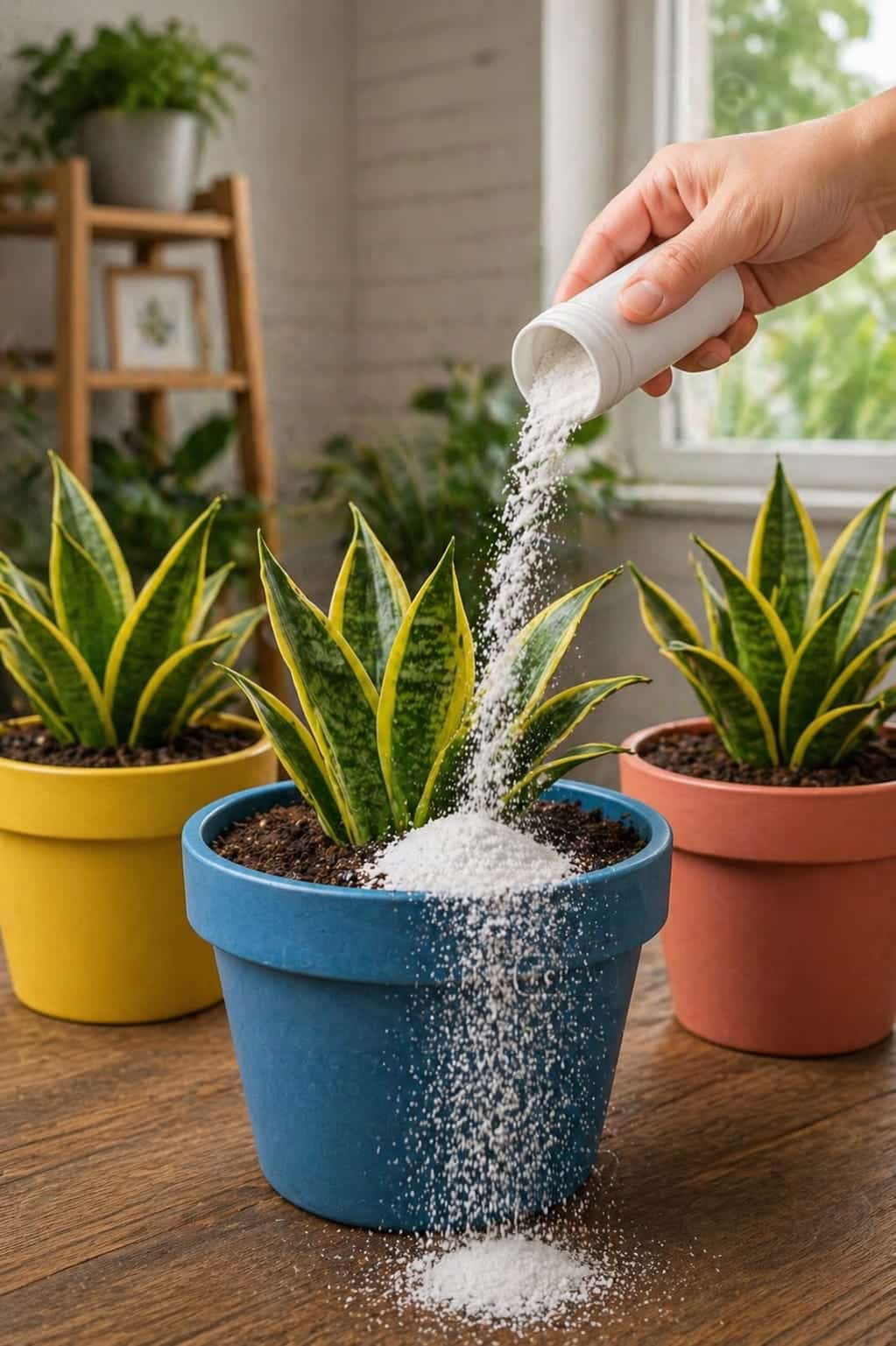
Snake plants are famous for being nearly indestructible. They can survive in dry rooms, tolerate missed watering, and keep their bold upright shape even when other houseplants are struggling. That is why it feels so frustrating when a snake plant starts to look weak. The leaves may lean, wrinkle, turn yellow, develop brown tips, or simply stop growing. Many people assume the plant is finished and start thinking about throwing it away.
But before you toss a weak snake plant, there is one simple white powder trick that many homeowners are starting to try first. It looks unusual, almost dramatic: a fine white powder is sprinkled over the soil around the plant, creating the impression of a quick rescue treatment. People see it and wonder, “What is that white powder? Is it fertilizer? Is it baking soda? Is it eggshell powder? Can it really save a snake plant?”
The safest and most useful version of this trick is usually crushed eggshell powder or a light mineral-style soil amendment used in very small amounts. Eggshell powder is popular because it is natural, easy to make at home, and contains calcium carbonate. Calcium can support plant cell structure, and many gardeners like adding finely crushed eggshells to soil as a slow-release mineral supplement. For a weak snake plant, this can feel like a simple last-chance boost before giving up.
However, there is one very important warning: the white powder should never be poured heavily onto the plant like snow. Snake plants do not need thick layers of powder, strong kitchen chemicals, or constant feeding. A large pile of any powder on the soil can cause problems, especially if it affects drainage, traps moisture, or changes the soil too much. The trick works best when the powder is used lightly, carefully, and only after you understand why the snake plant is weak in the first place.
In this complete guide, you will learn what the white powder snake plant trick is, why people use it, how to prepare a safe version, how to apply it correctly, what results to expect, and what mistakes to avoid. You will also learn how to diagnose a weak snake plant, because no powder can help if the real problem is root rot, overwatering, or a pot without drainage.
What Is the White Powder Trick for Snake Plants?
The white powder trick is a simple houseplant care method where a small amount of fine white powder is added to the top layer of snake plant soil. In the safest natural version, this powder is usually finely crushed eggshell powder. Some people also use other white powders in plant care, such as garden lime, diatomaceous earth, perlite dust, or baking soda, but not all of these are appropriate for snake plants in the same way.
For a weak snake plant, crushed eggshell powder is the best beginner-friendly option because it is mild, natural, and slow to break down. It is not a fast fertilizer, and it will not instantly heal a dying plant, but it can become a gentle soil-supporting amendment when used sparingly.
The idea is that eggshell powder may slowly add calcium to the soil as it breaks down. Calcium is involved in plant structure and root function. In outdoor gardens, crushed eggshells are often added to compost or soil. Indoors, the process is slower, but many plant owners still like using it as part of a natural care routine.
The trick became popular because it looks powerful. A white powder falling over dark soil creates a dramatic visual effect, as if the plant is being treated with a secret rescue formula. But the real value does not come from dumping large amounts of powder. It comes from using a tiny amount while also fixing the plant’s basic care problems.
Why Snake Plants Become Weak
Before using any rescue trick, it is important to understand why a snake plant becomes weak. Snake plants are tough, but they are not immune to poor conditions. Most weak snake plants are struggling because of one of five issues: too much water, not enough light, poor drainage, old compacted soil, or root damage.
Overwatering is the most common problem. Snake plants store water in their thick leaves and underground rhizomes. They do not need frequent watering. If the soil stays wet for too long, the roots can rot. A plant with rotten roots may look thirsty because the leaves wrinkle or droop, but adding more water only makes things worse.
Low light is another common cause of weakness. Snake plants can survive in low light, but they grow stronger in bright indirect light. A plant sitting in a dark corner may stay alive for months but produce little new growth. Over time, it may look dull or weak.
Poor drainage is also dangerous. A decorative pot without drainage holes may trap water at the bottom. Even if the top of the soil looks dry, the lower roots may be sitting in wet conditions. This can slowly damage the plant.
Old soil can become compacted and hold moisture too long. Snake plants prefer fast-draining, airy soil. If the soil is dense, muddy, or slow to dry, the roots cannot breathe properly.
Finally, cold drafts, pests, fertilizer burn, or sudden environmental changes can weaken the plant. That is why diagnosis matters. The white powder trick may help support a plant, but it cannot replace proper care.
Why Homeowners Try White Powder Before Giving Up
Homeowners try this trick because it feels simple and hopeful. When a snake plant looks weak, many people do not want to throw it away immediately. They want one easy thing to try first. A kitchen-based powder like crushed eggshell feels natural, affordable, and safe when used carefully.
It also gives plant owners a sense of action. Instead of watching the plant decline, they can prepare a gentle amendment, inspect the soil, clean the leaves, and reset the care routine. Often, the act of paying closer attention helps more than the ingredient itself.
Another reason this trick is popular is that it fits into the growing interest in natural houseplant care. Many people want to reuse household materials instead of buying more products. Eggshells, rice water, banana peels, and other kitchen scraps have become common topics in plant care because they feel sustainable and clever.
But natural does not always mean risk-free. Even a natural powder can cause issues if used too heavily. Snake plants need moderation. A tiny amount may be fine, while a thick layer may create problems.
What White Powder Should You Use?
The safest white powder for this snake plant trick is finely crushed eggshell powder. It should be clean, dry, and ground as finely as possible. Large eggshell pieces break down very slowly and can look messy on the soil. Fine powder blends more easily into the top layer.
Do not confuse eggshell powder with random household powders. Never use laundry powder, cleaning powder, powdered bleach, powdered detergent, or bathroom cleaners on plants. These can seriously harm or kill a snake plant.
Be careful with baking soda. While baking soda is sometimes used in gardening sprays, it is not ideal as a soil amendment for snake plants. It contains sodium and can affect soil balance if overused. Sprinkling baking soda heavily on soil is not a good rescue method.
Diatomaceous earth is another white powder sometimes used around plants for crawling insects, but it works only when dry and should not be treated as fertilizer. Garden lime can change soil pH and should be used carefully, not casually. For beginners, eggshell powder is the most approachable version of the white powder trick.
How Eggshell Powder May Help a Snake Plant
Eggshells are mostly calcium carbonate. In soil, finely ground eggshells may slowly release calcium over time. Calcium supports plant tissue strength and is part of a healthy soil mineral balance. For outdoor gardens, eggshells are often added to compost or worked into soil as a slow amendment.
For indoor snake plants, the effect is slower and more subtle. Eggshell powder will not act like instant fertilizer. It does not provide a full range of nutrients. It does not replace nitrogen, phosphorus, potassium, or micronutrients in a balanced plant food.
However, as a gentle mineral addition, it may support the soil environment over time. It may also encourage a more careful care routine. When you apply eggshell powder properly, you usually check the soil, inspect the roots, and pay attention to drainage. Those actions are often what truly help the plant recover.
Think of eggshell powder as a small support tool, not a miracle medicine. It can be part of a rescue routine, but the plant still needs proper light, drainage, and watering.
How to Make Eggshell Powder for Snake Plants
Making eggshell powder is simple, but it should be done cleanly. Fresh eggshells can contain leftover egg residue, which may smell or attract pests if added to a pot. Cleaning and drying are important.
Ingredients and Tools
- Clean eggshells from 2 to 4 eggs
- Warm water
- A baking tray or plate
- A blender, coffee grinder, mortar and pestle, or rolling pin
- A small jar for storage
Instructions
- Rinse the eggshells thoroughly with warm water.
- Remove any egg residue from the inside of the shells.
- Let the shells dry completely.
- For extra cleanliness, bake the shells at a low temperature for 10 to 15 minutes.
- Allow the shells to cool.
- Grind them into the finest powder possible.
- Store the powder in a dry jar.
The finer the powder, the better. Large chunks break down very slowly and may sit on the soil for months. Fine powder is easier to mix into the top layer of soil.
How to Apply the White Powder Correctly
The correct application is light and controlled. You do not want a thick white blanket over the soil. You only need a small amount.
For a small snake plant pot, use about 1/4 teaspoon of eggshell powder. For a medium pot, use about 1/2 teaspoon. For a large pot, use no more than 1 teaspoon. Sprinkle it lightly over the soil surface, then gently mix it into the top inch of soil with your fingers, a spoon, or a small fork.
After applying, do not water immediately unless the plant is already due for watering. If the soil is still moist, wait. Snake plants do not need extra water just because you added powder.
When it is time to water, water normally and let excess water drain completely. The eggshell powder will slowly settle into the top layer of the soil.
How Often Should You Use Eggshell Powder?
Eggshell powder should be used rarely. Once every two to three months is enough for most snake plants, and even that may be more than necessary. Since eggshell powder breaks down slowly, repeated heavy applications can build up on the soil surface.
If your snake plant is healthy and growing well, you may not need to use it often at all. If the plant is weak, use it once as part of a care reset, then focus on light, watering, and drainage.
Do not apply eggshell powder every week. Do not keep adding more because you do not see instant results. Snake plants grow slowly, and eggshell powder works slowly if it works at all.
What This Trick Can and Cannot Do
The white powder trick can provide a mild mineral addition to the top layer of soil. It can encourage a more thoughtful plant-care routine. It can help you feel like you are giving the plant one more chance before giving up.
But it cannot cure root rot. It cannot reverse severe overwatering damage. It cannot make a snake plant grow in a dark room. It cannot replace repotting if the soil is old and compacted. It cannot bring back leaves that are already mushy or dead.
If the plant has serious root problems, you need to remove it from the pot and inspect the roots. If the plant is in a pot without drainage, you need to change the pot. If the plant is in heavy soil, you need to improve the soil. Eggshell powder alone cannot solve those issues.
How to Check If Your Snake Plant Can Be Saved
Before tossing a weak snake plant, inspect it carefully. First, look at the leaves. If some leaves are still firm and upright, the plant may be savable. If all leaves are mushy, collapsed, and rotten at the base, the plant is in serious trouble but may still have healthy sections that can be propagated.
Next, check the soil. Is it wet, sour-smelling, or compacted? If so, overwatering or poor drainage may be the real issue. Remove the plant from the pot and inspect the roots.
Healthy snake plant roots and rhizomes should feel firm. Rotten roots are mushy, dark, and may smell bad. Cut away damaged roots with clean scissors. If the rhizome is still firm, the plant has a chance.
If the roots are healthy but the leaves look weak, the issue may be light, old soil, or inconsistent watering. In that case, a gentle reset with fresh soil, better light, and a small amount of eggshell powder may help.
The Best Rescue Routine for a Weak Snake Plant
If your snake plant is weak, do not rely only on white powder. Follow a full rescue routine.
- Remove the plant from its pot if you suspect root problems.
- Inspect roots and rhizomes carefully.
- Trim away mushy or dead roots with clean tools.
- Let the plant dry briefly if roots were wet or damaged.
- Repot into fresh fast-draining soil.
- Use a pot with drainage holes.
- Place the plant in bright indirect light.
- Wait before watering if the soil is already moist.
- Use a tiny amount of eggshell powder only after the plant is stable.
- Water only when the soil is dry.
This routine addresses the real causes of weakness. The white powder can be a small part of the reset, but the main rescue comes from healthy roots and better conditions.
Best Soil for Recovering Snake Plants
A weak snake plant needs soil that drains quickly. Dense indoor potting soil can hold too much water. A better mix is gritty, airy, and designed for succulents or cacti.
A simple snake plant rescue mix can include:
- 2 parts cactus or succulent mix
- 1 part perlite or pumice
- 1 part orchid bark or coarse sand
This mix helps prevent root rot by allowing water to drain and air to reach the roots. If your plant has been struggling in heavy soil, switching to a better mix may make a bigger difference than any powder.
When repotting, do not choose a pot that is too large. Extra soil holds extra moisture. A pot only slightly larger than the root system is best.
Continue to Page 2
Continue to page 2 for more details about this article and the key points many readers miss on the first page.