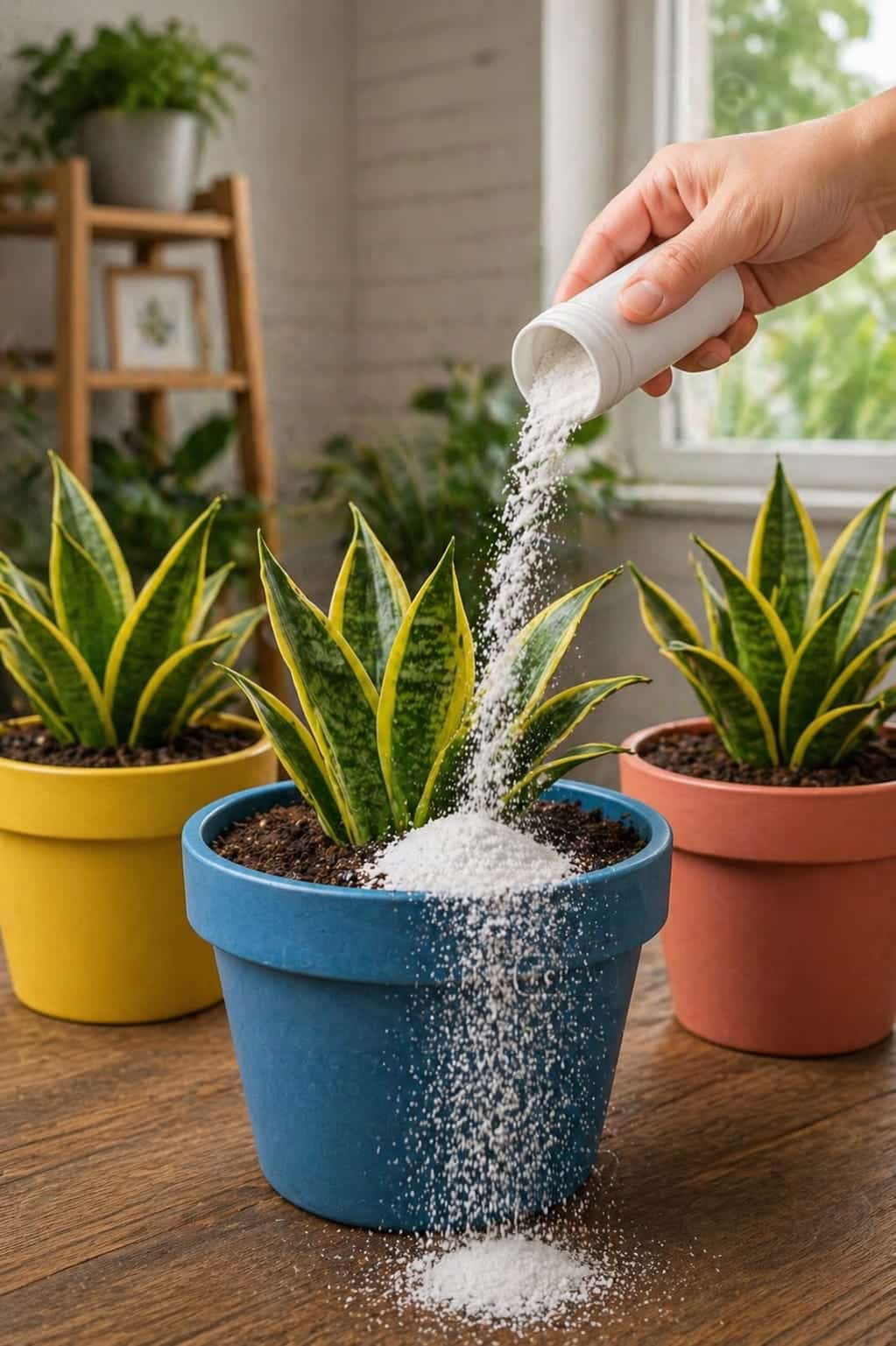
Why Drainage Matters More Than Powder
Drainage is one of the most important parts of snake plant care. Without drainage holes, water collects at the bottom of the pot. The roots may sit in moisture even when the top looks dry. This creates the perfect conditions for rot.
If your snake plant is weak and the pot has no drainage, fix that first. Move the plant to a pot with drainage holes. If you love a decorative container without holes, use it as an outer cover only. Keep the plant in a nursery pot inside it and remove the inner pot when watering.
White powder cannot protect roots from standing water. Good drainage is non-negotiable.
How to Water a Weak Snake Plant
Watering a weak snake plant requires patience. Many people see a weak plant and immediately water it more. This can be a mistake. If the plant is weak because of root rot, more water makes the problem worse.
Always check the soil before watering. Push your finger or a wooden stick deep into the pot. If the lower soil is still damp, wait. Snake plants should dry out well between waterings.
When you do water, water thoroughly until excess drains from the bottom. Then empty the saucer. Do not give small daily sips. Deep, occasional watering is better.
After repotting a plant with damaged roots, you may need to wait several days before watering. Freshly trimmed roots need time to callus and recover.
Best Light for a Recovering Snake Plant
Snake plants can survive in low light, but a weak plant often recovers better in bright indirect light. Light gives the plant energy to grow new roots and leaves. A dark corner may keep the plant alive, but it will not encourage strong recovery.
Place the plant near a bright window. East-facing windows are excellent. South- or west-facing windows can work if the light is filtered or the plant is placed a few feet back. Avoid suddenly moving a low-light plant into harsh direct sun, as this can scorch the leaves.
Increase light gradually. A recovering plant needs energy, but it also needs stability.
Should You Use Baking Soda as the White Powder?
Baking soda is not the best white powder for snake plant soil. While baking soda is sometimes used in diluted sprays for certain plant problems, it contains sodium and can disturb soil balance if sprinkled heavily. Snake plants do not need sodium in their potting mix.
A large amount of baking soda can make soil conditions harsh for roots. It may also leave residue and affect water movement. If you are trying to strengthen a weak snake plant, baking soda is not the safest choice.
Use finely crushed eggshell powder instead if you want a natural white powder amendment. Keep it light and occasional.
Should You Use Diatomaceous Earth?
Diatomaceous earth is a fine white powder sometimes used to help manage crawling insects in dry conditions. It can be useful for certain pest problems, but it is not a plant fertilizer. It works physically when dry, and it becomes less effective when wet.
If your snake plant has pests, diatomaceous earth may be used carefully on the soil surface, but it should not be poured heavily into the pot as a growth booster. Also, avoid breathing the dust when applying it.
If your goal is stronger growth, eggshell powder or a proper diluted fertilizer is more relevant. If your goal is pest control, identify the pest first and choose the right treatment.
Should You Use Garden Lime?
Garden lime is another white powder that contains calcium carbonate, but it is stronger and more purposeful than eggshell powder. It is mainly used to raise soil pH. Using lime without knowing your soil pH can create imbalance.
For indoor snake plants, garden lime is usually unnecessary unless you know the potting mix is too acidic and you understand how much to use. Beginners should avoid using garden lime casually.
Eggshell powder is slower and gentler, making it better for a simple home trick.
Can White Powder Stop Root Rot?
No, white powder cannot stop established root rot. Root rot must be handled directly. The plant needs to be removed from wet soil, rotten roots must be trimmed away, and the plant must be repotted into fresh well-draining mix.
Some people sprinkle powder on top of wet soil hoping it will dry or disinfect the pot. This is not enough. If the roots are rotting below the surface, surface powder will not solve the problem.
If your snake plant has mushy leaves, soft bases, or a foul smell, do not rely on eggshell powder. Inspect the roots immediately.
Can White Powder Help Brown Tips?
Brown tips on snake plants can have many causes: inconsistent watering, mineral buildup, fertilizer burn, low humidity, physical damage, or stress. Eggshell powder may not fix brown tips directly.
Once a leaf tip turns brown, it will not turn green again. You can trim the dry tip if it bothers you, but the important step is preventing more damage. Check watering, light, fertilizer use, and soil quality.
If brown tips appear after using too much powder or fertilizer, stop adding amendments and flush the soil with plain water if the pot drains well.
Can White Powder Help Yellow Leaves?
Yellow leaves are often a sign of overwatering or root stress. Eggshell powder will not reverse a yellow leaf if the roots are damaged. In fact, adding anything to wet soil can make the situation worse.
If one old outer leaf turns yellow, it may simply be aging. But if several leaves yellow at once, check the soil and roots. Repot if necessary.
Use the white powder trick only after the plant is stable and the soil conditions are corrected.
Can White Powder Encourage New Pups?
A healthy snake plant may produce pups when it has enough energy and a good root system. Eggshell powder alone will not force pups, but a balanced care routine can encourage them over time.
To encourage pups, provide bright indirect light, a slightly snug pot, fast-draining soil, warmth, and correct watering. A tiny amount of eggshell powder may support soil minerals, but light and root health are more important.
Snake plants grow slowly. New pups may take months to appear, especially indoors.
How to Tell If the Trick Is Working
If the white powder trick is helping as part of a good routine, your snake plant should remain firm and stable. Over time, you may see stronger leaves, improved color, or new growth. The soil should dry normally and should not smell bad.
The best signs of recovery are firm leaf bases, healthy roots, and new pups. A weak plant may take weeks or months to show visible improvement.
Do not expect instant transformation. Eggshell powder is slow. Snake plants are slow. Recovery is slow. Patience is part of the process.
Signs You Used Too Much White Powder
Too much powder can create a crust on the soil surface or interfere with water movement. If you see a thick white layer that hardens or stays visible, you used too much. Remove the excess gently with a spoon.
Watch for warning signs such as worsening yellow leaves, brown tips, soil crusting, poor drainage, or a strange smell. These signs may indicate that the soil environment is not healthy.
If you overapplied eggshell powder, remove the top layer of soil and replace it with fresh mix. If you used the wrong powder, such as cleaning powder or baking soda, repot the plant immediately into fresh soil.
How to Use White Powder Without Making a Mess
To avoid the messy look of powder spilling everywhere, apply it with a small spoon rather than pouring from a large container. Sprinkle lightly and close to the soil surface. Then mix gently into the top layer.
Do not dump powder over the leaves. Powder stuck in leaf creases can look messy and may trap moisture. If powder gets on the leaves, wipe it off with a damp cloth.
Apply the powder outdoors, over a tray, or on a surface that is easy to clean. A little goes a long way.
Should You Mix Eggshell Powder with Water?
You can mix eggshell powder with water, but it does not dissolve quickly. Eggshell calcium breaks down slowly. If you stir it into water, much of it will settle at the bottom. It is usually easier to mix the fine powder into the top layer of soil.
Some gardeners make eggshell vinegar extracts for outdoor gardening, but that is not necessary for snake plants. Keep the method simple. A small sprinkle of fine powder is enough.
Avoid making strong homemade chemical reactions or fermented mixtures for indoor snake plants. Simple and gentle is safer.
Can You Use Store-Bought Calcium Powder?
Some plant products contain calcium, but not all calcium powders are suitable for houseplants. Human supplements may contain additives, sweeteners, flavorings, or other ingredients that are not meant for soil. Do not use random supplement powders unless you know exactly what is in them.
For this trick, homemade clean eggshell powder is easier and safer. If you want a more predictable plant product, use a proper houseplant fertilizer or soil amendment labeled for plants.
White Powder vs. Fertilizer
Eggshell powder is not a complete fertilizer. It mainly provides calcium carbonate slowly. A balanced fertilizer contains nitrogen, phosphorus, potassium, and other nutrients that plants need in measured amounts.
If your snake plant is actively growing and has not been fed in a long time, a diluted cactus or succulent fertilizer may be more useful than eggshell powder. Use fertilizer lightly, usually during spring or summer.
You can use eggshell powder as a slow mineral amendment, but do not expect it to replace proper nutrition completely. Snake plants do not need much fertilizer, but when they do, balanced feeding is more predictable.
A Simple Weak Snake Plant Recovery Plan
Here is a practical recovery plan that includes the white powder trick safely:
- Remove any dead or mushy leaves.
- Check whether the pot has drainage holes.
- Inspect the soil moisture and smell.
- If the soil is wet or sour, remove the plant and inspect the roots.
- Trim rotten roots if needed.
- Repot into fresh cactus-style soil.
- Place the plant in bright indirect light.
- Wait to water until the soil is dry.
- Sprinkle a tiny amount of eggshell powder into the top soil only after the plant is stable.
- Water carefully and wait for slow recovery.
This plan gives your snake plant the best chance. The white powder is just one small part of a complete rescue approach.
How to Prevent Snake Plants from Getting Weak Again
Prevention is easier than rescue. Once your snake plant begins recovering, keep the care routine simple. Do not overwater. Do not keep it in a dark corner. Do not use a pot without drainage. Do not add too many homemade treatments.
Place it in bright indirect light. Use fast-draining soil. Water deeply but rarely. Clean the leaves occasionally. Feed lightly during the growing season if needed. Repot when the soil becomes old or compacted.
Snake plants thrive on consistency. They do not need constant attention, but they do need the right conditions.
Common Mistakes with the White Powder Trick
Using Too Much Powder
A thick layer can crust over the soil and look messy. Use only a tiny sprinkle.
Using the Wrong Powder
Never use cleaning powder, detergent, powdered bleach, or random household products. Use clean eggshell powder only.
Applying It to Wet, Rotting Soil
If the soil is wet and sour, repot first. Powder will not fix rotten roots.
Expecting Instant Results
Eggshell powder breaks down slowly. Snake plant recovery takes time.
Ignoring Light
A plant in deep shade will not grow strongly. Improve light before expecting new growth.
Skipping Drainage
No powder can protect a snake plant from a pot that traps water.
Frequently Asked Questions
What is the white powder people use on snake plants?
The safest natural version is finely crushed eggshell powder. It is used lightly as a slow mineral amendment.
Can white powder save a dying snake plant?
Not by itself. It may support the soil slightly, but a dying snake plant usually needs root inspection, better drainage, fresh soil, and proper watering.
How much eggshell powder should I use?
Use about 1/4 teaspoon for a small pot, 1/2 teaspoon for a medium pot, and no more than 1 teaspoon for a large pot.
How often should I apply it?
Once every two to three months is enough, and many plants need it less often.
Can I use baking soda?
Baking soda is not recommended as a soil powder for snake plants because it contains sodium and can disturb soil balance.
Can eggshell powder stop root rot?
No. Root rot must be handled by removing rotten roots and repotting into fresh, well-draining soil.
Should I water after applying eggshell powder?
Only water if the plant is already due for watering. Do not add water to moist soil just because you applied powder.
Can I put eggshell chunks on the soil?
You can, but fine powder is better. Large chunks break down very slowly and may look messy.
Can I sprinkle powder on the leaves?
No. Apply it to the soil only. Wipe any powder off the leaves with a damp cloth.
Is eggshell powder a fertilizer?
It is a slow mineral amendment, not a complete fertilizer. It does not replace balanced plant food.
Final Thoughts
Before you toss a weak snake plant, the white powder trick can be worth trying — but only if you use the right powder and understand what the plant really needs. The safest version is finely crushed eggshell powder applied in a very small amount to the top layer of soil. It may provide a slow calcium boost and support the soil environment over time.
But this trick is not magic. A weak snake plant usually needs better care first. Check the roots. Check the soil. Make sure the pot has drainage. Move the plant to bright indirect light. Use fast-draining soil. Water only when the soil is dry. These steps matter far more than any powder.
Use eggshell powder gently and occasionally. Do not dump a thick layer over the pot. Do not use baking soda, cleaning products, or mystery powders. Do not apply anything to wet, rotting soil and expect it to solve the problem.
When used wisely, the white powder trick can become a small part of a snake plant rescue routine. It gives you one more reason to slow down, inspect the plant, and care for it intentionally. And sometimes, that extra attention is exactly what a struggling snake plant needs before it begins its quiet comeback.
A snake plant that still has firm roots and healthy tissue is often more resilient than it looks. Before giving up, try a careful reset, a brighter spot, fresh soil, better drainage, and a tiny sprinkle of clean eggshell powder. With patience, your weak snake plant may surprise you with stronger leaves, new pups, and a second chance at life.