Do Worm Towers Work in Winter? – Cold Weather Composting
Worm activity slows in cold weather. In mild climates, the tower may continue working slowly. In freezing climates, worms may move deeper into the soil and decomposition will slow significantly. This winter worm tower care guide helps you adapt.
Winter tips:
- Feed less often
- Do not overfill the tower
- Add dry bedding
- Protect the bed with mulch
- Resume regular feeding in spring
In very cold regions, worm towers are most active from spring through fall.
Do Worm Towers Work in Hot Weather? – Summer Composting Tips
Extreme heat can stress worms. A raised bed in full summer sun can become too warm, especially if the tower is exposed. This summer worm tower maintenance guide keeps your system running.
Hot weather tips:
- Keep soil evenly moist
- Mulch the raised bed
- Place the tower near plants that shade the soil
- Avoid overfeeding fruit scraps
- Use a light-colored lid
- Do not let the tower dry out completely
If conditions are very hot and dry, worms may retreat deeper into the soil until temperatures improve.
How to Maintain a Worm Tower – Simple Routine for Long-Term Success
Maintenance is simple. The most important thing is balance. This worm tower maintenance schedule makes it easy.
Weekly Maintenance
- Check moisture
- Add scraps only if old scraps are breaking down
- Add dry bedding after scraps
- Keep lid secure
- Watch for flies or odor
Monthly Maintenance
- Check whether the tower is too full
- Stir the top layer gently if needed
- Add crushed eggshells for grit
- Flush with a little water only if too dry
- Observe plant growth nearby
You do not need to empty a worm tower often. Worms and microbes slowly process the material.
Should You Harvest Compost From a Worm Tower? – Using Finished Material
Usually, the point of a worm tower is not to harvest compost. The worms distribute castings into the surrounding soil for you. However, if the tower becomes packed with finished material, you can remove some from the top and spread it around the bed. This how to use worm tower compost tip maximizes your harvest.
Finished material should look dark, crumbly, and earthy. If it still looks like food scraps, leave it longer.
DIY Worm Tower Troubleshooting – Common Problems and Fixes
| Problem | Likely Cause | Fix |
|---|---|---|
| Bad smell | Too much food or too wet | Add dry bedding and stop feeding temporarily |
| Fruit flies | Exposed scraps | Cover food with soil, leaves, or shredded paper |
| No worms | Soil too dry, new bed, or no worm population | Add moisture and a handful of red wigglers |
| Scraps not breaking down | Too cold, too dry, or overfed | Chop scraps smaller and feed less |
| Tower too wet | Too many watery scraps | Add cardboard and leave lid slightly ventilated |
| Rodent interest | Wrong food or loose lid | Avoid cooked food and secure the lid |
Best Kitchen Scraps for Fast Breakdown – Speeding Up Composting
The best worm tower foods are soft, plant-based scraps chopped into small pieces. This fast composting kitchen scraps list will help your tower thrive.
- Banana peel pieces
- Apple bits
- Lettuce scraps
- Carrot peels
- Cucumber ends
- Melon rind pieces in small amounts
- Coffee grounds in moderation
- Tea leaves
- Crushed eggshells
- Wilted herbs
Mix wet scraps with dry bedding to keep the tower balanced.
Why Crushed Eggshells Help – Natural Grit for Worms
Crushed eggshells are useful in a worm tower because they provide grit. Worms use grit to help process food. Eggshells also add calcium slowly as they break down. This eggshells in worm tower tip is a game-changer.
To use eggshells:
- Rinse them.
- Let them dry.
- Crush them finely.
- Add a small sprinkle to the tower occasionally.
Do not add large uncrushed shells in huge amounts. Fine pieces work better.
Can You Add Coffee Grounds? – Moderation Is Key
Yes, but only in moderation. Coffee grounds can be useful, but too much can compact and heat up. This coffee grounds in worm tower advice will keep your worms happy.
Use coffee grounds like seasoning, not like the main ingredient.
- Add small amounts
- Mix with shredded paper or leaves
- Avoid thick layers
- Do not add daily piles
Should You Add Citrus? – Use Sparingly
A little citrus peel is usually fine, but large amounts can make the tower too acidic and unpleasant for worms. Use citrus sparingly and always chop it small.
Can You Put a Worm Tower in a Container Garden? – Large Planters Only
Yes, but the container must be large. A small pot does not have enough soil volume for a worm tower. This worm tower for container gardening tip is for big planters only.
Use worm towers in:
- Large planter boxes
- Half barrels
- Large raised planters
- Deep vegetable containers
Avoid installing worm towers in small pots because they can overwhelm the soil and create odor.
How Long Does It Take to Work? – Realistic Timeline for Soil Improvement
A worm tower does not produce instant results. It builds soil fertility gradually. This worm tower results timeline sets realistic expectations.
Typical timeline:
- First week: scraps begin softening
- 2 to 4 weeks: worm activity increases
- 1 to 2 months: surrounding soil begins improving
- Full season: plants benefit from steady organic matter
The longer the system runs correctly, the better the soil becomes.
Signs Your Worm Tower Is Working – Positive Indicators
A healthy worm tower usually shows quiet progress. Look for these signs of successful worm tower indicators.
Good signs include:
- No rotten smell
- Scraps slowly disappear
- Worms visible near the tower
- Soil becomes darker and crumbly
- Plants nearby grow strongly
- Fewer food scraps go to waste
- Moisture stays balanced
- The tower smells earthy
You may not always see worms, but if scraps are breaking down and the tower smells clean, the system is working.
Common Mistakes to Avoid – DIY Worm Tower Pitfalls
- Using a pipe with no holes
- Drilling holes above the soil line
- Adding too much food at once
- Using meat, dairy, or oily scraps
- Forgetting to add dry bedding
- Leaving the tower uncovered
- Letting the tower dry out completely
- Flooding the tower with water
- Installing it in sterile dry soil without worms
- Expecting instant fertilizer results
Simple DIY Worm Tower Instructions – Quick Summary
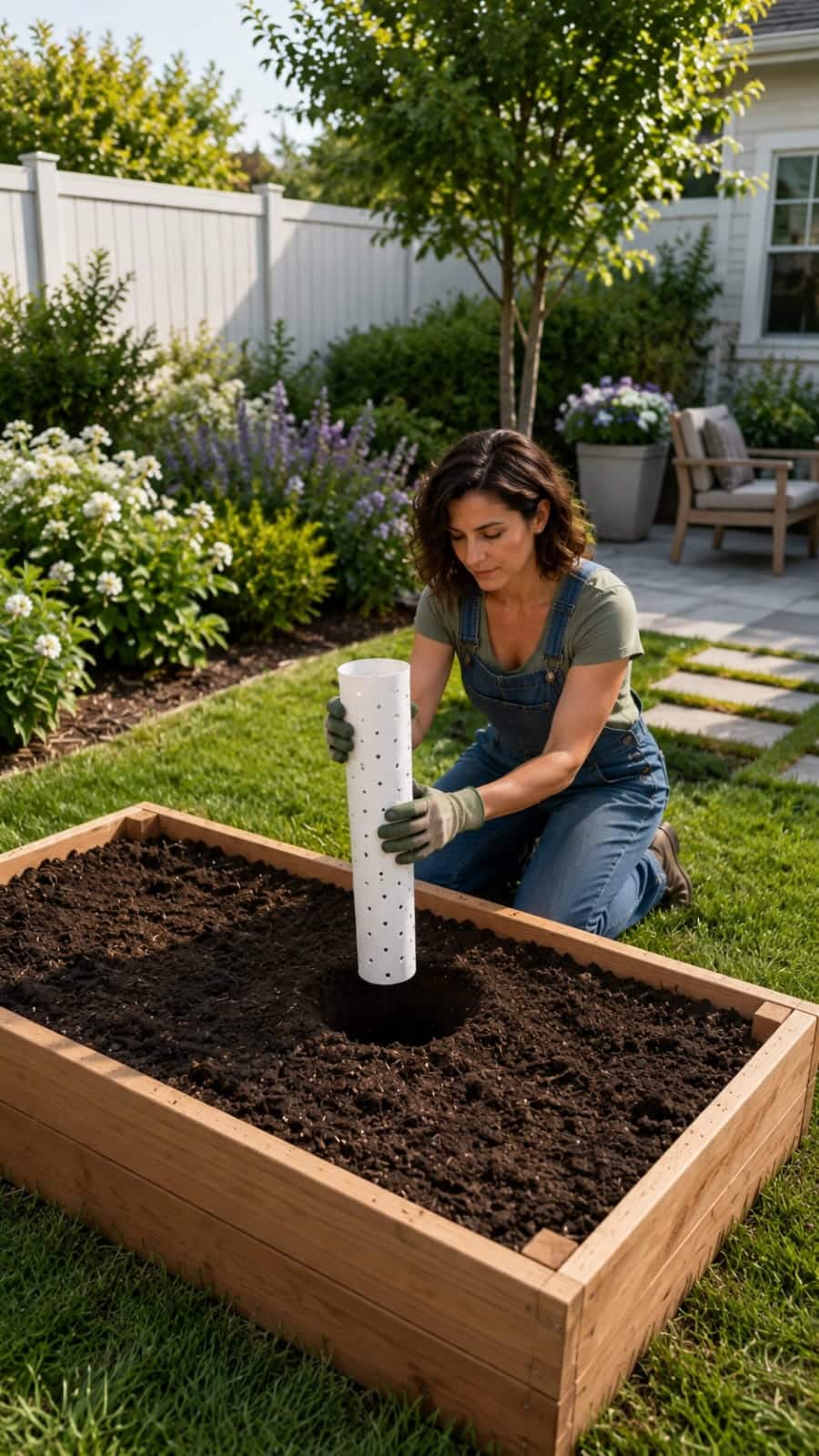
Here is the full project in a quick format. This how to build a worm tower step by step recap is all you need.
- Cut a 4 to 6-inch wide pipe to 18 to 24 inches long.
- Drill many holes in the lower half of the pipe.
- Leave the upper section mostly solid.
- Dig a hole in the center of the raised bed.
- Bury the perforated section underground.
- Backfill soil around the pipe so it stands upright.
- Add shredded paper, dry leaves, or compost as bedding.
- Add a small handful of chopped kitchen scraps.
- Cover scraps with dry bedding.
- Place a lid on top.
- Feed small amounts as scraps disappear.
Short Caption for This Trick
“To build a DIY worm tower, drill holes in the lower half of a wide PVC pipe, bury the perforated section in a raised garden bed, add bedding and small chopped kitchen scraps, then cover it with a lid. Worms enter through the holes, eat the scraps, and spread nutrient-rich castings into the surrounding soil – the best organic garden fertilizer system for bigger harvests.”
Frequently Asked Questions – DIY Worm Tower Q&A
What is a worm tower?
A worm tower is a vertical composting tube buried in a garden bed. Worms enter through holes, eat kitchen scraps inside the tube, and enrich the surrounding soil with worm castings.
Do worm towers really work?
Yes, when managed correctly. They work best in healthy soil with moisture, bedding, worms, and small amounts of plant-based food scraps.
Do I need to add worms to a worm tower?
If your garden already has worms, they may enter naturally. In new raised beds, adding red wigglers can help start the system faster.
What food can go in a worm tower?
Use fruit and vegetable scraps, coffee grounds in small amounts, tea leaves, wilted greens, banana peels, and crushed eggshells.
What should not go in a worm tower?
Avoid meat, dairy, oil, salty foods, cooked leftovers, pet waste, and large amounts of citrus, onion, or garlic.
How deep should a worm tower be buried?
Bury about 10 to 14 inches of the pipe, or enough so the perforated section is underground and accessible to worms.
Will a worm tower smell bad?
A healthy worm tower should smell earthy. Bad smells usually mean too much food, too much moisture, or the wrong scraps.
Can a worm tower attract rats?
It can if mismanaged. Use a secure lid, avoid meat and cooked food, cover scraps with bedding, and do not overfeed.
How often should I feed a worm tower?
Start once per week with small amounts. Feed more only when previous scraps are breaking down.
Can I use a worm tower in a raised bed?
Yes. Raised beds are one of the best places for worm towers because the nutrients spread directly into the growing area.
Final Thoughts – The Best DIY Project for Organic Gardeners
A DIY worm tower is a simple but powerful way to feed your garden naturally. With one perforated pipe, a lid, bedding material, kitchen scraps, and worms, you can create a living compost system directly inside your raised bed. This best organic garden fertilizer system is a must-have for any sustainable vegetable gardener.
The method is easy: drill holes in the lower section of a pipe, bury it in the soil, add bedding and small amounts of food scraps, cover it, and let the worms do the work. Over time, the tower helps create richer soil, stronger roots, healthier vegetables, and a more sustainable garden. This how to improve soil fertility naturally project will transform your growing space.
The key is balance. Feed lightly, avoid problem foods, keep the tower moist but not soggy, and always cover scraps with dry bedding. When cared for properly, a worm tower becomes a quiet underground fertilizer system that turns waste into garden growth. This low-maintenance composting for raised beds is perfect for busy gardeners.
For raised beds, small backyard gardens, organic vegetable gardening, and low-maintenance composting, this is one of the most practical DIY garden projects you can build. Start your DIY worm tower project today and enjoy bigger harvests for years to come.