Light Makes the Biggest Difference
Snake plants tolerate low light, but tolerance is not the same as thriving. In low light, the plant may survive but grow very slowly. The soil also dries more slowly, increasing the risk of root problems.
For stronger growth, place snake plants in bright indirect light. Morning sun is usually gentle and helpful. Harsh afternoon sun can burn leaves if the plant is not used to it.
Good places include:
- Near an east-facing window
- A few feet from a bright window
- Beside a sheer curtain
- On a bright shelf
- In a sunny room away from direct heat
- Near a glass door with filtered light
A snake plant in better light will usually produce stronger pups, firmer leaves, and deeper color.
How to Help Weak Snake Plant Pups Grow
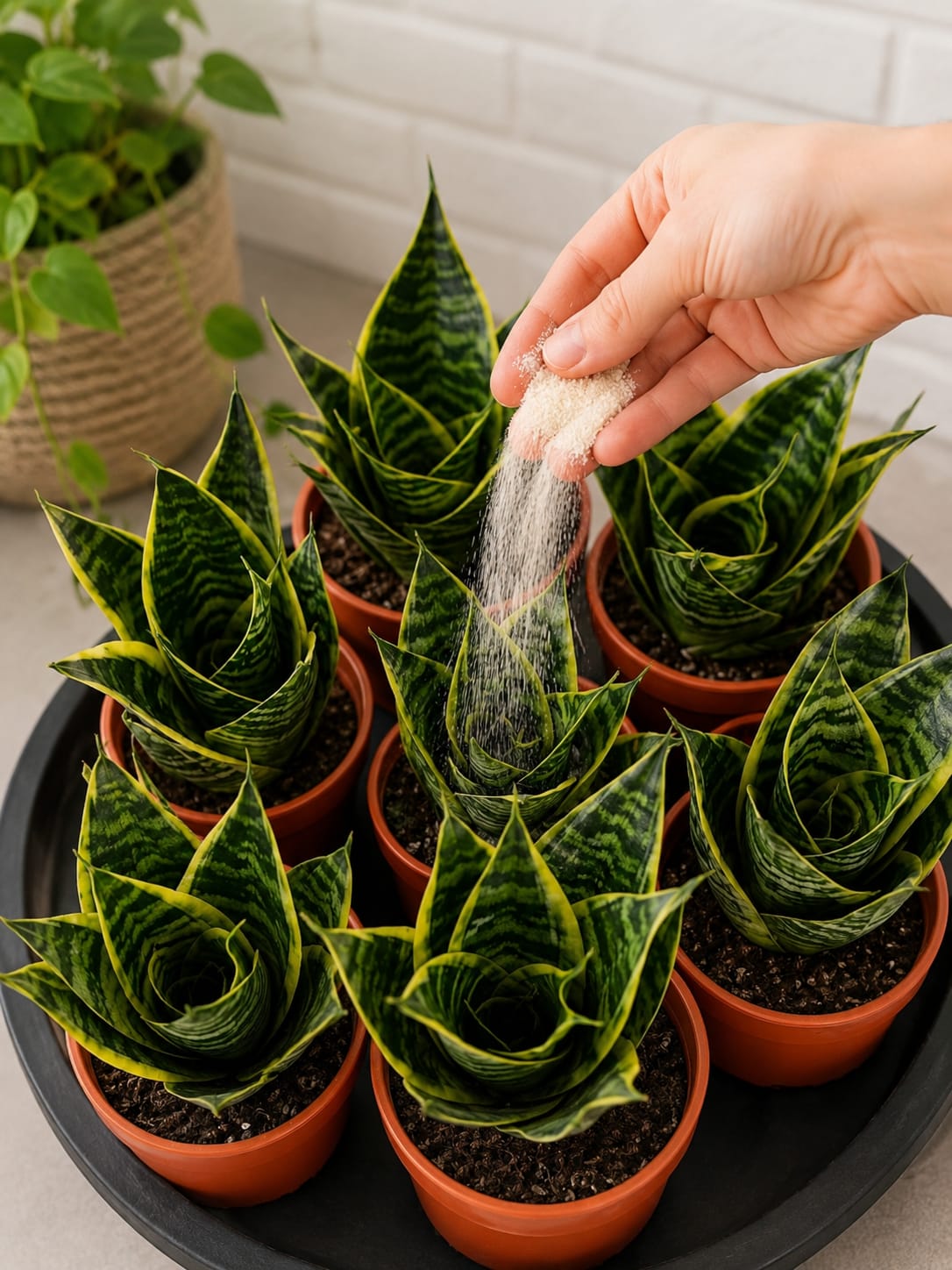
Small snake plant pups can look delicate at first. They need stable roots and careful watering. A tiny amount of plant-safe powder may be used around the soil surface, but the bigger priority is not disturbing the pups too much.
To help pups grow:
- Do not separate them too early
- Keep the soil lightly dry between waterings
- Give bright indirect light
- Avoid heavy fertilizer
- Do not bury the pup bases too deeply
- Use a small pot with drainage
- Keep the plant warm
Snake plant pups grow from rhizomes under the soil. If the main plant is healthy, pups will usually become stronger over time.
Common Mistakes With Weak Snake Plants
Weak snake plants are often caused by simple care mistakes. Correcting these mistakes is more powerful than any quick trick.
- Watering too often: The number one mistake. Snake plants need dry periods.
- Using a pot without drainage: Water collects at the bottom and damages roots.
- Keeping the plant in very low light: Growth slows and soil stays wet longer.
- Using heavy soil: Roots cannot breathe well.
- Adding too much fertilizer: Slow-growing plants do not need constant feeding.
- Repotting into a huge pot: Extra soil holds extra moisture.
- Letting powder collect in the crown: This can trap moisture where the plant should stay dry.
How to Know If Your Snake Plant Is Improving
Snake plants grow slowly, so improvement may take time. Do not expect dramatic change in one week. Look for gradual signs of strength.
Good signs include:
- Leaves feel firm
- The plant stands upright
- The base stays dry and solid
- New pups appear
- Leaf color becomes richer
- No bad smell from the soil
- The soil dries at a normal pace
If the plant continues to decline, check the roots. The answer is often below the soil.
How to Style Small Snake Plants Indoors
Small snake plants are perfect for home styling because they have strong shape without taking up much space. Several small pots grouped together can create a beautiful patterned display. The repeated leaf rosettes look modern, organized, and fresh.
For a stylish look, try:
- Terracotta pots for a warm natural style
- White ceramic pots for a clean minimalist look
- Black pots for a modern dramatic effect
- Woven baskets for boho decor
- Round trays to group multiple plants
- Wooden shelves for a cozy plant corner
- Stone top dressing for a finished look
Small snake plants look especially good in groups of three, five, or seven. Odd numbers create a more natural arrangement.
Best Places to Display Snake Plants
Snake plants are flexible and can fit almost anywhere, but they look best when their upright shape is allowed to stand out.
Beautiful display spots include:
- Bedroom nightstand
- Living room side table
- Entryway console
- Bathroom shelf with a window
- Kitchen counter corner
- Office desk
- Bookshelf
- Plant stand near a window
- Dining room cabinet
Because snake plants have vertical leaves, they are great for narrow spaces. They add height without making the room look crowded.
Decor Tip: Use Terracotta for a Natural Look
Terracotta pots are one of the best choices for snake plants. They are breathable, warm-looking, and easy to style. Their orange-brown color contrasts beautifully with green and yellow variegated leaves.
Terracotta works well with:
- Wooden furniture
- Neutral walls
- Rattan baskets
- Black metal shelves
- Boho interiors
- Rustic decor
- Minimalist plant corners
Terracotta also helps soil dry faster than plastic pots, which can be helpful for snake plants. Just remember that plants in terracotta may need watering slightly more often than plants in plastic.
Decor Tip: Group Several Snake Plants Together
One snake plant looks elegant, but several small snake plants grouped together can create a mini indoor garden. This is especially beautiful when each plant has a similar pot style. The repeated shapes make the display look intentional.
To create a grouped display:
- Use matching pots for a clean look
- Place plants on a round tray
- Mix small and medium sizes
- Keep the tallest plant in the back
- Add a trailing plant nearby for contrast
- Keep the surface uncluttered
This type of arrangement works well on plant shelves, coffee tables, entryway benches, and sunny corners.
Snake Plant Care Table
| Care Factor | Best Practice | Why It Matters |
|---|---|---|
| Light | Bright indirect light | Encourages stronger growth and better color |
| Water | Only when soil dries | Prevents root rot and weak bases |
| Soil | Fast-draining succulent-style mix | Keeps roots airy and healthy |
| Pot | Drainage holes preferred | Allows excess water to escape |
| White powder | Very light sprinkle of plant-safe product | Supports soil surface without overloading roots |
| Decor | Terracotta, ceramic, stone, or tray grouping | Makes the plant look polished indoors |
Frequently Asked Questions
Can white powder really help a weak snake plant?
It can support the soil surface or root zone if the powder is plant-safe and used lightly. However, it will not fix poor watering, rotten roots, bad soil, or a pot without drainage.
What white powder should I use?
Use only a product that is clearly safe for houseplants. Do not use random household powders. Different white powders have different effects, so the product identity matters.
Can I put white powder in the center of the snake plant?
No. Keep the crown clean and dry. Apply any powder lightly on the soil surface, not inside the leaf rosette.
How often should I repeat this trick?
Do not repeat it often. Snake plants do not need constant treatments. Once in a while may be enough, depending on the product used.
Why is my snake plant weak even though I water it?
It may be weak because it is being watered too often. Snake plants prefer the soil to dry between waterings.
Should I fertilize weak snake plants?
Only fertilize if the roots are healthy. Never fertilize a rotting or stressed plant. Use a diluted fertilizer during spring or summer.
Final Thoughts
A light sprinkle of white powder across the soil surface can be used as a gentle snake plant care trick, especially when the plant looks weak but still has firm leaves and a healthy base. The key is to use only a plant-safe powder, apply it lightly, and avoid the crown of the plant.
Still, the real secret to stronger snake plants is not one ingredient. It is the full care routine: bright indirect light, fast-draining soil, careful watering, a pot with drainage, and a clean root zone. When those basics are correct, snake plants can grow stronger, produce new pups, and keep their bold upright shape for years.
For decor, small snake plants are perfect in terracotta pots, ceramic containers, grouped trays, shelf displays, and bright indoor corners. Their structured leaves bring a modern, calm, and natural feeling to the home. With the right care and a clean styling approach, even a weak snake plant can slowly return to being a strong and beautiful indoor feature.