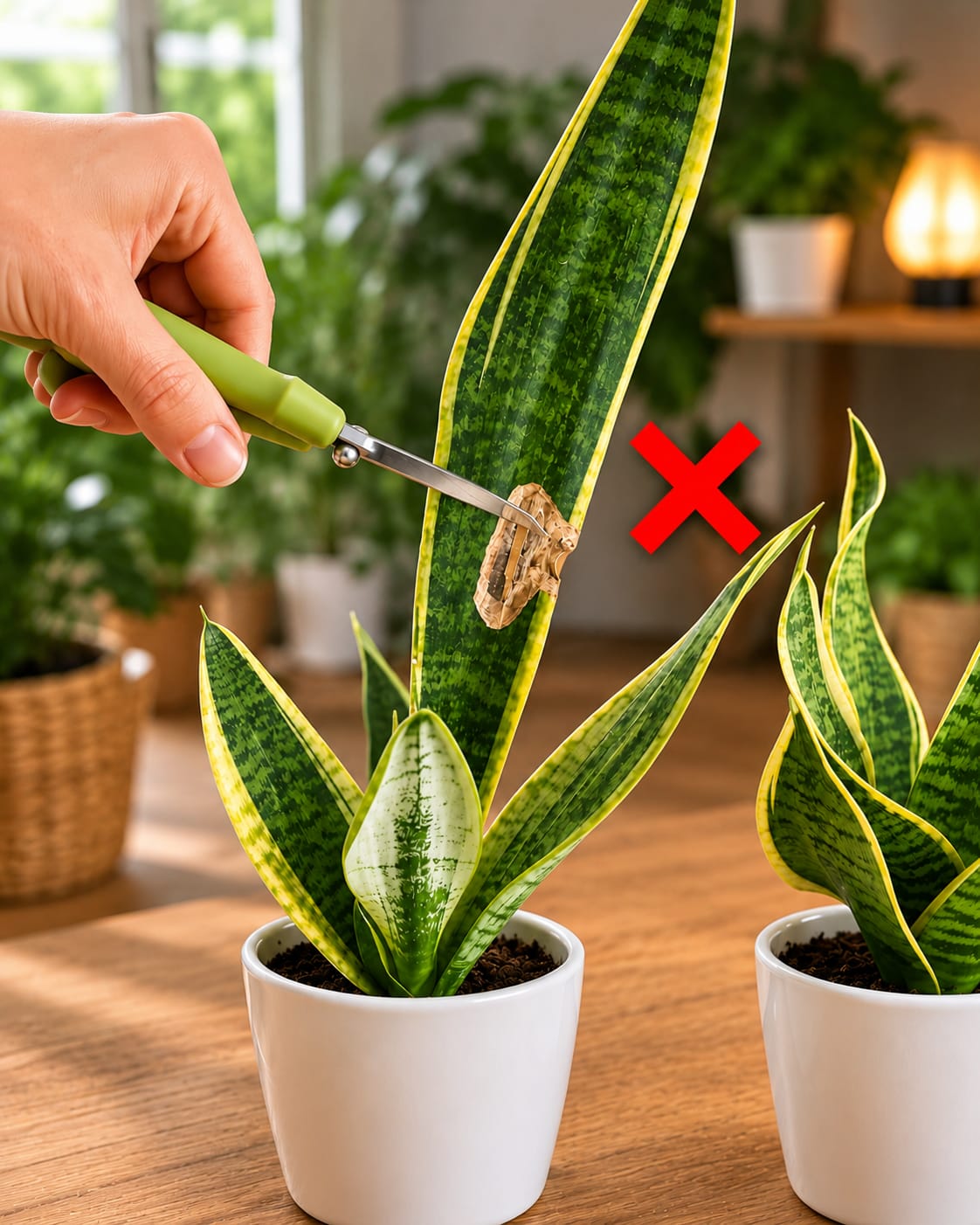
Can a Damaged Snake Plant Leaf Heal?
A damaged snake plant leaf can stay alive, but the scar usually will not disappear. The plant can seal the wound and continue growing, but the old mark remains as a dry patch. This is normal. The goal is not to make the old leaf perfect. The goal is to keep the plant strong enough to produce clean new leaves.
New growth may appear as:
- Fresh shoots from the soil
- New small leaves near the base
- Stronger upright growth
- Firmer existing leaves
- Better color over time
Once the plant has produced new growth, you can decide whether the old damaged leaf still looks acceptable or should be removed for appearance.
How to Hide a Damaged Leaf Without Cutting It
If the leaf is healthy but the mark bothers you, use styling instead of cutting. Snake plants have a strong vertical shape, so a small adjustment can make the damage less noticeable.
Try these ideas:
- Turn the pot so the damaged side faces the wall.
- Place the plant in a decorative cachepot.
- Add a taller healthy plant beside it.
- Use a plant stand to change the viewing angle.
- Group it with pothos, ZZ plant, or peace lily.
- Add a clean top dressing to make the pot look finished.
This keeps the healthy leaf working for the plant while improving the decorative look.
Indoor Decor Ideas for a Recovering Snake Plant
A recovering snake plant can still look beautiful indoors. The trick is to style it simply and cleanly. Snake plants already have a sculptural form, so they do not need a busy setup.
Minimalist White Pot Style
A white ceramic pot makes the green and yellow leaf pattern stand out. This works well on a shelf, desk, console table, or bedroom dresser.
Black Tray Plant Corner
Place several small snake plants on a black tray. The tray catches small soil spills and makes the group look intentional. This style works well in apartments and modern living rooms.
Natural Wood Warm Look
Set the plant on a wooden table or stool. Add a woven mat or neutral basket to create a warm, natural look.
Bathroom Spa Style
If the bathroom has bright indirect light, a snake plant can look beautiful near towels, candles, and stone accessories. Avoid dark bathrooms with no natural light.
Entryway Plant Accent
A snake plant near the door creates a clean welcoming look. Use a simple pot and keep the surrounding area uncluttered.
Best Companion Plants for Snake Plant Decor
Snake plants pair well with other low-maintenance plants. Mixing textures makes the display feel richer and more designed.
- ZZ plant for glossy dark leaves
- Pothos for trailing softness
- Peace lily for elegant white blooms
- Jade plant for succulent texture
- Rubber plant for larger leaves
- Spider plant for airy movement
- Philodendron for heart-shaped foliage
When grouping plants, make sure each one still receives the light and watering it needs. Do not water all plants on the same schedule if their needs are different.
How to Prevent Future Snake Plant Leaf Damage
Prevention is easier than repair. Since damaged snake plant leaves usually stay marked, protecting the leaves is important.
To prevent damage:
- Keep the plant away from high-traffic corners.
- Avoid placing it where pets brush against it.
- Do not bend leaves during cleaning.
- Rotate the pot gently.
- Keep it away from cold windows in winter.
- Avoid harsh direct afternoon sun.
- Use a stable pot that will not tip easily.
- Do not overwater.
A stable location helps the plant keep its upright shape and reduces accidental scars.
Common Mistakes With the White Liquid Trick
The white liquid trick can be helpful only when used carefully. The biggest mistakes come from using too much, using it too often, or using it on a plant that needs root repair instead.
Avoid these mistakes:
- Pouring the liquid directly onto the damaged leaf
- Using thick or undiluted mixtures
- Repeating the treatment every day
- Using it in a pot without drainage
- Using it while the soil is already wet
- Ignoring root rot signs
- Thinking the scar will disappear
- Cutting healthy leaves too quickly
The method works best as gentle support, not as a replacement for proper snake plant care.
Simple Recovery Routine for a Damaged Snake Plant
If your snake plant has a damaged leaf but the plant still looks firm, follow a calm recovery routine.
- Check the damaged area and confirm it is dry and firm.
- Remove loose dead pieces only if they fall away easily.
- Do not cut the whole leaf unless it is soft or rotting.
- Place the plant in bright indirect light.
- Use a small amount of diluted white liquid around the soil base.
- Let the soil dry well afterward.
- Avoid moving the plant too often.
- Watch for new shoots from the base.
After several weeks, judge the plant by new growth, not by the old scar. New shoots are the best sign that the plant is recovering.
Frequently Asked Questions
Should I cut a damaged snake plant leaf?
Cut only if the leaf is mushy, rotten, badly infected, or mostly dead. If the leaf is firm and green with only a dry scar, you can leave it and support the plant from the roots.
Can white liquid fix a snake plant scar?
No. A scar usually stays visible. The liquid may support the roots and future growth, but it will not erase old damage.
Where should I pour the white liquid?
Pour a small amount around the soil near the base of the plant. Avoid the leaf wound and avoid the crown.
How often should I use this trick?
Use it occasionally only. Snake plants do not need frequent treatments. Let the soil dry between watering.
What if the damaged leaf is soft?
Soft damage may mean rot. In that case, cut the affected leaf with clean tools and check the roots.
Can this trick help new snake plant shoots grow?
It may support the root zone if used safely, but new shoots depend mainly on healthy roots, bright indirect light, proper soil, and careful watering.
Final Thoughts
A damaged snake plant leaf does not always need to be cut right away. If the leaf is still firm and the damage is dry, the plant may continue using that leaf while it recovers. Instead of rushing to remove it, focus on the root zone, soil health, and gentle care.
The white liquid recovery trick is best used as a light support step around the base of the plant. It should be diluted, plant-safe, and used in small amounts. It should not be poured onto the damaged leaf, and it should never replace proper drainage, bright indirect light, and careful watering.
With patience, a snake plant can continue looking beautiful even with one imperfect leaf. The scar may remain, but new shoots can grow from the base, the plant can regain strength, and the whole display can still look clean, modern, and stylish indoors. Sometimes the smartest care move is not to cut first, but to support the plant gently and let the roots do their work.