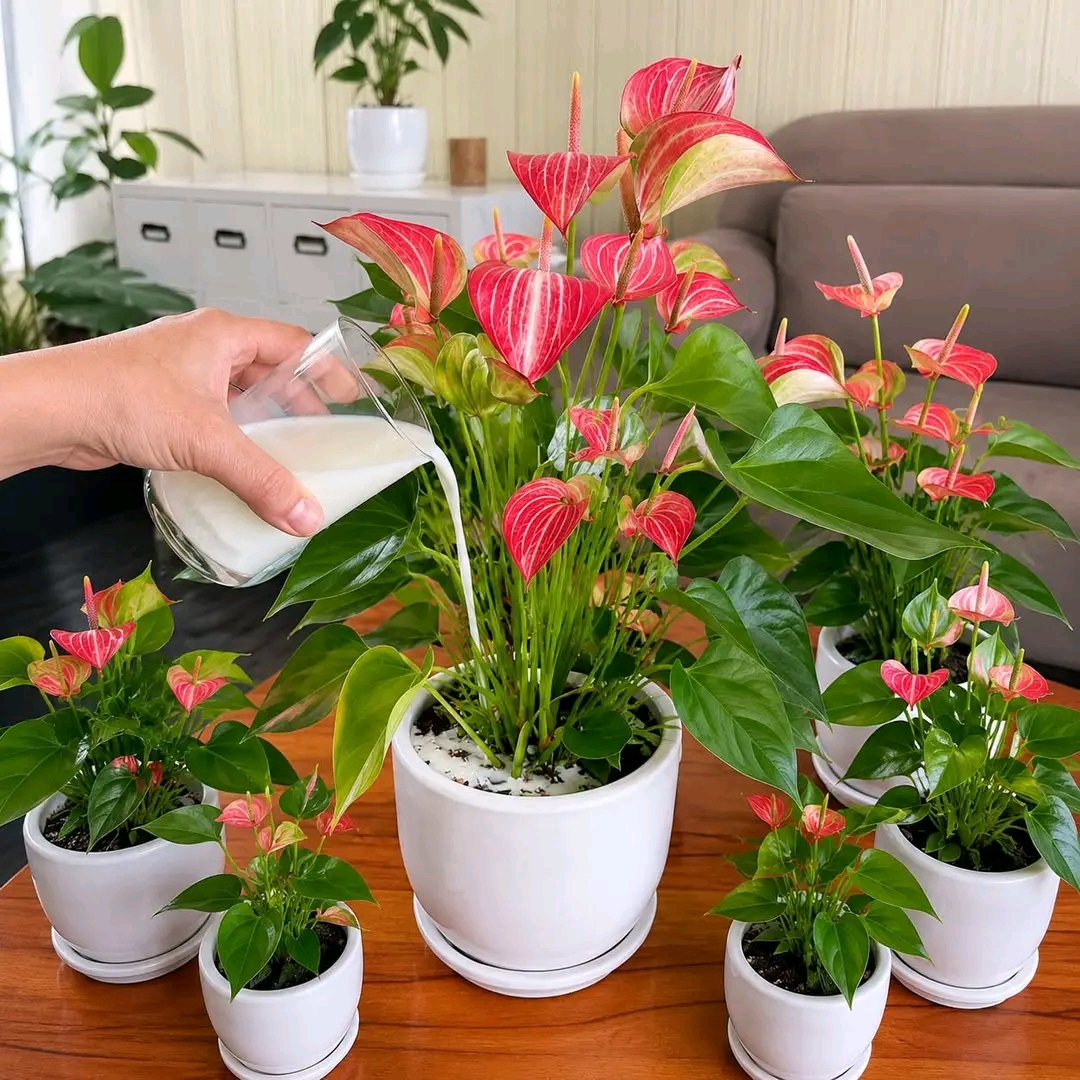
How to Encourage More Anthurium Blooms
Anthuriums bloom best when they receive bright indirect light, warm temperatures, and gentle feeding. If a plant produces many leaves but few spathes, light is often the first thing to check. Moving the plant closer to a bright filtered window can make a major difference over time.
Old faded spathes can be removed at the base of the stem once they turn brown, green, or tired-looking. This keeps the display clean and allows the plant to focus energy on new growth. Do not cut healthy new stems. Use clean scissors and avoid damaging the crown.
Balanced fertilizer during active growth can support blooming, but too much nitrogen may encourage leaves more than flowers. A gentle balanced formula is usually better than aggressive feeding. Homemade white liquids should not be used as bloom-forcing shortcuts.
Cleaning the Leaves for a Premium Display
Anthurium leaves are naturally glossy and look best when clean. Dust reduces shine and can affect light absorption. Wipe the leaves gently with a soft damp cloth. Support each leaf from below while cleaning so the stem is not bent or snapped. Avoid oily leaf shine products because they can leave residue and attract dust.
If any white liquid splashes onto the leaves, wipe it away. Milk, rice water, or fertilizer residue can dry into marks and make the plant look dirty. The spathes should also stay clean and dry. A premium Anthurium display depends on glossy leaves, colorful spathes, and a tidy pot surface.
Clean leaves also help with pest monitoring. It is easier to notice spider mites, scale, mealybugs, or thrips when the foliage is not dusty. Anthuriums should be inspected regularly, especially in warm indoor spaces with many plants.
Pot Styling and Indoor Decor Value
Anthuriums have strong indoor decor value because their leaves and spathes create color, shine, and structure. A white ceramic pot gives a clean modern look and highlights red or pink blooms. A terracotta pot creates a warmer natural style. A woven basket cover softens the display for bedrooms and living rooms. A black or stone-effect planter can make the plant feel more luxurious and architectural.
In the living room, a large Anthurium can sit on a wooden table, plant stand, or sideboard where the spathes become a focal point. In a bedroom, it can add a soft tropical feeling if the room has enough filtered light. In a home office, it brings color and polish to the background without looking messy. In a bright kitchen, it can look fresh and lively, as long as it is kept away from hot drafts and greasy surfaces.
For commercial interior landscaping, Anthuriums work well in reception areas, boutique spaces, salon corners, hotel-style displays, and staged homes because they provide long-lasting color. However, commercial displays require clean care. Homemade white liquids that sour or leave residue are not ideal in professional settings. Predictable watering, clean leaves, and controlled fertilizer are better for a premium plant display.
Common Anthurium Care Mistakes
One common mistake is overwatering. Anthuriums like moisture, but their roots need oxygen. A pot that stays wet for too long can cause root rot. Another common mistake is using dense potting soil. Even if watering is careful, dense soil may hold too much moisture around the roots.
A third mistake is placing the plant in low light and trying to fix weak growth with fertilizer. Without light, the plant cannot use nutrients effectively. Feeding a low-light plant often leads to buildup rather than better growth. A fourth mistake is using homemade liquids too often. Even mild mixtures can become harmful when repeated without giving the soil time to dry and reset.
A fifth mistake is ignoring the crown. Anthuriums should not have liquid constantly poured into the tight center where stems emerge. Moisture trapped in the crown can encourage rot. Water and any diluted feed should be applied to the soil around the root zone, not directly into the plant’s central growth point.
Simple Recovery Plan for Weak Anthurium
If an Anthurium looks weak, start with the roots. Check whether the soil is wet, compacted, or sour-smelling. If the plant is in a pot without drainage, move it into a draining pot. If the soil is dense, repot into a chunky Anthurium mix. If roots are mushy, trim damaged sections and allow the plant to recover in fresh soil.
Next, improve light. Place the plant in bright indirect light, avoiding harsh direct sun. Keep temperatures stable and avoid cold drafts from windows or air conditioners. Check humidity, especially if leaves are browning at the edges. Clean the leaves so the plant can absorb light efficiently.
Do not feed heavily during recovery. Weak roots cannot handle strong fertilizer. Once the plant begins producing stable new growth, light feeding can resume. A white tonic should not be the first step in recovery. The first step is always root health.
Safe Homemade Approach If You Still Want to Try It
If a homeowner still wants to use a light white tonic, the safest approach is to keep it very diluted, fresh, and rare. The liquid should be thin, not creamy. It should have no sour smell. It should be poured only when the plant needs watering and only around the soil, away from the crown. The pot must drain fully afterward.
Do not repeat the treatment weekly. Anthuriums do not need constant homemade feeding. Once a month during active growth is already more than enough for many mild methods, and even then plain water should be used between treatments. If the plant shows any negative reaction, stop immediately.
For most growers, a weak labeled fertilizer is safer and more reliable. It gives known nutrients in controlled amounts and reduces the risk of sour organic residue. Homemade methods may seem cheaper, but plant damage can cost more than a proper fertilizer.
Professional Styling Note
In high-end indoor horticulture, Anthurium is valued for its glossy leaves, long-lasting spathes, strong color, and tropical elegance. It works beautifully in luxury home staging, modern apartment decor, commercial interior landscaping, boutique plant displays, wellness corners, hotel-style interiors, and polished property presentation. A healthy Anthurium can make a space feel cared for, warm, and refined.
The professional look comes from restraint. The leaves should be clean, the pot should match the room, the soil surface should look fresh, and the plant should not smell sour or show residue. A white liquid may be part of a private care routine, but it should not leave visible mess. The plant should look naturally healthy, not treated.
A premium Anthurium display depends on healthy roots, clean foliage, bright indirect light, gentle feeding, and correct watering. The best care routine is the one that keeps the plant stable over time. Dramatic hacks may attract attention, but consistent horticultural care creates the lasting result.
Final Thoughts
A light white root tonic may seem like an easy way to encourage bigger, healthier Anthurium leaves, but it should be used with caution. The liquid may be diluted milk water, rice water, eggshell water, weak fertilizer, or another homemade mixture, and each option carries different risks. Thick, spoiled, sugary, fermented, or unknown liquids should never be poured into an Anthurium pot.
The true foundation of Anthurium growth is bright indirect light, airy well-draining soil, drainage holes, warm temperatures, balanced humidity, gentle feeding, clean leaves, and careful watering. If the roots are healthy and the environment is stable, the plant can produce larger leaves and more elegant spathes over time. If the roots are stressed, extra liquid can make the problem worse.
With the right care and presentation, Anthurium can remain a stunning indoor plant for living rooms, bedrooms, home offices, bright kitchens, modern apartments, plant shelves, commercial interior landscaping, luxury home staging, and premium plant displays. Healthy roots, glossy leaves, vibrant spathes, clean soil, and patient maintenance will always create a stronger result than risky homemade shortcuts.