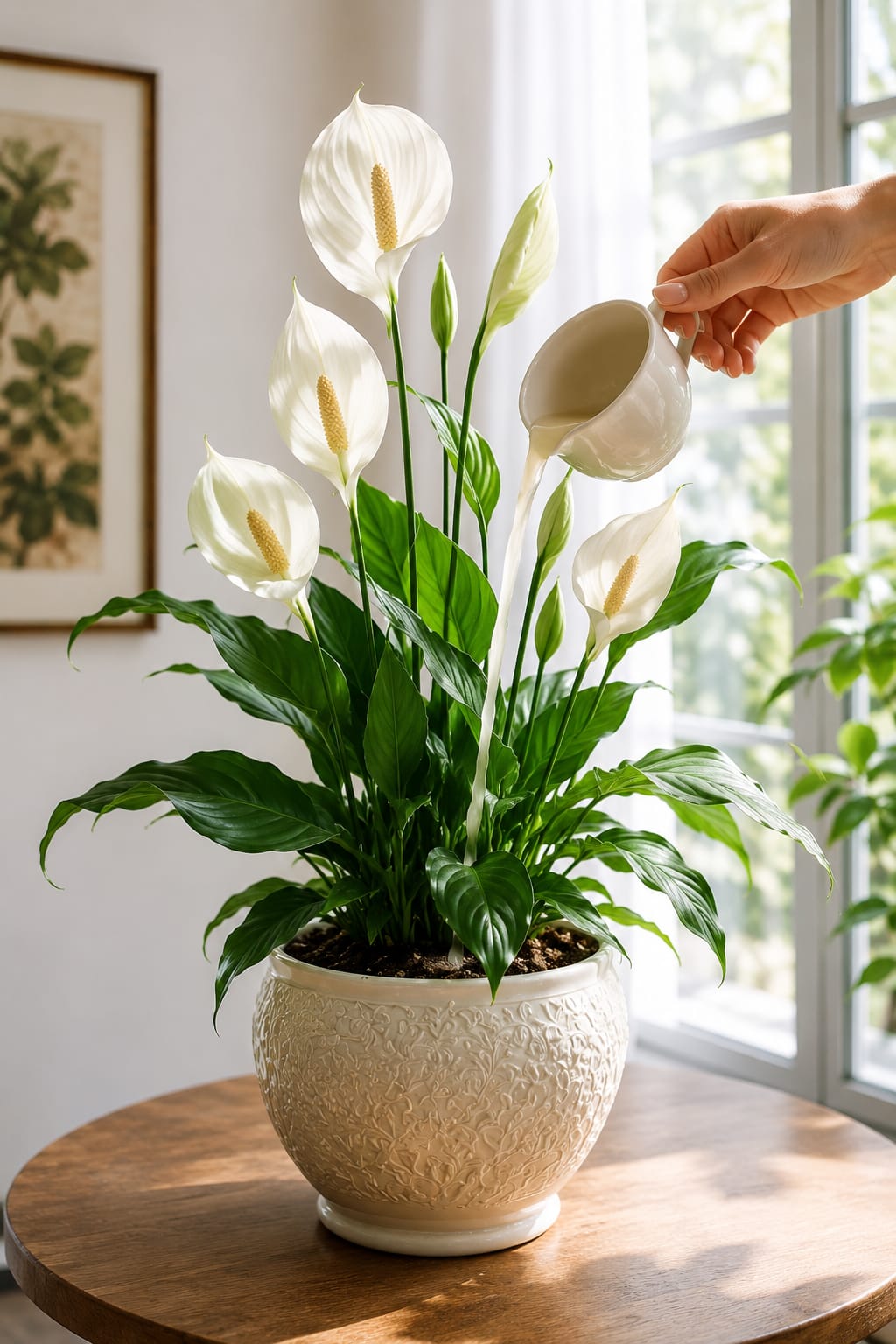
Peace lily is one of the most graceful indoor plants for anyone who wants glossy green leaves, elegant white blooms, and a calm decorative display that fits beautifully into living rooms, bedrooms, home offices, bright kitchens, apartments, plant shelves, entryways, commercial interiors, luxury home staging, and premium indoor plant styling. Its deep green foliage, soft tropical shape, and white spathes give it a refined look that feels clean, peaceful, and expensive even when the plant is placed in a simple ceramic pot on a small wooden table.
Many homeowners become interested in easy peace lily hacks when the plant looks green but refuses to bloom, when the leaves lose their shine, or when the white flowers appear smaller than expected. One popular idea is pouring a light white liquid around the base of the plant. This liquid may be diluted milk water, rice water, weak fertilizer, eggshell water, or another mild root-zone tonic. The goal is usually to support stronger roots, richer leaves, and better blooming without buying expensive plant products. However, peace lilies are sensitive plants, and this kind of method needs to be handled carefully. A white liquid can support growth only when it is fresh, very diluted, and used rarely. If it is thick, sour, spoiled, sugary, or poured into already wet soil, it can cause root rot, fungus gnats, mold, brown tips, yellow leaves, and sour-smelling soil.
The most important thing to understand is that a peace lily does not bloom because of one dramatic trick. Stunning blooms come from a complete care routine. The plant needs bright indirect light, healthy roots, evenly moist but well-drained soil, a pot with drainage holes, gentle feeding during active growth, clean leaves, and stable indoor conditions. A mild white tonic may be used as a small support step, but it should never replace good houseplant care. A peace lily that receives the right light and root care will always perform better than one that is treated with strong homemade mixtures but kept in poor soil or a dark corner.
Understanding Peace Lily Growth
Peace lily, also known as Spathiphyllum, is loved for its lush green leaves and elegant white spathes. The white part that most people call the flower is actually a modified leaf, while the real flowers are tiny and arranged on the central spadix. This structure gives the plant its classic white-and-green appearance, making it one of the most popular choices for indoor plant decor, modern apartment greenery, office plant styling, and luxury indoor displays.
A healthy peace lily grows from a central crown, sending up leaves on upright stems. When the plant is mature and receives good light, it may produce white spathes above the foliage. These blooms can last for weeks and bring a soft, refined look to a room. A healthy plant usually has firm stems, glossy leaves, clean soil, and a fresh appearance. A stressed plant may droop, yellow, develop brown tips, produce weak blooms, or stop flowering completely.
Peace lilies are often described as easy-care plants, but that does not mean they enjoy neglect or heavy treatments. They are forgiving in some ways, especially when they need water and droop as a visible signal, but their roots are sensitive to soggy soil. They need moisture, but they also need oxygen. This balance is the heart of peace lily care. Too much water, too little light, or too much fertilizer can quickly reduce the plant’s beauty.
What the White Liquid Might Be
The white liquid used around a peace lily may be diluted milk water. Some homeowners use milk water because milk contains calcium and small amounts of other nutrients. The idea sounds natural, but dairy can sour in soil if it is too strong or used too often. Straight milk should never be poured into a peace lily pot. It can leave residue, smell bad, attract pests, and encourage mold. If milk water is used at all, it should be heavily diluted until it is thin and barely cloudy.
The white liquid may also be rice water. Rice water can look cloudy and is often used as a homemade plant tonic. It may contain trace nutrients and starches, but those starches can also feed microbes in the potting mix. In small amounts, fresh diluted rice water may not harm a healthy plant, but repeated use can lead to a sticky soil surface, fungus gnats, or sour smell. Peace lilies do not need rice water to bloom, so it should be treated as optional and used carefully.
Another possibility is eggshell water or a weak calcium mixture. Eggshells contain calcium carbonate, but they break down slowly and do not act like instant fertilizer. Calcium can be useful in plant structure, but peace lily blooming is usually limited more by light and root health than by a sudden lack of calcium. A calcium-based homemade liquid should not be used heavily, especially because too much mineral residue can build up in indoor pots.
The safest version of a white liquid is often simply a weak, properly diluted houseplant fertilizer. A balanced fertilizer mixed at half strength or quarter strength can support healthy foliage and blooms during active growth. Unlike mystery homemade mixtures, a labeled fertilizer gives more predictable nutrients. Even then, peace lilies prefer gentle feeding, not strong feeding.
What This Hack Can Actually Do
A mild white root tonic may support a peace lily if the plant is already healthy, actively growing, and sitting in the right environment. If the liquid is a weak fertilizer, it may provide small amounts of nitrogen, phosphorus, potassium, and micronutrients. These can support fresh leaves and blooming potential. If the mixture is very diluted rice water or milk water, it may offer a tiny organic boost, but the benefits are less predictable.
The method can also encourage more careful watering. Sometimes the real improvement comes not from the liquid itself, but from the fact that the homeowner begins paying attention to the plant’s soil, pot, light, and moisture. A peace lily responds beautifully when its care becomes more consistent. However, it is important not to confuse attention with a miracle ingredient.
This hack cannot force blooms overnight. It cannot repair root rot instantly. It cannot make a peace lily bloom in a dark room. It cannot replace a pot with drainage holes. It cannot fix compacted soil. It cannot undo months of overwatering in one application. It is only a support method, and it must be used with restraint.
Why Bright Indirect Light Matters Most for Blooms
If a peace lily has lush leaves but few blooms, light is usually the first thing to check. Peace lilies are often sold as low-light plants, but low light mostly means they can survive in lower light, not that they will bloom heavily there. For stunning white blooms, the plant needs bright indirect light. A room with filtered daylight, a window covered by sheer curtains, or a bright spot away from harsh afternoon sun can help the plant build enough energy to flower.
Direct hot sun can scorch the leaves, especially through glass. Brown patches, faded areas, and crispy edges may appear when the plant receives too much harsh light. On the other hand, if the plant sits far from a window, the leaves may remain green but flowering may be weak or absent. Moving the plant gradually closer to bright filtered light often does more for blooming than any homemade tonic.
For indoor plant styling, a peace lily looks beautiful near a window where the white spathes catch soft light. The plant should not be pressed directly against cold glass or exposed to hot drafts. A bright living room corner, bedroom window area, home office shelf, or entry console with indirect light can create both healthy growth and a premium decorative effect.
Watering Peace Lily the Right Way
Peace lilies like soil that stays lightly moist, but they do not like sitting in soggy conditions. The top layer of soil should begin to dry before watering again. When watering, the liquid should moisten the root zone and then drain out of the bottom of the pot. The saucer should be emptied afterward. This is especially important if any tonic or fertilizer is being used, because standing liquid around the roots can increase the risk of fertilizer burn and root rot.
A white liquid should count as watering. It should not be added as an extra treatment when the soil is already wet. If the potting mix is damp and heavy, wait. Peace lily roots need oxygen. Adding more liquid into wet soil can suffocate the roots and cause yellow leaves or drooping that looks like thirst but is actually root stress.
Many peace lily owners water on a schedule, but the plant’s needs change with light, temperature, humidity, pot size, and season. In warm bright conditions, the plant may need water more often. In cool, low-light rooms, the soil dries more slowly. The best approach is to check the soil and the weight of the pot. A plant in a decorative ceramic pot may stay moist longer than one in terracotta. A large pot may hold moisture longer than a snug pot.
Best Soil for Peace Lily Roots
Peace lilies grow best in a rich but airy potting mix. The soil should hold moisture, but it should not become muddy or compact. A good indoor mix may include potting soil, perlite, coco coir, fine bark, and a small amount of compost-based material. The purpose is to create a root zone that stays gently moist while still allowing oxygen to reach the roots.
Dense garden soil should not be used indoors. It can compact in the pot, hold too much water, and suffocate the root system. A peace lily planted in heavy soil may droop even when the soil is wet because the roots cannot breathe. If a plant has sour-smelling soil, fungus gnats, slow drying, or repeated yellow leaves, repotting into a fresher airy mix may help more than adding any tonic.
If the plant has been in the same potting mix for years, the soil may become depleted and compacted. Old soil can also hold fertilizer salts and mineral buildup. A clean repot with fresh mix can improve root health, and healthy roots are the foundation of lush leaves and blooms. After repotting, avoid strong feeding until the plant settles.
Choosing the Right Pot
A peace lily pot should have drainage holes. This is one of the most important details in indoor plant care. Decorative pots without drainage may look beautiful, but they can trap water at the bottom. When roots sit in trapped water, they can rot. A pot with drainage allows excess water, fertilizer, and mineral buildup to move out of the root zone.
If using a decorative outer pot, keep the plant in a nursery pot inside it and remove standing water after watering. This gives the luxury look without sacrificing plant health. A white ceramic pot, textured stone-style planter, woven basket cover, or neutral decorative container can make a peace lily look elegant while still allowing practical care.
The pot size also matters. A pot that is much too large can hold too much wet soil around the roots. A pot that is too small may dry out too quickly and restrict growth. Peace lilies usually appreciate a pot that gives roots room without overwhelming them. If the plant is root-bound and dries very quickly, moving up one pot size can support fuller leaves.
How to Feed Peace Lily for Lush Leaves
Peace lilies do not need heavy fertilizer. During spring and summer, a diluted balanced houseplant fertilizer every four to six weeks can support healthy leaves and blooms. If the plant is growing under strong indoor light, it may use nutrients more actively. If it is in low light or winter conditions, feeding should be reduced or stopped.
If the white liquid is a diluted fertilizer, it should be weak. Full-strength feeding may cause brown leaf tips, yellowing, or root burn. Peace lilies often look better with gentle nutrition than aggressive feeding. A plant that receives too much fertilizer may produce damaged tips even if it is otherwise healthy.
Do not combine multiple feeding methods at once. A plant should not receive milk water, rice water, liquid fertilizer, slow-release pellets, and powder amendments all in the same period. Layering treatments increases the risk of salt buildup and sour soil. Choose a simple routine and observe how the plant responds.
How to Encourage Stunning Blooms
To encourage blooms, focus first on light. A peace lily needs enough bright indirect light to produce energy. If the plant has not bloomed in a long time, move it gradually to a brighter location with filtered light. Avoid harsh direct sun, but do not keep it in a dark corner and expect flowers.
Next, support the roots. The potting mix should be airy and lightly moist. The pot should drain. The roots should not be sitting in compacted soil or stagnant water. If roots are stressed, the plant may focus on survival instead of flowering. A healthy root system supports strong stems and spathes.
Then use gentle feeding during active growth. A weak balanced fertilizer can help. Some peace lilies bloom better after receiving consistent care for several weeks or months. Blooming is not always immediate. Patience is part of the process. When the plant does bloom, remove old spathes once they turn green, brown, or tired. This keeps the display clean and encourages the plant to focus on new growth.
Risks of Using Milk Water
Milk water is one of the most common white-liquid ideas, but it can be risky. Milk contains organic material that can spoil. In a warm indoor pot, dairy residue may sour, smell unpleasant, attract fungus gnats, and create mold. Peace lily roots need clean moisture and oxygen, not thick organic residue around the crown.
If milk water is used, it should be heavily diluted until it looks only faintly cloudy. It should be used rarely, never weekly, and only when the soil actually needs watering. It should never be poured onto leaves, flowers, or into the tight crown of the plant. The pot must drain fully afterward.
For most peace lily owners, a diluted houseplant fertilizer is safer and more predictable than milk water. It provides known nutrients and reduces the risk of sour soil. Natural does not always mean safer, especially inside small indoor pots.
Risks of Rice Water
Rice water can seem gentle because it is commonly used in home plant-care tips, but it also carries risks. The starches in rice water can feed microbes in the soil. If used too often, it may lead to a sticky surface, sour smell, mold, or fungus gnats. Indoor pots do not process organic materials as quickly as outdoor garden beds.
Fresh diluted rice water is safer than fermented rice water. Fermented mixtures can become strong and unpredictable. Peace lilies are sensitive, so fermented liquids should be avoided unless the grower has experience and the plant is very healthy. Even then, plain water and balanced fertilizer are usually safer.
If rice water causes odor, mold, or gnats, stop using it. Remove the top layer of affected soil if needed and return to plain water until the plant stabilizes. A peace lily can grow beautifully without rice water.
Warning Signs After Using a White Liquid
If the plant develops yellow leaves, brown tips, drooping after watering, sour soil smell, mold, fungus gnats, black leaf spots, or mushy stems after using a white tonic, the treatment may be stressing the plant. Stop using it immediately. Do not repeat the mixture hoping the plant will adjust.
If the pot drains well, flush the soil gently with clean water and allow it to drain fully. This may help remove some residue. If the soil smells sour or feels sticky, repotting is safer. Remove the plant carefully, check the roots, trim rotten sections with clean tools, and repot into fresh airy mix.
After a problem, avoid fertilizer or homemade tonics for several weeks. Let the plant recover in bright indirect light with careful watering. New healthy growth is the best sign that the root system is improving.
Cleaning Peace Lily Leaves
Peace lily leaves are large and glossy, so dust shows quickly. Clean leaves help the plant absorb light and make the display look more premium. Wipe each leaf gently with a soft damp cloth, supporting the leaf with one hand while cleaning with the other. Avoid harsh rubbing because the leaves can tear.
Do not use oily leaf shine products. They may look attractive for a short time, but they can leave residue and attract dust. Plain water is usually enough. If any white liquid splashes onto the leaves, wipe it off before it dries. Dairy or fertilizer residue on leaves can create marks and reduce the clean look.
Removing damaged leaves also improves appearance. Yellow leaves can be cut near the base with clean scissors. Old blooms can be removed once they fade. A groomed peace lily looks elegant even when it is not flowering heavily.
Humidity and Indoor Conditions
Peace lilies appreciate moderate to higher humidity, but they do not need constantly wet leaves. Dry indoor air can contribute to brown tips and curled leaves. Grouping plants together, using a pebble tray, or running a humidifier nearby can help if the air is very dry. However, airflow should remain good so the plant does not stay damp all day.
Cold drafts can stress peace lilies. Keep them away from cold windows in winter, air-conditioning vents, and sudden temperature changes. Warm stable indoor conditions help the plant keep firm leaves and better blooms. Temperature stress can cause drooping and slow growth, even if watering and feeding are correct.
A peaceful indoor location with filtered light, stable temperature, and moderate humidity creates the best setting. This is why peace lilies are so popular in bedrooms, living rooms, and home offices. They add softness without demanding constant attention.
Indoor Decor and Styling Ideas
Peace lily is a natural choice for elegant indoor decor because the plant combines dark glossy leaves with white blooms. A textured cream ceramic pot can create a luxury home staging look. A simple white planter makes the plant feel modern and clean. A woven basket cover brings warmth to bedrooms and living rooms. A stone-effect planter can make the plant look more architectural and premium.
In a living room, a peace lily can sit on a round wooden table, plant stand, or sideboard where the white blooms catch soft daylight. In a bedroom, it creates a calm and restful look when paired with neutral bedding and soft curtains. In a home office, it adds polish to a video-call background. In an entryway, it can create a welcoming impression if there is enough light.
For commercial interior landscaping, peace lilies are useful because they look elegant and familiar. They can work in reception areas, wellness spaces, waiting rooms, boutique corners, and staged homes. In these settings, clean care matters even more. Homemade liquids that smell or leave residue are not ideal for professional displays. Controlled watering, clean leaves, and proper fertilizer are better for premium presentation.
Continue to Page 2
Continue to page 2 for more details about this article and the key points many readers miss on the first page.