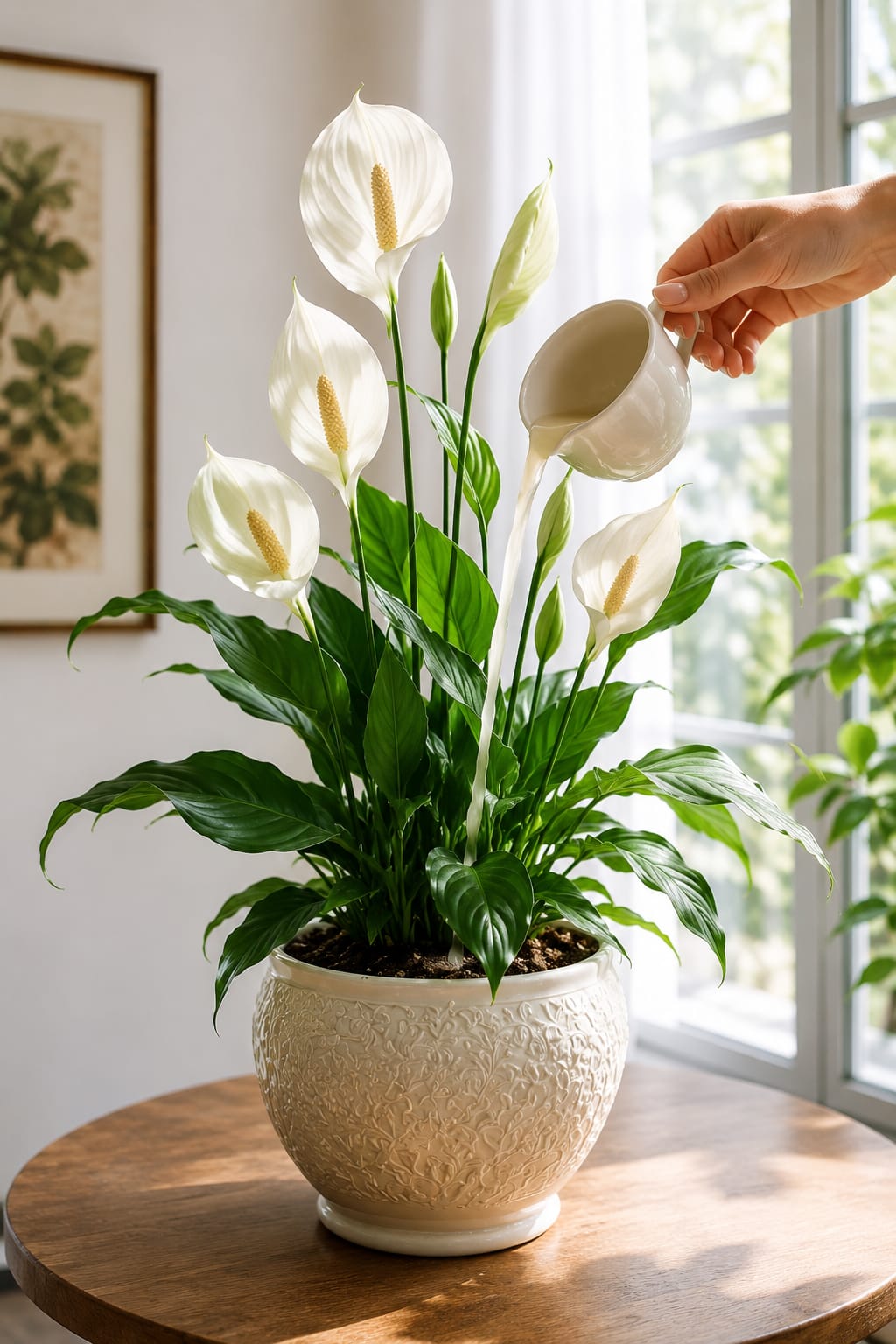
Common Peace Lily Mistakes
One common mistake is keeping the plant in low light and expecting fertilizer to create blooms. Without enough light, the plant cannot produce the energy needed for strong flowering. Another mistake is overwatering. Peace lilies droop when thirsty, but they can also droop when roots are damaged by soggy soil. Checking the soil is more reliable than reacting only to drooping leaves.
A third mistake is using strong homemade mixtures. Thick milk, fermented rice water, sugary liquids, or unknown white tonics can damage indoor soil. A fourth mistake is pouring liquid directly into the crown. The crown should stay clean and airy. Water and diluted feed should go into the soil around the root zone, not into the tight base of the stems.
A fifth mistake is feeding too often. Peace lilies are not heavy feeders. Too much fertilizer leads to brown tips, salt buildup, and weaker appearance. Gentle feeding during active growth is enough for most plants.
Simple Recovery Plan for a Weak Peace Lily
If a peace lily looks weak, begin by checking the soil. If it is wet and heavy, allow it to dry slightly and check drainage. If the pot has no drainage holes, move the plant into a draining pot. If the soil smells sour, repot into fresh airy mix. If roots are black or mushy, trim damaged areas and repot carefully.
Next, improve light. Move the plant into bright indirect light, avoiding harsh sun. Clean the leaves so they can absorb light. Keep the room warm and stable. Avoid feeding until the plant shows signs of recovery. Weak roots cannot handle strong fertilizer.
After new growth appears, gentle feeding can resume. A diluted balanced fertilizer is usually safer than a homemade white liquid. If you choose to test a mild tonic, use it rarely and watch the plant closely. The goal is recovery, not experimentation.
Professional Plant-Care Note
In high-end indoor plant care, peace lily is valued for its clean white blooms, deep green leaves, and adaptable nature. It is often used in luxury home staging, commercial interior landscaping, modern apartment decor, office plant design, and premium plant displays because it looks calm and refined. The best displays are simple, clean, and healthy.
A professional-looking peace lily should have glossy leaves, fresh soil, no sour smell, no fungus gnats, no standing water, and a pot that matches the interior. The care routine should be quiet and controlled. Heavy homemade treatments, visible residue, or smelly soil reduce the luxury effect. The plant should look naturally healthy, not overtreated.
The strongest peace lily hack is consistency. Bright indirect light, correct watering, airy soil, drainage holes, gentle feeding, and clean leaves create the lush look people want. A white tonic may be interesting, but stable care is what produces lasting beauty.
Final Thoughts
A light white liquid may be used around a peace lily only with caution. It may be diluted milk water, rice water, eggshell water, weak fertilizer, or another mild tonic, but it should always be fresh, thin, odor-free, and heavily diluted. It should never be poured into wet soil, used weekly, applied to leaves, or added to a plant with root problems.
The real secret to lush leaves and stunning blooms is not one ingredient. It is bright indirect light, healthy roots, well-drained soil, a pot with drainage holes, steady moisture, clean foliage, gentle fertilizer, and patience. If your peace lily is not blooming, improve light first. If the leaves are drooping or yellowing, check the roots and watering routine before adding any tonic.
With careful care and elegant styling, peace lily can remain a beautiful indoor feature for living rooms, bedrooms, home offices, entryways, bright kitchens, modern apartments, commercial interior landscaping, luxury home staging, and premium plant displays. Healthy roots, glossy leaves, graceful white blooms, clean soil, and balanced maintenance will always create a stronger result than risky homemade shortcuts.