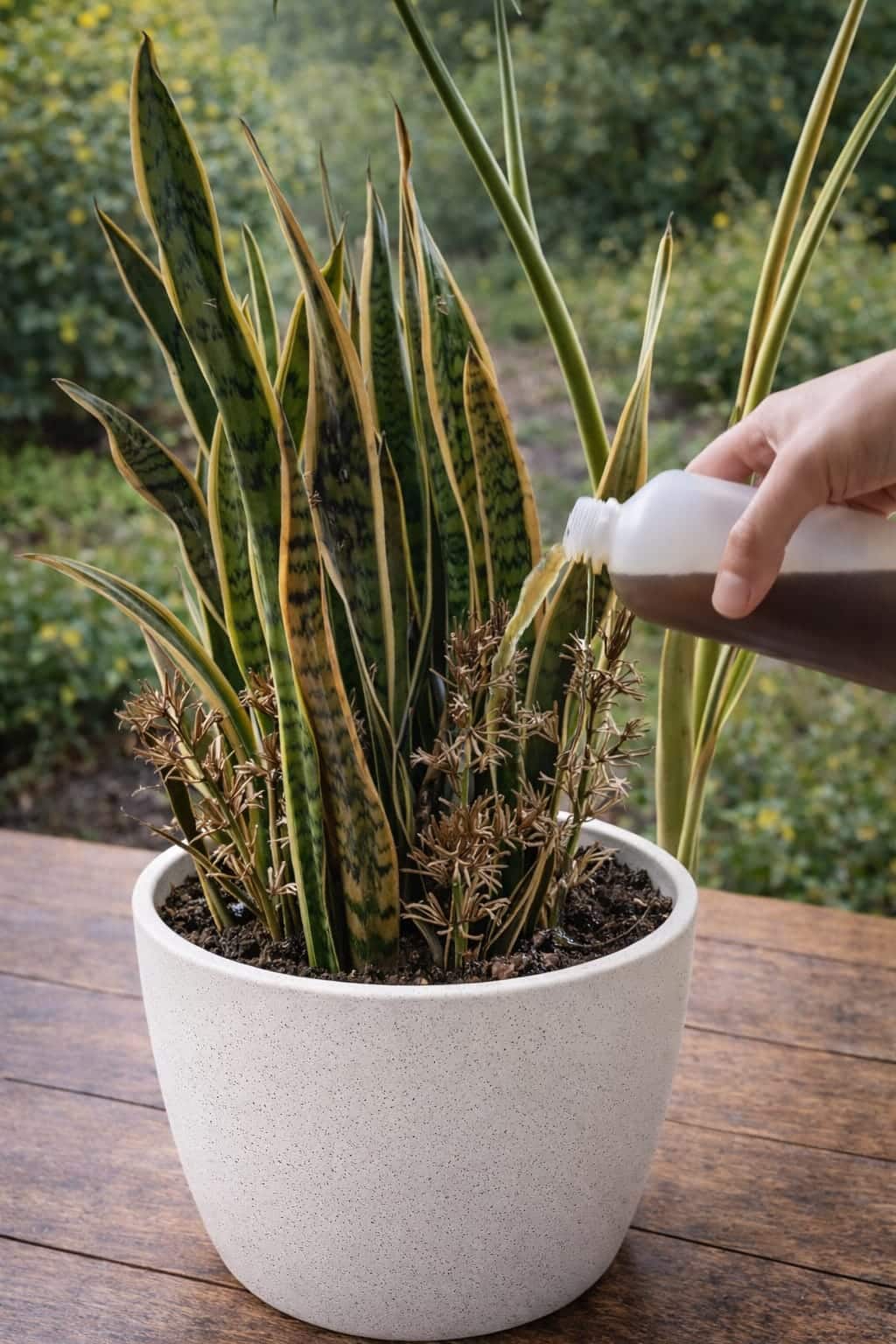
2 Light – The #1 Bloom Trigger
While snake plants survive in low light, flowering only happens in brighter conditions. Light provides the energy the plant needs to produce flowers.
The Right Light Conditions
· Place your plant near a sunny window with indirect light – an east or west window is ideal.
· Avoid harsh direct afternoon sun, which can scorch the leaves.
· Rotate the pot every couple of weeks to ensure even exposure.
· If natural sunlight is limited, supplement with a grow light for a few hours daily.
Why This Works
Bright, indirect light allows the plant to photosynthesize efficiently, storing the energy needed for the demanding process of flowering. In low light, the plant focuses only on survival – not reproduction.
Pro tip: If your snake plant has been in a dark corner for years, move it gradually to brighter light over a few weeks to avoid shock.
3 Soil and Fertilizer – Balance Over Abundance
Well‑draining soil is non‑negotiable for snake plants. Heavy, moisture‑retentive soil leads to root rot and prevents blooming.
The Right Soil Mix
· Cactus or succulent mix works perfectly.
· DIY option: Amend regular potting soil with sand or perlite (1 part sand/perlite to 2 parts soil) to improve drainage.
· Avoid heavy garden soil or mixes that stay wet for more than a week.
The Right Fertilizer
· Use a balanced liquid fertilizer (e.g., 10-10-10) diluted to half strength.
· Feed once every 2–3 months during the growing season (spring and summer).
· Do not fertilize in fall and winter – the plant rests.
Why This Works
Too much fertilizer, especially high‑nitrogen formulas, promotes leafy growth at the expense of flowers. A light, balanced feeding supports overall health without encouraging excessive foliage. By keeping the roots dry and the nutrients balanced, you give your plant the conditions it needs to push out blooms..
Pro tip: If you see brown leaf tips or a white crust on the soil, you’re over‑fertilizing. Flush the soil with plain water and reduce feeding.
4 Temperature – Warm Days, Cool Nights
Snake plants are adaptable, but they respond to temperature changes. A slight drop at night can mimic the natural seasonal shift that triggers blooming.
Ideal Temperature Range
· Daytime: 65–85°F (18–29°C)
· Nighttime: 55–65°F (13–18°C) – a drop of about 10°F can encourage flowering.
What to Avoid
· Sudden temperature swings.
· Cold drafts below 50°F (10°C).
· Prolonged exposure to temperatures above 90°F (32°C).
Pro tip: In autumn, place your snake plant near a cool window (but away from frost) for a few weeks. The natural temperature drop may trigger buds
5 Pot Size – Slightly Root‑Bound Encourages Blooms
Snake plants prefer to be slightly root‑bound. When the roots fill the pot, the plant senses limited space and shifts energy toward reproduction – flowering.
Pot Size Guidelines
· Repot only every 2–3 years, or when roots are visibly growing out of the drainage holes.
· When repotting, choose a pot that is only 1–2 inches larger in diameter.
· Avoid moving to a much larger pot – excess soil holds too much moisture and discourages blooming.
Pro tip: If your snake plant has never bloomed and is in a very large pot, try moving it to a smaller, snugger pot.
6 Maturity – Patience Is Non‑Negotiable
Young snake plants rarely bloom. Most need to be at least 3–5 years old to have enough energy reserves to produce flowers
Signs of Maturity
· Thick, well‑established leaves.
· Visible rhizomes (underground stems) near the soil surface.
· The plant has produced pups (offsets) at least once
Pro tip: If your snake plant is young, focus on healthy growth. Blooms will come with time.
7 Stability – Avoid Constant Changes
Snake plants are creatures of habit. Moving them frequently, repotting too often, or changing their environment can stress them in a negative way, preventing blooms
What to Do
· Keep the plant in one spot once you’ve found a good location.
· Rotate the pot occasionally for even light, but don’t move it to different rooms.
· Avoid repotting unless necessary.
Pro tip: Once you see a flower stalk emerging, do not move the plant. Buds can drop if conditions change.
Common Mistakes That Prevent Blooms
Mistake Why It’s Harmful Correct Approach
Overwatering Root rot, no energy for blooms Let soil dry completely
Low light No energy for flowering Move to bright, indirect light
Too much fertilizer Promotes leaves, not flowers Feed lightly every 2–3 months
Pot too large Excess moisture, root focus Keep pot snug
Repotting too often Plant never feels secure Repot every 2–3 years
Moving the plant Stress, bud drop Keep in one spot
Young plant Not enough energy Be patient – wait 3–5 years
What to Do When Your Snake Plant Blooms
If you’re lucky enough to see a flower stalk emerging, follow these steps:
- Do not move the plant – buds are sensitive to changes in light and temperature.
- Continue normal care – water when soil is dry, provide bright light.
- Enjoy the fragrance – the flowers are most fragrant at night.
- After blooming – the stalk will eventually dry and turn brown. Cut it off at the base.
- Resume normal care – the plant may bloom again in the future, or it may take years.
Pro tip: Do not fertilize while the plant is in bloom – it can shorten the flower life.
Frequently Asked Questions (FAQs)
Q: How long do snake plant blooms last?
Individual flowers last 1–2 days, but the stalk produces new blooms over 2–4 weeks, so the overall display can last up to a month
Q: Why did my snake plant bloom only once and never again?
Blooming is unpredictable. Some snake plants bloom every few years; others may only bloom once in a decade. Focus on consistent care, and it may surprise you again.
Q: Do snake plants need to be root‑bound to bloom?
Not necessarily, but being slightly root‑bound does encourage blooming. It’s one of several factors.
Q: Can I propagate my snake plant from the flower stalk?
No – the flower stalk will not produce new plants. Propagate from leaf cuttings or division of offsets (pups).
Q: Are snake plant flowers fragrant?
Yes – they have a sweet, jasmine‑like scent that is strongest at night.
Q: Should I cut the flower stalk after blooming?
Yes – once the stalk turns brown and dry, cut it off at the base. This prevents the plant from wasting energy on dead tissue.
Q: Can I force my snake plant to bloom by stressing it more?
No – there’s a fine line between “controlled stress” (slight drought, root‑bound) and actual harm. Severe stress can kill the plant.
Printable Snake Plant Bloom Checklist
☐ Place in bright, indirect light (east/west window)
☐ Water only when soil is completely dry
☐ Use well‑draining cactus/succulent soil
☐ Keep pot slightly snug – repot every 2–3 years
☐ Fertilize lightly every 2–3 months in spring/summer (diluted balanced fertilizer)
☐ Maintain daytime temps 65–85°F, nighttime drop to 55–65°F (autumn)
☐ Keep plant in one stable location
☐ Be patient – plant must be mature (3–5+ years)
☐ Do not move once flower stalk appears
☐ After blooming, cut dry stalk at base
Final Thoughts – Patience and Consistency
Snake plant blooms are rare, special, and utterly delightful. They don’t happen by accident – they happen when you’ve provided the right balance of light, water, soil, temperature, and patience.
· Give it bright indirect light.
· Let the soil dry completely between waterings.
· Keep it slightly root‑bound.
· Feed lightly, not heavily.
· Provide a slight temperature drop in autumn.
· Be patient – maturity takes years.
And then, one day, you may notice a tall stalk emerging from the center of your snake plant. The tiny buds will open into fragrant, delicate flowers – a reward for your consistent, gentle care.
Enjoy the moment. It’s one of houseplant gardening’s greatest surprises.
Now it’s your turn! Have you ever had a snake plant bloom? What conditions seemed to trigger it? Drop a comment below – I’d love to hear your story.
And if you found this guide helpful, share it with a friend who loves snake plants. Pin it for later, and subscribe to our newsletter for more plant care wisdom.
Stay bright, stay patient, and watch your snake plant surprise you. 🌿✨