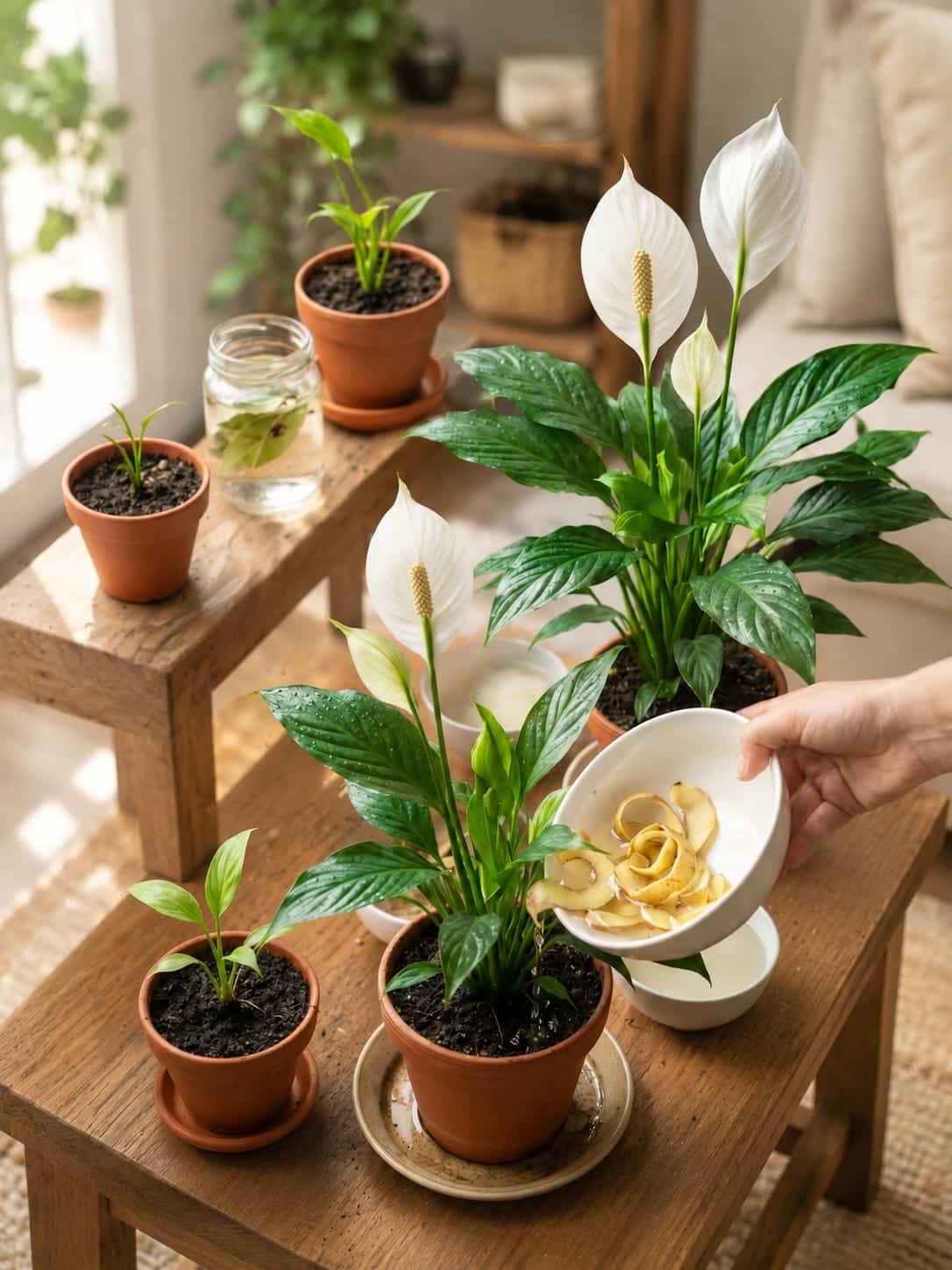
Best Soil for Peace Lily Blooms
Peace lilies need soil that holds some moisture but still allows air to reach the roots. A dense, muddy mix can cause root rot. A mix that dries too quickly can cause repeated wilting.
A good peace lily mix may include quality indoor potting soil, perlite, coco coir, and a small amount of orchid bark. This creates a balance of moisture retention and drainage.
If the soil stays wet for many days, it may be too heavy. If it smells sour, repotting may be needed. If water runs straight through without soaking, the mix may be too dry or compacted.
Potato peel water should only be used in a healthy, well-draining mix. It cannot fix poor soil structure.
How to Water Peace Lily Correctly
Peace lilies like consistent moisture, but they do not like sitting in water. Water when the top inch of soil begins to dry. If the leaves droop and the soil is dry, the plant likely needs water.
Water thoroughly until excess drains from the bottom of the pot. Then empty the saucer. This prevents the roots from sitting in stagnant water.
If the leaves droop while the soil is wet, do not water again. This may indicate root stress or rot. Check the potting mix and drainage.
Potato peel water should follow the same watering rule. Use it only when watering is actually needed.
Humidity for Healthy Leaves and Flowers
Peace lilies appreciate moderate humidity. Dry indoor air can cause brown leaf tips and dull foliage. Higher humidity can help the leaves look smoother and fresher.
You can increase humidity by grouping plants together, placing a humidifier nearby, or using a pebble tray. A bright bathroom or kitchen may also work if there is enough light.
Do not create humidity by keeping the soil constantly wet. Humid air and soggy soil are not the same thing. Wet soil can rot roots.
Good humidity supports the plant, but it must be balanced with airflow and proper watering.
How to Feed Peace Lily Properly
A peace lily can benefit from gentle feeding during active growth. Use a balanced houseplant fertilizer diluted to half strength. Apply it only when the plant is healthy and growing.
Do not overfertilize. Too much fertilizer can cause brown tips, salt buildup, and root stress. Peace lilies prefer light feeding over heavy feeding.
Potato peel water is not complete fertilizer. It may offer small natural support, but it does not provide nutrients in a reliable balance.
If you use fertilizer, do not use potato peel water on the same day. Keep treatments separate and simple.
Can Potato Peel Water Replace Fertilizer?
No. Potato peel water cannot replace fertilizer. It does not provide a measured balance of nutrients. A peace lily needs several nutrients to support leaves, roots, and blooms.
Potato peel water may contain small amounts of helpful compounds, but the amount is unpredictable. It should be treated as a mild homemade supplement only.
If your peace lily is growing in fresh soil and receiving good light, it may need very little fertilizer. But when nutrients are needed, a balanced houseplant fertilizer is more dependable.
Use potato peel water as an occasional addition, not the main feeding plan.
Can Potato Peel Water Fix Yellow Leaves?
No. Potato peel water will not turn yellow leaves green again. Yellow leaves can be caused by overwatering, underwatering, low light, root rot, old age, cold drafts, or nutrient imbalance.
If one older leaf yellows slowly, it may simply be aging. If many leaves yellow at once, check the soil moisture and roots.
If the soil is wet and leaves are yellowing, do not use potato peel water. Adding more organic liquid can make the root environment worse.
Remove yellow leaves once they are fully damaged and correct the cause so new leaves grow healthy.
Can Potato Peel Water Fix Brown Tips?
Potato peel water usually does not fix brown tips. Brown tips on peace lilies are often caused by dry air, inconsistent watering, hard tap water, fertilizer buildup, too much direct sun, or root stress.
Old brown tissue will not turn green again. You can trim brown tips with clean scissors if you want the plant to look neater.
To prevent new brown tips, improve humidity, water consistently, avoid overfeeding, and keep the plant in bright indirect light.
If brown tips are caused by mineral buildup, flushing the soil with plain water or repotting may help more than homemade tonics.
How to Keep Peace Lily Leaves Glossy
Peace lily leaves naturally look glossy when they are clean and healthy. Dust can dull the leaves and reduce the amount of light they absorb.
Wipe the leaves gently with a damp cloth every few weeks. Use plain water only. Do not wipe the leaves with potato peel water because it can leave residue.
Support each leaf with one hand while wiping with the other. Peace lily leaves can tear if handled roughly.
Clean leaves help the plant use light more efficiently, which supports stronger growth and future blooms.
What to Do With Faded Peace Lily Flowers
Peace lily flowers naturally fade with time. The white spathe may turn green, cream, brown, or dry. This is normal.
Once a bloom is finished, cut the flower stem near the base with clean scissors. Removing old blooms helps the plant direct energy toward new leaves and future flowers.
Do not pull faded flowers roughly. This can damage the plant crown.
After flowering, continue stable care. Do not overuse treatments in an attempt to force immediate new blooms.
Can Potato Peels Attract Fungus Gnats?
Yes. Potato peels can attract fungus gnats if they are placed directly in the soil or if potato peel water is used too often. Fungus gnats love damp organic material.
To avoid gnats, never leave peel pieces in the pot. Always strain the liquid well. Use the treatment rarely and only when the soil is ready for watering.
If gnats appear, stop using potato peel water. Let the top layer of soil dry slightly between waterings. Use sticky traps to catch adult gnats and improve airflow.
A healthy peace lily pot should smell fresh and earthy, not sour or rotten.
Can Potato Peel Water Cause Mold?
Yes, if it is too strong, too frequent, or added to wet soil. Starchy water can feed mold when conditions are damp and airflow is poor.
If mold appears, remove the affected top layer of soil. Stop using potato peel water. Let the soil dry slightly more before watering again and improve airflow around the plant.
If the soil smells bad or the plant begins to decline, repot into fresh well-draining mix and inspect the roots.
Mold is a sign that the routine needs to be simplified.
⚠️ Important: Never leave potato peel pieces in the pot. They can rot, smell, attract gnats, and harm the root environment. Always strain the liquid well.
What to Do If You Added Potato Peels Directly to the Pot
If you placed raw potato peels on the soil, remove them before they soften or rot. If they were buried, dig them out carefully and remove any affected soil around them.
If the soil smells sour, remove the plant from the pot and inspect the roots. Trim any rotten roots with clean scissors and repot into fresh soil.
If fungus gnats appear, stop all homemade organic treatments and allow the top layer of soil to dry more between waterings.
After removing the peels, return to plain water and basic care until the plant stabilizes.
A Simple Peace Lily Flower-Stimulating Routine
Place the peace lily in bright indirect light. Use a pot with drainage holes. Keep the soil lightly moist but not soggy. Water when the top inch begins to dry.
Maintain moderate humidity and wipe the leaves clean. Remove faded blooms. Feed lightly during active growth with a diluted balanced fertilizer.
If you want to use potato peel water, apply it once every four to six weeks at most during active growth. Use it fresh, strained, diluted, and only when the plant needs watering.
This balanced routine is much safer and more effective than leaving food scraps in the pot.
Common Mistakes to Avoid
- Burying potato peels in the soil – they can rot, smell bad, and attract pests.
- Using salted or seasoned potato water – salt and seasoning can damage roots.
- Using potato peel water too often – frequent use can cause sour soil and fungus gnats.
- Applying it to wet soil – peace lily roots need oxygen.
- Expecting potato peels to replace fertilizer – they are not complete plant food.
- Keeping the plant in low light and expecting blooms – bright indirect light is the true bloom driver.
- Using old, smelly, fermented potato water – fresh and mild is the only safe option.
Frequently Asked Questions
Is potato peel water good for peace lilies?
Potato peel water can be used occasionally as a mild natural supplement, but it must be fresh, strained, diluted, and applied only when the plant needs watering.
Can potato peels make peace lilies bloom?
They cannot force blooms. Peace lilies bloom best with bright indirect light, healthy roots, proper watering, humidity, and gentle balanced feeding.
Can I put potato peels directly in the pot?
No. Potato peels can rot, smell, attract fungus gnats, and cause mold. Use strained potato peel water instead.
How do I make potato peel water?
Soak a small handful of clean raw potato peels in two cups of water for two to four hours. Strain well, dilute with equal plain water, and use fresh.
How often should I use it?
Use it once every four to six weeks during active growth. Do not use it every time you water.
Can I use boiled potato water?
Only if it is unsalted, unseasoned, cooled completely, strained, and heavily diluted. Never use salty or seasoned cooking water.
Can potato peel water cause gnats?
Yes, if used too often or if peel pieces remain in the soil. Stop using it if gnats appear.
What is the best way to get more peace lily flowers?
Give the plant bright indirect light, keep roots healthy, water correctly, maintain humidity, remove faded blooms, and feed lightly during active growth.
🌿 Potato peel water is a gentle occasional supplement, not a miracle bloom booster. For abundant white peace lily flowers, focus on bright indirect light, healthy roots, proper watering, and balanced feeding. Use potato water only as a rare support – and let consistent care do the real work.