Peace lilies are among the most graceful houseplants you can grow indoors. Their deep green leaves, soft tropical shape, and elegant white blooms make them look calm, fresh, and beautiful in almost any room. When a peace lily is happy, it can bloom again and again, producing white spathes that rise above the leaves like little flags of success.
But many peace lily owners eventually face the same problem. The plant grows leaves, but the flowers disappear. It may stay green for months without producing a single white bloom. The leaves may look healthy, yet the plant refuses to flower. Sometimes it blooms once after purchase and then never again. This can make people wonder what the plant is missing.
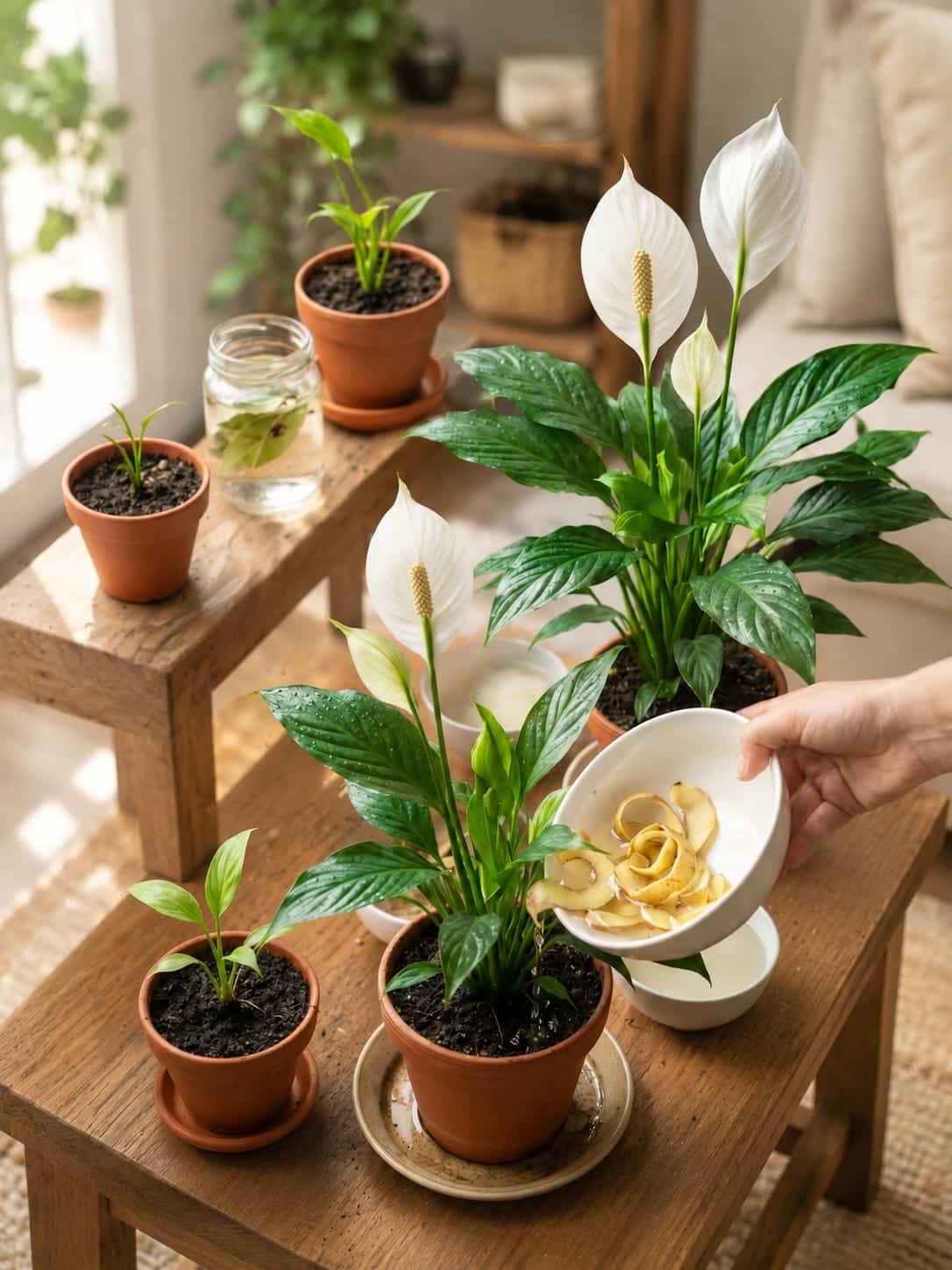
The image shows peace lilies near a bright window with potato peels in a bowl, suggesting a homemade treatment used as a natural flower stimulant. Potato peel water is a popular kitchen-based plant trick because potato peels contain starches and small amounts of minerals that may support soil microbes and provide a gentle natural boost when prepared correctly.
However, potato peels must be used carefully. Raw peels should not be buried directly into an indoor peace lily pot. Cooked or rotting potato scraps should never be left in the soil. If used incorrectly, potato peels can smell bad, attract fungus gnats, encourage mold, and create sour soil around the roots. A peace lily needs moisture, but it does not like dirty, soggy, decaying soil.
The safest way to use potato peels for peace lilies is to make a mild potato peel water, strain it well, dilute it, and apply it occasionally to the soil when the plant is already due for watering. This treatment should never replace bright indirect light, good drainage, healthy roots, balanced fertilizer, or proper watering.
This guide explains how potato peel water may help peace lilies, how to prepare it safely, how often to use it, when to avoid it, and what truly makes peace lilies bloom profusely.
Why Peace Lilies Stop Blooming
Before using any homemade treatment, it is important to understand why peace lilies stop flowering. In most cases, a peace lily does not stop blooming because it lacks one special kitchen ingredient. It usually stops blooming because one of its basic needs is not being met.
The biggest reason is low light. Peace lilies are often described as low-light plants, but this can be misleading. They can survive in lower light, but survival is not the same as flowering. A peace lily kept far from a window may produce green leaves but very few flowers. To bloom well, it needs bright indirect light.
Another common reason is root stress. Peace lilies like evenly moist soil, but they do not like sitting in water. If the soil stays wet too long, the roots can suffocate and rot. A plant with damaged roots may droop, yellow, or stop flowering.
Old, compacted soil can also reduce blooming. When potting mix becomes heavy and airless, roots cannot function properly. Without healthy roots, the plant cannot support flowers.
Nutrition matters too. Peace lilies need gentle balanced feeding during active growth. A homemade treatment like potato peel water may support the soil in a small way, but it is not complete fertilizer.
What Potato Peels Can Do for Peace Lilies
Potato peels contain starches and small amounts of nutrients. When soaked in water, some of those compounds move into the liquid. This is why potato peel water is sometimes used as a natural plant tonic.
The starches in potato peel water may feed beneficial microbes in the soil. Healthy microbial activity can help create a more active root environment. In a mild and controlled amount, this may support general plant vigor.
Potato peels also contain small amounts of potassium and other minerals. Potassium is often associated with overall plant strength and flowering support. However, the amount in homemade potato peel water is not exact or guaranteed.
This means potato peel water should be seen as a gentle supplement, not a powerful fertilizer. It may help support a healthy peace lily, but it cannot fix poor light, rotten roots, or bad soil.
For best results, potato peel water should be used only on a peace lily that is already in good condition and actively growing.
Can Potato Peel Water Make Peace Lilies Bloom?
Potato peel water cannot force a peace lily to bloom overnight. It is not a magic flower button. Peace lily blooms depend mostly on light, maturity, root health, and steady care.
However, potato peel water may support blooming indirectly. If the plant is already receiving good bright indirect light, has healthy roots, and is growing in well-draining soil, a mild potato peel treatment may give the soil a small natural boost. A stronger, healthier plant is more likely to produce flowers.
If your peace lily is in a dark corner, potato peel water will not solve the problem. If the plant has root rot, the treatment may make things worse by adding organic material to already unhealthy soil. If the pot has no drainage, any liquid treatment becomes risky.
So the correct way to understand this trick is simple: potato peel water may support a blooming routine, but the real bloom stimulant is proper light and healthy roots.
🌸 Bloom secret: Bright indirect light is the real driver of peace lily flowers. Potato peel water is only a very occasional supplement, never a substitute for good light.
Why You Should Not Put Potato Peels Directly Into the Pot
The image shows potato peels in a bowl near peace lilies. This is a useful visual, but the peels should not be placed directly into the pot and left there.
Raw potato peels break down quickly in moist soil. As they decompose, they can smell unpleasant and attract fungus gnats, fruit flies, ants, or mold. In an indoor pot, this can become a problem very fast.
Peace lilies already prefer soil that stays lightly moist. Adding raw food scraps can keep the surface wetter and more organic than it should be. This creates the perfect environment for gnats and mold.
Burying peels is even worse. When peels rot near the roots, they can create sour pockets in the soil and reduce oxygen around the root system. Peace lily roots need moisture, but they also need air.
If you want to use potato peels, make a strained liquid. Do not turn the peace lily pot into a compost bin.
The Safest Potato Peel Water Recipe
To make potato peel water safely, use clean peels from plain potatoes. The potatoes should not be cooked with salt, oil, butter, spices, or seasoning. Use only clean raw peels.
Place a small handful of potato peels in a bowl or jar. Add two cups of clean room-temperature water. Let the peels soak for two to four hours. The water may become slightly cloudy or lightly tinted.
After soaking, strain the liquid very well. Remove every piece of peel. Do not allow peel fragments to enter the peace lily pot.
Dilute the strained potato peel water with an equal amount of plain water. This makes the treatment gentler and safer for indoor roots.
Use the mixture fresh. Do not leave it sitting for days. If it smells sour, fermented, or unpleasant, discard it immediately.
Optional Boiled Potato Peel Water
Some gardeners boil potato peels to extract more from them, but this method must be used with caution for indoor plants. Boiled potato peel water can become too starchy if it is not diluted.
If you use the boiling method, place a small handful of clean peels in a pot with plenty of water. Simmer for ten to fifteen minutes. Let the liquid cool completely. Strain it very well.
Then dilute it heavily. Use one part cooled potato peel liquid with at least three parts plain water. The final mixture should be thin, not thick or sticky.
Never use salted potato water. Never use water from potatoes cooked with oil, butter, seasoning, or broth. Salt and seasonings can damage houseplant roots.
For peace lilies, the simple soaking method is usually safer than a strong boiled mixture.
How to Apply Potato Peel Water to Peace Lily
Use potato peel water only when your peace lily is already due for watering. Touch the top inch of the soil first. If it is still damp, wait. Do not add more liquid to wet soil.
Pour a small amount of diluted potato peel water directly onto the soil. Avoid pouring it over the leaves, flowers, or crown of the plant. The treatment belongs in the root zone, not on the foliage.
Water slowly so the soil absorbs it evenly. If the pot has drainage holes, allow excess liquid to drain completely. Empty the saucer afterward.
Do not leave the pot sitting in runoff water. Standing water can lead to root rot, especially when the water contains organic material.
After applying the treatment, return to plain water for normal care.
How Often Should You Use Potato Peel Water?
Potato peel water should be used occasionally, not constantly. Once every four to six weeks during active growth is enough. For many peace lilies, once every two months is safer.
Do not use it every week. Do not use it every time you water. Too much starchy water can encourage mold, sour soil, and fungus gnats.
The best time to use it is during spring and summer, when the peace lily is actively growing. During winter or low-light periods, the plant uses less water and nutrients, so organic treatments are more likely to sit in the soil too long.
If the plant responds well, continue gently. If you notice odor, mold, gnats, yellowing, or drooping while the soil is wet, stop using the treatment immediately.
When Potato Peel Water May Help
Potato peel water may help when a peace lily is healthy but needs a gentle natural boost. It is best used on a plant with firm green leaves, active growth, and a pot that drains well.
It may be useful after a blooming cycle, when the plant is rebuilding energy. It may also support a plant that is producing new leaves but needs a mild soil refresh.
If your peace lily is near a bright window, growing steadily, and watered correctly, potato peel water may become a small supportive part of the routine.
The key is that the plant should already be stable. Homemade tonics are safest when used on healthy plants, not on plants that are struggling badly.
When You Should Avoid Potato Peel Water
- Do not use if the soil is wet – adding more liquid can suffocate the roots and encourage rot.
- Do not use if the plant has fungus gnats – starchy organic liquid can make gnats worse.
- Do not use if there is mold on the soil surface – mold means the pot is already too moist or organic-heavy.
- Do not use if the peace lily has yellowing leaves and wet soil – this may mean root stress.
- Do not use if the pot has no drainage holes – organic water in a no-drainage pot can quickly create sour soil.
- Do not use old, fermented, salty, seasoned, or smelly potato water.
The Real Secret to Abundant Peace Lily Flowers
The real secret to abundant peace lily flowers is bright indirect light. Peace lilies can survive in low light, but they usually bloom better in brighter filtered light.
Place the plant near a bright window where it receives strong indirect light. Morning light is often gentle and helpful. Avoid harsh direct afternoon sun, which can scorch the leaves.
If your peace lily has not bloomed for months, gradually move it closer to better light. Do not suddenly place it in intense sun. A steady increase in brightness is safer.
Once the plant has enough light, it can produce more energy. That energy supports roots, leaves, and flowers. No homemade treatment can replace this process.
Continue to Page 2
Continue to page 2 for more details about this article and the key points many readers miss on the first page.