Snake plants are famous for being almost impossible to ignore. Their tall sword-like leaves, bold green patterns, and bright yellow edges make them look elegant, modern, and strong. They can survive in many homes where other houseplants struggle. They tolerate missed waterings, average humidity, and lower light better than many indoor plants.
But every snake plant owner eventually wants the same thing: more growth. More baby shoots. More leaves filling the pot. And, if possible, those rare tall flower spikes that make a snake plant look magical.
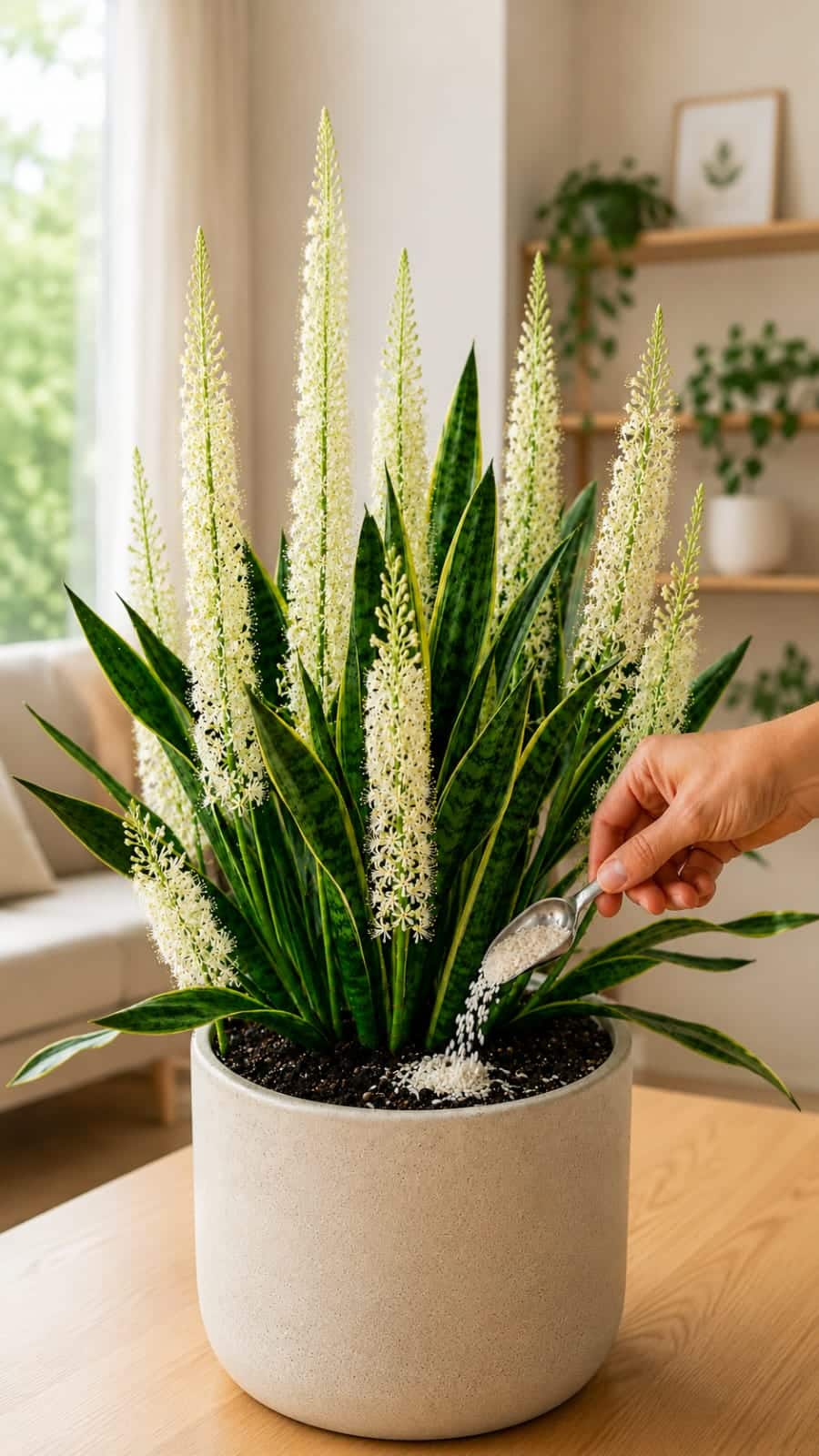
The image shows a stunning snake plant full of tall white flower spikes, while uncooked rice is being sprinkled onto the soil. The idea is simple and attractive: use rice to encourage stronger growth, more pups, and maybe even blooms. Rice is one of the most popular kitchen ingredients in natural plant care because rice rinse water contains starches and small traces of minerals that may support soil microbes when used carefully.
However, this trick needs to be explained honestly. Rice will not magically force a snake plant to bloom. It will not instantly create pups. It will not fix root rot, low light, dense soil, overwatering, or a pot without drainage. If used incorrectly, rice can attract fungus gnats, mold, ants, and sour smells. Snake plants need a dry-friendly, airy root zone, so any organic kitchen ingredient must be used lightly.
The safest way to use rice for snake plants is not to bury a pile of grains in the pot. The safest method is fresh diluted rice water used occasionally during active growth. If dry rice grains are used, they should be used only in tiny amounts and removed if they begin to soften, swell, mold, or smell.
This guide explains how rice may support snake plant growth, how to use it safely, what truly encourages baby shoots, and what conditions may help a snake plant produce its rare fragrant flowers.
Why Snake Plants Produce Baby Shoots
Snake plant baby shoots are commonly called pups. These pups grow from underground rhizomes. Rhizomes are thick storage structures beneath the soil that hold water, nutrients, and energy. When the plant is healthy, warm, and receiving enough light, the rhizomes can send up new shoots through the soil.
This is why the secret to a fuller snake plant is not only what you put on top of the pot. The real secret is what is happening below the surface. Strong rhizomes create new pups. Weak, rotting, or stressed rhizomes do not.
If a snake plant has been sitting in the same pot for months without producing new shoots, the first things to check are light, soil, watering, pot size, and root health. A plant in a dark corner may survive for years but grow very slowly. A plant in wet soil may stop producing pups because the rhizomes are under stress.
Rice water can be a mild support, but it cannot replace the basic conditions that make rhizomes active. To grow more pups, you need healthy roots first.
Why Snake Plant Flowers Are Rare Indoors
Snake plants can flower, but indoor blooming is not guaranteed. When they do bloom, they often produce tall flower spikes covered in small white, cream, or pale green flowers. These flowers may be fragrant, especially in the evening.
Many people are surprised when a snake plant blooms because the plant is usually grown for its leaves, not its flowers. Blooming often happens when a mature plant is healthy, slightly snug in its pot, receiving strong light, and experiencing stable care. Sometimes mild stress, such as being root-bound, may also encourage flowering, but stress should never mean neglecting or damaging the plant.
Rice alone will not create flowers. Blooms happen when the plant has stored enough energy and the conditions are right. Bright indirect light is one of the biggest factors. A snake plant in a dim room is much less likely to bloom than one near a bright window.
If your goal is flowers, focus first on maturity, light, root health, and patience. Rice water may be only a small optional part of the routine.
What Rice Can Do for Snake Plants
Rice rinse water contains starch and small traces of minerals released when uncooked rice is washed. In some natural plant-care routines, this cloudy water is used as a gentle soil tonic. The starches may support microbial activity in the potting mix, and active soil life may help roots function better over time.
For snake plants, this must be handled gently. Snake plants are not plants that enjoy rich, wet, compost-heavy soil. They store water in their leaves and rhizomes. They prefer a fast-draining mix and a careful watering routine.
A small amount of fresh diluted rice water may support the soil environment during active growth. But too much rice water can make the pot stay damp, feed fungus gnats, or cause sour smells. Dry rice grains can also become a problem if they sit in moist soil and start breaking down.
Rice is best used as a mild occasional supplement, not as fertilizer and not as a miracle bloom booster.
Can Rice Make a Snake Plant Bloom?
Rice cannot directly make a snake plant bloom. A snake plant blooms when it is mature, healthy, and receiving the right conditions. The most important factors are bright light, healthy rhizomes, proper watering, a suitable pot, and time.
If the plant is already strong and mature, a mild rice-water routine may support general health. A healthier plant is more likely to have the energy needed for rare flowering. But the rice itself is not the bloom trigger.
If your snake plant is not blooming, do not start by adding more rice. Start by improving light. Move the plant closer to a bright window where it receives strong indirect light or gentle morning sun. Avoid sudden harsh afternoon sun if the plant is not used to it.
Also check the pot. Snake plants sometimes bloom when they are slightly snug, but they should not be rotting or trapped in poor soil. A healthy, slightly root-filled pot is different from a plant suffocating in old compacted mix.
🌸 Bloom secret: Bright indirect light, maturity, and a slightly snug pot matter far more for snake plant flowers than any kitchen ingredient.
Why Dry Rice in the Pot Can Be Risky
The image shows rice grains being sprinkled onto the soil. This looks simple and natural, but it must be done carefully. Dry rice absorbs moisture. Once it becomes wet, it can swell, soften, and begin to break down.
In an outdoor compost pile, this may not matter. In an indoor snake plant pot, it can become a problem. Softening rice can attract fungus gnats, ants, or mold. It can create sour spots on the soil surface. It may also hold moisture near the base of the plant, which snake plants do not like.
Snake plants are especially vulnerable to problems caused by wet organic material because their roots and rhizomes need oxygen. If the soil stays damp and stale, rot can begin.
This does not mean rice can never be used. It means rice should be used in a controlled way. Fresh diluted rice water is usually safer than leaving grains in the pot.
The Safest Rice Water Recipe for Snake Plants
To make a safe rice water mixture, use plain uncooked rice. Do not use cooked rice, salted rice, seasoned rice, or rice water that contains oil, butter, spices, broth, or sugar.
Place two tablespoons of uncooked rice in one cup of clean water. Stir or swirl the rice for about one minute. The water should become lightly cloudy. Strain out all the rice grains completely.
Then dilute the cloudy rice water with another cup of plain water. The final mixture should be thin and only lightly cloudy. If it looks thick or milky, dilute it more.
Use the rice water fresh. Do not store it for days. If it smells sour, fermented, or unpleasant, throw it away. Fresh rice water is much safer for indoor plants than old rice water.
How to Apply Rice Water to a Snake Plant
Use rice water only when the snake plant is already due for watering. This is very important. If the soil is still damp, wait. Snake plants should dry out between waterings.
Pour a small amount of diluted rice water onto the soil only. Do not pour it over the leaves. Do not let it collect in the center of the plant. Water the soil gently and evenly.
The pot must have drainage holes. Let excess liquid drain completely, then empty the saucer. A snake plant should never sit in standing water.
After using rice water, return to plain water for future waterings. Watch the soil carefully. If it smells sour, grows mold, or attracts gnats, stop using rice water.
How Often Should You Use Rice Water?
Rice water should be used rarely. Once every six to eight weeks during active growth is enough. For many snake plants, even that is unnecessary.
Do not use rice water weekly. Do not use it every time you water. Do not use it during winter if the plant is not actively growing. In cooler, darker months, snake plants use less water and organic liquids can remain in the soil too long.
Spring and summer are the best seasons for any gentle growth-support routine. This is when the plant has more light and warmth, and the roots are more active.
If the plant is already healthy, producing pups, and growing well, you may not need rice water at all. Simple care is often the best care for snake plants.
How to Use Dry Rice Grains Safely
If you want to use dry rice grains like the image, use only a tiny pinch. Place it on the soil surface away from the base of the leaves. Do not bury rice deep in the pot. Do not create a thick mound of grains around the rhizomes.
After a short time, check the rice. If it begins to soften, swell, smell, or attract insects, remove it immediately. It is safer to treat dry rice as a temporary surface experiment rather than a permanent soil amendment.
Never use cooked rice in a snake plant pot. Cooked rice breaks down quickly and can attract pests and mold. It is not suitable for indoor pots.
For the safest routine, skip the grains and use diluted rice water instead. It is cleaner, easier to control, and less likely to create rotting organic material on the soil surface.
The Real Secret to More Snake Plant Pups
The real secret to more snake plant pups is bright indirect light and healthy rhizomes. Snake plants tolerate low light, but they do not grow quickly in low light. A snake plant in a dim corner may survive, but it may rarely produce new shoots.
Move the plant to a brighter location if you want growth. A spot near a bright window is ideal. Gentle morning sun can be helpful. If the plant has been in low light for a long time, introduce stronger light gradually to avoid sunburn.
More light means more energy. More energy means stronger rhizomes. Stronger rhizomes mean a better chance of pups.
Rice water can only support this process slightly. It cannot replace light.
Best Soil for Snake Plant Growth
Snake plants need fast-draining soil. A dense potting mix is one of the biggest reasons they stop growing or begin to rot. Their roots and rhizomes need air as much as they need moisture.
A cactus or succulent mix is a good base. You can improve drainage by adding perlite, pumice, coarse sand, lava rock, or small bark chips. The mix should feel loose and airy, not muddy or heavy.
After watering, the soil should drain quickly and dry within a reasonable time. If the mix stays wet for many days, it is too moisture-retentive for a snake plant.
Do not add rice water to dense wet soil. Repotting into a better mix will help more than any kitchen trick.
Choosing the Right Pot for Baby Shoots
Snake plants often grow well when slightly snug in the pot. A slightly snug pot can encourage rhizomes to fill the space and send up new shoots. But the pot should not be so crowded that the soil is exhausted or the plant is cracking the container.
The pot should have drainage holes. This is essential. Without drainage, water collects at the bottom and can rot the roots, even if the top of the soil looks dry.
A pot that is too large can also be a problem. Extra soil holds extra moisture, and snake plants do not like sitting in damp conditions. Choose a pot only slightly larger than the root system.
Terracotta pots can be helpful because they dry faster. Plastic and glazed ceramic pots can work too, but you must water more carefully.
Continue to Page 2
Continue to page 2 for more details about this article and the key points many readers miss on the first page.