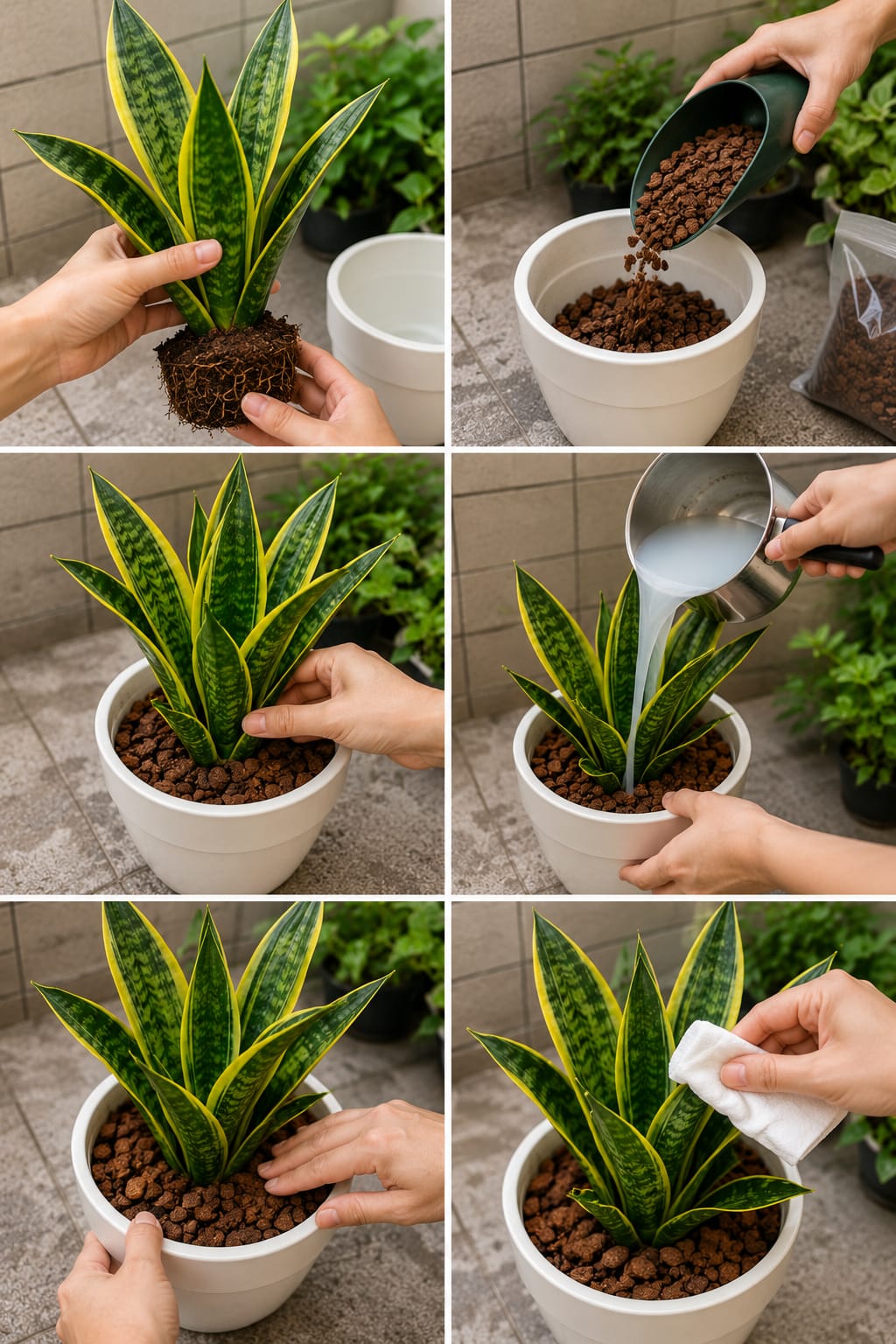
Snake plant is one of the most reliable indoor plants for people who want strong upright leaves, simple care, and a clean decorative look that fits modern homes, apartments, offices, balconies, and indoor plant corners. Its sword-shaped foliage, deep green patterned centers, yellow-edged variegation, and bold vertical growth make it a favorite for living room styling, bedroom decor, home office greenery, modern apartment interiors, low-maintenance houseplant collections, premium indoor plant displays, and polished property presentation. When the plant is healthy, it can look elegant in a white ceramic planter, a terracotta pot, a matte black container, or a simple decorative cachepot.
Because snake plant is tough and adaptable, many people try different potting methods and homemade plant-care ideas around it. Clay pebbles are often used because they look clean, support drainage, and can create a more modern indoor plant setup. Milk water is also sometimes used as a homemade plant-care liquid because milk is associated with calcium and mild nutrients. Both ideas can look simple, but they need to be handled carefully. Snake plants are dry-loving plants, and they can suffer quickly when their roots sit in wet, stale, or residue-filled conditions.
A snake plant can be grown with clay pebbles as part of a controlled setup, but the method should not be misunderstood. Clay pebbles can help with structure and drainage when used correctly, but they do not replace proper root care. A pot still needs drainage or a carefully managed water reservoir. The plant still needs bright indirect light, careful watering, and a stable root zone. Milk water, if used at all, must be very diluted, fresh, and applied rarely. Thick milk, spoiled milk, sweetened milk, or frequent dairy watering can cause sour smell, fungus gnats, mold, sticky residue, and root stress.
This guide explains how to repot a snake plant with clay pebbles safely, how clay pebbles may help, when they can create problems, how to use milk water only with caution, how to protect the crown and roots, what warning signs to watch for, and how to keep the plant clean, healthy, and suitable for indoor plant styling, commercial interior landscaping, luxury home staging, modern apartment decor, and premium houseplant presentation.
Quick Answer
A snake plant can be repotted with clay pebbles when the setup is managed carefully. Clay pebbles can improve drainage, keep the surface clean, and support airflow around the root zone, but they should not trap standing water around the roots. If the plant is grown in a normal pot, the pot should have drainage holes and the clay pebbles should not replace a well-draining cactus and succulent mix unless the grower is using a controlled semi-hydroponic method. Milk water should be used only in a very diluted form, rarely, and only on the root area when the plant actually needs moisture. It should never be poured into the crown or used frequently. Plain water and a proper succulent fertilizer are usually safer than milk water for snake plant care.
What Plant This Is
The plant is a snake plant, also known as Sansevieria or Dracaena trifasciata. It is easy to recognize because of its tall upright leaves, thick water-storing structure, green patterned surface, and yellow edges. These leaves allow the plant to tolerate dry conditions better than many common indoor plants. This is why snake plant is often recommended for beginners, busy homeowners, offices, apartments, and low-maintenance indoor plant collections.
Snake plant grows from underground rhizomes and root clusters. The leaves emerge from the base in firm groups, creating a strong vertical shape. This growth habit makes the plant useful for interior decor because it adds height without spreading widely. It can sit on a table, beside a sofa, near an entryway, on a balcony, in a home office, or inside a premium planter without looking messy.
Even though snake plant is tough, it has one major weakness. It does not like soggy roots. The plant can survive missed watering, but it can decline quickly when the roots stay wet for too long. This is why any potting method with clay pebbles or milk water must be used with restraint. The goal is to keep the root zone breathable, not to create a wet decorative container.
Why Clay Pebbles Are Used
Clay pebbles, often called LECA, are lightweight expanded clay balls used in indoor gardening, hydroponic setups, semi-hydroponic systems, drainage layers, and decorative plant displays. They are popular because they look tidy, resist compacting, and create air spaces around the root area. Their clean appearance makes them useful for modern indoor plant styling and premium houseplant displays.
For snake plants, clay pebbles may be used as a top dressing, as a drainage support layer in a draining pot, as part of a semi-hydroponic setup, or as a way to keep the surface of the pot clean. They can reduce soil splashing, improve the visual finish, and make the planter look more polished. They can also help lift the plant above any small amount of water when used in a cachepot system.
However, clay pebbles are not magic. They do not automatically prevent root rot. If a pot has no drainage and water sits below the pebbles, the root zone can still become too wet. If the plant is placed directly into a deep wet reservoir without proper adaptation, roots may rot. Snake plant roots need oxygen and controlled moisture. Clay pebbles can support that goal only when the watering routine is correct.
What Clay Pebbles Should Not Be Misunderstood As
Clay pebbles should not be misunderstood as a replacement for drainage holes in a regular soil setup. A layer of pebbles at the bottom of a sealed pot does not remove extra water. It only moves the standing water lower in the container. If the roots grow down into that wet layer, they can rot. This is a common mistake with decorative pots.
They should also not be misunderstood as a complete fertilizer or nutrition source. Clay pebbles do not feed the plant. They are mostly a structural material. If a snake plant is grown in clay pebbles alone as a semi-hydro setup, it will eventually need a proper diluted nutrient solution. If it is grown in soil with pebbles as decoration, it may need only light fertilizer during active growth.
Clay pebbles should not be used to hide poor care. A clean surface can look attractive while problems develop below. If the potting mix stays wet, if the roots are mushy, or if the plant base is soft, the pebbles will not fix the issue. The root environment must be checked and corrected.
Why Milk Water Is Risky
Milk water is sometimes used in homemade plant-care routines because milk contains calcium and small amounts of organic nutrients. The idea can sound gentle, but milk is perishable. When milk enters an indoor potting medium, it can spoil, smell sour, attract pests, and create residue. Snake plants do not need dairy to grow well.
Milk water becomes especially risky in a clay pebble setup because liquid can move through the pebbles and collect lower in the pot. If the milk water is not extremely diluted, residue may remain around roots or inside the container. That residue can encourage bacteria, mold, and odor. A clean-looking pot can still develop hidden problems.
Snake plants are slow feeders. They do not need rich organic liquids. If the plant is healthy and needs feeding, a measured cactus and succulent fertilizer is safer than milk water. If milk water is used at all, it should be very weak, fresh, unsweetened, unflavored, and rare. Plain water should remain the normal choice.
What Milk Water Should Not Be Used For
Milk water should not be used as a cure for root rot. If a snake plant has soft bases, yellowing leaves, mushy roots, or a bad smell from the pot, the plant needs root inspection and fresh conditions. Adding milk water will not repair rotten roots. It may make the environment wetter and more contaminated.
Milk water should not be used as a magic growth booster. Snake plants grow slowly. Their growth depends more on light, root health, pot size, soil structure, temperature, and watering rhythm than on homemade liquids. A plant will not produce instant new leaves just because milk water was added.
It should also not be poured over the leaves or into the crown. The crown is the center where the leaves emerge. Liquid trapped there can cause rot. Milk residue on leaves can dry into a cloudy film, attract dust, and reduce the polished look of the plant. Any liquid should be applied with control and kept away from the crown.
Choosing the Right Pot for This Method
The safest pot for a snake plant is one with drainage holes. A white ceramic planter can look beautiful, but it should allow extra water to escape. If the decorative pot has no drainage, the snake plant should be kept in an inner pot with holes so it can be lifted out for watering. Extra water should never remain hidden at the bottom.
If clay pebbles are used as part of the setup, the pot design becomes even more important. In a normal soil setup, pebbles can be used lightly on the surface or as a small support layer, but drainage still matters. In a semi-hydro setup, the water reservoir must be controlled carefully, and the plant should be adapted gradually. A snake plant moved suddenly from soil into a wet reservoir can lose roots.
The pot should also be stable. Snake plant leaves are tall and can make the plant top-heavy. A sturdy ceramic or terracotta pot can help prevent tipping. The pot should not be oversized because too much extra space can hold moisture. A pot only slightly larger than the root ball is usually safer.
Best Root Setup for Snake Plant
The best root setup depends on whether the plant is being grown in soil with clay pebbles or in a semi-hydro style. For most plant owners, a fast-draining cactus and succulent mix is simpler and safer. Clay pebbles can be used as a decorative top layer or mixed lightly for structure, but the main root medium should still drain well and dry properly.
A good snake plant soil mix can include cactus and succulent mix, perlite, pumice, coarse grit, and a little orchid bark. This combination keeps the roots airy and reduces water retention. The soil should not feel heavy, muddy, or dense after watering. It should allow water to pass through and then dry gradually.
If clay pebbles are used alone, the plant must be managed differently. Soil roots may not immediately behave like water-adapted roots. Old soil should be removed carefully, and the plant should not sit too deep in constant water. Semi-hydro systems require measured nutrients, reservoir control, and close monitoring. For beginners, soil plus good drainage is usually more forgiving.
How to Prepare Clay Pebbles
Clay pebbles should be rinsed before use. They often contain dust that can cloud water or settle into the pot. Rinsing removes loose particles and creates a cleaner setup. If the pebbles are being used in a semi-hydro system, soaking them before use may help reduce floating and make them easier to handle.
The pebbles should be clean and free from mold, residue, or old fertilizer buildup. Reused pebbles should be washed thoroughly. If they smell bad or have been used with rotting plants, they should be sanitized carefully or replaced. A clean material is important because snake plant roots can suffer in contaminated conditions.
When used as a top dressing, the layer should not be too thick if the soil below needs to dry. A heavy layer can slow evaporation and make it harder to judge soil moisture. A light layer gives a clean look while still allowing the pot to breathe. Practical care should come before decoration.
How to Repot with Clay Pebbles Safely
Repotting should begin with a healthy root check. The plant should be removed gently from its old pot by holding the root ball and lower leaves. Old soil can be loosened carefully. The roots should be inspected for rot, dryness, or damage. Healthy roots are firm. Rotten roots are soft, dark, hollow, or unpleasant-smelling.
If using a soil-based setup, fresh dry-friendly soil should be added to the pot first. The snake plant should be placed at the same depth it was growing before. The crown should not be buried. Clay pebbles can be added around the top as a clean surface layer, but they should not be packed tightly against the leaf bases.
If using clay pebbles as a deeper layer, water should still be able to drain freely. The pebbles should not create a hidden wet zone in a sealed pot. After repotting, the plant should be placed in bright indirect light and monitored. Watering should be conservative until the roots settle.
How to Use Milk Water More Safely
If milk water is used, it should be extremely diluted. The mixture should be mostly water with only a small amount of plain milk. It should be fresh, unsweetened, unflavored, and odor-free. It should look like cloudy water, not thick milk. Anything sour, spoiled, sweetened, flavored, or creamy should be avoided completely.
The liquid should be applied rarely and only when the plant actually needs moisture. It should not be poured into the crown. It should not splash the leaves. It should not collect in the bottom of a decorative pot. After use, drainage should be checked carefully. If any liquid remains in a saucer or cachepot, it should be removed.
Milk water should not be used in a closed clay pebble reservoir. Dairy residue in standing water can spoil quickly. If the plant is in semi-hydro with clay pebbles, milk water is not a good choice. Clean water and proper hydroponic nutrients are much safer. Milk water belongs only as a rare, highly diluted soil-side experiment, and even then plain water is usually better.
When Milk Water Should Be Avoided
Milk water should be avoided when the plant is newly stressed, recently rescued, root-damaged, or showing soft leaf bases. It should also be avoided when the pot has no drainage, when clay pebbles are holding a water reservoir, when the room is cool, when light is low, or when the potting medium dries slowly. These conditions make spoilage and root stress more likely.
It should also be avoided if fungus gnats, fruit flies, mold, or sour smell are already present. These signs mean the pot is already too organic, too wet, or contaminated. Adding dairy liquid can feed the problem. The correct response is to dry the pot, remove residue, improve drainage, and check root health.
Milk water should not be used as part of a frequent routine. Snake plants do not need weekly homemade liquid feeding. A simple watering schedule based on soil dryness is safer. The less organic residue in the pot, the cleaner the root environment will remain.
Watering a Snake Plant in Clay Pebbles
Watering depends on the setup. If the plant is in soil with clay pebbles on top, water should be applied carefully to the soil and allowed to drain fully. The pebbles may make the surface look dry or wet differently than soil, so the pot should be checked below the surface before watering. A moisture meter can help, but the pot weight and soil feel are also useful.
If the plant is in a semi-hydro clay pebble system, the water level must be controlled. The root base should not be constantly submerged unless the plant has adapted to that system. A small reservoir may be used by experienced growers, but the water should stay clean. Stagnant water, dairy liquid, or strong organic mixtures are unsafe in this setup.
Snake plants should never be watered just because the top looks dry. Clay pebbles dry on the surface quickly, while moisture may remain below. Overwatering is still possible. The plant should be watered based on root needs, not the decorative surface appearance.
Light for Stronger Growth
Bright indirect light helps a snake plant maintain strong leaves and healthy roots. The plant can tolerate moderate or lower light, but growth will be slower. In low light, water use decreases, and the potting medium dries more slowly. This is important when clay pebbles or milk water are involved because slow drying increases risk.
A bright window with filtered light is ideal. Morning sun may be suitable if the plant is acclimated gradually. Harsh afternoon sun can scorch leaves, especially if the plant has been indoors. If the plant is in a darker room, a grow light can support better growth and safer drying.
Light is more important than milk water for healthy growth. A snake plant in good light with proper drainage will usually perform better than a plant in poor light receiving homemade treatments. The plant needs energy from light to grow and use water efficiently.
Feeding Snake Plant Correctly
Snake plants need only light feeding during active growth. A cactus and succulent fertilizer or diluted balanced houseplant fertilizer can be used during spring and summer. It should be used at reduced strength. Strong fertilizer can damage roots, especially if the plant is in a semi-hydro or low-drainage setup.
Clay pebbles do not provide nutrients. If the plant is grown mostly in clay pebbles, it may need a proper diluted nutrient solution designed for that type of growing. Milk water is not a suitable nutrient solution. It is not balanced, it spoils, and it can create residue.
If the plant is in normal soil, fertilizer should be used sparingly. Snake plants are slow-growing and do not need heavy nutrition. Feeding should be paused if the plant is stressed, newly repotted, or in low light. Root health comes before feeding.
Possible Damage If This Method Is Done Incorrectly
Damage can happen if clay pebbles are used in a sealed pot with water trapped at the bottom. The surface may look clean while roots sit in stale moisture. This can lead to root rot, soft leaf bases, yellowing, and bad smell. Clay pebbles are helpful only when water is managed properly.
Milk water can create additional damage if it is too strong or used too often. It can sour in the pot, attract pests, encourage mold, and leave residue. If it collects among clay pebbles, it may be harder to remove than from plain soil. The pot may need to be flushed or cleaned completely.
Another risk is burying the crown too deeply when repotting. The base of the leaves should remain above the medium. If pebbles or soil are packed tightly around the crown, moisture can collect and cause rot. A clean open crown is essential for snake plant health.
Warning Signs to Watch For
After repotting with clay pebbles or using milk water, watch for sour smell, fungus gnats, fruit flies, mold, white film, sticky residue, soft leaf bases, yellowing lower leaves, mushy roots, or pebbles that stay wet for too long. These signs suggest that the setup is holding too much moisture or organic residue.
If the pot smells sour, milk water or trapped organic material may be spoiling. The plant should not be watered again to dilute it without checking drainage. If the smell is strong, the potting medium may need to be replaced. Clean conditions are safer than waiting for spoiled residue to disappear.
If leaves become soft at the base, root or crown rot may be developing. The plant should be removed from the pot and inspected. Rotten roots should be trimmed, and the plant should be reset in fresh dry-friendly conditions. Continuing the same routine will likely make the problem worse.
Common Mistakes
One common mistake is using clay pebbles in a pot without drainage and assuming the plant is protected. Standing water can still rot roots. Another mistake is using a thick layer of clay pebbles on top of wet soil, which can hide moisture and make it harder to know when the plant needs water.
Another mistake is pouring milk water into a clay pebble reservoir. Dairy liquid should not sit in a water reservoir. It can spoil quickly and create odor. If a semi-hydro setup is used, it should rely on clean water and proper nutrients, not kitchen liquids.
Overwatering after repotting is also common. A freshly repotted snake plant does not need constant moisture. The plant should be allowed to settle, and watering should be based on dryness. A stable routine is safer than repeated treatments.
What to Do If Too Much Milk Water Was Added
If too much milk water was added, the pot should be checked immediately. Any liquid sitting in the saucer, cachepot, or lower reservoir should be removed. Leaves and crown areas should be wiped clean if milk splashed onto them. The plant should be placed in good airflow and bright indirect light.
If the potting setup drains well and only a small amount was used, the plant can be monitored. The medium should be allowed to dry properly. If smell, mold, sticky residue, or gnats appear, the setup should be cleaned. In a clay pebble system, the pebbles may need to be rinsed or replaced.
If a large amount of milk water entered the pot, repotting may be safest. The plant should be removed, old medium discarded, roots inspected, and the pot cleaned. The plant should then be placed in fresh dry-friendly conditions. No additional milk water should be used during recovery.
Cleaning the Leaves
Snake plant leaves should be wiped regularly with a soft cloth to keep them clean and polished. Dust can make the leaves look dull and reduce the premium appearance of the display. A slightly damp cloth is enough. The leaves should be supported gently while wiping so they do not bend or crack.
If milk water splashes on the leaves, it should be removed quickly. Dried milk residue can create cloudy marks and attract dust. It can also make the plant look unclean. A snake plant’s decorative value depends on firm, clean, upright leaves.
Leaf shine products are usually unnecessary. A healthy snake plant has a natural smooth finish when dust is removed. Simple wiping is safer and keeps the plant suitable for living rooms, offices, bedrooms, entryways, and staged interiors.
Repotting After Problems
Repotting may be needed if the clay pebble setup becomes sour, wet, moldy, or pest-infested. The plant should be removed gently, and the roots should be inspected. Any rotten roots should be trimmed with clean scissors. Old contaminated pebbles or soil should be discarded or cleaned thoroughly before reuse.
If the plant is moved back into soil, a cactus and succulent mix with perlite or pumice is a safe choice. If it stays in clay pebbles, the pebbles should be clean, and the watering system should be controlled. Milk water should not be used again if it caused problems.
After repotting, the plant should be kept in bright indirect light and watered carefully. Fertilizer should be paused until the plant stabilizes. Snake plants recover slowly, so patience is important. Firm leaves and no bad smell are signs of improvement.
Indoor Decor Value
A snake plant in a white planter with clay pebbles can have strong indoor decor value. The clean white pot, reddish-brown pebbles, and green-yellow leaves create a modern contrast. This look fits living rooms, balconies, home offices, minimalist interiors, plant shelves, and premium apartment styling. The surface looks tidy and polished when the setup is clean.
The decorative surface should not hide care problems. A pot can look beautiful while roots suffer below. Regular checks are important. The pebbles should stay clean, the leaves should remain firm, and the pot should not smell. A premium display should be attractive and healthy at the same time.
Snake plant works well as a structured accent because it grows upright and does not need constant trimming. Clay pebbles can make the pot surface look more finished, but the plant’s health still depends on correct moisture control. A clean design should support the roots, not trap water around them.
Room-by-Room Styling
In the living room, a snake plant with clay pebbles can sit beside a sofa, on a wooden table, near a window, or in a modern plant corner. The upright leaves add height, while the pebbled surface creates a neat decorative finish. The plant should receive enough light and should not sit in hidden water.
In the bedroom, the plant should remain odor-free and pest-free. Milk water is not ideal for bedroom plants because any sour smell or gnats can become unpleasant. A simple water-only routine is usually better for a calm sleeping space. Clean leaves and a tidy pot create the best effect.
In a home office, snake plant provides a professional and low-maintenance look. A white pot with clay pebbles can look modern and organized. The plant should be placed where it gets bright indirect light and where watering can be controlled without spilling onto furniture or electronics.
On a balcony or covered patio, snake plant can look beautiful in a pebble-topped pot. However, rain should be managed carefully. If rainwater fills the pot or reservoir, roots can rot. Outdoor setups should drain freely and be protected from cold or harsh sun.
Continue to Page 2
Continue to page 2 for more details about this article and the key points many readers miss on the first page.