Office and Commercial Styling
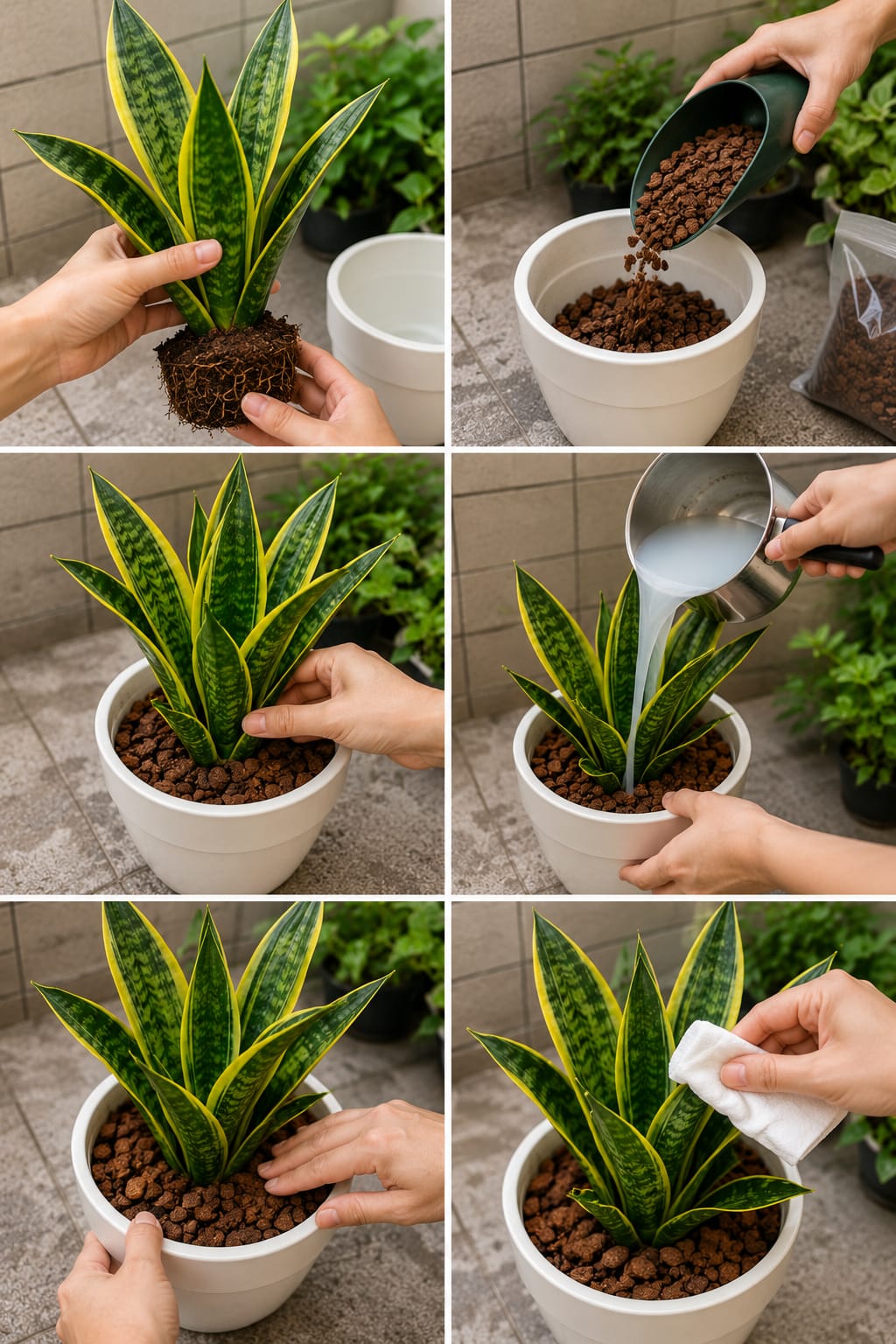
Snake plant is excellent for commercial interior landscaping because it is structured, clean, and low-maintenance. A clay pebble surface can make the pot look more finished in reception areas, offices, meeting rooms, hotel-style interiors, wellness spaces, and property presentation areas. It gives the plant a modern, tidy appearance.
Milk water is usually not suitable for commercial plant displays. Any care method that can create odor, pests, or residue should be avoided in professional spaces. Clean water, proper fertilizer, and controlled watering are more reliable. A plant display must look polished and remain easy to maintain.
A premium commercial snake plant display depends on firm leaves, clean pot surfaces, stable drainage, and no visible mess. Clay pebbles can support that look when used correctly. They should never be used to hide soggy soil or trapped water.
Product and Tool Guide
Helpful materials for this setup include a snake plant, a pot with drainage holes, clean clay pebbles, cactus and succulent mix, perlite or pumice, a narrow-spout watering can, clean scissors, a moisture meter, a soft cloth, and a diluted cactus and succulent fertilizer. A grow light can help if the plant is kept in a darker room.
If clay pebbles are used, a strainer or bucket can help rinse them before potting. If the plant is grown in semi-hydro, a proper nutrient solution is more appropriate than milk water. If milk water is used in a soil-based setup, it should be extremely diluted and measured carefully, but it is not necessary.
These tools create a safer and cleaner routine. Snake plant does not need complicated care. Good drainage, bright indirect light, dry-friendly roots, and clean surfaces are more important than decorative tricks or homemade liquid experiments.
Care Timeline After Repotting
During the first 24 hours after repotting, the plant should be checked for stability, crown depth, and drainage. The leaf bases should remain above the medium. Clay pebbles should not be packed tightly into the crown. If the soil or roots were moist during repotting, immediate watering may not be needed.
During the first week, the plant should be watched for leaning, soft bases, sour smell, or wet pebbles that do not dry. The plant should stay in bright indirect light and should not be fertilized heavily. Milk water should be avoided during the early adjustment period because the roots need clean recovery conditions.
After two to four weeks, the plant should remain firm if the setup is working. Do not expect dramatic growth. Snake plants grow slowly. After one to two months, normal care can continue, with watering only when the plant needs it. Long-term success depends on keeping the root zone airy and avoiding trapped residue.
Professional Styling Note
In high-end indoor horticulture, snake plant is valued because it offers strong architectural structure with very little visual clutter. Clay pebbles can improve the presentation by creating a clean, modern pot surface. This works well in luxury interior styling, modern apartment decor, commercial office design, and property staging.
However, professional styling should never sacrifice plant health. A beautiful pebble surface is not useful if the roots are rotting below. The setup must drain, the crown must stay dry, and the plant must remain odor-free. Milk water should not be used in professional displays because it can create unnecessary risk.
A premium-looking snake plant display depends on healthy roots, firm leaves, clean pebbles, a stable pot, and a care routine that is easy to maintain. Simple, controlled care will always look better than overcomplicated homemade treatments.
Final Thoughts
Clay pebbles can be used around a snake plant safely when they are clean, well-managed, and part of a setup that does not trap water around the roots. They can improve the decorative look, support airflow, and keep the pot surface tidy. However, they do not replace drainage, proper watering, or root health. A snake plant still needs dry-friendly conditions and careful moisture control.
Milk water should be treated with much more caution. It is not necessary for snake plant growth, and it can cause sour smell, mold, fungus gnats, sticky residue, and root stress if used too strongly or too often. If used at all, it should be extremely diluted, rare, fresh, and kept away from the crown. Plain water and a measured succulent fertilizer are safer for most plant owners.
With clean care and the right presentation, snake plant can remain a strong decorative accent for living rooms, bedrooms, home offices, balconies, entryways, modern apartments, commercial interior landscaping, luxury home staging, premium white planters, and polished property presentation. Healthy roots, firm leaves, clean clay pebbles, and controlled watering will always create a better result than risky homemade liquid treatments.
i