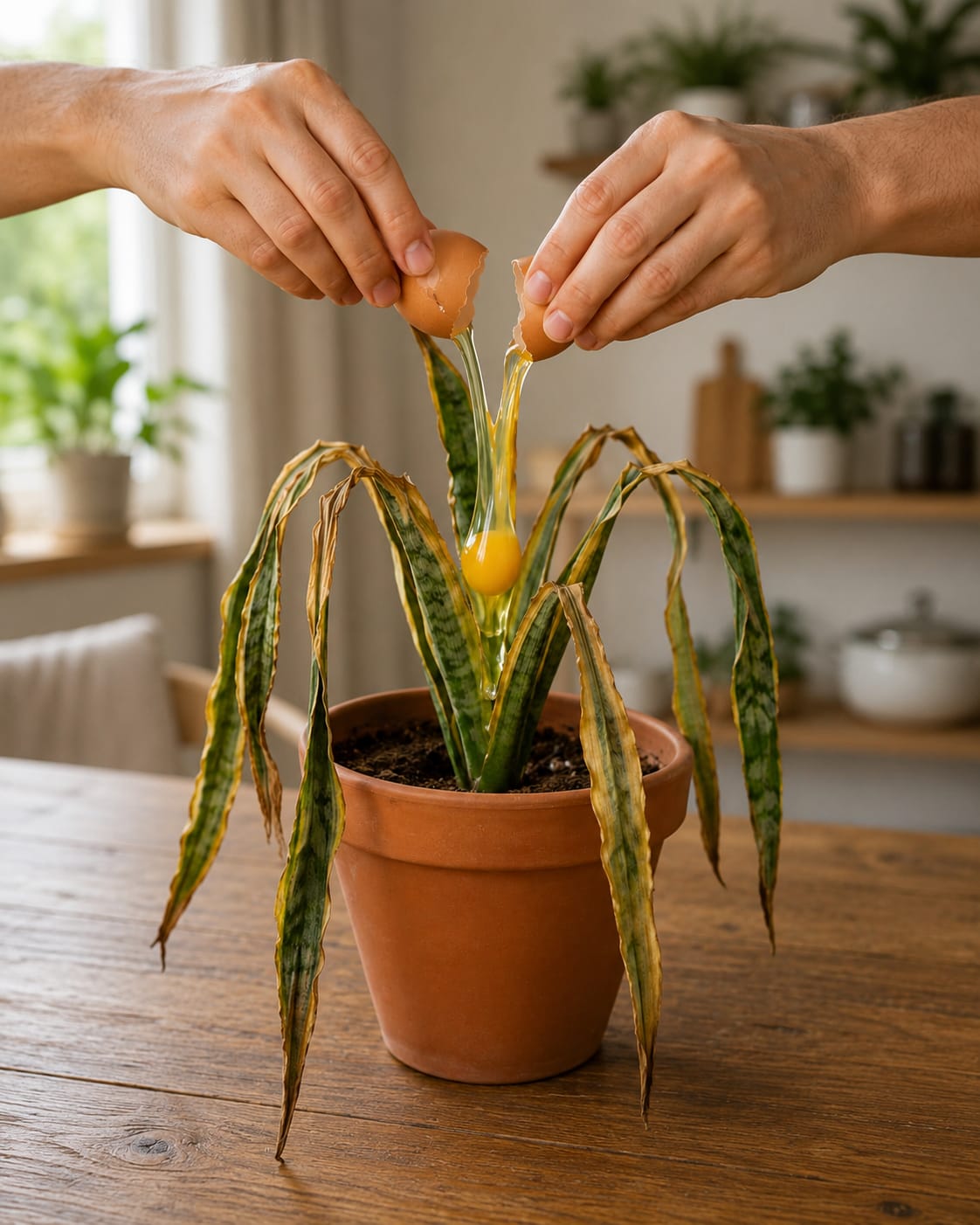
Snake plant is one of the most popular indoor plants for people who want strong upright leaves, simple care, and a clean architectural look that fits almost any room. Its sword-shaped foliage, dark green patterns, yellow-edged variegation, and sculptural vertical growth make it a favorite for living room styling, bedroom decor, home office greenery, modern apartment interiors, low-maintenance houseplant collections, premium indoor plant displays, and commercial interior landscaping. When a snake plant is healthy, it looks firm, polished, and elegant with very little effort.
Because snake plant is known for being tough, many people try homemade care methods around it. Egg is one of the most common kitchen ingredients used in natural plant-care ideas because it is often connected with protein, calcium, minerals, organic matter, and homemade fertilizer routines. Some people use crushed eggshells, eggshell water, or other egg-based mixtures for plants. However, a raw egg should never be treated as a simple miracle food that can be poured directly into a snake plant pot without risk. Snake plants are dry-loving plants, and raw egg can create serious problems when it touches the crown, settles into the soil, or begins decomposing indoors.
A weak snake plant with drooping, yellowing, crispy, or collapsing leaves should not be treated with raw egg. When a snake plant looks damaged, the most likely problems are usually overwatering, root rot, poor drainage, old compacted soil, underwatering stress, sun damage, cold damage, or severe root weakness. Raw egg will not fix those problems. It may attract flies, create odor, encourage bacteria, cause mold, make the soil sticky, and worsen root stress. The safest plant-care approach is to identify why the plant is declining before adding anything to the pot.
This guide explains why pouring raw egg into a snake plant is risky, what egg-based materials may or may not provide, how eggshells can be used more safely, what to do if raw egg was already added, how to rescue a weak snake plant, how to check roots, how to improve soil and drainage, and how to restore a cleaner decorative plant display for living rooms, bedrooms, home offices, modern apartments, luxury home staging, property presentation, and premium indoor plant care.
Quick Answer
Raw egg should not be poured into a snake plant pot. It can rot, smell bad, attract fungus gnats and flies, encourage bacteria and mold, make the soil sticky, and increase the risk of root problems. Snake plants do not need protein from raw egg, and their roots cannot use it in a clean direct way. If egg is used at all, the safest option is clean, dried, crushed eggshell powder in a very small amount, kept away from the crown and mixed lightly into a well-draining soil surface. A weak snake plant should be rescued by checking roots, removing rotten tissue, repotting into cactus and succulent mix, using a pot with drainage holes, watering only when dry, and placing the plant in bright indirect light.
What Plant This Is
The plant is a snake plant, also known as Sansevieria or Dracaena trifasciata. It is recognized by its upright, thick, sword-like leaves and patterned green surface. Many varieties have yellow leaf margins, which create a bold contrast and make the plant especially useful for indoor decor. The leaves store water, which allows the plant to survive dry periods better than many softer tropical houseplants.
Snake plant is often recommended for beginners because it can tolerate missed watering, average indoor humidity, and moderate light. However, it is not indestructible. Its biggest weakness is wet soil. If the root zone stays damp for too long, the roots can rot and the leaves can begin to yellow, soften, wrinkle, bend, collapse, or dry at the edges. A snake plant can look strong for a long time while its roots are slowly struggling below the soil.
The plant’s natural care preference is simple. It likes a breathable potting mix, drainage holes, bright indirect light, and a dry-down period between watering. It does not need rich wet soil, constant feeding, kitchen scraps, raw egg, or heavy organic mixtures. The more a snake plant is treated like a dry-friendly succulent-style houseplant, the better it usually performs indoors.
Why Raw Egg Is Used in Homemade Plant Care
Raw egg is sometimes used in homemade plant-care content because eggs are associated with nutrition. Eggshells contain calcium carbonate. The egg itself contains proteins and organic material. These qualities make people assume that egg can act like a quick natural fertilizer. The idea sounds simple, but plant roots do not use raw egg the way humans use food. A raw egg must decompose first, and decomposition inside an indoor pot can become messy and unsafe for the plant.
In outdoor composting, eggshells and some organic kitchen waste may eventually break down with the help of microbes, airflow, soil organisms, and time. In a small indoor container, raw egg can become a problem before it becomes helpful. It may produce odor, attract pests, and create bacterial activity in the potting mix. Snake plant roots need air, not a sticky wet organic pocket around them.
This is especially risky when the plant is already weak. A struggling snake plant usually has a root or moisture issue. Adding raw egg can make the soil heavier and more unstable. Instead of feeding the plant, it may create decay around the crown and roots. The safest approach is to separate the idea of eggshell powder from raw egg. Crushed clean eggshells may be used carefully, but raw egg should not be poured into the pot.
What This Method Should Not Be Misunderstood As
Raw egg should not be misunderstood as a rescue treatment for a dying snake plant. A plant with wilted, yellow, crispy, or collapsing leaves needs diagnosis, not kitchen liquid. If the roots are rotten, raw egg will not rebuild them. If the soil has no drainage, raw egg will not fix it. If the plant is dehydrated because roots are dead, raw egg will not help it absorb water.
It should not be misunderstood as a complete fertilizer. Egg is not a balanced houseplant fertilizer, and snake plants are not heavy feeders. A labeled cactus and succulent fertilizer or diluted balanced indoor plant fertilizer is more predictable and safer when the plant is healthy enough to feed. Raw egg is unpredictable, messy, and more likely to create odor than controlled nutrition.
It should also not be misunderstood as a reason to water more. A raw egg already adds moisture and organic material. If the soil is watered heavily afterward, the pot can become damp, sour, and oxygen-poor. Snake plant roots can suffocate in these conditions. A plant that is already weak may decline faster.
Why Raw Egg Can Damage Snake Plant Roots
Raw egg can damage the root environment because it breaks down inside the soil. During decomposition, it can create smell, microbial activity, sticky residue, and moisture retention. In a fast-draining outdoor garden bed, organic material may disperse more naturally. In an indoor pot, it stays close to the roots. Snake plant roots are sensitive to stagnant, wet, low-oxygen conditions.
The egg white and yolk can coat the soil particles and create a sticky area. This can reduce airflow and make the potting mix less breathable. If the egg settles near the base of the plant, it can trap moisture around the crown. Snake plant crowns should remain dry and clean. Wet organic residue around the leaf bases can increase the risk of rot.
Raw egg can also attract pests. Fungus gnats, fruit flies, ants, and other insects may be drawn to decomposing organic matter. Once pests begin breeding in the pot, the plant becomes harder to keep indoors. A snake plant is valued for its clean, low-maintenance appearance, and raw egg can quickly turn the pot into an unpleasant and messy container.
Why a Weak Snake Plant Needs Root Care First
A weak snake plant should always be evaluated from the roots upward. Drooping leaves, dry edges, yellowing, soft bases, and collapsed foliage may look like a leaf problem, but the cause is often below the soil. Roots may be rotten from overwatering, dried from long neglect, trapped in compacted soil, or suffocated in a pot without drainage. Feeding does not solve these structural problems.
If roots are rotten, they cannot absorb water properly. This can make the leaves look dehydrated even when the soil is wet. Many people respond by adding more water or homemade fertilizer, but this makes the pot even wetter. The correct response is to check the root system, remove rotten tissue, and repot into a fresh dry-friendly mix.
If roots are severely dry and the leaves are crispy, the plant may need a careful rehydration routine, but still not raw egg. A snake plant can recover from drought better than rot, but damaged leaves may not become perfect again. The goal is to save the healthy growing points and encourage new stable growth over time.
How to Check the Plant Before Adding Anything
Before any treatment is added, the plant should be checked carefully. The soil should be inspected for moisture, smell, texture, and drainage. If the soil smells sour, rotten, or musty, there may be root problems. If the soil is hard and compacted, water may not be moving correctly. If the pot has no drainage holes, hidden water may be sitting at the bottom.
The leaf bases should be checked. If they feel soft, mushy, or wet, the plant may have rot. If the leaves are dry and crispy but the base is firm, the plant may be suffering from dehydration, old damage, or root stress. If leaves are yellowing from the bottom while the soil is wet, overwatering is likely.
The plant may need to be removed from the pot for a root inspection. Healthy roots are usually firm. Rotten roots are dark, mushy, hollow, or smelly. Dry dead roots may be brittle and empty. The condition of the roots tells the truth about what the plant needs. Raw egg should not be added before this check.
What to Do If Raw Egg Was Already Added
If raw egg was already poured into the pot, the safest first step is to remove as much of it as possible. Any egg sitting on the leaves, crown, soil surface, or pot rim should be wiped away immediately. The crown should be cleaned gently so no egg remains between the leaves. Sticky residue should not be allowed to dry on the plant.
If the egg entered the soil, the situation depends on how much was added and whether the pot drains well. A tiny amount may be monitored closely, but a whole egg or a heavy amount should usually be treated as contamination. The potting mix can begin smelling and attracting pests quickly. In most cases, repotting into fresh soil is safer than waiting for the egg to decompose.
The plant should be removed from the pot, the old soil should be discarded, and the roots should be rinsed or cleaned gently if egg residue is present. Any rotten roots should be trimmed with clean tools. The plant should then be placed into a fresh cactus and succulent mix with good drainage. Watering should be conservative after repotting, especially if the roots were damaged.
How to Use Eggshells More Safely
Eggshells are much safer than raw egg when prepared correctly, but they should still be used with restraint. The shells should be cleaned, dried completely, and crushed into a fine powder. Large shell pieces break down slowly and may remain in the pot for a long time without providing much benefit. Fine powder is easier to distribute lightly.
Only a very small amount should be used. It should be placed on the outer soil surface and mixed lightly into the top layer. It should not be piled against the leaf bases or crown. Eggshell powder breaks down slowly, so it should not be expected to produce fast visible results. It may offer mild calcium support over time, but it is not a complete fertilizer.
Eggshell powder should not be added to wet, moldy, compacted, or pest-infested soil. It should be used only when the plant is healthy and the potting mix drains well. If the snake plant is already declining, root care matters more than eggshells. A weak plant needs clean soil and correct watering first.
Why Eggshell Powder Is Not a Miracle Fertilizer
Eggshell powder is mostly calcium carbonate, and calcium can be useful for plants in the right conditions. However, eggshells break down slowly in potting mix, especially indoors. They do not instantly feed the plant. They also do not provide a balanced nutrient profile. Snake plants need only light feeding, and they respond better to stable care than to heavy amendments.
If the soil already contains enough calcium, adding eggshell powder may not make any visible difference. If the plant’s problem is overwatering, low light, root rot, or poor drainage, calcium will not fix it. This is why eggshell powder should be treated as optional, not essential.
A measured cactus and succulent fertilizer is more reliable when the plant needs nutrients. It contains a balanced nutrient mix designed for plant use. Eggshell powder may be a gentle soil amendment, but it should not replace proper fertilizer or root care. It is most useful only as a small, clean, occasional addition.
Best Soil Mix for Rescue
A weak snake plant should be moved into a fast-draining potting mix if the old soil is heavy, wet, compacted, or contaminated. A cactus and succulent mix is a good base. Perlite, pumice, coarse grit, or orchid bark can be added to improve airflow. The mix should allow water to pass through and should dry gradually after watering.
Dense garden soil should not be used in an indoor snake plant pot. It can hold too much moisture, compact around the roots, and create poor oxygen flow. Heavy compost mixes should also be avoided for rescue situations because they can stay wet. A damaged snake plant needs a clean, breathable mix that protects the remaining roots.
If raw egg was added, old soil should not be reused. It may contain residue and bacteria. Fresh soil gives the plant a cleaner start. The pot should also be washed if egg residue or rotten smell is present. Clean materials reduce the chance of pests and odor returning.
Choosing the Right Pot
A snake plant rescue pot must have drainage holes. This is not optional. A pot without drainage can trap water at the bottom and cause the same problems again. Terracotta is useful because it dries faster and allows some moisture movement through the pot wall. Plastic or ceramic pots can also work if they drain well and the soil mix is appropriate.
The pot should not be too large. A weak snake plant with damaged roots should not be placed in a huge container filled with damp soil. Extra soil can stay wet because there are not enough healthy roots to use the moisture. A pot that fits the remaining root system with a little room for growth is safer.
A terracotta pot can look beautiful with snake plant because it gives a warm natural style and supports drier soil conditions. A white ceramic pot can create a clean modern look, but it must drain properly. The best planter is one that protects roots while matching the indoor decor.
How to Repot a Weak Snake Plant
The plant should be removed gently from the pot. The leaves may already be weak, dry, or bent, so rough handling can cause more damage. The old soil should be loosened carefully from the roots. If raw egg, sour soil, or mold is present, the old mix should be discarded completely.
Roots should be inspected closely. Rotten roots should be trimmed with clean scissors. Any mushy leaf bases should also be removed if they are clearly rotting. If a leaf is completely collapsed, it may not recover and can be cut away. Firm leaves and firm crown sections should be protected.
The plant should be placed into fresh dry-friendly soil at the same depth as before. The crown should not be buried. Soil should be added around the roots and pressed gently, not packed tightly. After repotting, watering should be light and careful. If the roots were badly damaged, it may be better to wait a short time before watering heavily so cuts can dry slightly.
Watering After Rescue
Watering after rescue should be conservative. Snake plants store water in their leaves, and damaged roots cannot use water quickly. If the plant is watered too much after repotting, rot can return. The soil should be allowed to dry between watering. The exact timing depends on light, pot size, soil mix, and remaining root health.
When watering is needed, water should be applied to the soil only. It should not be poured into the center of the plant. Extra water should drain from the pot, and the saucer should be emptied. If the pot is terracotta, the soil may dry faster, but it should still be checked before watering.
A weak plant should not be watered with egg, milk, juice, banana water, or strong homemade liquids. Plain water is safest during recovery. Once the plant is stable and producing healthy growth, light fertilizer may be used during the growing season. Recovery is not the time for experiments.
Light for Recovery
Bright indirect light helps a snake plant recover because it supports photosynthesis and helps the soil dry at a healthy pace. A weak plant should not be placed in harsh direct sun immediately, especially if the leaves are already dry or damaged. Strong sun can burn stressed leaves and worsen browning.
A bright window with filtered light is usually best. Morning light may be acceptable if gentle. A dark corner should be avoided during recovery because the plant will use water slowly, and soil may stay damp for too long. If natural light is weak, a grow light can help provide stable brightness.
Light cannot repair dead tissue, but it can support new growth and root recovery. Damaged leaves may remain unattractive, but the plant can still survive if the crown and roots are saved. Patience is important because snake plants grow slowly.
Feeding During Recovery
A recovering snake plant should not be fertilized immediately. If roots are damaged, fertilizer can irritate them and slow recovery. The plant should first stabilize in fresh soil with correct watering and light. Feeding can wait until new growth appears or the plant shows signs of strength.
When feeding resumes, a diluted cactus and succulent fertilizer is usually safer than homemade materials. It should be used during active growth and at reduced strength. Snake plants do not need heavy feeding. Too much fertilizer can cause brown tips, root stress, and salt buildup.
Eggshell powder, if used later, should be very light and occasional. It should not be combined with many other amendments at once. A simple routine is easier to manage and safer for the plant. The plant needs stability more than constant treatment.
Possible Damage If Egg Is Used Incorrectly
Raw egg can cause several problems in a snake plant pot. It can rot and smell bad. It can attract fungus gnats, fruit flies, ants, and other pests. It can create mold on the soil surface. It can make the soil sticky and reduce airflow. It can trap moisture near the crown and increase the risk of rot.
It can also make the plant display unpleasant indoors. A snake plant is often used because it looks clean and low-maintenance. A pot that smells like spoiled food or attracts insects does not belong in a bedroom, living room, home office, or commercial interior. Homemade care should never make the plant less hygienic.
If egg residue enters the soil and the plant is already weak, the damage can become worse quickly. The safest correction is usually removing the contaminated soil. Waiting for the egg to break down inside the pot is risky, especially for a dry-loving plant.
Warning Signs to Watch For
After any egg-related mistake, watch for sour smell, mold, flies, fungus gnats, sticky soil, soft leaf bases, yellowing leaves, mushy roots, wet crown tissue, or soil that stays damp for many days. These signs suggest that the pot is becoming unhealthy. Early action can save the plant.
If the plant droops while the soil is wet, the roots may be damaged. More water will not help. If the plant is crispy and the soil is dry, dehydration may be part of the issue, but the roots still need to be checked. The same leaf symptom can come from different causes, so soil and roots matter.
If the pot begins to smell after raw egg was added, repotting should not be delayed. Odor means decomposition is happening. The plant should be moved into clean soil before pests and rot become harder to control.
Common Mistakes
The biggest mistake is pouring a raw egg directly into the center of the plant. This can coat the crown and leaf bases, exactly where moisture should not collect. Another mistake is assuming that a weak plant needs food. A weak snake plant usually needs root correction before feeding.
Another common mistake is using a pot without drainage. Even without raw egg, this can harm snake plants. With raw egg, the risk becomes much higher because liquid and organic matter are trapped inside the pot. Drainage holes are essential for recovery.
Overwatering after adding egg is also a serious mistake. Water speeds the spread of residue through the pot and can create a damp decomposing zone. Snake plants should be watered only when the soil is dry enough, and never as a way to push kitchen ingredients into the root zone.
How to Trim Damaged Leaves
Damaged leaves can be trimmed when they are fully dry, mushy, collapsed, or unattractive. If a leaf is soft at the base, it may need to be removed completely because rot can spread. If only the tip or edge is dry, it can be trimmed carefully with clean scissors following the natural shape of the leaf.
Leaves that are partly damaged but still firm can remain if they are helping the plant produce energy. However, badly collapsed leaves may not recover and can make the display look poor. Removing dead tissue also helps reduce places where pests or mold can collect.
Tools should be cleaned before and after cutting. If rot is suspected, sanitation is especially important. Removed rotten material should be discarded, not mixed into indoor compost near other houseplants. Clean pruning protects the remaining healthy parts.
Can the Plant Be Saved?
A weak snake plant can often be saved if at least part of the crown or root system remains firm and healthy. Even if some leaves are badly damaged, the plant may produce new growth later. Snake plants are slow, so recovery can take weeks or months. The damaged leaves may not improve, but new leaves can grow if the base survives.
If all roots are rotten and the crown is mushy, the plant may be difficult to save. Firm leaf sections may sometimes be propagated, but variegated snake plant cuttings may not always keep the yellow edges depending on the method. Division from a healthy crown section is usually better when possible.
The best chance of saving the plant comes from removing the cause of decline. If the problem is raw egg contamination, remove it. If the problem is wet soil, replace it. If the problem is no drainage, change the pot. If the problem is low light, move the plant. Rescue is about correcting the environment, not adding more ingredients.
Indoor Decor Value
Snake plant has strong decor value because it is structured, upright, and clean. It can make a room look more finished without taking up much space. Its vertical leaves work well with modern furniture, neutral walls, wood tables, stone surfaces, and minimalist interiors. A healthy snake plant in terracotta creates a warm natural style, while a white or black pot creates a modern premium look.
A damaged snake plant can still be styled during recovery, but it should be kept clean. Rotten leaves, sticky soil, egg residue, flies, or bad smell will ruin the display. If the plant is being rescued, the pot surface should be cleaned, dead leaves removed, and the plant placed in a bright recovery area.
For home decor, the plant should look intentional. Clean soil, firm leaves, and a proper planter matter more than homemade tricks. A recovering plant may not look perfect right away, but a clean rescue setup is much better than a messy pot with kitchen waste.
Room-by-Room Styling
In the living room, snake plant can be placed beside a sofa, console, window, or side table. A terracotta pot works well with wooden furniture and natural textures. If the plant is recovering, place the healthiest side outward and remove dead leaves so the display looks cleaner.
In the bedroom, snake plant should remain odor-free and pest-free. Raw egg should never be used in a bedroom plant pot because smell and insects can become unpleasant quickly. A clean pot and dry-friendly soil are essential for a calm bedroom display.
In a home office, snake plant creates a professional low-maintenance look. A weak plant should be cleaned before being used as a video-call background or desk accent. Brown dry leaves can make the space feel neglected. Trimming and repotting can restore a more polished appearance.
In an entryway, snake plant can create a strong first impression. However, entryways may have lower light or temperature changes. A recovering plant should be placed where conditions are stable. If the entryway is dark, use a brighter recovery spot first and move the plant later when it is stronger.
Continue to Page 2
Continue to page 2 for more details about this article and the key points many readers miss on the first page.