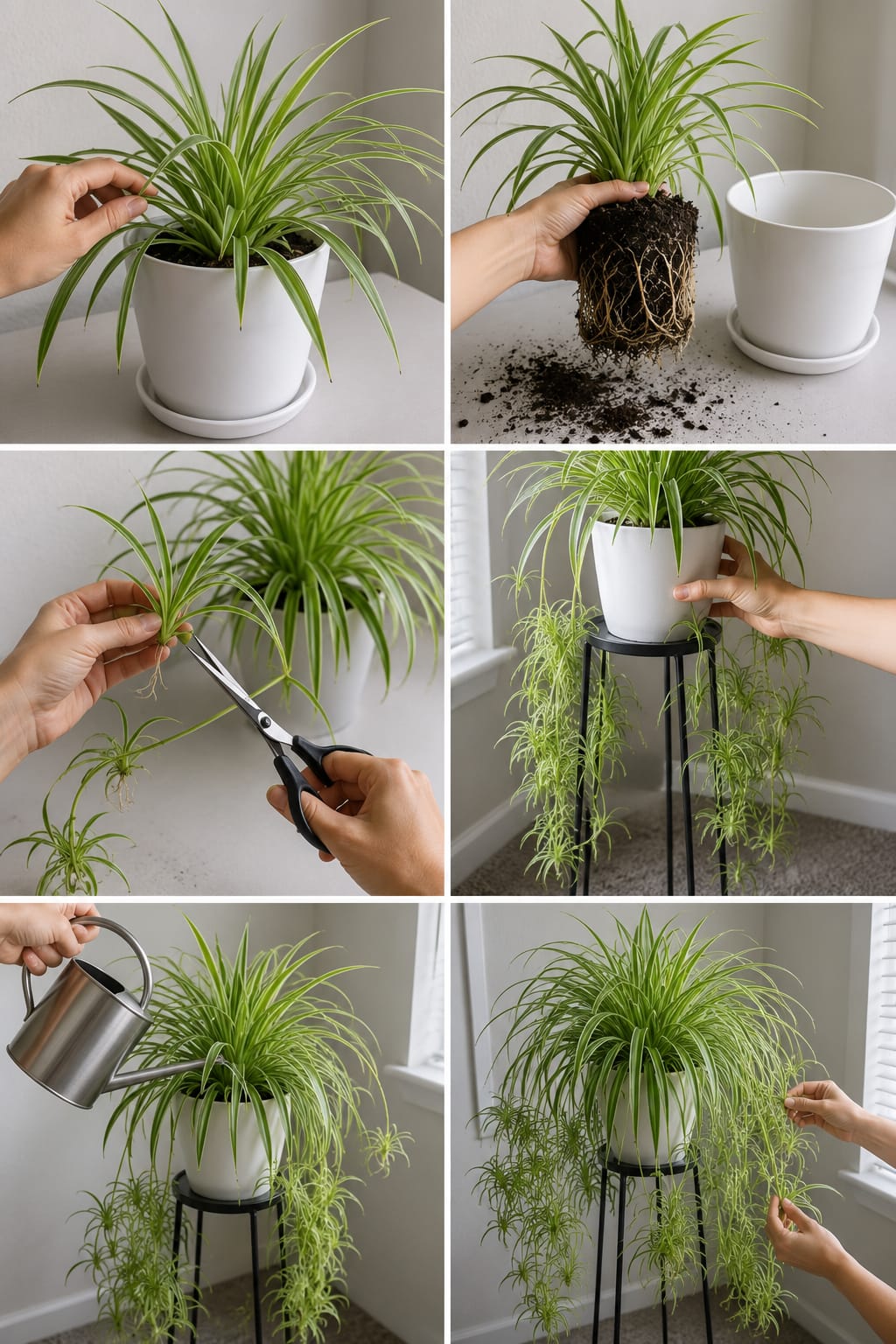
Spider plant is one of the most dependable indoor plants for people who want fresh green foliage, easy propagation, fast recovery, and a soft decorative look that works in almost any room. Its long arching leaves, light green and cream variegation, graceful fountain shape, and trailing baby plantlets make it a favorite for living room styling, bedroom decor, home office greenery, modern apartment interiors, hanging basket displays, premium indoor plant care, and polished property presentation. When the plant is healthy, it can look full, bright, and lively in a white ceramic planter, a simple hanging pot, a plant stand, or a clean decorative cachepot.
Spider plant is loved because it is forgiving, beginner-friendly, and easy to multiply. A mature plant can produce long stems with small baby plants, often called spiderettes or pups. These baby plants can be rooted and grown into new plants, making spider plant one of the most rewarding houseplants for propagation. At the same time, a mature spider plant can become crowded in its pot, and repotting may be needed when roots fill the container, soil becomes compacted, or the plant begins drying out too quickly.
Repotting and propagation should still be done carefully. Spider plants are tough, but they can suffer when their roots are buried too deeply, when soil stays soggy, when baby plants are cut too early, or when the plant is moved into a pot that is too large. The goal is not to force fast growth with heavy feeding or constant watering. The goal is to give the roots fresh breathable soil, keep the crown clean, separate healthy baby plants at the right time, and maintain a light care routine that supports steady growth.
This guide explains how to repot a spider plant safely, how to check the root system, how to cut and root baby spider plants, how to water after repotting, what soil mix works best, what mistakes to avoid, and how to keep the plant healthy, clean, and suitable for indoor plant styling, hanging basket decor, commercial interior landscaping, modern apartment design, luxury home staging, and premium houseplant presentation.
Quick Answer
A spider plant can be repotted safely by removing it gently from the old container, checking the roots, choosing a pot with drainage holes, using a light well-draining indoor potting mix, and watering carefully after planting. Baby spider plants can be propagated by cutting healthy plantlets from the long stems once they have small roots or a clear crown, then rooting them in water or planting them directly into moist potting mix. Spider plants grow best in bright indirect light, evenly moist but not soggy soil, moderate humidity, and gentle feeding during active growth. For a fuller display, several baby plants can be planted together or allowed to trail from a hanging basket. The plant should not sit in standing water, heavy soil, or harsh direct sun.
What Plant This Is
The plant is a spider plant, known botanically as Chlorophytum comosum. It is easy to recognize because of its long narrow leaves that grow in a rosette shape and often arch outward like a fountain. Many common varieties have green leaves with white or cream stripes, while others may have green edges and a pale center. This variegation gives the plant a bright, clean look that fits well in both modern and classic interiors.
Spider plant produces long trailing stems when it is mature and healthy. These stems may carry small white flowers first, then baby plantlets that look like miniature versions of the mother plant. These baby plants can hang down beautifully from the pot, creating a cascading display. This is one reason spider plant is often used in hanging baskets, tall plant stands, shelves, and bright window corners.
Although spider plant is easy to grow, it still has preferences. It likes bright indirect light, breathable soil, and a pot that drains well. It can tolerate some dryness, but it prefers not to be neglected for too long. It can also tolerate average home humidity, but very dry air and irregular watering may cause brown leaf tips. The plant is forgiving, but a stable routine keeps it fuller and more attractive.
Why Repotting Matters for Spider Plant
Repotting matters because spider plants can develop thick, fleshy roots that quickly fill a pot. These roots store moisture and help the plant survive short dry periods. Over time, the root system can become crowded, and the potting mix may become compacted. When this happens, water may run through too quickly or stay unevenly trapped in old soil. Both conditions can stress the plant.
A crowded spider plant may begin to dry out faster than normal. The leaves may droop between watering, brown tips may increase, and growth may slow. Sometimes the pot may even bulge or crack because the roots are thick and strong. Repotting gives the root system more room and replaces old soil with a fresh mix that can hold light moisture while still allowing airflow.
Repotting also gives the plant owner a chance to inspect root health. Healthy spider plant roots are usually firm, thick, and pale. Stressed roots may be mushy, dark, dry, or sour-smelling. If the soil smells bad or roots are rotting, repotting becomes more than a routine care step. It becomes a rescue method to protect the plant before more leaves decline.
When to Repot a Spider Plant
The best time to repot a spider plant is usually spring or early summer, when the plant is entering active growth. During this time, it can recover more quickly from root disturbance and begin growing into the new soil. Repotting during active growth is especially helpful if the plant is full, producing baby plants, or showing strong new leaves.
A spider plant may need repotting when roots are tightly packed, the plant dries out very quickly, water runs straight through the pot, the soil has become hard, roots are visible at the drainage holes, or the plant is unstable in its container. It may also need repotting when the pot has no drainage holes, the soil smells sour, or the plant has been sitting in the same mix for a long time.
It is usually better to avoid repotting during extreme stress unless there is a serious root problem. If the plant is weak from cold, pests, or severe underwatering, it may need to stabilize first. However, if the soil is rotten or the roots are trapped in soggy conditions, emergency repotting may be necessary. The goal is always to protect the roots first.
Choosing the Right Pot
A spider plant pot should have drainage holes. This is one of the most important requirements because extra water must be able to leave the root zone. A decorative pot without drainage can trap moisture at the bottom and create root rot, even if the top of the soil looks dry. If a decorative outer pot is used, the spider plant should remain inside a draining nursery pot, and extra water should be emptied after watering.
The new pot should usually be only slightly larger than the old one. A very large pot can hold too much wet soil around the roots, especially if the plant is not large enough to use the moisture quickly. A modest size increase gives the roots room without creating a soggy environment. Spider plants like space, but they do not need an oversized container.
A white ceramic pot, cream planter, terracotta pot, black modern container, or hanging basket can all look beautiful with spider plant foliage. White and neutral planters make the variegated leaves look fresh and bright. A tall plant stand can highlight the trailing baby plants. The best pot is one that looks good while still supporting drainage, stability, and easy watering.
Best Soil Mix for Spider Plant
Spider plant grows best in a light indoor potting mix that holds moderate moisture but drains well. A standard houseplant potting mix can work if it is not too dense. Perlite, pumice, coco chips, or fine orchid bark can be added to improve airflow and prevent compaction. The soil should feel soft and breathable rather than heavy and muddy.
The plant likes more moisture than a snake plant, but it does not want swampy soil. A mix that stays wet for many days can cause root problems. A mix that dries instantly may cause the leaves to wilt and develop brown tips. The ideal soil holds enough moisture for steady growth while allowing excess water to drain away.
Garden soil should not be used alone in a pot. It can compact indoors, drain poorly, and bring pests into the home. Heavy compost-rich soil should also be used carefully because it can stay too wet in a decorative container. A clean indoor potting mix with added drainage material is safer for long-term plant maintenance and polished indoor styling.
How to Remove the Plant from the Old Pot
The plant should be removed gently. It is better to hold the root ball and lower crown area rather than pulling hard on the leaves. Spider plant leaves are flexible, but they can tear or crease if the plant is handled roughly. If the pot is tight, the sides can be squeezed or tapped to loosen the root ball. A plastic nursery pot can sometimes be flexed to release the roots.
Once the plant is out, the root ball should be inspected. Thick white or pale roots are normal for spider plant. If the roots are tightly wrapped around the bottom, they can be loosened gently with the fingers. The goal is not to break the root system aggressively. It is only to open the outer layer enough so roots can move into fresh soil.
Old soil that falls away easily can be removed. Soil that is strongly attached to healthy roots does not need to be stripped completely unless it is rotten, sour-smelling, or pest-infested. Too much root disturbance can stress the plant. A careful balance is best, especially when the plant is already healthy.
How to Repot Safely
A small amount of fresh potting mix should be placed at the bottom of the new pot. The spider plant should sit at the same depth it was growing before. The crown should not be buried deeply. If the crown is covered with wet soil, the base of the leaves can rot. The plant should sit high enough that the center stays clean and visible.
Fresh soil should be added around the root ball and pressed gently. The soil should hold the plant upright without being packed tightly. Roots need air, so compression should be avoided. If the plant is loose, more soil can be added around the sides, but the surface should remain soft and breathable.
After repotting, the plant can be watered to settle the soil. Water should drain from the bottom of the pot. Extra water should be removed from the saucer. The plant should then be placed in bright indirect light and allowed to adjust. It may look slightly relaxed for a few days, but it should recover if the roots remain healthy.
Why Baby Spider Plants Are Easy to Propagate
Baby spider plants are easy to propagate because they are already small complete plantlets. They grow from long stems sent out by the mother plant. Many plantlets develop tiny roots before they are even removed. This makes propagation much easier than with plants that require special rooting techniques. A healthy baby spider plant can often become a new potted plant with simple care.
Propagation also helps keep the mother plant looking tidy. Long stems with many babies can be attractive, but they may also become heavy or tangled. Some baby plants can be left for a cascading display, while others can be removed and rooted. This gives the plant owner control over the final shape.
New spider plants can be used to fill another pot, refresh a thin display, create gifts, or build a fuller hanging basket. Several young plants placed together can create a dense look faster than a single plant. This makes spider plant excellent for indoor plant styling and easy home propagation projects.
When to Cut Baby Spider Plants
Baby spider plants can be cut when they have a clear small crown and, ideally, small visible roots. A plantlet with tiny root nubs is usually ready to root in water or soil. A very tiny baby without a clear base may still root, but it is safer to wait until it is stronger. Healthy baby plants should have firm leaves and a small center growth point.
The cut should be made with clean scissors. The plantlet can be removed from the long stem by cutting close to its base without damaging the crown. The long stem can be trimmed back if it is dry or no longer attractive. If the mother plant still looks good with some trailing babies, not all plantlets need to be removed at once.
Cutting baby plants does not harm the mother plant when done cleanly. In fact, removing some babies can reduce weight and help the mother plant stay tidy. The plant may produce more runners again when conditions are right. Bright indirect light and stable care encourage healthy growth.
Rooting Baby Spider Plants in Water
Water propagation is simple and useful because the roots can be seen as they develop. A clean glass or jar should be filled with fresh water. The base of the baby plant should touch the water, but the leaves should stay above the surface. Leaves left underwater can rot and make the water cloudy.
The water should be changed regularly to keep it clean. If the water smells bad, becomes cloudy, or feels slimy, it should be replaced immediately. The baby plant should be placed in bright indirect light, not direct hot sun. Too much sun can heat the water and stress the small roots.
Once the roots are long enough to handle, the baby plant can be moved into soil. It should be planted gently in a small pot with light potting mix. The soil should be kept lightly moist while the roots adjust. Water roots are tender, so the transition should be calm and controlled.
Rooting Baby Spider Plants in Soil
Baby spider plants can also be planted directly into soil. This method is clean and avoids the transition from water roots to soil roots. The potting mix should be lightly moist and well-draining. The base of the baby plant should be placed into the soil so the small roots or root nubs make contact with the mix. The crown should remain above the surface.
The soil should not be soaked. Young roots need moisture, but they also need oxygen. A small pot is usually better than a large one because it dries more evenly and reduces the risk of waterlogged soil. Several baby plants can be planted together in one pot for a fuller look.
Direct soil rooting may take a little patience, but it often produces strong plants. The baby plant should remain in bright indirect light while it establishes. If the leaves stay firm and new growth appears, the plant is settling in well.
Keeping the Mother Plant Full
A mature spider plant looks best when the center is full and the leaves arch evenly. If the plant becomes crowded, brown-tipped, or uneven, repotting and trimming can refresh its appearance. Removing old damaged leaves at the base can also make the plant look cleaner. Brown tips can be trimmed carefully with clean scissors, following the natural shape of the leaf.
Baby plants can be used to make the mother pot fuller. Rooted plantlets may be planted around the outer edge of the mother plant if there is enough space. This can create a thicker display. However, the pot should not become overcrowded to the point where airflow and watering become difficult.
Regular care keeps the plant balanced. The mother plant should receive bright indirect light, careful watering, and occasional feeding during active growth. If the plant is too dark, it may produce weak leaves and fewer runners. If it is overwatered, the roots may suffer and the leaves may yellow.
Watering After Repotting
After repotting, spider plant should be watered enough to settle the soil. Water should flow through the drainage holes. After that first watering, the routine should be based on soil moisture. The top layer can dry slightly before the next watering, but the plant should not be left bone dry for long periods during active growth.
Spider plant can wilt slightly when thirsty, but it usually recovers when watered. However, repeated extreme drying can stress the plant and cause brown tips. On the other hand, constant wet soil can rot the thick roots. The best routine is steady and moderate.
A plant in a hanging basket may dry faster than one in a ceramic pot on a table. A plant near a bright window may need water more often than one in a darker room. The pot weight, soil feel, and leaf condition can all help guide watering. A moisture meter may help beginners, but careful observation is still important.
Light for Stronger Growth
Spider plant grows best in bright indirect light. It can tolerate moderate light, but its variegation and fullness usually improve with more brightness. A bright window with filtered light is ideal. Gentle morning sun may be fine, but harsh afternoon sun can burn the leaves or cause dry brown tips.
Low light can make the plant grow slowly and produce fewer baby plants. Leaves may become softer, and the plant may lose some of its fresh fountain shape. If the plant is in a dark corner, a grow light can help support healthier growth and better color.
Light also affects watering. A plant in brighter light uses more water, while a plant in lower light dries slowly. If the plant is moved to a darker area, watering should be reduced. Overwatering in low light is one of the easiest ways to create root problems.
Feeding Spider Plant
Spider plant benefits from gentle feeding during active growth. A diluted balanced houseplant fertilizer can support fresh leaves and baby plant production. It should be used at reduced strength because too much fertilizer can cause brown leaf tips or salt buildup in the soil. Light feeding is better than strong feeding.
Feeding is usually most useful in spring and summer. During winter or low-light periods, feeding should be reduced because the plant grows more slowly. Fertilizer should not be applied to a plant with soggy soil, root rot, or severe stress. The roots should be healthy before feeding begins.
Homemade fertilizers should be used carefully. Spider plants are forgiving, but indoor pots can still attract fungus gnats or develop odor if organic scraps or thick liquids are added. A clean diluted fertilizer is usually more predictable for premium indoor plant care and tidy home presentation.
Possible Damage If Repotting Is Done Incorrectly
Repotting can harm a spider plant if the roots are torn aggressively, the crown is buried too deeply, the pot is too large, or the soil is too wet and heavy. A buried crown may rot. A huge pot may hold too much moisture. Dense soil may suffocate roots. These problems can cause yellow leaves, soft bases, drooping, and slow recovery.
Baby plants can also fail if they are cut too early or placed in dirty water. If the plantlet has no root nubs and is very small, it may struggle. If leaves sit underwater, they can rot. If new plantlets are planted in soggy soil, the small roots can decay before they grow.
Overwatering after repotting is another common problem. People often water repeatedly because they want the plant to settle quickly. However, too much water can slow recovery. The plant needs light moisture, drainage, and oxygen. A steady routine is safer than constant attention.
Warning Signs to Watch For
After repotting or propagation, the plant should be watched for yellowing leaves, mushy crown, sour soil smell, fungus gnats, drooping while soil is wet, brown tips increasing quickly, or baby plants collapsing. These signs suggest that the plant may be too wet, poorly drained, or stressed from handling.
If the soil smells bad, the roots should be checked. If the roots are mushy or dark, the plant may need to be cleaned and repotted into fresh soil. If the leaves are brown at the tips but the plant is otherwise healthy, the cause may be dry air, mineral buildup, inconsistent watering, or fertilizer sensitivity.
If baby plants rot in water, the water should be changed and damaged tissue removed. If several cuttings fail, the issue may be dirty water, too little light, leaves underwater, or weak plantlets. Clean conditions improve success.
Common Mistakes
One common mistake is placing a spider plant in a pot with no drainage. The plant may look fine at first, but roots can rot in hidden standing water. Another mistake is choosing a pot that is much too large. More soil does not always mean better growth. It can simply hold more water than the plant can use.
Another mistake is cutting baby plants before they are developed. A stronger plantlet roots more easily. It is better to wait until the baby has a visible crown and small root nubs. Cutting too early may still work, but it is less reliable.
Overfeeding is also common. Spider plants can react to too much fertilizer with brown tips. A light feeding routine is safer. If the plant is already growing well, it does not need heavy fertilizer. Simple consistent care usually produces the best display.
Continue to Page 2
Continue to page 2 for more details about this article and the key points many readers miss on the first page.