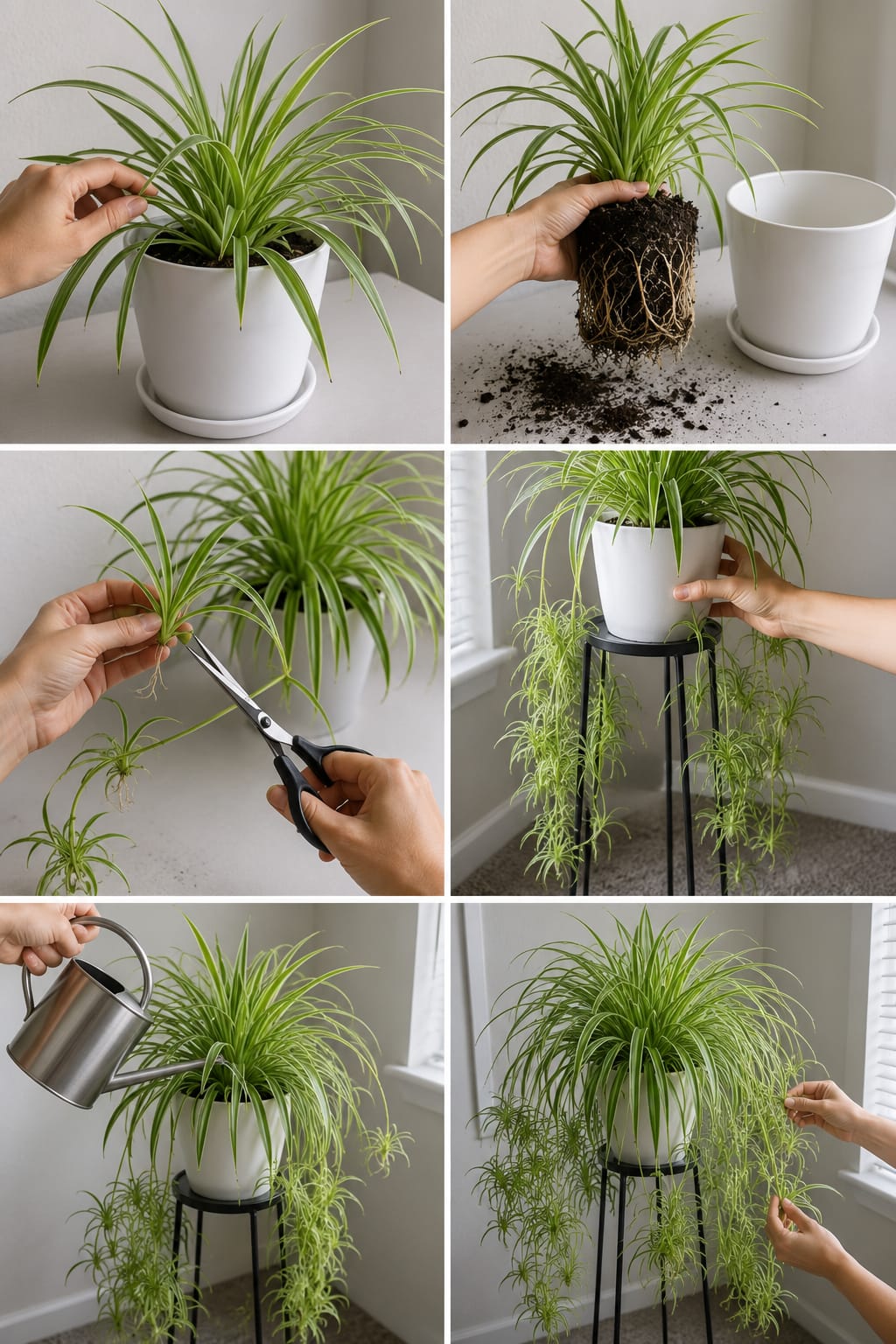
How to Refresh a Tired Spider Plant
A tired spider plant can often be refreshed with a combination of trimming, repotting, and propagation. Old brown leaves can be removed at the base. Brown tips can be trimmed lightly. If the root ball is crowded or the soil is old, the plant can be moved into fresh breathable mix. Healthy baby plants can be rooted and used to create new pots or fill the display.
If the mother plant has become too large, it may be divided. The root clump can be separated carefully into smaller sections, each with leaves and roots. This should be done gently to avoid excessive root damage. Dividing is best during active growth when the plant can recover more easily.
A refreshed spider plant should be placed in bright indirect light and watered carefully. It may take a few weeks to settle. Once new growth appears, the plant should begin looking fuller and healthier. A simple refresh can make an old plant look decorative again.
Indoor Decor Value
Spider plant has strong indoor decor value because it looks fresh, soft, and lively. Its arching leaves create movement, while the variegation brightens the room. It works well in hanging baskets, plant stands, wall hooks, shelves, windowsills, and bright corners. A mature plant with trailing babies can create a beautiful cascading effect.
A white planter gives spider plant a clean modern look. A terracotta pot creates a warmer natural style. A black plant stand can make the green and white leaves stand out. Hanging baskets are especially effective because they allow the baby plants to trail downward. This makes the plant look fuller and more dramatic without taking up much floor space.
The display should stay tidy. Old runners, damaged leaves, and fallen soil reduce the premium look. Regular trimming, leaf cleaning, and careful watering help the plant remain suitable for home styling, office decor, and property presentation. A healthy spider plant can make a simple corner feel brighter and more finished.
Room-by-Room Styling
In the living room, spider plant can sit on a plant stand, shelf, side table, or hang near a bright window. Its arching leaves soften furniture lines and add a relaxed natural feeling. A tall stand is useful when the plant has trailing babies because it gives them space to hang freely.
In the bedroom, spider plant creates a calm and fresh look. A white pot can match soft bedding and neutral walls. The plant should receive enough indirect light so the leaves stay bright and strong. If the bedroom is dim, watering should be reduced and a grow light may help.
In a home office, spider plant works well on shelves, file cabinets, plant stands, and window corners. It can make a workspace feel less plain without demanding too much care. The plant should be positioned where trailing stems will not interfere with work surfaces or electronics.
In an entryway, spider plant can make the space feel welcoming if there is enough light. A tall stand or hanging basket can create a decorative first impression. If the entryway is dark, the plant may grow slowly and produce fewer baby plants. A bright location will keep it fuller.
Office and Commercial Styling
Spider plant can be useful in commercial interior landscaping because it is friendly-looking, easy to propagate, and visually soft. It works well in offices, waiting rooms, wellness spaces, reception areas, cafes, classrooms, and bright commercial corners. Its cascading form can soften shelves and high surfaces.
For professional spaces, the plant should be maintained regularly. Long runners should not block walkways. Dead leaves should be removed. Pots should not drip water onto floors or furniture. A hanging spider plant can look premium when it is full and clean, but it can look neglected if brown tips and dry runners are left unmanaged.
A clean white pot or simple hanging basket can create a polished look. The plant should be placed where staff can reach it for watering and trimming. Professional styling depends on easy maintenance as much as visual beauty.
Product and Tool Guide
Helpful materials for spider plant care include a pot with drainage holes, light indoor potting mix, perlite, a clean pair of scissors, a watering can with good control, a moisture meter for beginners, a soft cloth for leaf cleaning, a diluted balanced fertilizer, a hanging basket, and a plant stand. A grow light can help in rooms with weak natural light.
For propagation, a clean glass of water or a small starter pot with light soil can be used. Baby plants should be handled gently. If several baby plants are rooted together, a slightly wider pot can create a full display. The pot should still drain well and should not be oversized.
These tools help create a simple, reliable routine. Spider plant does not need complicated products. Fresh soil, drainage, light, gentle watering, and occasional trimming are the most important parts of success.
Care Timeline After Repotting and Propagation
During the first 24 hours after repotting, the plant should be watered lightly if the soil was dry and placed in bright indirect light. The crown should be checked to make sure it is not buried. Extra water should drain away. Baby plants placed in water should have only their bases submerged, not their leaves.
During the first week, the plant may adjust slightly. Leaves may relax for a short time, but they should not become mushy. Soil should stay lightly moist but not wet. Water-propagated baby plants should be kept in clean water, and the water should be changed if cloudy.
After two to four weeks, the plant should begin stabilizing. Baby plants may show new roots or new growth. After one to two months, rooted plantlets can become strong enough to grow in their own pots. Long-term fullness comes from bright light, proper watering, gentle feeding, and allowing healthy runners to develop.
Professional Styling Note
In high-end indoor horticulture, spider plant is valued because it creates a fresh, easy, cascading look with very little visual heaviness. It is not as dramatic as Monstera or as architectural as snake plant, but it brings softness and movement. This makes it useful for modern apartments, wellness interiors, casual offices, bright bedrooms, plant shelves, and hanging basket displays.
However, the plant only looks premium when it is tidy. Brown tips, dry baby stems, overcrowded pots, and soil spills can reduce its decorative value. A clean pot, healthy leaves, and well-spaced trailing plantlets create a much better presentation. Repotting and propagation are not only care steps. They are also styling tools.
A beautiful spider plant display depends on healthy roots, a clean crown, bright indirect light, controlled watering, and a planter that fits the room. Simple care creates the best result. With regular attention, spider plant can look full, fresh, and decorative for years.
Final Thoughts
Spider plant is one of the easiest houseplants to repot and propagate when the process is handled carefully. A mature plant may need fresh soil and a slightly larger pot when roots become crowded. Baby spider plants can be cut and rooted in water or soil once they have a clear crown and small root nubs. Several young plants can be planted together to create a fuller display.
The safest routine is to use a pot with drainage holes, a light well-draining potting mix, bright indirect light, controlled watering, and gentle feeding during active growth. The crown should stay clean, the roots should not sit in water, and young plantlets should not be placed in heavy soggy soil. Spider plant is forgiving, but it still grows best when its roots are protected.
With clean care and the right presentation, spider plant can remain a beautiful accent for living rooms, bedrooms, home offices, entryways, modern apartments, hanging baskets, commercial interior landscaping, wellness spaces, premium plant stands, and polished property presentation. Healthy roots, bright variegated leaves, and cascading baby plants will always create a stronger display than rushed repotting or careless propagation.