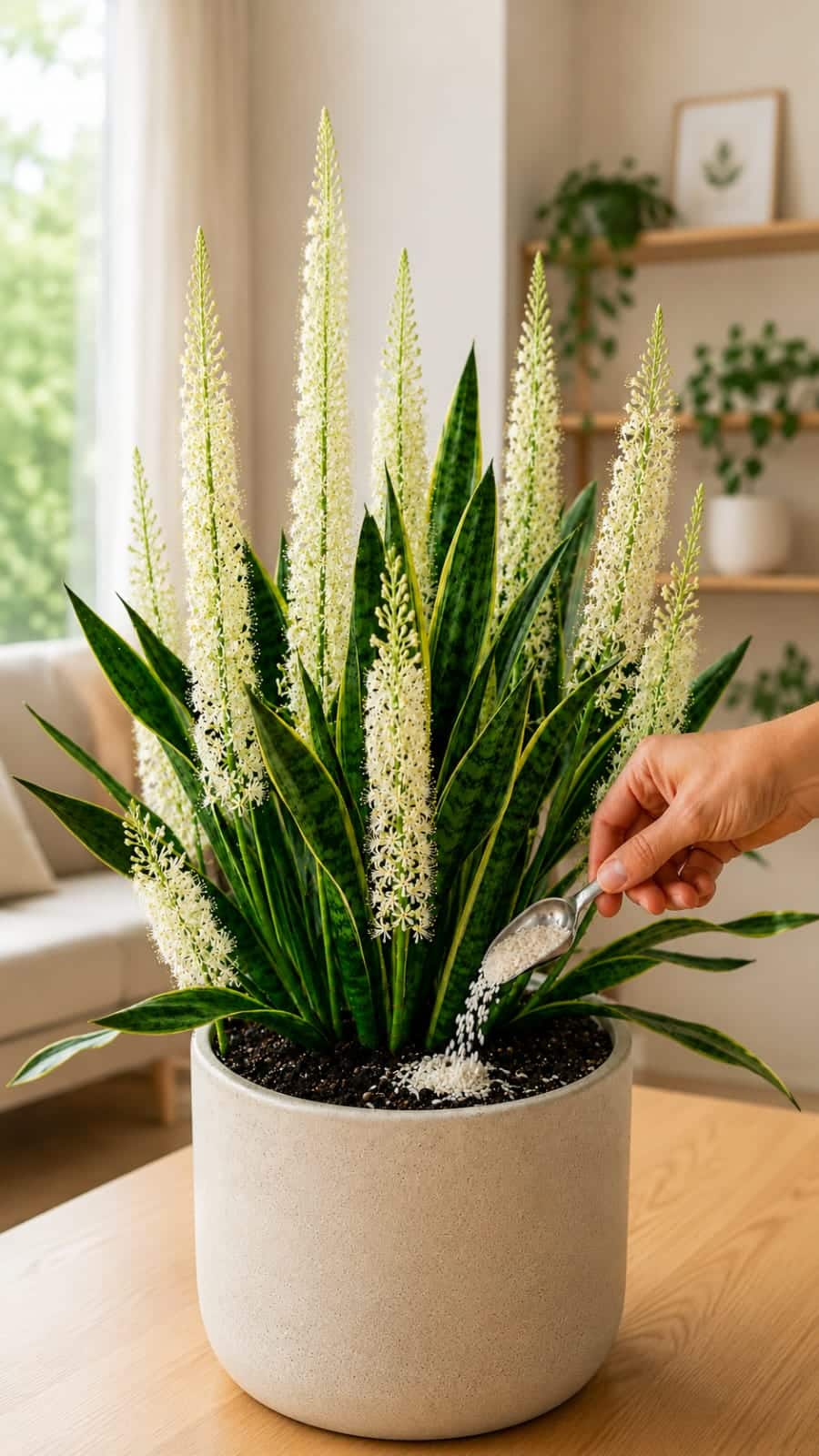
How to Water Snake Plants Correctly
Water only when the soil is dry. This is the most important watering rule. The top may dry quickly while the lower soil remains damp, so check deeper before watering.
You can use your finger, a wooden stick, or a moisture meter. If the stick comes out with damp soil on it, wait. If the pot feels heavy, wait. If the soil is dry deep down, it is time to water.
When you water, water thoroughly and let excess drain away. Then leave the plant alone until the soil dries again. Do not give small daily sips. Frequent small watering can keep the surface damp and encourage pests.
Rice water should follow the same rule. Use it only when the plant actually needs water.
Why Overwatering Stops Pups and Flowers
Overwatering is one of the fastest ways to stop snake plant growth. When soil stays wet, roots cannot breathe. Rhizomes can soften and rot. Once rhizomes are damaged, they cannot produce strong pups or flowers.
Signs of overwatering include yellow leaves, soft leaf bases, mushy rhizomes, sour-smelling soil, and leaves collapsing. If you see these signs, stop watering and inspect the roots.
Healthy rhizomes are firm. Rotten rhizomes are soft, dark, mushy, or smelly. Rotten parts must be removed with clean tools.
Never use rice water on an overwatered snake plant. It adds more moisture and organic material, which can make the problem worse.
How to Encourage Snake Plant Flowers Naturally
Snake plant flowers are rare indoors, but you can improve the chances by giving the plant ideal conditions. Start with strong bright indirect light. A mature plant near a bright window has a better chance of blooming than one in a dark room.
Let the plant become slightly snug in its pot. Do not repot too often. A mature, stable plant is more likely to bloom than a plant that is constantly disturbed.
Water correctly. Let the soil dry between waterings. Avoid overwatering, especially in winter.
Feed lightly during the growing season with a diluted cactus or succulent fertilizer. Do not overfeed. Too much fertilizer can damage roots and create brown tips.
Finally, be patient. Snake plants bloom when they are ready. The flowers are a reward for long-term healthy care, not the result of one ingredient.
Should You Fertilize a Snake Plant?
Snake plants are light feeders. They do not need heavy fertilizer. But a small amount of balanced nutrition during spring or summer can support growth.
Use a cactus or succulent fertilizer diluted to half strength. Feed once or twice during active growth. Do not fertilize during winter if the plant is not growing.
Rice water cannot replace fertilizer. It may contain starch and tiny traces of minerals, but it is not complete plant food.
If you use fertilizer, do not use rice water on the same day. Keep the routine simple and gentle.
Can Rice Water Replace Fertilizer?
No. Rice water is not fertilizer. It does not provide a reliable balance of nutrients. Snake plants need very little feeding, but when they do need nutrients, a proper diluted fertilizer is more predictable.
Rice water may support soil microbes slightly, but it cannot provide everything the plant needs for strong growth.
If your plant is pale, weak, or not producing pups, do not assume rice water is the answer. Check light, watering, soil, and pot size first.
A healthy routine matters more than any homemade supplement.
How to Repot a Snake Plant for Fuller Growth
Repotting can help if the soil is old, compacted, or the plant is severely crowded. The best time to repot is spring or early summer.
Remove the plant from the pot and inspect the rhizomes. Trim away any soft, rotten, or damaged parts. Keep only firm healthy sections.
Choose a pot with drainage holes, only slightly larger than the root system. Fill it with fast-draining soil. Place the plant at the same depth as before.
If any rhizomes were cut, let them dry briefly before watering. This helps prevent rot. Do not add rice grains immediately after repotting. Let the plant settle first.
How to Divide Snake Plants for an Instant Fuller Pot
If you want a fuller plant quickly, division is more reliable than waiting for rice to create pups. A mature snake plant can often be separated into several sections.
Each section should have leaves, roots, and a firm rhizome. Use clean tools if cutting is needed. Let cut areas dry before replanting.
You can plant several divisions together in one wide pot for a fuller look. Make sure the pot is not too large and has drainage holes.
Division creates immediate fullness, while natural pup production takes patience.
Best Temperature for Growth and Blooms
Snake plants grow best in warm indoor conditions. Temperatures between about 65°F and 85°F are comfortable for them. Cold rooms slow growth and increase the risk of rot.
Keep snake plants away from cold drafts, freezing windows, and air conditioning blasts. Cold damage can cause soft spots, brown patches, or leaf stress.
Warmth helps roots stay active. Active roots and rhizomes are more likely to support new shoots and possibly blooms.
If your snake plant is in a cool room and not growing, warmth may help more than rice water.
Does Humidity Matter?
Snake plants tolerate average indoor humidity well. They do not need high humidity like many tropical plants. This makes them easy to grow in normal homes.
Very dry air may contribute to brown tips, but humidity is usually not the main reason a snake plant fails to produce pups. Light, soil, watering, roots, and pot size are much more important.
Avoid heavy misting. Water sitting in the center of the plant can encourage problems if airflow is poor.
Keep the leaves clean and the soil dry-friendly.
How to Clean Snake Plant Leaves
Dusty leaves absorb less light. Since light is essential for growth and potential blooms, clean leaves are important.
Wipe leaves gently with a damp cloth every few weeks. Support the leaf as you wipe so it does not bend or crack. Use plain water only.
Do not use oil, milk, mayonnaise, or sticky leaf-shine products. These can leave residue and collect dust.
Clean leaves look better and help the plant use light more efficiently.
Can Rice Help Yellow Leaves?
No. Rice will not turn yellow snake plant leaves green again. Yellowing often comes from overwatering, root rot, cold stress, poor drainage, or natural aging.
If one old leaf yellows slowly, it may be normal. If several leaves yellow or soften near the base, check the roots and rhizomes.
Do not use rice water if the soil is wet or the plant is yellowing from the base. This can worsen the problem.
Remove damaged leaves when needed and correct the cause so new growth stays healthy.
Can Rice Help Brown Tips?
Rice water does not fix brown tips. Brown tips may come from inconsistent watering, mineral buildup, overfertilizing, cold drafts, sunburn, or physical damage.
Old brown tissue will not become green again. You can trim brown tips with clean scissors if desired.
If brown tips are caused by mineral buildup, adding rice water may not help. Plain water flushing or repotting may be better.
Preventing new brown tips depends on stable care.
Can Rice Attract Fungus Gnats?
Yes. Rice can attract fungus gnats if it is used too heavily or if it begins to decay. Fungus gnats love moist organic material, and rice can become food for microbes when it softens in damp soil.
Rice water can also contribute to gnats if used too often. This is why it should be rare and diluted.
If gnats appear, stop using rice immediately. Remove any visible grains. Let the soil dry properly. Use sticky traps to catch adults and improve airflow around the plant.
A snake plant pot should smell clean and earthy, not sour or fermented.
⚠️ Important: Never leave cooked rice or large piles of dry rice in your snake plant pot. It can rot, attract pests, and cause root problems.
What to Do If Rice Starts Molding
If rice grains mold on the soil surface, remove them immediately. Scoop away the affected top layer of soil if needed. Do not mix moldy rice deeper into the pot.
Let the soil dry more before watering again. Improve airflow and avoid using rice grains in the future.
If the soil smells bad or the plant begins yellowing, remove the plant from the pot and inspect the roots. Repot into fresh fast-draining soil if necessary.
Mold means the pot is too damp or receiving too much organic material.
What to Do If You Used Too Much Rice
If you added a large pile of dry rice, remove as much as possible. Scoop it off the surface gently. If grains were mixed into the soil, remove the top layer and replace it with fresh dry mix.
If cooked rice was added, remove it immediately. Cooked rice should not stay in an indoor plant pot.
If the pot smells sour, repot the plant. Inspect rhizomes and roots. Trim any soft or rotten parts and let healthy sections dry before repotting.
After correcting the issue, return to plain water and simple care.
A Safe Snake Plant Rice Routine
Use rice water only as a mild occasional support. Rinse two tablespoons of uncooked rice in one cup of water, strain out the grains, and dilute the cloudy water with another cup of plain water.
Apply a small amount to the soil only when the plant is due for watering. Let the pot drain fully. Do not repeat for at least six to eight weeks.
Between treatments, use plain water. Keep the plant in bright indirect light. Use fast-draining soil. Allow the pot to dry between waterings.
This is much safer than leaving piles of rice grains in the pot.
Common Mistakes to Avoid
- Using cooked rice – it rots quickly and attracts pests.
- Adding too much dry rice – large amounts can swell, mold, and smell.
- Using rice water too often – frequent use can cause sour soil and fungus gnats.
- Using rice on wet soil – snake plants need dry-down between waterings.
- Expecting rice to force flowers – snake plant blooms depend on maturity, light, and overall health.
- Keeping the plant in low light and expecting pups – brighter indirect light is key.
- Using a pot without drainage – drainage is essential for healthy rhizomes.
Frequently Asked Questions
Is rice good for snake plants?
Fresh diluted rice water can be used occasionally as a mild natural supplement, but rice is not necessary for most snake plants. Proper light, soil, drainage, and watering matter more.
Can rice make a snake plant bloom?
No. Rice cannot force blooms. Snake plants bloom when they are mature, healthy, slightly snug, and receiving strong light and stable care.
Can rice make a snake plant produce more pups?
Rice cannot directly create pups. Pups come from healthy rhizomes. Bright indirect light, fast-draining soil, proper watering, and warmth encourage pups best.
Can I put dry rice on snake plant soil?
Only a tiny amount should be used, and it should not be buried or left to rot. Rice water is safer than dry grains.
Can I use cooked rice?
No. Cooked rice can rot, smell bad, attract pests, and encourage mold. It should not be added to indoor plant pots.
How do I make rice water?
Rinse two tablespoons of uncooked rice in one cup of water, strain out the grains, then dilute the cloudy water with another cup of plain water. Use it fresh.
How often should I use rice water?
Use it rarely, about once every six to eight weeks during active growth. Do not use it weekly or during winter slowdown.
What is the best way to get snake plant flowers?
Give the plant bright indirect light, keep it mature and slightly snug, use fast-draining soil, water only when dry, and avoid disturbing it too often. Blooms require patience.
🌿 Rice water is a gentle occasional supplement, not a miracle cure. For fuller snake plants with more baby shoots and rare flowers, focus on bright indirect light, fast-draining soil, proper watering, and warm, stable care. Use rice only as a rare support – and let healthy roots do the real work.