Caring for the Plant as It Grows
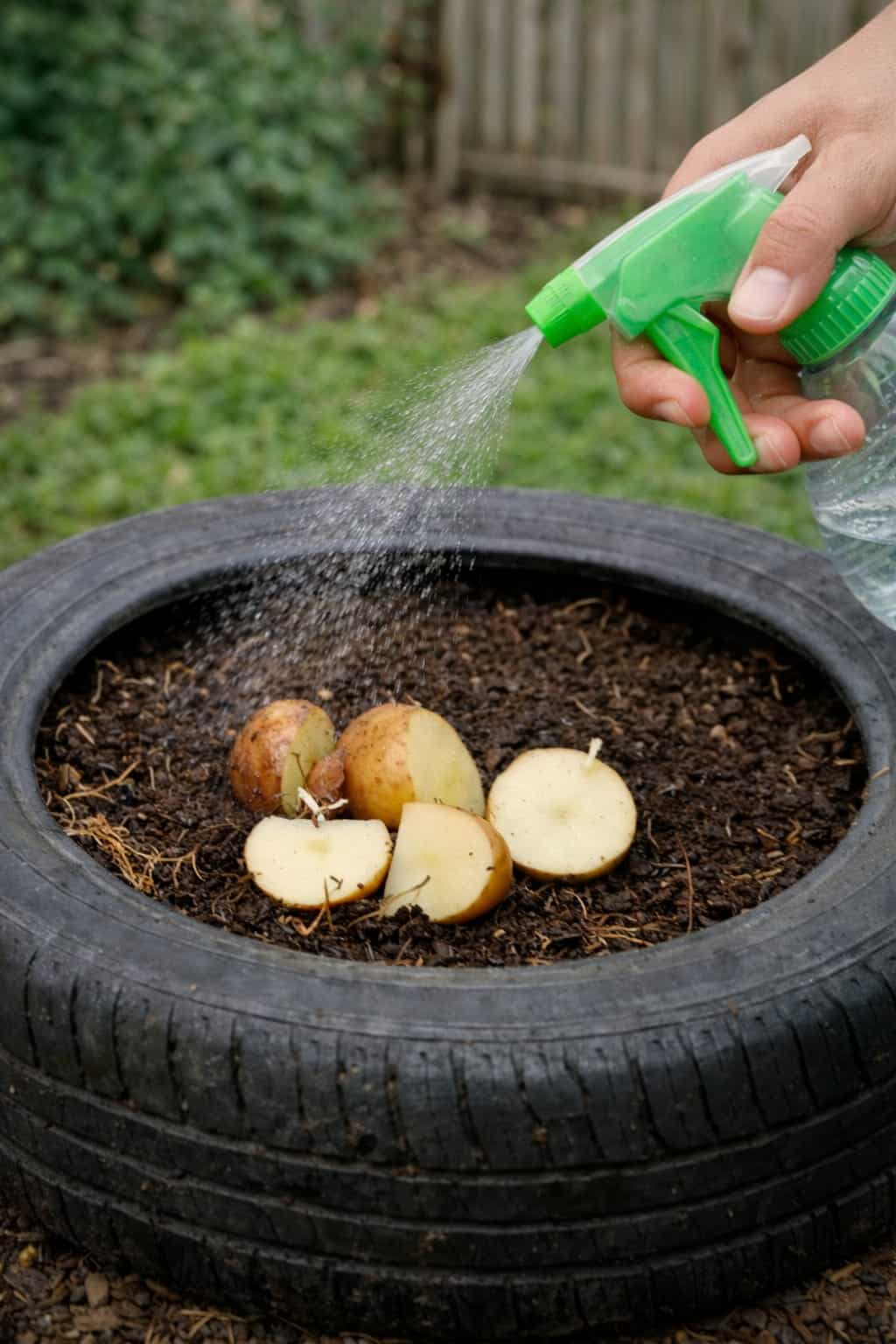
Once the potato plant is actively growing, it needs only a few basics. Potatoes are not high‑maintenance, but they do require attention to these key areas.
Sunlight
Potatoes grow best with full sun — at least 6–8 hours daily. Less light means fewer leaves, fewer potatoes, and a longer growing time.
Consistent Moisture
The soil should not dry out completely for long periods, but it also should not stay soaked. Water deeply when the top inch of soil feels dry. During hot weather, this may mean watering every 2–3 days. Inconsistent watering can cause knobby or cracked potatoes.
Hilling (Adding Soil)
This is one of the most important potato‑specific techniques. As the plant grows to about 6 inches tall, add more soil around the lower stems, leaving only the top leaves exposed. Repeat every few weeks until the container is nearly full.
Why hill potatoes?
· Protects developing tubers from sunlight (green potatoes are toxic).
· Encourages more potatoes to form along the buried stems.
· Supports the plant and keeps it upright.
Fertilizing
Potatoes are heavy feeders. At planting time, mix a balanced organic fertilizer (like 5‑5‑5) into the soil. When the plants are about 6 inches tall, side‑dress with additional fertilizer. Avoid high‑nitrogen fertilizers, which promote leaves at the expense of tubers.
Pest and Disease Watch
Common potato pests include Colorado potato beetles, aphids, and flea beetles. Check leaves regularly. Remove beetles by hand. Use neem oil or insecticidal soap for infestations. Good air circulation and proper watering prevent fungal diseases like blight.
When to Harvest Potatoes (And How)
Potatoes are ready to harvest when the plant’s foliage begins to yellow and die back. This usually happens 10–20 weeks after planting, depending on the variety.
For “New Potatoes” (Small, Tender):
· Harvest when the plant flowers (for varieties that flower).
· Gently reach into the soil and remove a few small potatoes from around the edges.
· Leave the plant to continue growing.
For Full‑Size Storage Potatoes:
· Wait until the foliage has completely died back.
· Stop watering for 1–2 weeks before harvest to allow skins to thicken.
· Use a garden fork or your hands to gently loosen the soil.
· Dig carefully to avoid cutting or bruising the potatoes.
· Cure harvested potatoes by spreading them in a single layer in a dark, cool, humid place for 1–2 weeks. This toughens skins for storage.
How to Store Potatoes:
· Store in a cool (40–50°F / 4–10°C), dark, well‑ventilated place.
· Do not refrigerate – cold converts starches to sugar.
· Do not wash until ready to use.
· Properly cured potatoes can last several months.
Common Mistakes Beginners Make (And How to Avoid Them)
Potatoes are easy, but a few mistakes can slow them down. Avoid these common pitfalls.
Planting in Heavy, Soggy Soil
Fix: Use loose, well‑draining potting mix. Add perlite or sand. Ensure containers have drainage holes.
Using Rotten or Diseased Potato Pieces
Fix: Start with certified seed potatoes or firm, sprouted organic potatoes. Discard any with soft spots or mold.
Not Giving Enough Light
Fix: Place containers in full sun (6–8 hours). If growing indoors, use a strong grow light.
Overwatering
Fix: Water only when the top inch of soil is dry. Potatoes rot in standing water.
Harvesting Too Early
Fix: Wait for the foliage to die back naturally. Green potatoes are not ready.
Not Hilling
Fix: Add soil or mulch around stems every few weeks. This increases yield and prevents greening.
The good news is that potatoes are forgiving enough that even beginners often get encouraging results.
Why This Is Such a Great Project for New Gardeners
Growing potatoes teaches some of the best gardening lessons in a simple way:
· How roots and shoots develop – You can see both parts working together.
· How soil affects plant health – Proper drainage is essential.
· How patience pays off – The harvest is worth the wait.
· How ordinary food can become living growth again – A potato from your kitchen becomes a new plant.
It is practical, visual, and rewarding from start to finish. And because the harvest is edible, it feels even more meaningful. Kids love digging for potatoes — it is like a treasure hunt.
A Simple Potato Growing Calendar
Spring (After Last Frost)
· Prepare soil or containers.
· Plant seed potato pieces.
· Water and place in sun.
Early Summer
· Shoots appear.
· Begin hilling.
· Water consistently.
Mid‑to‑Late Summer
· Plants flower (for some varieties).
· Harvest new potatoes.
· Continue hilling and watering.
Late Summer to Early Fall
· Foliage yellows and dies.
· Stop watering.
· Harvest main crop.
· Cure and store.
Frequently Asked Questions (Growing Potatoes)
Can I grow potatoes from a grocery store potato?
Yes, but with caution. Grocery store potatoes are often treated with sprout inhibitors. Organic potatoes are more likely to sprout. Also, they may carry diseases. For best results, buy certified seed potatoes from a nursery.
How many potatoes will one plant produce?
A single seed potato can yield 5–10 potatoes, depending on variety and growing conditions. Some prolific varieties produce even more.
Do I need to chit (pre‑sprout) potatoes?
Chitting (placing potatoes in a bright, cool spot to sprout before planting) can give you a head start, especially in short‑season climates. It is optional but helpful.
Can I grow potatoes indoors?
Yes, but you need a very bright grow light (14–16 hours daily) and a deep container. Outdoor growing is easier and more productive.
Why are my potatoes turning green?
Green potatoes have been exposed to light. They produce solanine, a toxic compound. Do not eat green potatoes. Prevent by hilling soil around stems and keeping tubers covered.
How do I know when to stop watering?
When the foliage begins to yellow and die, stop watering. This signals the plant to stop growing and the skins to thicken for storage.
Can I reuse potato growing soil?
It is best not to. Potato soil can harbor diseases. Use fresh potting mix each year, or rotate crops if growing in ground.
The Hidden Joy of Growing Potatoes
Potatoes have a special kind of gardening magic because so much of the reward stays hidden underground until harvest day. You water and care for the plant without seeing the full result yet. Then later, when the foliage dies back and it is time to dig, the soil reveals what has been forming all along.
That hidden payoff is one of the biggest joys of growing them. It feels like uncovering something earned.
Unlike tomatoes that display their fruit openly, potatoes keep their secret until the very end. That surprise makes the harvest incredibly satisfying. Even if you only grow a few plants, pulling up a cluster of smooth, homegrown potatoes is a thrill.
Final Thoughts
Watching a small potato slowly grow into a green, healthy plant really does feel like a little piece of nature’s magic. But it is also something better than magic: it is a reminder that growth begins quietly, often out of sight, long before the results appear.
With just a little soil, moisture, light, and patience, a simple potato can become a thriving plant and eventually a generous harvest.
That is what makes potato growing so special. It starts with something ordinary. It grows with steady care. And in the end, it gives back much more than you expected.
So whether you have a sprawling backyard garden or a single bucket on an apartment balcony, try growing potatoes this season. Plant a small sprouted potato. Water it. Hill it. Watch those green leaves unfurl. And when the time comes, reach into the soil and pull out your very own homegrown treasure.
You will understand why gardeners love this simple trick — and why you will want to do it again next year.
Have you grown potatoes from a small start? Share your experience in the comments below. And if you found this guide helpful, save it for later or send it to a friend who wants to try growing their own food.