Fuchsia plants are loved for their elegant hanging flowers, soft leafy growth, and beautiful colors that look almost like tiny lanterns. A healthy fuchsia can produce dozens of dangling blooms in shades of pink, purple, red, coral, and white. When grown well, it becomes a lush plant with arching stems, fresh green leaves, and a waterfall of flowers that looks perfect in a pot, window corner, porch, balcony, or hanging basket.
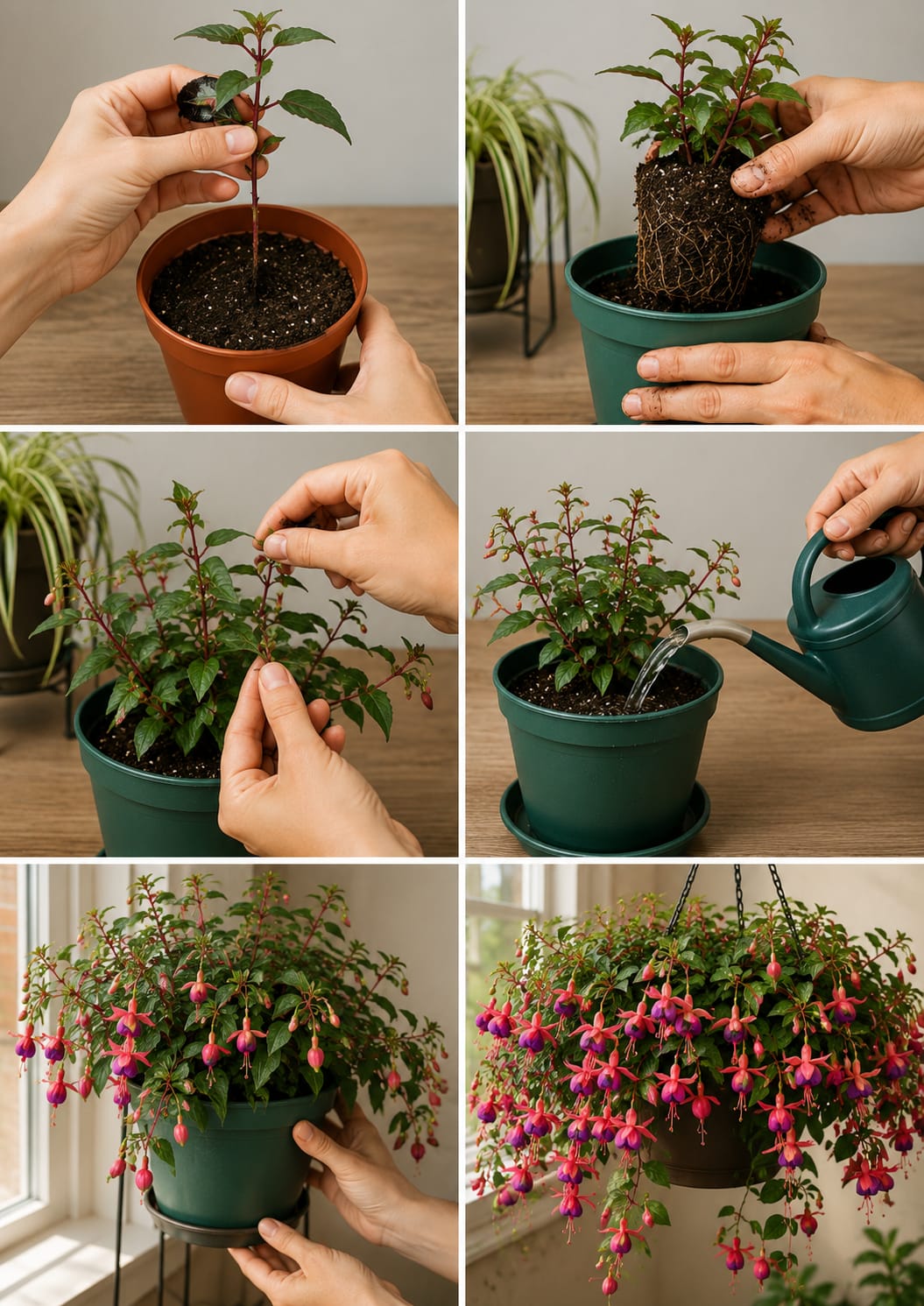
The image shows a simple fuchsia care and growing process. A young plant is started in a pot, then moved into a larger container with healthy roots and fresh soil. The stems are pinched or adjusted to encourage branching. The plant is watered carefully, placed near bright light, and eventually becomes full of colorful blooms. The final hanging basket shows what many gardeners want from a fuchsia: a rounded, bushy plant covered with beautiful pendant flowers.
Fuchsias are not difficult plants, but they are different from very tough houseplants like snake plants or ZZ plants. They need more attention to watering, light, temperature, and pruning. They like moisture, but they do not like soggy soil. They enjoy bright light, but they can suffer in harsh hot sun. They grow full and flower well when they are pinched and shaped early. If left alone in poor conditions, they may become leggy, dry, weak, or stop blooming.
The real secret to a beautiful fuchsia is steady care. It is not one special liquid, one fertilizer trick, or one quick step. It is a balance of cool bright conditions, airy soil, regular watering, gentle feeding, and smart pruning. When these needs are met, a small fuchsia can grow into a full flowering plant that looks dramatic and expensive, even when started from a simple young plant.
Understanding the Fuchsia Plant
Fuchsias are flowering plants known for their delicate drooping blooms. The flowers often have two layers of color, with outer sepals that flare outward and inner petals that hang below. Many flowers also have long stamens that add to the lantern-like look. This unique shape makes fuchsias stand out from many other potted flowers.
Some fuchsias grow upright and bushy, while others trail beautifully and are perfect for hanging baskets. The plant in the image appears to be treated like a compact bush at first, then later allowed to grow into a trailing flowering display. This is a common and attractive way to grow fuchsia. A young plant can be trained in a regular pot, then moved or styled as a hanging plant once it becomes fuller.
Fuchsias are often grown outdoors in mild weather, but they can also be grown indoors near bright windows if the room is not too hot and dry. They generally prefer cool to moderate temperatures. Extreme heat can stress them quickly. This is why fuchsias often look best in spring, early summer, fall, or shaded outdoor spots rather than hot direct midsummer sun.
Why Fuchsias Need the Right Start
A fuchsia that starts with healthy roots, fresh soil, and proper shaping has a much better chance of becoming full and covered in blooms. The image begins with a small plant in a pot. This stage is important because young fuchsias are easy to train. If you pinch and shape them early, they produce more side branches. More branches usually mean more flower sites later.
A weak start can cause problems. If the young plant is left in old compacted soil, the roots may struggle. If it is moved into a pot that is too large, the soil may stay wet too long. If the stems are never pinched, the plant may grow tall and thin instead of full. If it is placed in hot direct sun too soon, the leaves may wilt or burn.
The goal in the early stage is to build a strong foundation. That means choosing a pot with drainage, using a light potting mix, watering consistently, and giving the plant bright but gentle light. Once the plant feels settled, shaping and feeding can support fuller growth.
Choosing the Right Pot for Fuchsia
Fuchsias need a pot with drainage holes. This is one of the most important rules. They like moisture, but their roots still need oxygen. If water cannot escape, the lower soil becomes stale and wet, and the roots may begin to rot. A fuchsia in a pot without drainage may look healthy for a short time, then suddenly droop, yellow, and decline.
The pot should match the plant size. A small fuchsia does not need a huge container. A pot that is too large holds too much wet soil around the roots. This can lead to root problems, especially indoors where air movement is weaker. A pot only slightly larger than the current root ball is usually best.
For hanging baskets, choose a container that can hold enough moisture without becoming waterlogged. Hanging baskets dry faster because air moves around them from all sides. This means they may need more frequent watering than a pot sitting on a table. Still, drainage remains essential. A hanging fuchsia should never sit in trapped water.
Best Soil for Fuchsia Plants
Fuchsias grow best in soil that holds moisture but drains well. They do not want a dry cactus mix, but they also do not want heavy muddy soil. A good potting mix should feel light, soft, and airy. It should hold enough moisture for the fine roots but allow extra water to drain away.
A quality indoor or outdoor potting mix can work well if it is fresh and loose. Adding perlite can improve drainage and airflow. A little compost can help provide gentle nutrition, but the mix should not be too rich or dense. Heavy compost or garden soil can compact in pots and suffocate roots.
If a fuchsia is in old soil, repotting can make a big difference. Old soil may become compacted, salty, or unevenly wet. When water runs down the sides without soaking the root ball, the plant can dry out even after watering. When soil stays wet for days, the roots can rot. Fresh potting mix gives the plant a better root environment.
Repotting a Fuchsia Safely
The image shows a plant being moved from one pot into another. When repotting fuchsia, handle the root ball gently. The roots can be fine and delicate. If the plant is root-bound, loosen the outside of the root ball slightly, but do not tear it apart aggressively unless the roots are badly tangled. A little loosening helps roots grow into the new soil.
Place fresh soil at the bottom of the new pot, then set the plant at the same depth it was growing before. Do not bury the stems too deeply. Fill around the root ball with soil and press lightly. The soil should hold the plant upright but should not be compacted hard. Roots need air pockets.
After repotting, water gently to settle the soil. Keep the plant in bright indirect light while it adjusts. Avoid strong fertilizer immediately after repotting. The roots need time to settle before they can handle feeding. A newly repotted fuchsia may pause growth briefly, which is normal.
Light for Healthy Fuchsia Growth
Fuchsias need bright light to bloom well, but they do not love harsh heat. This is the part that confuses many growers. A fuchsia in deep shade may grow leaves but few flowers. A fuchsia in strong hot sun may wilt and burn. The best location gives bright, gentle light with protection from intense afternoon heat.
Morning sun is often excellent. An east-facing window or porch can work very well. Bright filtered light is also good. Outdoors, fuchsias often thrive in partial shade, especially where summers are warm. Indoors, place the plant near a bright window but avoid hot direct midday sun through glass.
If the plant becomes leggy with long spaces between leaves, it may need more light. If leaves curl, scorch, or wilt badly in the afternoon, the light may be too intense or the temperature too high. The best fuchsia location is bright, cool, and protected.
Watering Fuchsia Correctly
Fuchsias like consistent moisture. They should not dry out completely for long periods. When the soil becomes too dry, the plant can wilt quickly, drop buds, and lose leaves. However, keeping the soil constantly soggy is also dangerous. The best routine is even moisture with good drainage.
Check the soil with your finger. When the top layer begins to feel slightly dry, water thoroughly. Let excess water drain out. Do not leave the pot sitting in water. In warm weather, a fuchsia may need water often, especially in a hanging basket. Indoors or in cooler conditions, watering will be less frequent.
Water the soil rather than soaking the flowers. Wet flowers can become messy and may age faster. If watering with a can, pour gently around the base. If the plant is very full, lift the foliage slightly and water the soil beneath. The roots need moisture more than the leaves do.
Why Fuchsias Wilt
Fuchsias can wilt for several reasons. The most obvious reason is dry soil. If the soil is dry and the plant is drooping, water it thoroughly and let it drain. It may recover quickly. Repeated drying, however, can weaken the plant and cause bud drop.
A fuchsia can also wilt from heat. Even if the soil is moist, hot afternoon sun can make the plant collapse temporarily. If this happens often, move the plant to a cooler, shadier spot. Watering more and more will not fix heat stress if the roots are already moist.
Wet soil can also cause wilting. When roots are damaged by rot, they cannot absorb water properly, so the plant may droop even though the soil is wet. This is serious. If the plant wilts in wet soil, check the roots and drainage. Adding more water will make the problem worse.
Pinching for a Bushier Fuchsia
The image shows hands working with the stems, which suggests pinching or shaping. Pinching is one of the best ways to make fuchsias bushy. When you remove the growing tip of a young stem, the plant responds by producing side shoots. More side shoots create a fuller plant with more places for flowers to form.
Pinching should be done when the plant is actively growing and healthy. Use clean fingers or clean scissors to remove the soft tip above a set of leaves. After pinching, the plant may pause briefly, then new branches will appear. This process can be repeated while the plant is young to create a rounded shape.
Do not pinch heavily when the plant is already covered in buds and flowers unless you are trying to reshape it. Pinching delays flowering because the plant focuses on new growth first. For the fullest display, shape the plant early, then allow it to set buds later.
Pruning Fuchsia Plants
Pruning keeps a fuchsia healthy and attractive. It removes weak stems, dead growth, and leggy sections. It also encourages fresh branching. A fuchsia that is never pruned may become thin, tangled, or woody. A plant that is pruned at the right time can become compact and flower heavily.
The best pruning time depends on how you grow the plant. In many climates, fuchsias are pruned in early spring before active growth begins. During the growing season, light trimming and deadheading can keep the plant neat. If a stem is damaged or diseased, remove it right away.
Use clean scissors or pruning shears. Cut above a leaf node or healthy branching point. Do not remove all growth at once from a weak plant. Prune gradually if the plant is stressed. After pruning, provide good light and steady moisture so new growth can develop.
Deadheading for More Flowers
Deadheading means removing faded flowers. This keeps the plant looking clean and encourages more bloom production. When flowers fade, they may develop seed pods. If the plant puts energy into seeds, it may produce fewer new flowers. Removing old blooms helps redirect energy into fresh buds.
Fuchsia flowers are delicate, so remove faded blooms gently. Pinch or cut the flower stem close to where it joins the plant. Be careful not to damage new buds nearby. A well-maintained fuchsia can continue flowering for a long time when spent blooms are removed and the plant is kept healthy.
Feeding Fuchsia Plants
Fuchsias are more active feeders than snake plants, but they still need balanced feeding. A plant that is growing and blooming uses nutrients steadily. During spring and summer, a diluted balanced fertilizer or bloom-supporting fertilizer can help. The feed should be gentle and regular, not harsh and random.
Use fertilizer only when the plant is actively growing and the soil is not bone dry. Fertilizer on dry roots can burn them. Water lightly first if needed, then feed with diluted fertilizer. Do not overfeed. Too much fertilizer can cause leaf burn, weak growth, salt buildup, and fewer flowers.
If using organic feed, make sure it is mild and clean. Compost tea or worm casting tea can be used occasionally if fresh and not smelly. Avoid thick homemade kitchen mixtures, sugary liquids, salty water, vinegar, or anything fermented. Fuchsias like nutrients, but their roots still need clean, airy soil.
Temperature Needs
Fuchsias prefer cool to moderate temperatures. They often struggle in very hot weather. When temperatures rise too high, buds may drop, leaves may wilt, and flowering may slow. This is why many fuchsias perform beautifully in spring and fall but need protection during hot summer afternoons.
Indoors, keep fuchsias away from heaters, hot windows, and dry air vents. Outdoors, place them where they receive morning light and afternoon shade. A sheltered porch, balcony, or bright shaded patio can be ideal.
Cold can also damage fuchsias, especially tender varieties. Some fuchsias are hardy in certain climates, but many potted types need protection from frost. If grown outdoors in a cold region, bring the plant inside before freezing temperatures arrive or overwinter it in a protected place.
Humidity and Airflow
Fuchsias appreciate moderate humidity, but they also need airflow. Dry indoor air can make leaves crisp and buds drop. Very humid stagnant air can encourage fungal problems. The best environment is slightly humid but fresh.
A humidifier can help indoors if the air is very dry. Grouping plants together can also improve humidity slightly. However, avoid crowding plants so tightly that air cannot move between them. Good airflow helps prevent mildew and pest problems.
If growing fuchsias indoors, open a window when weather allows or use gentle room airflow. Avoid strong cold drafts. The goal is fresh air, not sudden temperature shock.
Continue to Page 2
Continue to page 2 for more details about this article and the key points many readers miss on the first page.