Anthurium is one of the most elegant flowering houseplants you can grow indoors. With its glossy heart-shaped leaves, upright stems, and bright red, pink, white, or orange spathes, it can make a balcony corner, windowsill, living room table, or indoor plant shelf look instantly more luxurious. But when an anthurium starts looking weak, dull, yellow, or tired, many plant lovers search for a simple natural trick that can support the plant without using harsh products.
One popular home-gardening method is the garlic water trick. This simple tonic is made by soaking or crushing garlic in water, then using the strained liquid carefully around the root zone. The idea is not to pour strong garlic directly onto the leaves or overload the soil. The goal is to create a mild, diluted plant-support water that may help refresh the growing area, discourage small soil pests, and support a cleaner root environment.
This trick is especially interesting for anthuriums because they love moisture, warmth, and humidity, but they do not like heavy, suffocating soil. Their roots need air as much as water. When the potting mix becomes too wet, compacted, or unhealthy, the plant can quickly show stress through yellow leaves, drooping stems, brown tips, weak blooms, and slow growth.
Garlic water should be understood as a gentle support step, not a miracle cure. It cannot fix root rot, poor drainage, or a dying plant overnight. However, when used correctly and in small amounts, it can become part of a smart anthurium care routine focused on clean roots, balanced moisture, and healthy indoor growth.
What Is the Garlic Water Trick for Anthurium?
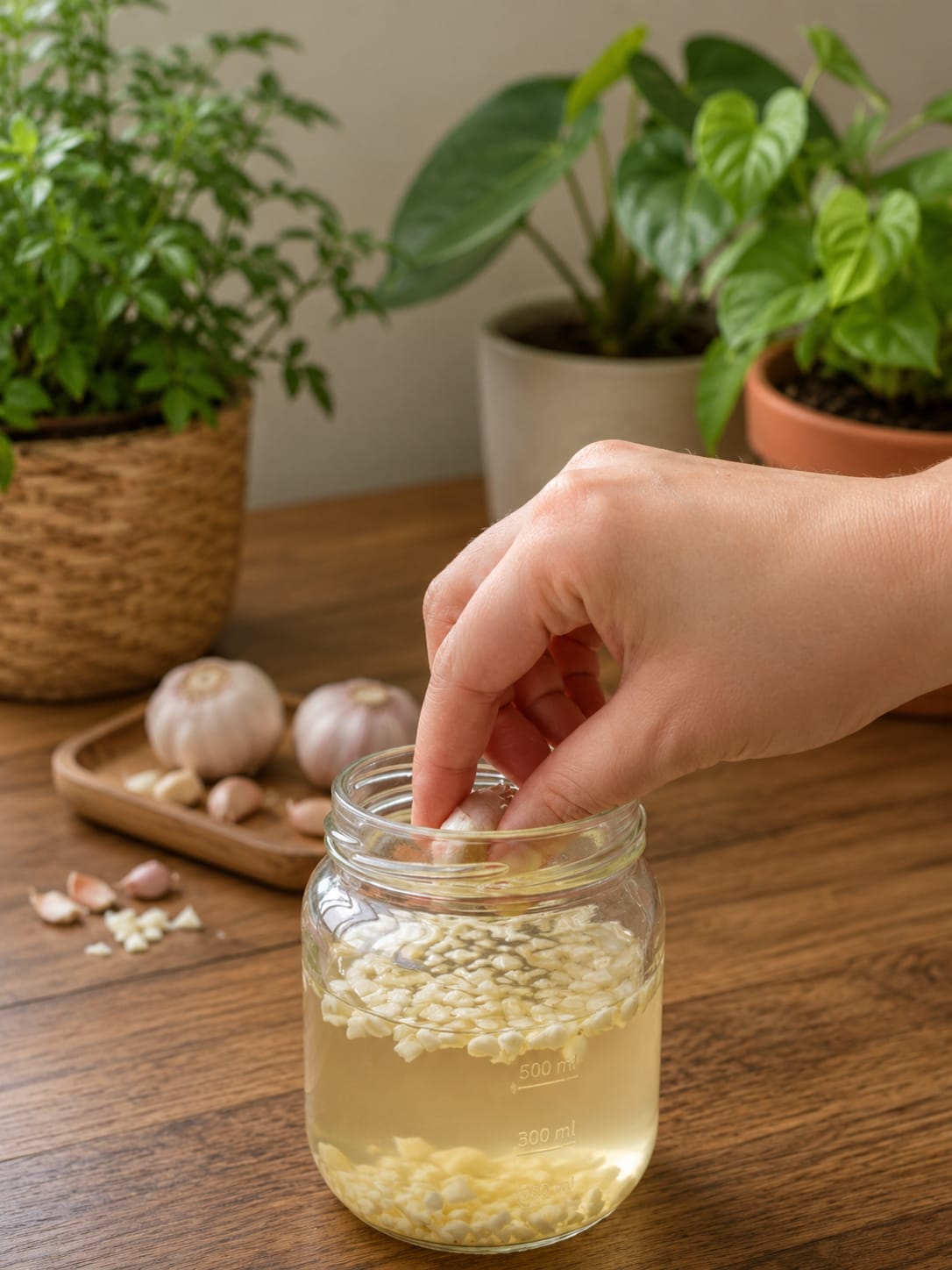
The garlic water trick is a homemade plant tonic made by mixing garlic with water, allowing the garlic compounds to infuse, then straining the liquid before use. The finished liquid is usually applied around the soil surface near the base of the plant, where the roots can benefit from a cleaner growing environment.
Garlic is often used in gardening because of its strong natural smell and its sulfur-containing compounds. Many gardeners believe garlic water can help discourage certain pests and support a healthier soil surface. For anthuriums, the main purpose is usually root-zone care rather than direct feeding.
This method may help with:
- Refreshing the soil surface
- Discouraging tiny pests around the pot
- Supporting a cleaner root environment
- Helping weak plants recover when the main care routine is corrected
- Reducing unpleasant soil odor caused by poor conditions
- Adding a simple natural step to indoor plant care
The most important word is diluted. Garlic is strong. Too much garlic can irritate roots, disturb the soil, or leave a strong smell indoors. A small amount is enough.
Why Anthurium Plants Sometimes Need Extra Support
Anthuriums are not difficult plants, but they are sensitive to bad soil conditions. They naturally grow in airy environments where their roots receive both moisture and oxygen. Indoors, many people place them in dense potting soil or pots without enough drainage. This creates the perfect situation for stress.
A struggling anthurium may show:
- Yellow leaves
- Brown leaf edges
- Drooping stems
- Weak or small new leaves
- Few or no flowers
- Soil that smells sour
- Leaves that lose their shine
- Slow growth even in warm weather
When these problems appear, the first step is not to add more fertilizer. The first step is to check the basics: drainage, light, watering, humidity, and potting mix. Garlic water can support the plant only after the growing conditions are reasonable.
How Garlic Water May Help the Root Zone
The root zone is the hidden heart of an anthurium. A plant may look beautiful above the soil, but if the roots are weak, crowded, or rotting, the leaves and blooms will eventually suffer. Garlic water is usually used around this lower area because that is where many common problems begin.
A mild garlic water rinse may help create a less attractive environment for some small pests and may freshen the soil surface when used occasionally. It can also encourage plant owners to focus on the base of the plant instead of only looking at the leaves.
For anthuriums, this matters because:
- The roots need oxygen
- The base should not stay constantly wet
- Small pests often appear around damp organic soil
- Old potting mix can become sour or compacted
- Weak roots lead to weak leaves and fewer blooms
Garlic water is best used as a light tonic, not as a replacement for repotting, pruning, or proper watering.
How to Make Garlic Water for Anthurium
A simple garlic water recipe should be mild. Strong homemade mixtures can damage delicate roots, especially if the plant is already stressed.
Ingredients
- 1 small garlic clove
- 1 cup of clean water
- A small jar or cup
- A strainer
Method
- Crush or finely chop one small garlic clove.
- Place it in one cup of clean water.
- Let it sit for 2 to 4 hours.
- Strain the liquid very well.
- Use only the clear garlic-infused water around the soil surface.
For a sensitive anthurium, dilute the strained garlic water again with more clean water before applying. A gentle version is safer than a strong version.
How to Apply Garlic Water to Anthurium
The safest way is to apply a small amount around the outer soil area, not directly into the crown or leaf center. Anthuriums dislike water sitting around the crown for too long, so avoid pouring the liquid into the tight base of the stems.
Use the garlic water like this:
- Make sure the soil is not soaking wet.
- Pour a small amount around the soil surface.
- Keep the liquid away from the center crown.
- Do not drench the pot.
- Allow the pot to drain fully.
- Wait and observe the plant for several days.
One small application is enough. Repeating it too often can create stress instead of support.
How Often Should You Use Garlic Water?
Garlic water should not become a weekly habit for anthurium care. It is better as an occasional support treatment. For most indoor anthuriums, once every 4 to 6 weeks is more than enough, and only when the plant seems to need root-zone support.
Avoid using garlic water too often because it may:
- Leave a strong smell in the pot
- Irritate delicate roots
- Disturb the soil balance
- Attract curiosity from pets
- Cause unnecessary stress to a healthy plant
If the anthurium is already growing well, producing shiny leaves, and blooming regularly, it may not need this trick at all.
When Garlic Water Makes Sense
This trick makes the most sense when the plant is mildly stressed but still alive and structurally healthy. It can be useful when the soil surface looks tired, the plant has slowed down, or the grower wants a gentle natural support step.
Garlic water may be reasonable when:
- The anthurium has slightly dull leaves
- The soil surface has minor pest activity
- The plant is not blooming as strongly
- The potting mix is still draining properly
- The roots are not rotten
- The plant is in warm, bright indirect light
It is not a good solution for advanced root rot, severe yellowing, black stems, or a plant that is collapsing. Those problems require inspection and repotting.
When Not to Use Garlic Water
Garlic water is natural, but natural does not always mean harmless. Anthuriums can be sensitive when their roots are already damaged.
Do not use garlic water if:
- The soil is already soaking wet
- The pot has no drainage holes
- The roots smell rotten
- The plant base is mushy
- The leaves are collapsing
- The plant was recently fertilized heavily
- You already used another strong treatment
If the plant is severely stressed, remove it from the pot and inspect the roots first. Healthy roots are usually firm and pale, while rotten roots are dark, soft, slimy, or foul-smelling.
The Best Soil for Anthurium
Garlic water works best only when the anthurium is planted in the correct mix. Anthuriums do not like heavy garden soil. They prefer a chunky, airy, well-draining medium.
A good anthurium mix may include:
- Orchid bark
- Coco chips
- Perlite
- Pumice
- A little high-quality potting mix
- Charcoal pieces
- Sphagnum moss in small amounts
The goal is to create a potting mix that holds light moisture but still allows air to reach the roots. If the soil is too dense, garlic water will not solve the problem.
Watering Anthurium the Right Way
Watering is one of the biggest reasons anthuriums struggle indoors. They like consistent moisture, but they do not like sitting in soggy soil. This balance is important.
A good watering routine is:
- Check the top layer of soil before watering
- Water when the upper part feels slightly dry
- Use room-temperature water
- Let extra water drain out fully
- Never leave the pot sitting in a full saucer
- Water less during cold or low-light periods
If the potting mix is chunky and airy, watering becomes easier. If the mix is heavy, the plant may stay wet too long and begin to decline.
Light Requirements for Better Anthurium Blooms
Anthuriums bloom best in bright indirect light. They need enough light to produce energy, but harsh direct sun can scorch their leaves. A plant kept in a dark corner may stay alive, but it will usually produce fewer flowers.
Good places include:
- Near an east-facing window
- Beside a bright balcony door
- A few feet from a south-facing window with filtered light
- A bright bathroom with humidity
- A well-lit office or living room
If the leaves are dark green but the plant never blooms, it may need brighter indirect light. If the leaves look pale or scorched, the light may be too strong.
Humidity and Anthurium Health
Anthuriums appreciate humidity. Dry indoor air can cause brown leaf edges, crispy tips, and slower growth. Garlic water will not fix dry air, so humidity should be handled separately.
To increase humidity:
- Group plants together
- Use a pebble tray under the pot
- Place the plant in a bright bathroom
- Use a small humidifier
- Keep it away from heaters and dry drafts
Humidity helps the leaves stay glossy and fresh, especially in warm rooms.
How Garlic Water Fits Into a Complete Care Routine
The best way to use garlic water is as one small part of a complete anthurium care system. It should not replace light, drainage, watering, or humidity.
| Care Step | Best Practice | Why It Matters |
|---|---|---|
| Garlic water | Use lightly and occasionally | Supports a cleaner root-zone environment |
| Light | Bright indirect light | Encourages stronger leaves and better blooms |
| Soil | Chunky, airy mix | Prevents suffocated roots |
| Watering | Moist but not soggy | Protects against root rot |
| Humidity | Moderate to high | Keeps foliage glossy and healthy |
| Fertilizer | Light feeding in growing season | Supports steady growth without root burn |
Can Garlic Water Help Anthurium Bloom?
Garlic water itself does not directly force an anthurium to bloom. Blooms come from a combination of strong roots, enough light, warm temperatures, balanced feeding, and overall plant maturity. However, if garlic water helps improve the root-zone environment, it may indirectly support better growth.
For more blooms, focus on:
- Bright indirect light
- Warm temperatures
- Healthy roots
- Light fertilizer during spring and summer
- Good humidity
- A pot that is not too large
A plant with healthy roots is more likely to produce strong leaves and colorful spathes.
Common Mistakes With Garlic Water
The garlic water trick can become harmful when used too strongly or too often. Many plant owners think that if a little helps, more will work faster. With anthuriums, that is usually the opposite of what the plant needs.
Avoid these mistakes:
- Using many garlic cloves in a small amount of water
- Leaving garlic pieces in the pot
- Pouring garlic water into soggy soil
- Using it every few days
- Spraying strong garlic water on delicate flowers
- Ignoring drainage problems
- Using it as a cure for advanced root rot
Always strain the mixture before use. Garlic pieces left in the soil may decompose and create odor.
How to Tell If Your Anthurium Likes the Treatment
After using diluted garlic water, observe the plant for one or two weeks. Anthuriums do not respond instantly, so patience is important.
Positive signs may include:
- Leaves staying firm
- No new yellowing
- Soil surface smelling cleaner
- New growth continuing normally
- Stems standing upright
Negative signs may include:
- Sudden yellowing
- Wilting after application
- Strong garlic smell lasting too long
- Mushy soil
- Brown patches appearing quickly
If negative signs appear, flush the soil lightly with clean water if drainage is good, then stop using the mixture.
Indoor Decor Ideas With Anthurium
Anthurium is not only a plant-care favorite. It is also one of the best decorative plants for creating a polished indoor look. The bold flowers and glossy leaves make it feel more like a living bouquet than a regular houseplant.
Beautiful decor placements include:
- On a wooden side table near a window
- On a balcony shelf with other tropical plants
- In a white ceramic pot for a clean modern look
- In a terracotta pot for a warm natural style
- On a bathroom counter with bright filtered light
- On an office desk for a fresh elegant touch
- In a bedroom corner with soft curtains and natural light
Red anthuriums look especially beautiful against neutral walls, beige curtains, wood furniture, and black metal plant stands. White anthuriums create a softer spa-like look, while pink varieties add a romantic tropical feeling.
How to Style Anthurium on a Balcony
A balcony can be an excellent place for an anthurium if the light is filtered and the wind is not too harsh. The plant should not sit under direct afternoon sun because the leaves and flowers can burn.
For balcony styling:
- Place it near a wall for protection
- Use a decorative pot cover
- Pair it with ferns, pothos, or peace lilies
- Keep it away from strong wind
- Add a small tray to protect the surface
- Use a raised plant stand for better visibility
The glossy leaves and colorful blooms can turn a simple balcony into a small tropical corner.
Continue to Page 2
Continue to page 2 for more details about this article and the key points many readers miss on the first page.