Jade plants are among the most loved houseplants because they are simple, sculptural, and long-lasting. Their thick green leaves, sturdy stems, and miniature tree-like shape make them perfect for windowsills, desks, shelves, balcony corners, and bright living rooms. A healthy jade plant can look elegant in a small ceramic pot, rustic in terracotta, modern in a blue planter, or even like a tiny bonsai when shaped over time.
One of the easiest ways to create more jade plants is by propagation. Instead of buying a new plant, a single healthy cutting can become a fresh baby jade plant with the right preparation. A popular trick is to dip the cut end into a brown rooting powder before placing it into soil. After that, the cutting is planted gently and misted lightly to help the surface settle around the stem.
This method is simple, but it works best when done carefully. Jade plants are succulents, which means they store water in their leaves and stems. They do not like soggy soil, heavy misting, or constant moisture. The rooting powder may support root development, but the real success comes from the full routine: a clean cutting, a dry callused end, a small amount of rooting powder, airy soil, gentle misting, and bright indirect light.
The brown powder in this trick is used as a rooting aid. It is not meant to be sprinkled heavily over the whole plant, poured into the pot, or applied to the leaves. The focus is the cut end of the stem or leaf, because that is where new roots need to form. When the cutting is prepared properly, new roots can begin growing from the buried base and slowly turn the cutting into a strong, independent plant.
What Is the Brown Rooting Powder Trick?
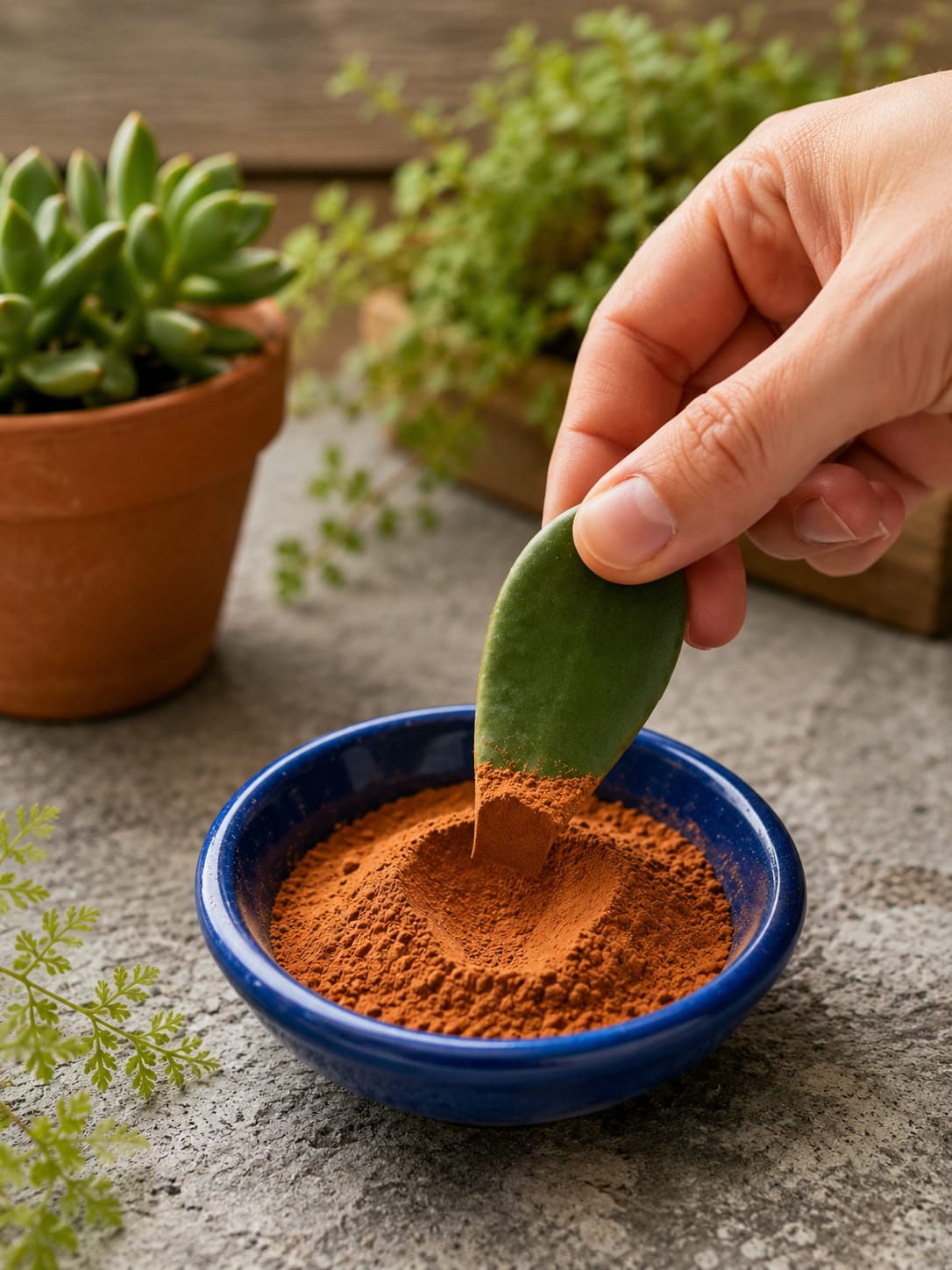
The brown rooting powder trick is a propagation method where the fresh cut end of a jade plant cutting is dipped into rooting powder before being inserted into soil. Rooting powder is commonly used by gardeners to encourage cuttings to form roots more successfully. Some powders are white, some are tan, and some look brown depending on the product or mixture.
The main idea is simple:
- Take a healthy jade plant cutting.
- Let the cut end dry and callus.
- Dip only the cut base into rooting powder.
- Plant it into a well-draining soil mix.
- Mist lightly instead of soaking the pot.
- Place it in bright indirect light.
This is a careful propagation trick, not a heavy fertilizer treatment. A small amount of powder at the base is enough. Too much can clump, hold moisture, or irritate the cutting.
Why Jade Plants Are So Easy to Propagate
Jade plants are naturally good candidates for propagation because they store energy and moisture in their thick leaves and stems. A healthy cutting can survive for a while without roots because it already has stored water inside. This gives it time to form new roots if the conditions are right.
Jade plants can usually be propagated from:
- Stem cuttings
- Individual leaves
- Small side shoots
- Broken healthy branches
Stem cuttings are usually faster and more reliable than single leaves because they already have a structure that can grow upward. Leaf propagation is possible, but it is slower and requires more patience.
Why the Cutting Should Be Healthy
The quality of the cutting is the foundation of the whole trick. A weak, mushy, yellow, or damaged piece will not root well, even with rooting powder. Choose a cutting that looks firm, green, and full of life.
A good jade cutting should have:
- Firm green leaves
- A sturdy stem
- No mushy areas
- No black rot spots
- No pest damage
- No strong wrinkles from dehydration
- A clean fresh cut
The cutting does not need to be large. A small, healthy section can root better than a big stressed branch. For beginners, a stem cutting around 3 to 5 inches is often easier to handle.
Why Callusing Is Important Before Rooting
One of the most important steps in jade plant propagation is letting the cut end dry before planting. This is called callusing. A callus forms when the wound at the base dries and seals slightly. This helps reduce the risk of rot when the cutting is placed into soil.
Many people skip this step and plant the cutting immediately. That can work sometimes, but it increases the risk of the fresh wound absorbing too much moisture and rotting before roots form.
For jade plants, allow the cutting to dry in a shaded, airy place for 1 to 3 days. Larger stems may need a little longer. The cut end should feel dry, not wet or sticky.
How Brown Rooting Powder Helps
Rooting powder is used to support the formation of new roots at the base of the cutting. It can help make propagation more reliable, especially when the grower wants stronger root development or is working with a valuable cutting.
It may help by:
- Encouraging root formation at the cut end
- Helping the cutting establish faster
- Supporting cleaner propagation
- Reducing the chance of failure when used correctly
- Giving beginners more confidence with cuttings
However, rooting powder does not replace correct soil and moisture control. A cutting can still rot if the soil is too wet. It can still fail if the pot is dark, cold, or poorly drained.
How to Use Rooting Powder Correctly
The correct way to use rooting powder is simple and controlled. Do not cover the whole plant. Do not add large spoonfuls to the pot. Do not mix too much into the soil. The powder belongs mainly on the cut base.
- Prepare a healthy jade cutting.
- Let the cut end callus until dry.
- Pour a small amount of brown rooting powder into a shallow dish.
- Dip only the bottom cut end into the powder.
- Tap off excess powder gently.
- Insert the cutting into dry or barely moist soil.
- Firm the soil lightly around the stem.
Use a separate dish for the powder instead of dipping the cutting directly into the original container. This keeps the product cleaner and prevents contamination.
Best Soil for Jade Plant Cuttings
Jade plant cuttings need soil that drains quickly. Heavy potting mix can hold too much water and rot the cutting before it roots. A succulent or cactus-style mix is usually the best choice.
A good jade propagation mix may include:
- Cactus or succulent soil
- Perlite
- Pumice
- Coarse sand
- Small bark pieces
The soil should feel loose and gritty, not dense and muddy. When water is added, it should pass through easily. The goal is to keep the base slightly supported but never trapped in wet soil.
Why a Small Pot Works Better
A small pot is usually better for jade cuttings than a large pot. Large pots hold more soil, and more soil holds more moisture. That extra moisture can increase the risk of rot.
A good propagation pot should have:
- Drainage holes
- A size that matches the cutting
- Enough depth to hold the stem upright
- A stable base
- Fast-draining soil
A blue ceramic or plastic pot can look beautiful, but drainage matters more than color. If using a decorative container without holes, place the cutting in a nursery pot first and use the outer pot only as a cover.
How Deep to Plant a Jade Cutting
A jade cutting does not need to be buried deeply. Usually, placing 1 to 2 inches of the stem into the soil is enough for stability. If the cutting is tall or heavy, use a small support stick until roots form.
Planting too deep can create problems because more of the stem stays underground where moisture collects. Keep the buried section short and stable.
After inserting the cutting, press the soil gently around the base. Do not pack it too tightly. The soil should hold the stem, but air should still move through the mix.
Why Mist Lightly Instead of Soaking
Jade cuttings do not need heavy watering immediately after planting. They do not have roots yet, so they cannot absorb water normally. Too much water around the base can cause the stem to rot before roots appear.
Light misting is often better at the beginning because it settles the soil without making the pot soggy. The surface can be slightly moistened, but the whole pot should not be drenched.
A safe misting routine is:
- Mist lightly after planting
- Allow the surface to dry again
- Mist only when the mix becomes completely dry
- Avoid wetting the leaves heavily
- Never keep the soil constantly damp
Once roots begin growing, the plant can gradually receive deeper watering, but only after the soil dries between waterings.
How Long Does a Jade Cutting Take to Root?
Jade plant cuttings are not instant. Rooting can take a few weeks or longer depending on temperature, light, soil, and cutting health. In warm conditions with bright indirect light, roots may begin forming in 2 to 6 weeks.
Signs that roots may be forming include:
- The cutting stays firm
- Leaves remain plump
- The stem does not wobble as much
- New tiny leaves begin appearing
- The plant resists slightly when gently touched
Do not pull the cutting out repeatedly to check for roots. That can break new root tips. Patience is important.
Where to Place the Cutting
Place the jade cutting in bright indirect light. Direct hot sun can stress the cutting before it has roots, while low light slows rooting and increases the risk of rot.
Good locations include:
- A bright windowsill with filtered light
- A table near an east-facing window
- A shelf in a sunny room
- A balcony corner protected from strong afternoon sun
- A warm indoor spot with good airflow
Avoid cold windows, dark corners, damp bathrooms, and outdoor spots exposed to heavy rain.
Temperature for Better Rooting
Jade cuttings root best in warm, stable temperatures. Cold conditions slow root growth and make moisture more dangerous. A warm room helps the cutting heal and produce roots more easily.
Try to keep the cutting away from:
- Cold drafts
- Air conditioning vents
- Heating vents that dry it too quickly
- Outdoor frost
- Rainy exposed balconies
Stable warmth and dry air are usually safer than cold damp conditions.
Common Mistakes With Jade Propagation
The brown rooting powder trick can work well, but mistakes can still ruin the cutting. Most failures happen because of too much moisture or planting too soon.
Avoid these mistakes:
- Planting the cutting before the end calluses
- Using heavy garden soil
- Watering deeply right after planting
- Keeping the soil wet every day
- Using too much rooting powder
- Burying too much of the stem
- Putting the cutting in harsh direct sun
- Using a pot without drainage
- Choosing a weak or rotting cutting
Jade propagation works best with patience and restraint. Less water is usually safer than too much.
Can You Propagate Jade From a Single Leaf?
Yes, jade plants can grow from a single leaf, but it takes longer than a stem cutting. The leaf must be healthy and removed cleanly from the plant. After callusing, the base of the leaf can be placed on or slightly into the soil.
For leaf propagation:
- Choose a firm, healthy leaf.
- Remove it cleanly with the full base intact.
- Let it dry for 1 to 3 days.
- Dip the base lightly in rooting powder if desired.
- Place it on dry succulent mix.
- Mist lightly and wait patiently.
Over time, tiny roots and a baby plant may form from the base. The original leaf may eventually shrivel as the new plant uses its stored energy.
When to Water After Roots Form
Once the cutting has roots, watering can become more normal, but still careful. Jade plants prefer the soak-and-dry method. This means you water thoroughly, let excess water drain, then wait until the soil dries before watering again.
For a newly rooted jade plant:
- Water lightly at first
- Increase water gradually as roots grow
- Let the pot dry between waterings
- Do not leave water in the saucer
- Reduce watering in winter
The leaves will tell you a lot. Plump leaves usually mean the plant has enough moisture. Wrinkled leaves can mean the plant is thirsty, but if the soil is wet, wrinkles may also mean root trouble.
How to Tell If the Cutting Is Rotting
Rot is the biggest danger during propagation. A rotting jade cutting often becomes soft at the base before the leaves show major changes.
Signs of rot include:
- Mushy stem base
- Black or brown soft patches
- Bad smell from the soil
- Cutting collapsing suddenly
- Leaves falling off easily
- Soil staying wet too long
If rot appears, remove the cutting immediately. Cut away the damaged part if there is still healthy stem above it, let it callus again, and restart in dry clean soil.
Should You Fertilize a New Jade Cutting?
No, a fresh jade cutting does not need fertilizer. It has no developed root system yet, so fertilizer can stress it. Wait until the cutting has rooted and started producing new growth.
After the plant is established, use a weak succulent fertilizer during the growing season. Do not fertilize during cold months or when the plant is stressed.
How to Make a Young Jade Plant Bushier
Once the cutting has rooted and begins growing, you can shape it slowly. Jade plants respond well to pruning, but young cuttings should not be pruned too soon. Let the roots establish first.
To make it bushier later:
- Give it bright light
- Rotate the pot regularly
- Pinch or prune the top after strong growth appears
- Allow side branches to develop
- Avoid overwatering, which creates weak growth
Good light is the key to compact jade growth. Low light makes stems stretch and leaves space out.
Continue to Page 2
Continue to page 2 for more details about this article and the key points many readers miss on the first page.