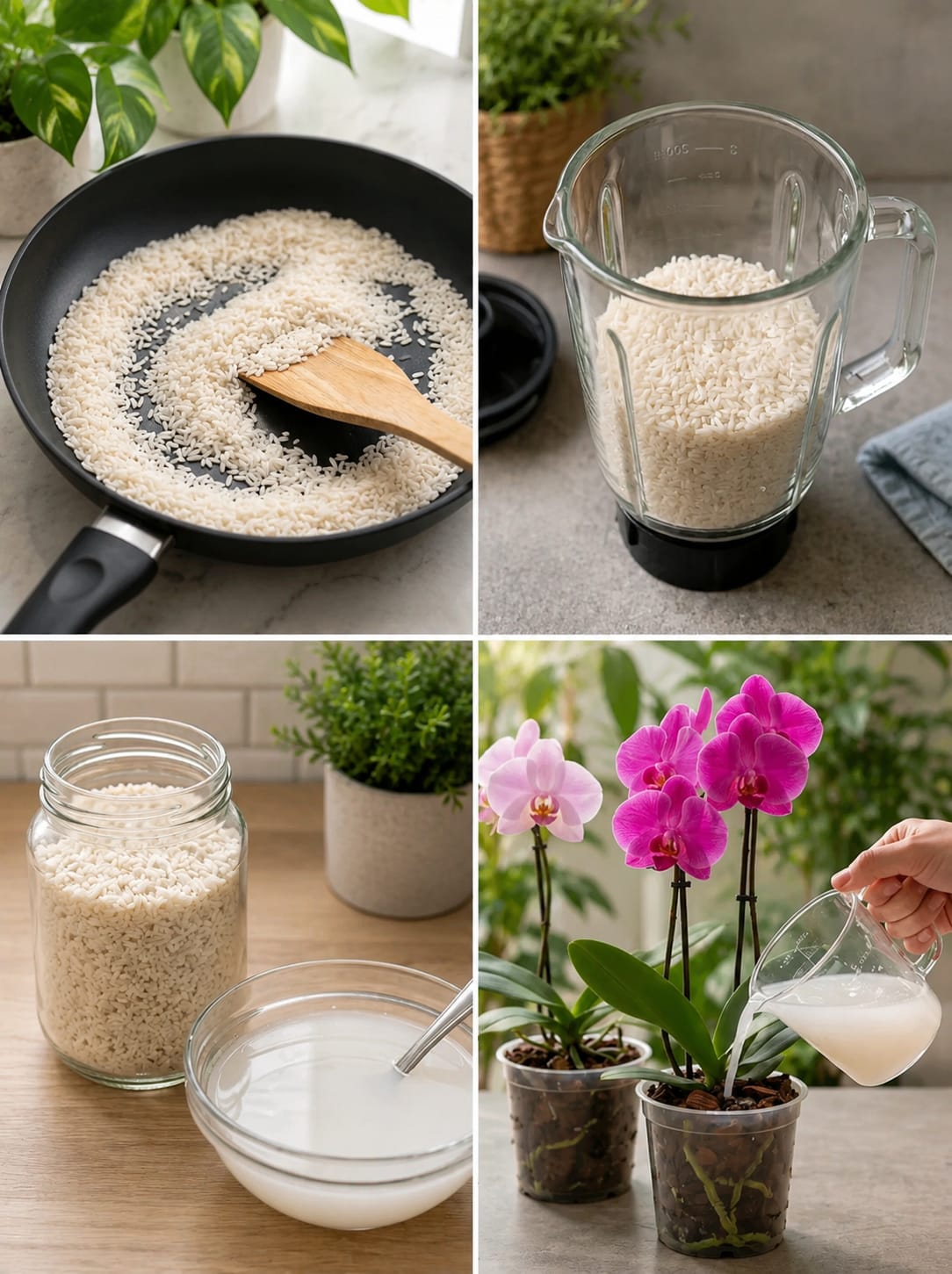
Orchids have a special way of making a home feel calm, expensive, and beautifully styled. Their long flower stems, glossy leaves, exposed roots, and graceful blooms can turn a simple windowsill into a soft indoor garden. Whether the flowers are pink, white, purple, yellow, or deep magenta, an orchid always feels like a living decoration rather than just another houseplant.
One simple plant-care trick that many orchid lovers use is rice water. The idea is easy: rice is rinsed, soaked, or lightly processed with water, and the cloudy liquid is used as a gentle watering boost for orchids. This milky liquid is not meant to replace proper orchid care, but it can be used occasionally as a mild homemade support for roots, leaves, and blooming strength.
Rice water is popular because it feels natural, affordable, and easy to prepare at home. Most people already have rice in the kitchen, and the leftover water can be used as a gentle plant-care addition instead of being thrown away. For orchids, the best approach is always light and careful. Orchids are sensitive plants, especially around their roots, so rice water should be diluted, used occasionally, and never poured repeatedly into a pot that is already wet.
This trick works best when the orchid is already growing in the right conditions: bright indirect light, good airflow, a breathable potting mix, and a careful watering routine. Rice water can support the plant, but it cannot fix root rot, poor drainage, darkness, or overwatering. The real beauty comes from combining the rice water trick with correct orchid care and thoughtful indoor styling.
What Is Rice Water for Orchids?
Rice water is the cloudy liquid created when rice is rinsed, soaked, or blended with water. It can contain small amounts of starch and trace nutrients released from the rice grains. Gardeners often use it as a gentle homemade plant tonic for foliage plants, flowering plants, and some houseplants.
For orchids, rice water is usually used as a mild root-zone drink. It is poured into the orchid potting medium in small amounts, allowing the roots to receive moisture and a light nutrient boost. It should not be thick, sticky, or sour. The best rice water for orchids is fresh, diluted, and used only occasionally.
The goal is simple:
- Support healthy root activity
- Encourage stronger leaf growth
- Help the orchid recover from mild stress
- Provide a gentle homemade plant-care boost
- Keep the plant looking fresh and decorative indoors
Why Orchids Need Gentle Feeding
Orchids are not heavy feeders like some fast-growing garden plants. Many common indoor orchids, especially Phalaenopsis orchids, naturally grow attached to trees in tropical environments. Their roots are used to air, moisture, and light feeding from rainwater, organic particles, and the environment around them.
This means orchids do not like strong, heavy, or salty fertilizers. Too much fertilizer can burn roots, damage leaf tips, and cause stress. A mild homemade tonic like diluted rice water is attractive because it feels softer than strong chemical feeding. But even gentle homemade treatments should be used carefully.
Orchids respond best to:
- Weak feeding
- Good airflow around roots
- Water that drains quickly
- Clean growing conditions
- Bright indirect light
- Stable temperatures
Rice water should be treated as a small support step, not as the main reason the orchid blooms.
How Rice Water May Help Orchid Roots
Orchid roots are the heart of the plant. Healthy roots are usually firm, plump, and green or silvery depending on moisture. When roots are hydrated, they often turn green. When dry, they may look pale silver. If roots become brown, black, mushy, or hollow, the plant is usually struggling.
Rice water may help orchid roots by providing a gentle organic boost. The diluted liquid can moisten the potting mix while adding small amounts of plant-friendly compounds from the rice. Used correctly, it may support new root activity and help the orchid maintain stronger growth.
Healthy orchid roots help the plant:
- Absorb moisture more efficiently
- Anchor itself inside the pot
- Support new leaves
- Prepare for flower spikes
- Recover after blooming
- Stay firm and balanced in the container
However, rice water should never be used on rotting roots as a quick cure. If the roots are already soft and decaying, the plant needs cleaning, trimming, and repotting rather than more liquid.
How Rice Water May Support Orchid Leaves
Orchid leaves should look firm, smooth, and slightly glossy. Leaves that are limp, wrinkled, yellowing, or leathery may signal watering problems, root damage, too much sun, or poor growing conditions.
Because rice water is used at the root zone, any leaf improvement comes indirectly. If the roots are healthy and able to absorb moisture properly, the leaves often look better too. A well-hydrated orchid with strong roots can produce leaves that look fuller, cleaner, and more decorative.
Rice water may support leaf appearance by helping the plant maintain steady growth. But it should not be poured over the leaves or allowed to sit inside the crown of the orchid. Water trapped in the crown can lead to rot, especially indoors where airflow is limited.
How Rice Water Connects to Orchid Blooming
Many people want rice water to make orchids bloom faster. The truth is more balanced. Rice water can support the plant’s general health, but blooming depends on several conditions working together. An orchid blooms when it has enough energy, healthy roots, proper light, and the right seasonal signals.
For Phalaenopsis orchids, blooming often depends on:
- Bright indirect light
- Healthy roots
- Mature leaves
- Stable care after flowering
- A slight temperature difference between day and night
- A balanced feeding routine
Rice water may help as part of a healthy routine, but it cannot force flowers on a weak orchid. A plant with rotten roots, poor light, or constant wet bark will not bloom well just because rice water is added.
How to Make Simple Rice Water for Orchids
The easiest rice water method is the soaking method. It is simple, clean, and safer than using thick cooked rice liquid.
Simple Soaked Rice Water Recipe
- Add 2 tablespoons of uncooked rice to a clean bowl.
- Pour in 1 cup of clean water.
- Stir gently for a few seconds.
- Let it sit for 20 to 30 minutes.
- Strain out the rice grains.
- Dilute the cloudy water with more clean water before using.
For orchids, dilution is important. A good rule is to mix 1 part rice water with 2 to 3 parts clean water. This makes the liquid gentler and reduces the chance of residue building up in the orchid potting mix.
Can You Use Cooked Rice Water?
Cooked rice water can be thicker and starchier than soaked rice water. It may also spoil faster. For delicate orchids, thick cooked rice water is not the best choice unless it is heavily diluted and completely unsalted.
Never use rice water that contains:
- Salt
- Oil
- Butter
- Spices
- Sugar
- Sauces
- Fermented bad smell
Only plain rice and clean water should be used. If the liquid smells sour, rotten, or unpleasant, throw it away. Orchids need clean care, not spoiled organic liquid.
How Often to Use Rice Water on Orchids
Rice water should not be used every time you water. Orchids prefer a clean wet-dry rhythm, and their potting medium should not become sticky or overloaded with residue.
A safe routine is:
- Use diluted rice water once every 3 to 4 weeks during active growth.
- Use plain water between rice water treatments.
- Avoid rice water when the orchid is already too wet.
- Stop using it if the potting mix smells bad.
- Do not use it on orchids with root rot.
Less is better. A light occasional boost is safer than frequent heavy use.
Best Time to Use Rice Water
The best time to use rice water is during the orchid’s active growth period. This is when the plant is producing new roots, new leaves, or preparing for future blooms. For many indoor orchids, this often happens after flowering or during warmer months.
Use rice water when:
- The orchid has healthy roots
- The potting mix is nearly dry
- The plant is actively growing
- The room is warm and bright
- There is good airflow
Avoid rice water when:
- The orchid is sitting in wet medium
- The roots smell rotten
- The leaves are yellowing from overwatering
- The room is cold and dark
- The pot has poor drainage
How to Apply Rice Water Correctly
Rice water should be poured into the potting medium, not onto the flowers. Orchid flowers are delicate, and wet petals can spot, fade, or age faster. The liquid should go near the base and through the bark or orchid mix.
- Check that the orchid mix is almost dry.
- Use diluted fresh rice water.
- Pour slowly around the root zone.
- Let the liquid drain completely.
- Never allow the pot to sit in standing water.
- Wipe spills from leaves or the crown if needed.
If the orchid is in a decorative outer pot, remove the inner pot first, water it over the sink, let it drain, then place it back into the decorative container.
Why Drainage Matters So Much
Orchids need oxygen around their roots. This is why many orchids are grown in bark, chunky orchid mix, or ventilated pots. If rice water is poured into a pot with poor drainage, the roots can suffocate.
Good drainage helps:
- Prevent root rot
- Keep the potting medium fresh
- Allow air to reach roots
- Reduce bad smells
- Protect the orchid from fungal problems
A decorative orchid arrangement can still be beautiful, but the inner growing pot should allow water to escape freely.
Best Orchid Potting Mix for Rice Water Use
Rice water is safest when the orchid is growing in a breathable medium. A dense soil mix can hold too much moisture and cause problems. Most common indoor orchids do not want regular garden soil.
A good orchid mix may include:
- Orchid bark
- Charcoal
- Perlite
- Coconut husk chips
- Sphagnum moss in small amounts
Bark-based mixes are popular because they allow airflow. If sphagnum moss is used, be extra careful with rice water because moss holds moisture longer.
Signs Your Orchid Likes the Routine
If rice water is being used correctly, the orchid should remain clean, firm, and healthy. Improvements are usually gradual, not overnight.
Positive signs include:
- Firm green leaves
- New root tips
- Roots turning green after watering
- No bad smell from the pot
- New leaf growth
- Flower spikes developing in season
- Potting medium drying normally
The best sign is steady growth. Orchids are slow and elegant plants, not fast-changing plants. Patience is part of their care.
Signs You Should Stop Using Rice Water
Rice water does not suit every situation. Stop using it if the orchid begins showing stress or if the potting medium becomes unpleasant.
Warning signs include:
- Sour smell from the pot
- Sticky residue on the medium
- Fungus growth on the surface
- Roots turning brown or mushy
- Leaves becoming limp while the medium is wet
- Tiny flies around the pot
- Slow drying after watering
If any of these happen, flush the pot with clean water, improve airflow, and return to a simpler care routine.
Rice Water and Root Rot: Important Warning
Rice water should not be used as a treatment for advanced root rot. Root rot happens when roots stay wet too long and begin to decay. Adding any liquid to already rotting roots can make the problem worse.
Signs of root rot include:
- Black roots
- Mushy roots
- Hollow roots
- Bad smell
- Yellow lower leaves
- Loose plant base
- Wet medium that does not dry
If root rot appears, remove the orchid from the pot, trim dead roots with clean scissors, repot into fresh orchid mix, and water carefully. Rice water can be considered only later, after the plant has recovered.
Can Rice Water Replace Orchid Fertilizer?
Rice water should not fully replace a balanced orchid fertilizer. It can be a gentle homemade supplement, but orchids still may benefit from a proper weak fertilizer during the growing season.
A good orchid feeding routine can include:
- Weak orchid fertilizer during active growth
- Plain water flushes between feedings
- Occasional diluted rice water
- No heavy feeding during stress
- No fertilizer on rotten roots
The safest idea is moderation. Orchids prefer weak and consistent care over strong and dramatic treatments.
Why Fresh Rice Water Is Better
Fresh rice water is safer because it is less likely to ferment or smell bad. Organic liquids can change quickly, especially in warm weather. Once rice water spoils, it can attract pests or create problems in the potting medium.
Use rice water the same day you make it. If you need to store it, keep it in the refrigerator for a short time, but fresh is always better for orchids.
Do not use rice water that looks slimy, smells sour, or has bubbles from fermentation unless you are experienced and know exactly what you are doing. For indoor orchids, simple and fresh is the safer choice.
Best Light for Orchids After Rice Water
Light is one of the biggest secrets behind orchid blooming. Rice water may support the roots, but the plant still needs enough light to produce energy.
Most common orchids prefer bright indirect light. Good locations include:
- Near an east-facing window
- A bright window with filtered sun
- A table near a sunny balcony door
- A room with strong natural light but no harsh midday sun
If the leaves are very dark green and the orchid never blooms, it may need more light. If leaves turn yellow or scorched, the light may be too strong.
How to Encourage More Orchid Blooms
Rice water can be part of a blooming routine, but blooms require full plant health. To encourage flowers, focus on the plant’s complete environment.
Blooming support tips:
- Give bright indirect light
- Keep roots healthy
- Use breathable orchid mix
- Water only when the medium is nearly dry
- Feed weakly during active growth
- Allow a slight nighttime temperature drop when appropriate
- Do not move the plant constantly
- Remove dead flower spikes only when needed
An orchid that has strong roots and mature leaves is much more likely to produce a beautiful flower spike.
How to Make Orchids Look More Luxurious Indoors
Orchids already look elegant, but the right styling can make them look even more expensive. A simple orchid can become a luxury decor piece with the right container, placement, and surrounding details.
Beautiful styling ideas include:
- Place a blooming orchid in a neutral ceramic pot.
- Use a clear inner pot so roots can be monitored.
- Add a decorative outer cachepot for a polished look.
- Style orchids near natural wood, stone, or linen textures.
- Group two or three orchids in matching pots for a boutique look.
- Place a pink orchid near a sunny window for a soft romantic effect.
- Use white orchids for minimalist, spa-like decor.
The key is simplicity. Orchids look best when the space around them is clean and uncluttered.
Continue to Page 2
Continue to page 2 for more details about this article and the key points many readers miss on the first page.