Snake plants are some of the most reliable indoor plants you can grow. Their tall sword‑shaped leaves, strong upright shape, and bold green patterns make them perfect for living rooms, bedrooms, offices, kitchens, and bright indoor corners. They look elegant without needing constant attention, and they can survive conditions that would make many other houseplants struggle.
But even a tough snake plant can slow down. It may stop producing new baby shoots. Its leaves may lose their fresh green color. The upright shape may become weak or uneven. Some leaves may lean, bend, wrinkle, or develop brown tips. The plant may still be alive, but it no longer looks full, strong, and polished.
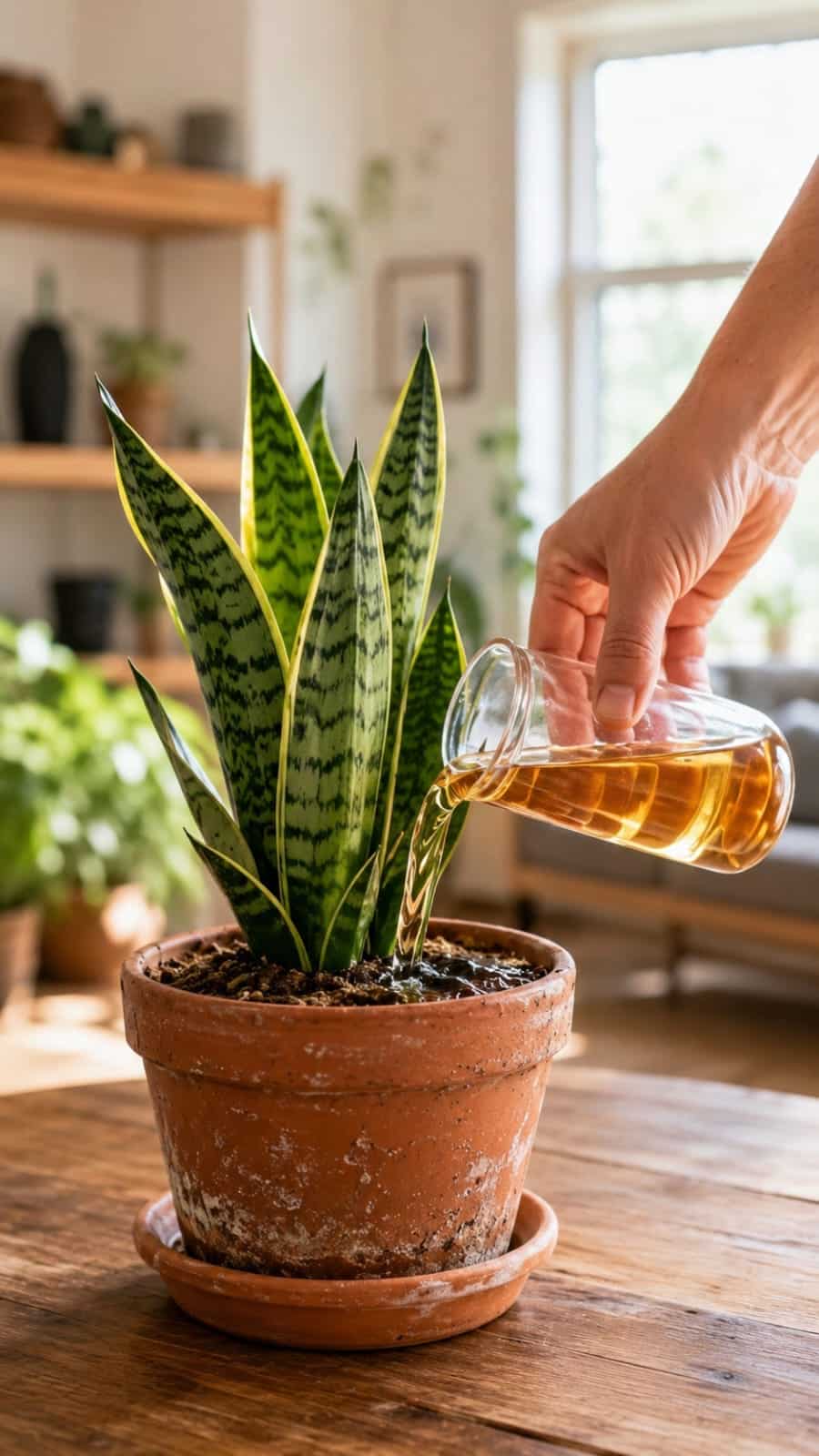
The image shows a snake plant being watered near the roots with a golden liquid. This “golden root tonic” idea is popular because it looks simple, natural, and powerful. Many homeowners are interested in gentle homemade plant tonics that support stronger roots and healthier growth without using harsh products. A golden liquid may represent a mild banana peel tea, diluted compost tea, weak chamomile tea, onion peel water, or another light natural infusion.
For snake plants, the safest version of a golden root tonic is a very mild banana peel water or weak compost‑style plant tea used only occasionally. It should be fresh, strained, diluted, and applied only to the soil when the plant is already due for watering.
However, it is important to be honest: no golden tonic can magically transform a snake plant overnight. It will not force instant baby shoots. It will not fix root rot. It will not make yellow leaves green again. Used correctly, a gentle golden root tonic may support a healthy snake plant. Used incorrectly, it can create sour soil, fungus gnats, mold, and root stress.
Why Snake Plant Roots Matter So Much
The beauty of a snake plant begins below the soil. Thick rhizomes store water and energy, which is why snake plants survive dry periods better than many houseplants. When rhizomes are healthy, the plant produces new pups (baby shoots) that make it look fuller. When roots or rhizomes are stressed, growth slows, leaves lean, and color fades.
That’s why any root tonic must be used carefully. A snake plant does not want rich, wet soil. It wants air around its roots, good drainage, and a watering rhythm that allows the soil to dry between waterings.
What Is a Golden Root Tonic?
A golden root tonic is a mild natural liquid used to water the soil around a plant’s root zone. For snake plants, the best golden tonic should be light, clean, and gentle – never thick, sticky, fermented, or full of food particles. It should look like weak tea, not syrup. The purpose is not to feed heavily but to provide a mild root‑zone refresh during active growth.
Can a Golden Root Tonic Make Snake Plants Grow Fuller?
A golden tonic may support fuller growth indirectly, but fullness comes from healthy rhizomes, good light, proper watering, and time. Baby shoots form when underground rhizomes have stored energy – mostly from light. A tonic cannot replace light or fix overwatering. To get fuller growth: bright indirect light, fast‑draining soil, water only when dry, then use a tonic occasionally as a support step.
Can It Make Leaves Fresh and Green?
Fresh green leaves come from healthy roots, adequate light, and balanced care. A tonic may help maintain vigor in a healthy plant, but it will not repair old yellow or damaged leaves. The best way to keep leaves fresh: bright indirect light, avoid overwatering, and wipe dust off leaves with a damp cloth every few weeks.
Can It Help the Plant Stay Upright?
Upright shape depends on firm leaves, stable roots, and balanced light. If leaves lean toward one side, rotate the pot. If leaves are soft and bending from the base, suspect overwatering or root rot. A golden tonic cannot straighten weak leaves, but supporting healthy roots may help future growth stay upright.
The Safest Golden Tonic Recipe for Snake Plants
Use mild banana peel water (safest homemade option):
- Take a small piece of clean banana peel (about 2 inches).
- Soak in 2 cups of water for 2–4 hours.
- Remove the peel completely and strain well.
- Dilute with 2 more cups of plain water.
- Final mixture should be pale yellow, thin, not sticky, and not fermented.
- Use fresh the same day – do not store.
Another safe option: very weak compost tea from finished compost, strained and diluted until it looks like weak tea. For indoor snake plants, banana peel water is simpler and cleaner.
How to Apply Golden Root Tonic Correctly
Apply only when the soil is dry (snake plant is due for watering). Pour a small amount around the soil near the roots – avoid the center of the leaf cluster. Let the liquid drain completely through the pot, then empty the saucer. Never leave the plant sitting in tonic runoff. After using the tonic, return to plain water for future waterings.
How Often Should You Use It?
Use it rarely: once every 6–8 weeks during active growth (spring and summer). Do not use weekly or every watering. During winter or low‑light months, skip homemade tonics. If you see fungus gnats, mold, sour smells, or yellowing, stop immediately.
⚠️ Important: Never use thick, sticky, fermented, or sugary liquids (honey, molasses, old fruit water) on snake plants. They attract pests and rot.
When Golden Tonic May Help
A golden tonic may help when the snake plant is already healthy but growing slowly during the active season. It may support the soil slightly and provide a gentle refresh after the plant has been in the same pot for a while. The best candidate: firm leaves, dry soil, good drainage, bright indirect light.
When You Should Avoid It
- Soil is still wet
- Leaves are yellow and soft (possible root rot)
- Pot smells sour
- Fungus gnats are present (organic liquids make them worse)
- Pot has no drainage holes
- Plant just had rotten roots trimmed – let it recover in fresh dry soil first
Continue to Page 2
Continue to page 2 for more details about this article and the key points many readers miss on the first page.