Roses have a special place in almost every garden lover’s heart. They are romantic, colorful, fragrant, and timeless. A single rose bush can transform a balcony, patio, windowsill, or garden corner into something alive and elegant. When roses bloom well, they feel generous. They give flowers again and again, sometimes for months, filling the space with beauty and softness.
But roses can also feel expensive and intimidating. Many people buy one beautiful rose plant and wish they could turn it into many more. They imagine a whole row of roses, a balcony filled with pink blooms, or a garden corner made from cuttings of one favorite plant. This is why rose propagation is so popular. The idea that one rose stem can become a new plant feels almost magical.
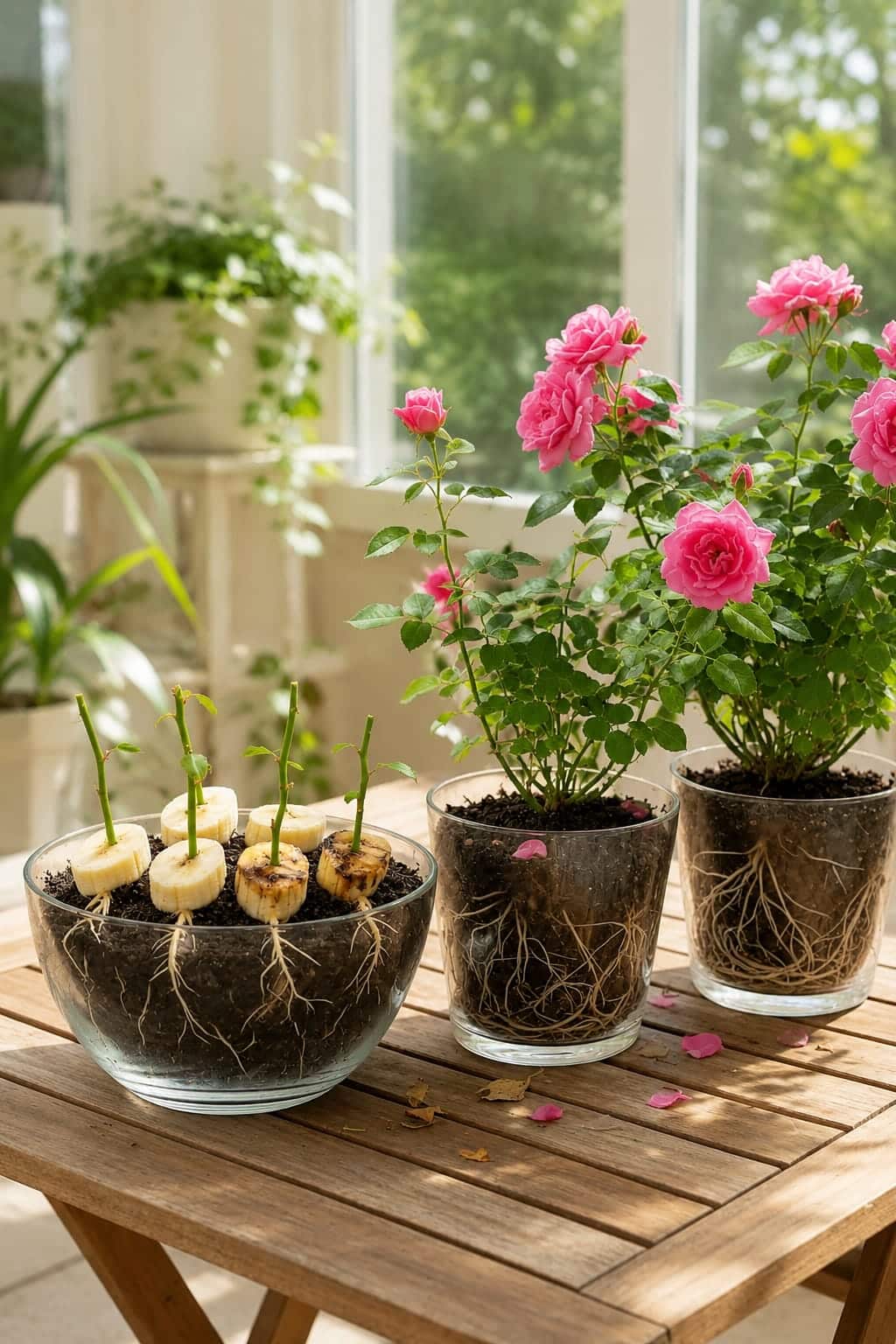
The image shows rose cuttings inserted into banana pieces, with roots forming below and flowering rose plants beside them. This suggests a natural propagation trick: using banana to help multiply roses. Banana is often used in plant‑care content because it contains moisture, sugars, and small amounts of minerals. Many gardeners believe banana can support rooting by keeping cuttings moist and giving them a gentle natural boost.
However, this method must be explained carefully. A banana does not guarantee unlimited roses. It cannot force every cutting to root. It cannot replace clean tools, healthy stems, proper soil, humidity, warmth, and patience. If banana is used incorrectly, it can rot, smell bad, attract fungus gnats, fruit flies, ants, mold, or bacteria. Rose cuttings are delicate, and too much rotting organic material around the stem can cause failure instead of success.
The safest way to use banana for rose propagation is to treat it as a temporary moisture‑support trick, not as a permanent planting medium. The cutting still needs a clean, airy propagation mix and good conditions. This guide explains how banana may help rose cuttings, how to use it safely, and what really makes roses root successfully.
Can You Really Multiply Roses with a Banana?
You can propagate roses from cuttings, and banana can be used as part of a homemade rooting method. But the banana does not create the rose. It simply provides moisture and a small organic support around the base of the cutting.
Rose cuttings root when cells near the lower part of the stem begin producing new roots. This depends on the health of the cutting, the season, moisture, temperature, and hygiene. Some roses root easily, others are difficult. Banana may help by keeping the lower end moist for a short time. However, banana decomposes quickly. In a warm environment, it can rot faster than a cutting can root. That’s why the method must be controlled.
Why Banana Is Used in Rose Propagation
Banana is soft, moist, and rich in organic material. When a cutting is inserted into a piece of banana, the banana helps keep the stem base from drying out. Moisture is critical because a cutting has no roots at first – it cannot replace water easily.
Banana also contains small amounts of potassium, but a cutting without roots cannot absorb nutrients well. The main benefit is moisture retention. The trick is visually appealing, but it must be done with clean conditions and small banana pieces. If the banana becomes slimy, black, or moldy, it will damage the cutting.
The Truth About “Infinite” Roses
The phrase “multiply roses infinitely” is exciting but needs realistic expectations. You can create many new rose plants from cuttings over time, especially if you have a healthy mother plant. But no method gives infinite plants instantly. Each cutting needs time, space, and care. Even experienced gardeners don’t get 100% success.
The best approach: take several cuttings at once. If you want three new plants, start with six to ten cuttings. That way, even if some fail, you still succeed. Over the years, one healthy plant can become many through repeated careful cuttings. Patience is key – roses are multiplied through healthy stems, clean technique, and steady care.
Choose the Right Rose Stem First
The most important part of rose propagation is selecting the right stem. Weak, diseased, or very old stems rarely root. The best cutting is semi‑hardwood: not too young and green, not too old and woody. Look for a stem that recently bloomed, is firm, free from black spots or mildew, and about pencil‑thick.
A cutting should have 3–5 nodes (the points where leaves grow). Roots often form near nodes. Remove any flowers or buds so the cutting directs energy into roots. The healthier the cutting, the better the chance of success with or without banana.
Best Time to Take Rose Cuttings
Spring, early summer, or early fall are ideal in most climates. These seasons provide mild temperatures and active plant growth. Avoid extreme heat, drought, or freezing weather. A cool morning is the best time – the plant is hydrated and less stressed.
Tools You Need
- Sharp, clean pruning shears or knife (wipe with rubbing alcohol)
- A ripe but firm banana (not mushy or black)
- Small pot with drainage holes
- Light propagation mix (perlite + coco coir or peat)
- Clear plastic bag or humidity dome (optional)
Prepare the Rose Cutting
Cut a healthy stem 6–8 inches long. Make the lower cut just below a node at a slight angle. Remove the flower, bud, and soft tip. Remove lower leaves so they don’t touch soil or banana. Keep 1–2 small leaves at the top. If leaves are large, cut them in half to reduce moisture loss.
Some gardeners gently scrape a thin layer of bark from one side of the lower stem to expose green tissue – this may encourage rooting. Do it gently. Plant the cutting soon after preparation.
How to Use Banana with Rose Cuttings
Use a small piece of banana – about one inch thick. Push the lower end of the cutting gently into the banana slice, then place the banana and cutting into a pot with propagation mix. Cover the banana lightly with soil, leaving the cutting upright. Water lightly to settle the mix. Do not soak – banana already contains moisture.
⚠️ Important: A large banana chunk in dense, wet soil will rot quickly. Keep the banana small and the mix airy.
A Safer Banana Method
If you’re worried about rot, try these safer alternatives:
* Rub the base of the cutting lightly with fresh banana pulp, then plant directly into clean propagation mix.
* Soak banana peel in water for a few hours, strain, dilute, and use once to moisten the mix.
* Skip banana entirely and use a clean propagation mix with rooting hormone (more reliable).
Best Soil Mix for Rose Cuttings
Rose cuttings need a mix that holds light moisture but drains well. Heavy garden soil compacts and encourages rot. A good mix: half perlite + half coco coir or peat. You can also use half perlite and half light potting mix. Always use a container with drainage holes.
Humidity: The Secret to Keeping Cuttings Alive
A cutting has no roots, so it loses water through leaves. High humidity prevents wilting. Cover the pot with a clear plastic bag or dome (ensure it doesn’t touch leaves). Open daily for fresh air to prevent mold. The goal is humid air, not wet soil.
Light for Rose Cuttings
Bright indirect light is best. Avoid harsh direct sun – it can overheat and dry out the cutting. A bright windowsill with filtered light works. Outdoors, choose a spot with morning sun and afternoon shade. Too little light causes rot; too much direct sun causes wilting.
Watering Rose Cuttings
Keep the propagation mix lightly moist like a wrung‑out sponge. Check regularly – if the surface dries, mist or water lightly. Because banana holds moisture, you may need less water than usual. Overwatering is the #1 reason banana propagation fails.
Continue to Page 2
Continue to page 2 for more details about this article and the key points many readers miss on the first page.