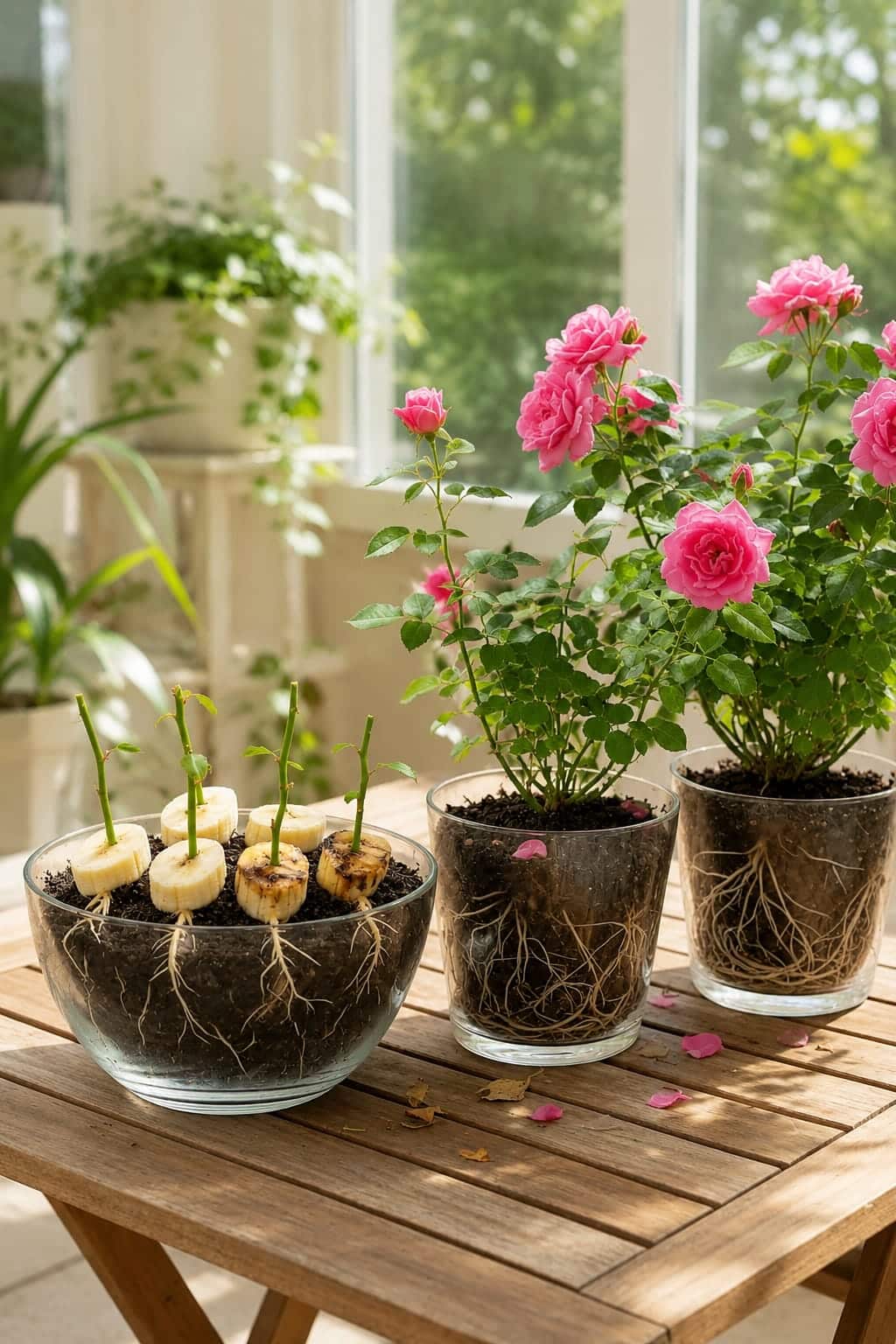
How Long Rose Cuttings Take to Root
Typically 3–8 weeks, sometimes longer. Do not pull the cutting to check for roots – you’ll break new roots. Signs of rooting: the cutting stays firm and green, new leaves appear, gentle tug meets resistance. If using a clear container, you may see roots through the side.
Signs the Banana Method Is Failing
- Sour or fermented smell
- Mold on soil surface
- Fruit flies or fungus gnats
- Black, mushy base of the cutting
- Sudden wilting
If you see these, remove the banana and any rotted cutting. Improve airflow and reduce moisture. Failure is normal – learn and try again.
Should You Use Rooting Hormone?
Rooting hormone is optional but gives more predictable results than banana. It contains compounds that encourage root formation. For the highest success rate, use rooting hormone in a clean propagation mix. Banana can be a fun experiment, but for valuable or rare roses, stick with reliable methods.
Transplanting Rooted Rose Cuttings
Once the cutting has a small root system (visible or resistant to gentle tug), move it to its own pot. Use a small pot with drainage holes – a too‑large pot holds excess moisture. Use a light rose potting mix. Water gently and keep in bright indirect light for a few days. Gradually introduce stronger light as the plant establishes.
How to Care for Young Rose Plants
Young roses need steady moisture, good light, and protection. Keep soil lightly moist but not soggy. Feed lightly after roots are well‑established (use diluted balanced fertilizer). Remove weak leaves and watch for pests like aphids or spider mites. Do not expect heavy blooms right away – let the plant build roots and branches first.
Can Banana Feed Mature Rose Plants?
For mature roses, compost banana peels instead of burying fresh fruit. Fresh banana in pots attracts pests and can sour the soil. Banana peel water (strained and diluted) can be used occasionally, but banana is not a complete fertilizer. Roses need balanced nutrition – banana is a supplement, not a replacement.
Common Mistakes with Banana Rose Propagation
- Using too much banana (large chunk rots before roots form)
- Using overripe or black banana
- Planting in dense, wet soil
- Overwatering
- Placing cuttings in direct hot sun
- Leaving too many leaves on the cutting
- Expecting every cutting to root
Why Rose Cuttings Turn Black
Blackening from the bottom means rot – usually from too much moisture, dirty tools, soft stem, or decomposing banana. Once black and mushy, the cutting is lost. Remove it immediately. For next attempt: use firmer stem, cleaner tools, less banana, and more airy mix.
How to Prevent Mold
Use only a small banana piece, avoid overwatering, and provide daily airflow. Open humidity covers. Remove fallen leaves. A clean setup prevents most mold problems. If surface mold appears, increase airflow and reduce moisture.
Propagating Roses Without Banana
Many gardeners prefer the traditional method: take a healthy cutting, dip in rooting hormone (optional), plant in moist perlite or coco coir, cover for humidity, place in bright indirect light. This is cleaner and often more reliable. Banana is a fun natural trick, but not required for success.
How to Increase Your Success Rate
- Take multiple cuttings (6–10 at once)
- Use healthy, semi‑hardwood stems
- Keep tools clean
- Use airy propagation mix
- Maintain high humidity but only light soil moisture
- Avoid direct sun until rooted
- Be patient – do not disturb cuttings
Frequently Asked Questions
Can you really grow roses from cuttings with a banana?
Yes, you can try, but success is not guaranteed. The banana may help with moisture, but the cutting still needs clean tools, good soil, humidity, and proper light.
Does banana make rose cuttings root faster?
Not necessarily. Rooting speed depends mostly on the rose variety, stem condition, and environment. Banana can rot if used incorrectly, slowing things down.
Should I bury the banana with the cutting?
Only a small piece, lightly buried in an airy mix. Monitor for mold or smell. A safer option is rubbing the cutting base with banana pulp and planting without the fruit piece.
Can I use banana peel instead of the fruit?
Yes – soak peel in water, strain, dilute, and use once. Do not leave peel pieces in the pot, as they attract pests and mold.
Why did my rose cutting turn black?
Usually rot from too much moisture, poor airflow, or rotting banana around the base.
How many cuttings should I take?
Take several – not all will root. If you want 3 new plants, start with 6–10 cuttings.
Final Thoughts
Multiplying roses with a banana is a creative, natural gardening trick that can work when done carefully. A small piece of banana may help keep the base of a rose cutting moist while roots begin to form. But banana is not magic. It does not guarantee infinite roses, and it cannot replace the real rules of propagation: healthy stems, clean tools, airy soil, proper humidity, bright indirect light, and patience.
For best results, use only a small banana piece, avoid overwatering, and monitor closely. Remove any rotting material immediately. For a more reliable method, root rose cuttings in a clean propagation mix with or without rooting hormone – skipping the fruit entirely.
With practice, one rose plant can become many. Not overnight, but through careful cuttings, strong roots, and steady care. Over time, you can fill your balcony, garden, or patio with roses grown by your own hands.
© High‑RPM Rose Propagation Guide – All rights reserved.