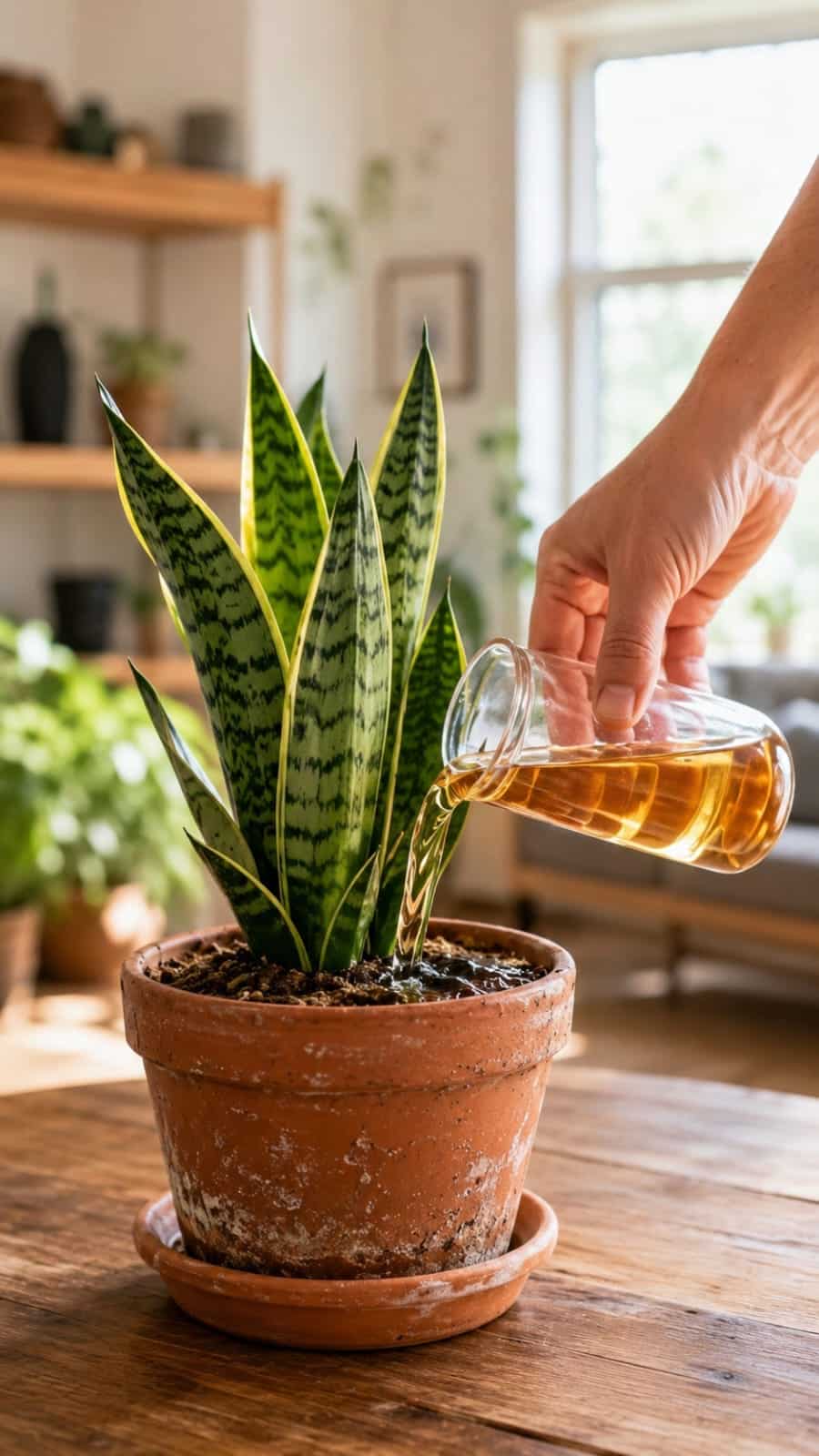
The Real Secret to Fuller Snake Plants: Light & Soil
The real secret is bright indirect light. Snake plants tolerate low light, but they grow much fuller and faster with more brightness. Place near an east or west window. A tonic cannot make up for poor light.
Use fast‑draining soil: cactus/succulent mix with added perlite or pumice. Soil should feel loose and airy, not muddy. A pot must have drainage holes and should not be too large – a snug pot encourages pups.
How to Water Snake Plants Properly
Water only when the soil is completely dry (check deeper than the surface). Water thoroughly until excess drains, then empty saucer. Do not water on a calendar. Avoid small daily sips. Golden tonic counts as a watering – do not apply tonic and then water again immediately.
Signs of Overwatering vs. Underwatering
Overwatering: yellow leaves, soft leaf bases, mushy areas, sour soil smell, black/rotten roots. Stop watering, repot into fresh dry mix, remove rot.
Underwatering: wrinkled leaves, curling, thin leaves, dry soil pulling away from pot edges. Water thoroughly with plain water first – do not use tonic as a rescue drink on a dehydrated plant.
How to Encourage More Baby Shoots (Pups)
Give bright indirect light, warm temperatures, fast‑draining soil, and proper watering. Keep the plant slightly snug in its pot. During active growth, feed lightly with a diluted cactus fertilizer once or twice per season. A golden tonic can be used occasionally, but patience is key – snake plants often grow slowly, then suddenly produce several shoots.
Can Golden Tonic Cause Fungus Gnats or Mold?
Yes, if used too often or too strong. Fungus gnats are attracted to moist organic soil. To avoid: use tonic rarely, strain well, never leave food pieces in the pot, let soil dry between waterings. If mold appears, remove top layer of soil, stop tonic, improve airflow. A healthy pot should smell earthy, not sweet or sour.
Can It Fix Yellow Leaves or Brown Tips?
No. Yellow leaves will not turn green again – check for overwatering or root rot. Brown tips won’t heal – trim them cleanly. Prevent new brown tips by watering consistently, avoiding overfertilizing, and protecting from cold drafts.
Common Mistakes to Avoid
- Using golden tonic too often (snake plants are light feeders)
- Applying tonic to wet soil
- Using thick, sticky, or fermented liquids
- Leaving banana peels or fruit pieces in the pot
- Using a pot without drainage holes
- Keeping the plant in low light and expecting full growth
- Treating yellow leaves with tonic instead of checking roots
A Simple Indoor Care Routine for Snake Plants
Place in bright indirect light. Use a pot with drainage holes and fast‑draining cactus mix. Water only when soil is dry. Wipe leaves with a damp cloth to remove dust. Rotate pot every few weeks. During spring/summer, feed lightly once or twice with diluted cactus fertilizer, OR use a mild golden tonic once every 6–8 weeks as an occasional natural support. Keep the routine simple and consistent.
Frequently Asked Questions
What is golden root tonic for snake plants?
Mild natural liquid like diluted banana peel water or weak compost tea. It is used occasionally on dry soil to support the root zone, not a miracle fertilizer.
How often can I use it?
Once every 6–8 weeks during active growth. No more.
Can I use honey water?
Honey water is riskier – it can become sticky and attract pests. Banana peel water is safer.
Can it replace fertilizer?
No. It is not complete fertilizer. Use a diluted cactus fertilizer if feeding is needed.
Can it fix a leaning snake plant?
Leaning is usually from low light or uneven light – rotate the pot. If leaves are soft and bending from the base, check for overwatering.
Why are my snake plant leaves yellow?
Most common cause: overwatering and root rot. Stop watering, check roots, repot into dry, fast‑draining mix.
Final Thoughts
A golden root tonic can be a gentle indoor care step for snake plants, but it should be used wisely. The safest version is fresh, strained, diluted banana peel water applied only to dry soil when the plant is due for watering. This tonic may support a healthy snake plant’s root zone, but it cannot replace the real foundations of growth: bright indirect light, fast‑draining soil, correct watering, warm temperatures, and patience.
Never use thick, sticky, fermented, or strong homemade liquids. Never apply tonic to wet soil. Never leave food scraps in the pot. Stop immediately if you notice mold, gnats, sour smells, or yellowing.
Keep the routine simple and gentle. With the right care, your snake plant can stay firm, upright, beautifully patterned, and ready to produce fresh new growth over time.
© High‑RPM Snake Plant Care Guide – All rights reserved.