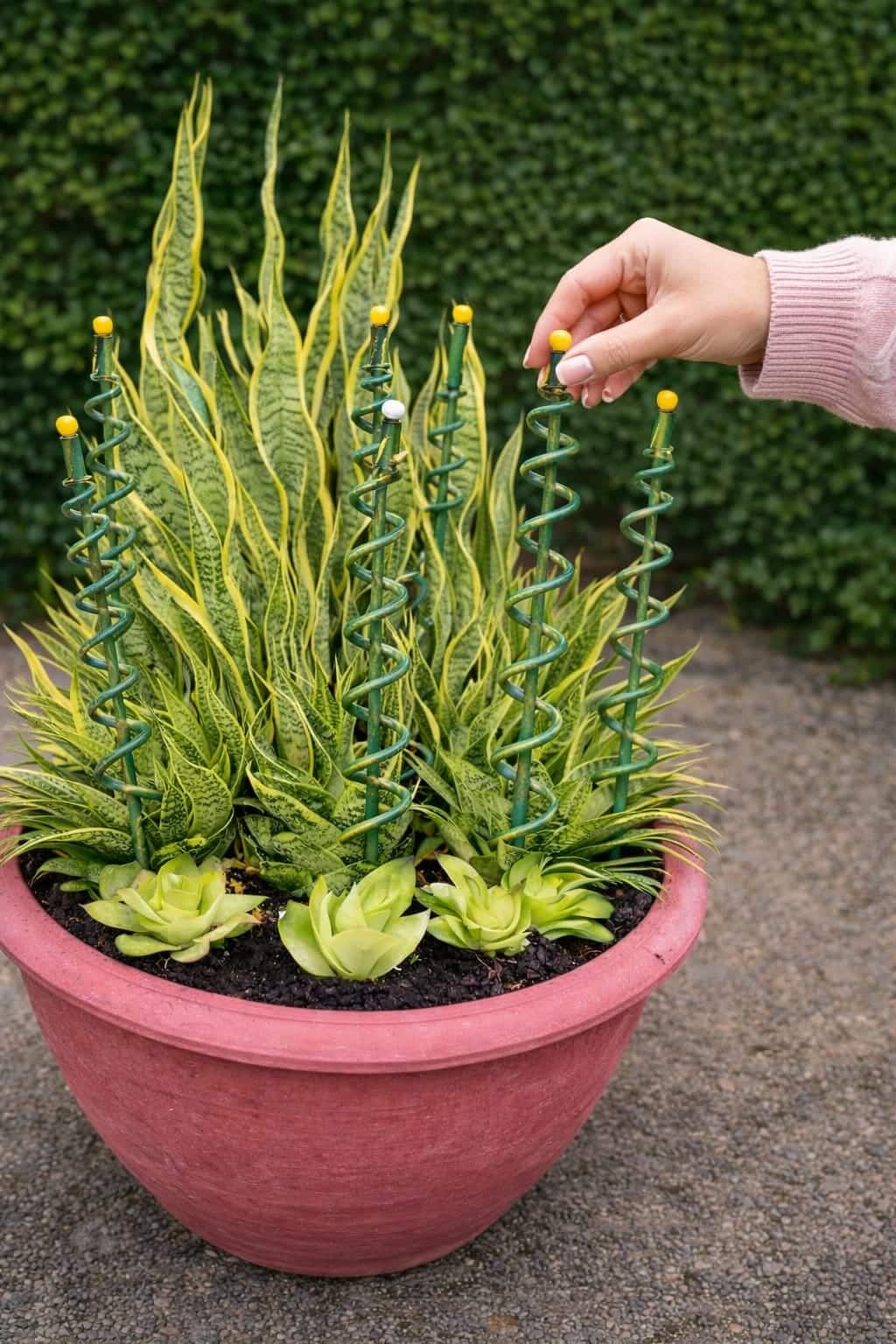
About the “Wavy” Decorative Look
If you are talking about a snake plant with trained or shaped leaves, that look usually comes from styling and support, not from the plant naturally growing that way on its own.
In decorative arrangements, gardeners sometimes use:
· Spiral stakes.
· Supports.
· Careful positioning of young leaves.
This can guide the plant visually and create a more artistic effect.
But here is the important part:
👉 Never force or bend stiff mature leaves aggressively.
Snake plant leaves can crease or break if handled too harshly.
If You Want a Styled Look:
· Start with younger, flexible growth.
· Use soft support.
· Adjust slowly over time.
· Keep the plant healthy first.
A weak plant should never be trained.
Common Mistakes to Avoid
If you want your snake plant to look amazing, avoid these:
Mistake Why It’s Harmful
Overwatering Roots rot, leaves soften.
Heavy compact soil No airflow, roots suffocate.
Very low light Weak, floppy growth.
Pots without drainage Water pools, root rot.
Forcing decorative shapes too quickly Leaves crease or snap.
Overfeeding Salt buildup, brown tips.
Most snake plant problems start below the soil, not above it.
Snake Plant Care Summary Table
Factor Ideal Condition Why It Matters
Light Bright, indirect (east/west window) Strong, upright growth
Soil Fast‑draining cactus mix + perlite Prevents root rot
Water Let soil dry completely between waterings Mimics natural dry cycles
Pot Drainage holes, slightly snug Prevents waterlogging
Feeding Light, diluted fertilizer in spring/summer Gentle support, not overload
Styling Young, flexible leaves only; soft supports Avoids damage
Printable Snake Plant Care Checklist
☐ Place in bright, indirect light (east/west window).
☐ Use a pot with drainage holes (terracotta preferred).
☐ Fill with fast‑draining cactus/succulent soil (add perlite).
☐ Water only when soil is completely dry (check with finger).
☐ Water deeply, then empty saucer.
☐ Do not water again for 2–4 weeks (depending on light).
☐ Feed lightly with diluted balanced fertilizer once a month in spring/summer.
☐ Rotate pot occasionally for even growth.
☐ Remove dead or yellow leaves at base.
☐ For decorative styling, work with young, flexible leaves and soft supports.
☐ Never force mature leaves – they can snap.
☐ Repot every 2–3 years when root‑bound.
Frequently Asked Questions (FAQs)
Q: Can snake plants naturally grow wavy leaves?
A: Some varieties have naturally wavy edges, but a dramatic “trained” look usually comes from gentle support and styling. Never force stiff mature leaves.
Q: How do I make my snake plant grow taller?
A: Provide bright indirect light, let the soil dry completely between waterings, and keep it in a slightly snug pot. Avoid over‑feeding.
Q: Why are my snake plant leaves falling over?
A: Most common causes: overwatering (soft, weak leaves) or insufficient light (leggy, floppy growth). Check soil moisture and light levels.
Q: Can I use a support stake to shape my snake plant?
A: Yes – for young, flexible leaves, you can use soft ties and a stake to guide growth. Adjust slowly over weeks.
Q: What’s the biggest mistake people make with snake plants?
A: Overwatering. Let the soil dry completely before watering again.
Final Thoughts – Healthy Roots First, Beautiful Growth Second
The best way to grow a snake plant is actually very simple:
· Give it bright indirect light.
· Use fast‑draining soil.
· Water sparingly.
· Keep it in a draining pot.
· Feed lightly.
· Let it grow strong before trying any decorative styling.
That is the real formula.
If you do those things, your snake plant will not just survive. It will grow taller, stronger, and more beautiful over time. And once it is healthy enough, you can style it into a more eye‑catching display with confidence.
Because the secret to a stunning snake plant is not complicated at all.
👉 Healthy roots first. Beautiful growth second.
Now it’s your turn! Have you tried shaping your snake plant? What’s your favorite variety for wavy or sculptural leaves? Drop a comment below – I’d love to hear your experience.
And if you found this guide helpful, share it with a friend who loves snake plants. Pin it for later, and subscribe to our newsletter for more practical plant care.
Stay bright, stay dry, and watch your snake plant thrive. 🌿✨