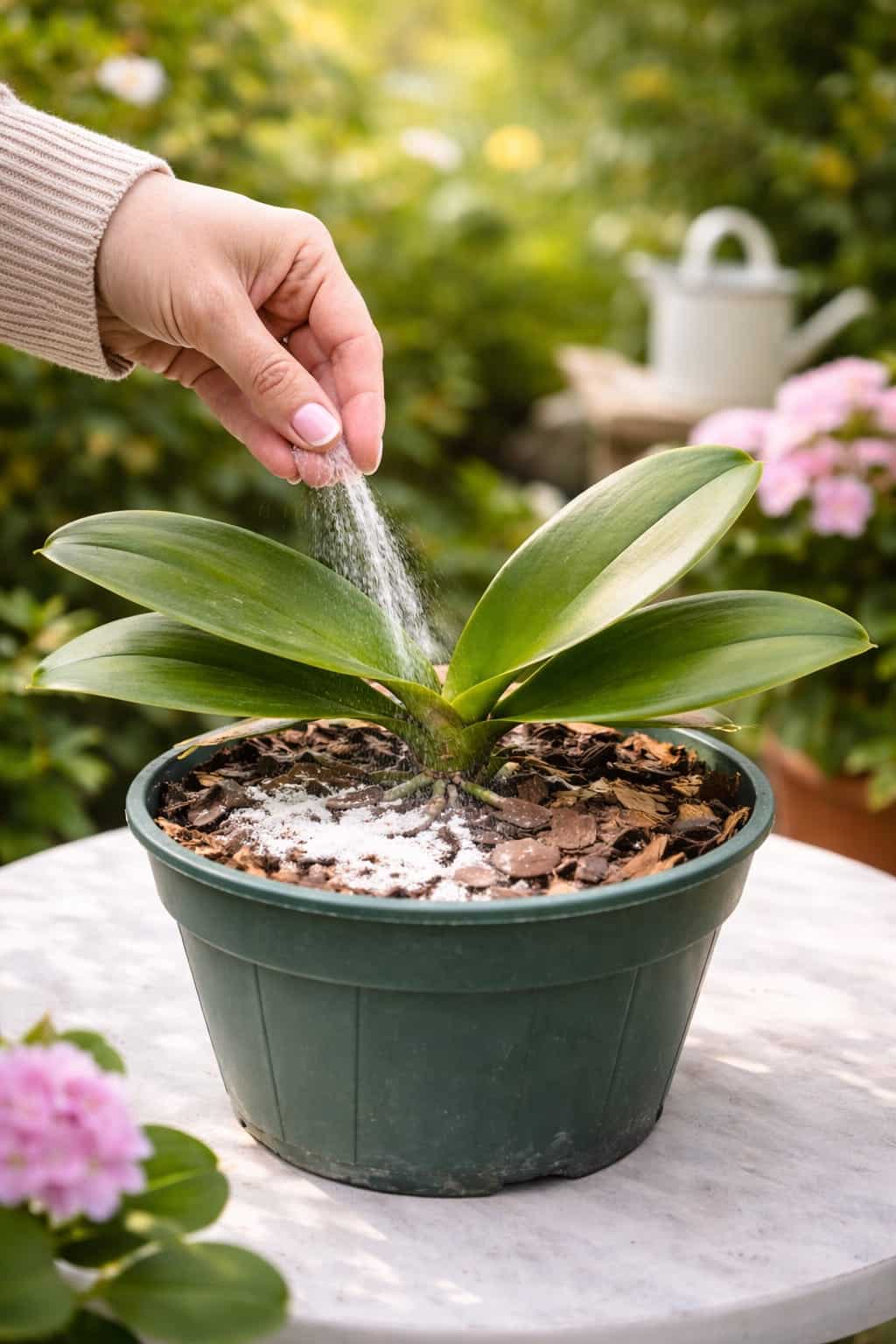
Can a simple ingredient (cinnamon) really save a dying orchid? Learn what it actually does, how to use it safely, and the real rescue steps – trim rotten roots, repot in fresh bark, and fix watering.
Let’s be honest: orchids are beautiful, elegant, and incredibly rewarding when they are healthy. But when they start declining, it can happen fast. Yellow leaves, weak roots, no flowers, and a tired‑looking crown can make it feel like the plant is already beyond saving.
That is why “one ingredient” orchid tricks get so much attention.
You have probably seen images of a white powder being sprinkled onto the potting mix, followed by a healthy orchid covered in blooms. It looks dramatic, simple, and almost too easy.
And honestly, the truth is more balanced than the viral claim.
The white powder in these kinds of plant posts is usually cinnamon powder or sometimes another mild plant‑safe powder. Out of all the common kitchen ingredients people try on orchids, cinnamon is one of the most believable because it is often used as a drying and surface‑protecting support after trimming damaged roots or stems.
But here is the important part:
👉 Cinnamon does not magically cure a dying orchid by itself.
👉 It helps most when the real problem is also fixed.
If your orchid is struggling, the real rescue comes from understanding why it is failing and using the ingredient the right way.
Why Orchids Start Dying
Most orchids do not decline because they are weak plants. They decline because their roots are under stress.
The Most Common Causes
Cause Effect
Overwatering Roots suffocate and rot.
Compact or broken‑down potting mix Old bark holds too much moisture, no airflow.
Poor airflow around the roots Roots cannot breathe.
Too little light No energy for recovery.
Water trapped in the crown Crown rot – often fatal.
Root rot The plant cannot absorb water, even when the pot is wet.
When the roots stay wet too long, they begin to rot. Once that happens, the orchid cannot absorb water properly – even if the pot is wet. That is why an orchid can look thirsty and dying while sitting in damp bark.
This is the stage when many people start looking for miracle fixes.
What the “One Ingredient” Usually Is
In posts like this, the white powder is most often meant to be cinnamon.
Why Cinnamon?
Because plant lovers often use it as a simple support ingredient for:
· Cut stems.
· Trimmed roots.
· Damaged areas near the crown.
· Surface protection after cleanup.
It is popular because it is dry, easy to use, and feels like a natural solution.
And yes, it can be useful.
But it works best as a helper after trimming away damage, not as a treatment dumped blindly into a failing pot.
What Cinnamon Can Actually Do
Used properly, cinnamon may help in a few ways.
- It Helps Dry Freshly Cut Areas
If you trim rotten roots or soft damaged tissue, a small amount of cinnamon can help keep that area drier.
- It May Support Cleaner Recovery Conditions
Many growers like it because it seems to help after damage has been removed.
- It Is Simple and Accessible
Unlike specialized products, many people already have it at home.
That is why it became such a popular “save your orchid” trick.
Continue to Page 2
Continue to page 2 for more details about this article and the key points many readers miss on the first page.