What Cinnamon Cannot Do
This is the part viral posts usually skip.
Cinnamon cannot:
· Regrow rotten roots overnight.
· Replace fresh orchid bark.
· Fix overwatering habits.
· Create blooms instantly.
· Save an orchid whose crown is severely damaged without other care changes.
So if someone sprinkles cinnamon onto soggy old bark and expects an instant bloom explosion, that is not how real orchid recovery works.
The Real Way to Save a Dying Orchid – Step by Step
If your orchid is in trouble, follow this process first.
Step 1: Remove the Orchid from the Pot
Take it out gently and inspect the roots.
· Healthy roots are: firm, green or silvery, plump.
· Rotten roots are: brown or black, soft, mushy, hollow.
Step 2: Cut Away All Damaged Roots
Use clean scissors and remove every dead or rotten root. This is the most important rescue step.
Step 3: Let the Remaining Healthy Parts Breathe
Once the rot is removed, the orchid has a chance to recover.
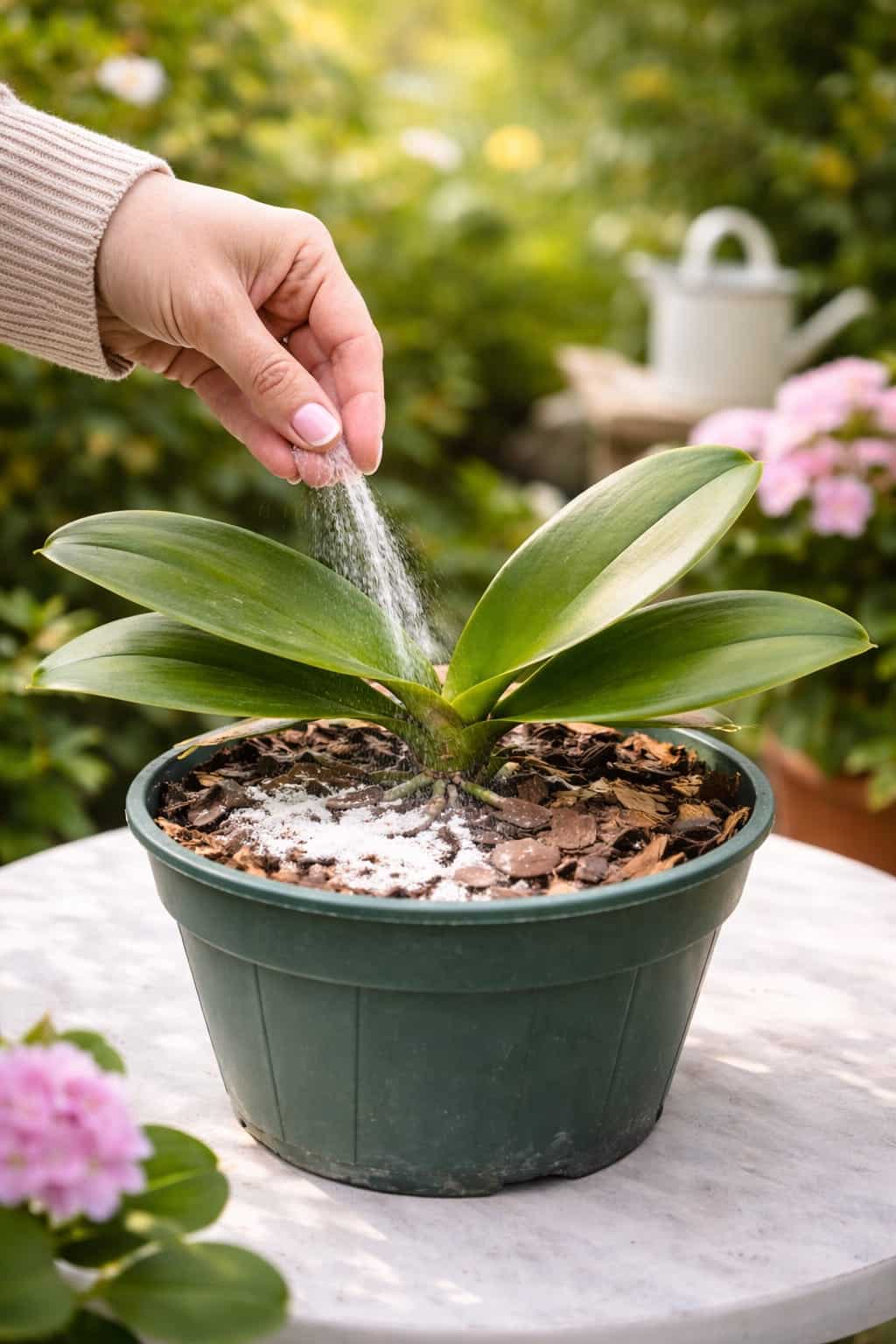
Step 4: Apply Cinnamon Lightly (Only Where Appropriate)
Use a very small amount on cut root ends or damaged dry areas if needed.
Important:
· Do not coat the entire root system heavily.
· Do not bury thick piles into the pot.
· Do not use too much around living roots.
Too much cinnamon can be overly drying.
Step 5: Repot into Fresh Orchid Medium
This matters more than the powder. Orchids need airy bark or proper orchid mix, not compact wet soil.
Step 6: Fix Your Watering Routine
Water only when the orchid mix is approaching dryness, not constantly.
Step 7: Give Bright, Indirect Light
Healthy roots plus proper light give the orchid the best chance to rebuild strength.
When This Ingredient Helps Most
This trick is most useful when:
· You have just trimmed rotten roots.
· The orchid still has some healthy roots left.
· The crown is not completely gone.
· You are repotting into fresh mix.
· You are changing the care routine afterward.
In that situation, cinnamon can be a nice extra support step.
Signs Your Orchid Is Recovering
Do not judge recovery too fast. Orchids heal slowly.
Good Signs Include
· Firmer leaves.
· New root tips (small green or silver bumps).
· Brighter leaf color.
· Steadier leaf posture.
· New crown or stem activity over time.
Eventually, if the plant fully stabilizes, blooms can return.
But first comes root recovery.
Common Mistakes to Avoid
If you want this trick to actually help, avoid these problems.
Mistake Why It’s Harmful
Using too much powder A little is enough. Heavy use can stress the plant.
Skipping root cleanup If rot is still present, the ingredient will not solve the real problem.
Reusing old soggy bark Fresh medium is essential.
Watering too soon after major root trimming Give the plant time to settle.
Expecting instant flowers Saving the orchid comes first. Blooming comes later.
The Truth Behind the “Simple Fix”
The ingredient is not fake – but the claim is usually exaggerated.
Cinnamon can absolutely be useful as part of an orchid rescue routine. It is simple, cheap, and easy to apply. But the true reason a dying orchid recovers is because you:
· Removed the rot.
· Improved airflow.
· Changed the medium.
· Corrected watering.
· Gave it better growing conditions.
That is the real fix.
Frequently Asked Questions (FAQs)
Q: Can cinnamon alone save a dying orchid?
A: No. It helps protect trimmed areas, but you must remove rotten roots, repot in fresh bark, and fix watering.
Q: How much cinnamon should I use?
A: A light dusting on cut ends – about ⅛ teaspoon. Do not pile it on.
Q: Can I use cinnamon on orchid leaves?
A: Not recommended. It can dry out leaf tissue. Use only on cut stems or roots.
Q: What if my orchid has no roots left?
A: You can still try the “sphag and bag” method (high humidity in a bag with damp sphagnum moss). Cinnamon may help prevent infection on the base.
Q: How long does it take for an orchid to recover?
A: New roots can appear in 4–8 weeks. New leaves may take longer. Blooms can take months to a year.
Printable Orchid Rescue Checklist
☐ Remove orchid from pot.
☐ Trim all brown, mushy, or black roots with sterilized scissors.
☐ Dust cut ends lightly with cinnamon (optional).
☐ Repot in fresh orchid bark (never old, soggy medium).
☐ Use a clear pot with drainage and ventilation holes.
☐ Place in bright, indirect light (east or north‑east window).
☐ Water only when bark is almost dry.
☐ Do not water for 3–5 days after repotting.
☐ Maintain humidity 50–70% (pebble tray or humidifier).
☐ Be patient – new roots take 4–8 weeks.
☐ Do not fertilize until new roots are 2–3 inches long.
Final Thoughts – The Real Rescue, Not a Magic Trick
So, can you save a dying orchid with this one ingredient?
Yes – but only as part of the full rescue process.
If the ingredient is cinnamon, it can help protect trimmed areas and support recovery after damaged roots are removed. But it is not the miracle. The miracle is giving the orchid a fresh start and the right conditions to rebuild itself.
That is what brings an orchid back.
And when it finally grows new roots, fresh leaves, and eventually blooms again, the transformation feels even better – because this time, it is real.
Now it’s your turn! Have you tried cinnamon on a dying orchid? What worked – or didn’t? Drop a comment below – I’d love to hear your experience.
And if you found this guide helpful, share it with a friend who’s about to throw away their orchid. Pin it for later, and subscribe to our newsletter for more honest, evidence‑based plant care.
Stay patient, stay consistent, and watch your orchid come back. 🌸✨