Room-by-Room Styling
In the living room, a snake plant can stand beside a sofa, on a plant stand, near a console, or by a bright window. Its upright shape adds structure without clutter. Watering should be done carefully so furniture and floors stay protected.
In the bedroom, snake plant creates a calm and minimal look. It should not be overwatered in lower-light bedrooms. A dry, clean pot surface is especially important in sleeping spaces because fungus gnats or sour soil can become unpleasant.
In a home office, snake plant works well because it looks professional and low-maintenance. It can sit near a desk, shelf, or video-call background. The plant should receive enough light to stay strong and should be watered only when the soil dries.
On a windowsill, snake plant can thrive if the light is bright but not harsh. The pot should be protected from cold drafts in winter. Terracotta may dry faster on a warm sunny sill, so check the soil instead of assuming the same schedule all year.
Office and Commercial Styling
Snake plants are widely used in commercial interior landscaping because they are durable, structured, and easy to style. They work well in reception areas, office corners, meeting rooms, hotel-style interiors, wellness spaces, boutique displays, and staged properties. Their clean vertical shape makes them look professional.
For commercial spaces, watering should be consistent but restrained. Many office plants fail because several people water them without coordination. One person should manage the schedule and check the soil before watering. This prevents accidental overwatering.
A premium commercial snake plant should have firm leaves, clean soil, no standing water, and a planter that matches the interior. Watering should be invisible and controlled. The plant should look naturally strong, not neglected or overtreated.
Product and Tool Guide
Helpful materials for snake plant watering include a pot with drainage holes, a terracotta or breathable planter, a matching saucer, cactus and succulent mix, perlite or pumice, a narrow-spout watering can, room-temperature water, a wooden stick or moisture meter, clean scissors, and a soft cloth for leaf cleaning. These simple tools help prevent the most common watering mistakes.
A decorative cachepot can be used if the plant remains inside a draining inner pot. Pot feet can improve airflow under containers. A grow light can help in darker rooms and may reduce the risk of soil staying wet too long. Good tools support a stable routine.
The plant does not need complicated tricks. It needs dry-friendly soil, good drainage, bright indirect light, and patient watering. These basics create stronger results than frequent homemade liquids or fixed weekly schedules.
Care Timeline After Watering
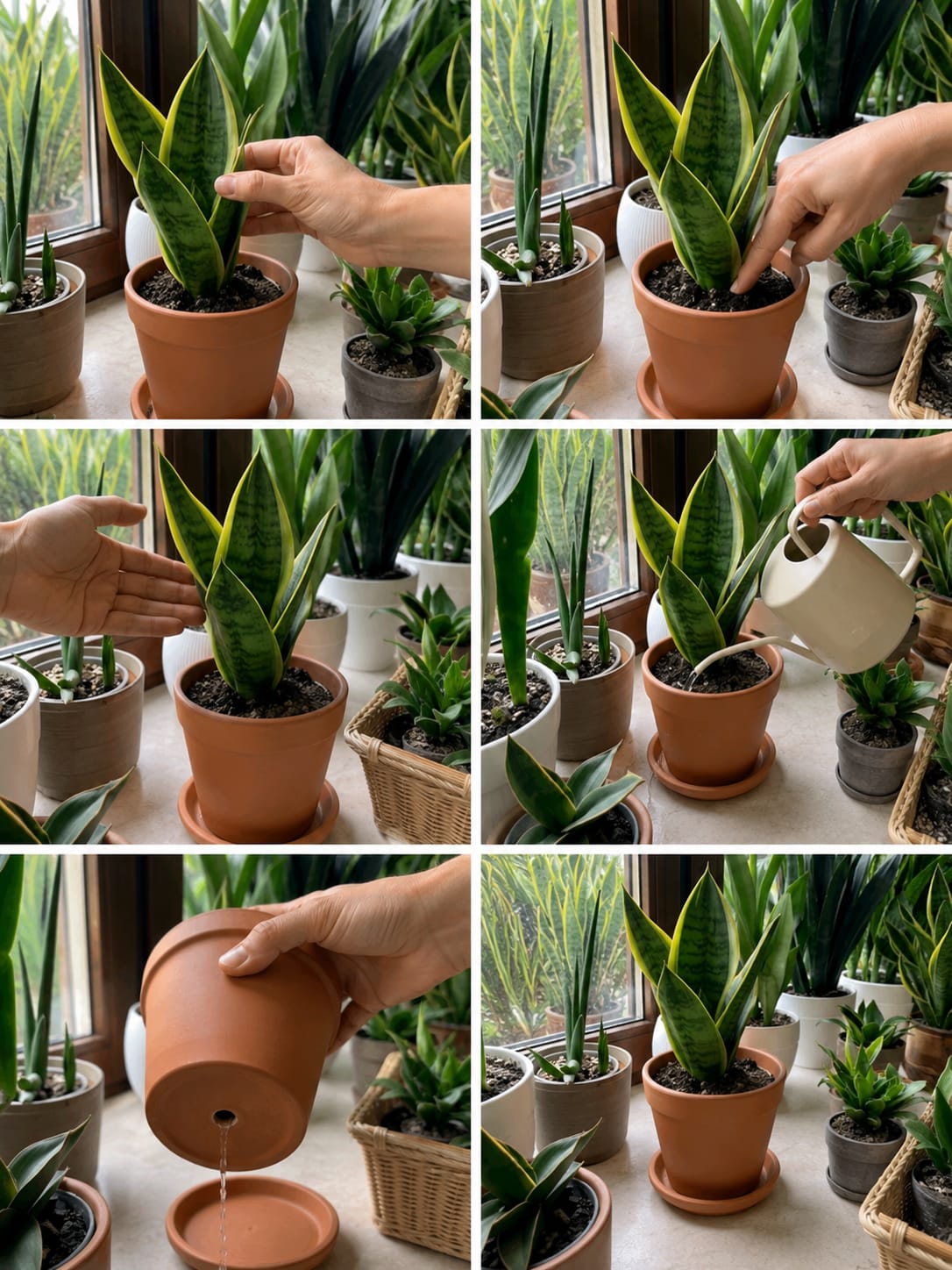
During the first 24 hours after watering, the pot should drain fully. The saucer should be emptied. The crown should be checked for trapped water and blotted if needed. The plant should return to bright indirect light with good airflow.
During the first week, the soil should begin drying gradually. The plant should remain firm and upright. Do not water again just because the surface dries. Check deeper moisture before deciding. The pot should not smell sour or attract gnats.
After two to four weeks, many indoor snake plants may be ready for another soil check. Some may need water, and others may not. After one to two months in winter or low light, a snake plant may still be fine without watering if the soil remains slightly moist below. Long-term success depends on observation.
Professional Styling Note
In high-end indoor horticulture, snake plant is valued because it offers bold architectural foliage with very little visual clutter. It works well in modern apartments, offices, bedrooms, entryways, commercial plant displays, luxury home staging, and polished property presentation. The plant looks especially refined when paired with clean pots and tidy surfaces.
However, the premium look depends on correct watering. A snake plant with yellow soft leaves, moldy soil, or water sitting in a saucer will not look elegant. A dry, tidy, well-drained pot creates a stronger display. The care routine should protect the plant while keeping the presentation clean.
A beautiful snake plant display depends on firm leaves, healthy rhizomes, fast-draining soil, drainage holes, bright indirect light, and watering only when the soil has dried well. Simple controlled watering creates a stronger result than frequent small watering or calendar-based care.
Final Thoughts
Snake plants should be watered less often than many houseplants. The safest rule is to water only when the soil has dried well, then water thoroughly and allow the pot to drain completely. For many indoor homes, this may mean every two to four weeks in warmer seasons and every four to eight weeks in winter, but the real answer depends on the plant’s environment.
A terracotta pot with a drainage hole, a fast-draining cactus and succulent mix, bright indirect light, and an empty saucer after watering will prevent most problems. If the soil is damp, wait. If the soil is dry and the leaves are slightly less firm, water deeply. Do not let the plant sit in standing water, and do not pour water into the crown.
With clean care and the right presentation, snake plant can remain a beautiful accent for living rooms, bedrooms, home offices, windowsills, modern apartments, commercial interior landscaping, luxury home staging, terracotta planters, and polished property presentation. Healthy roots, firm upright leaves, dry-down periods, and controlled watering will always create a stronger display than frequent watering or guessing by calendar alone.